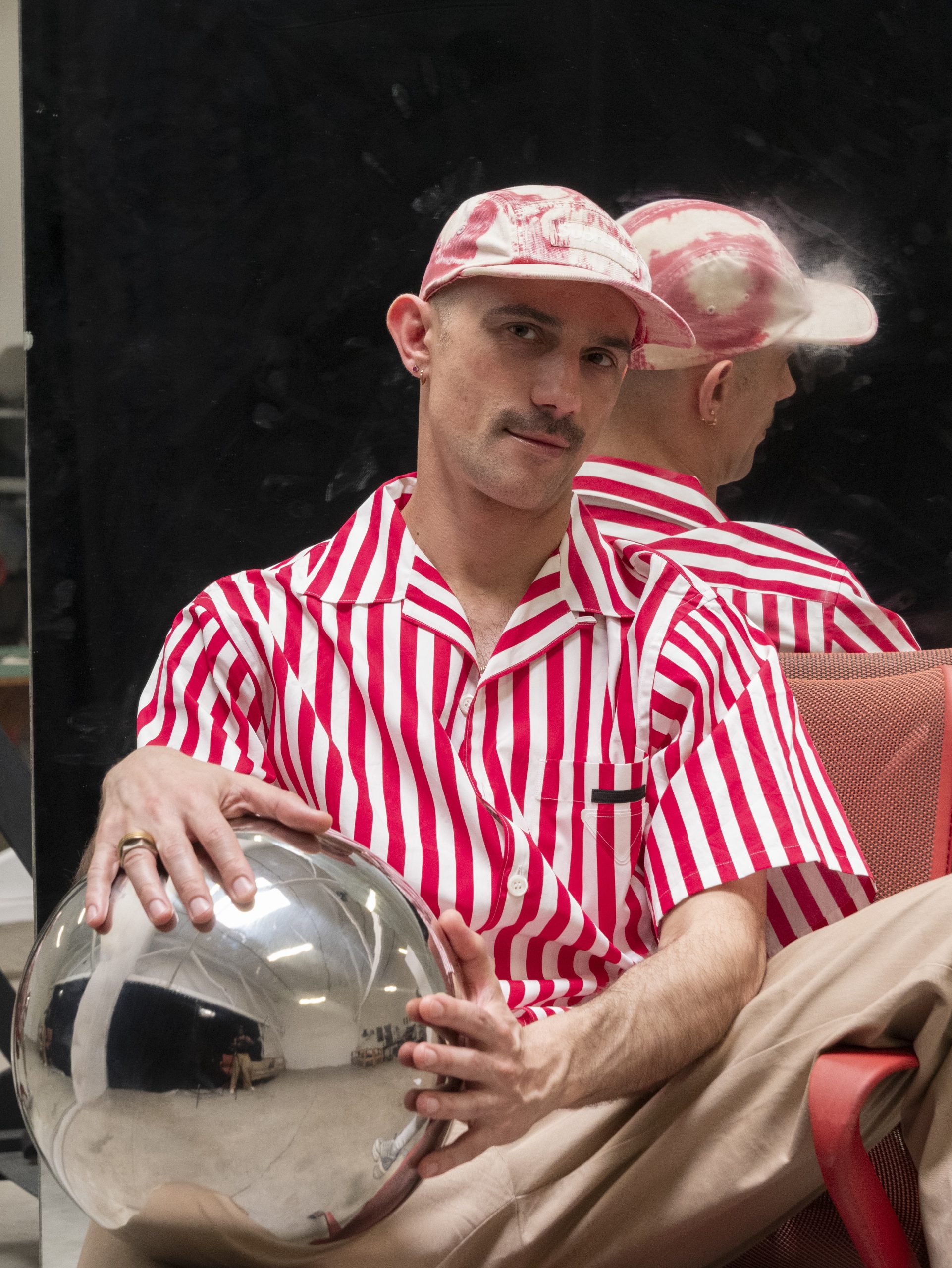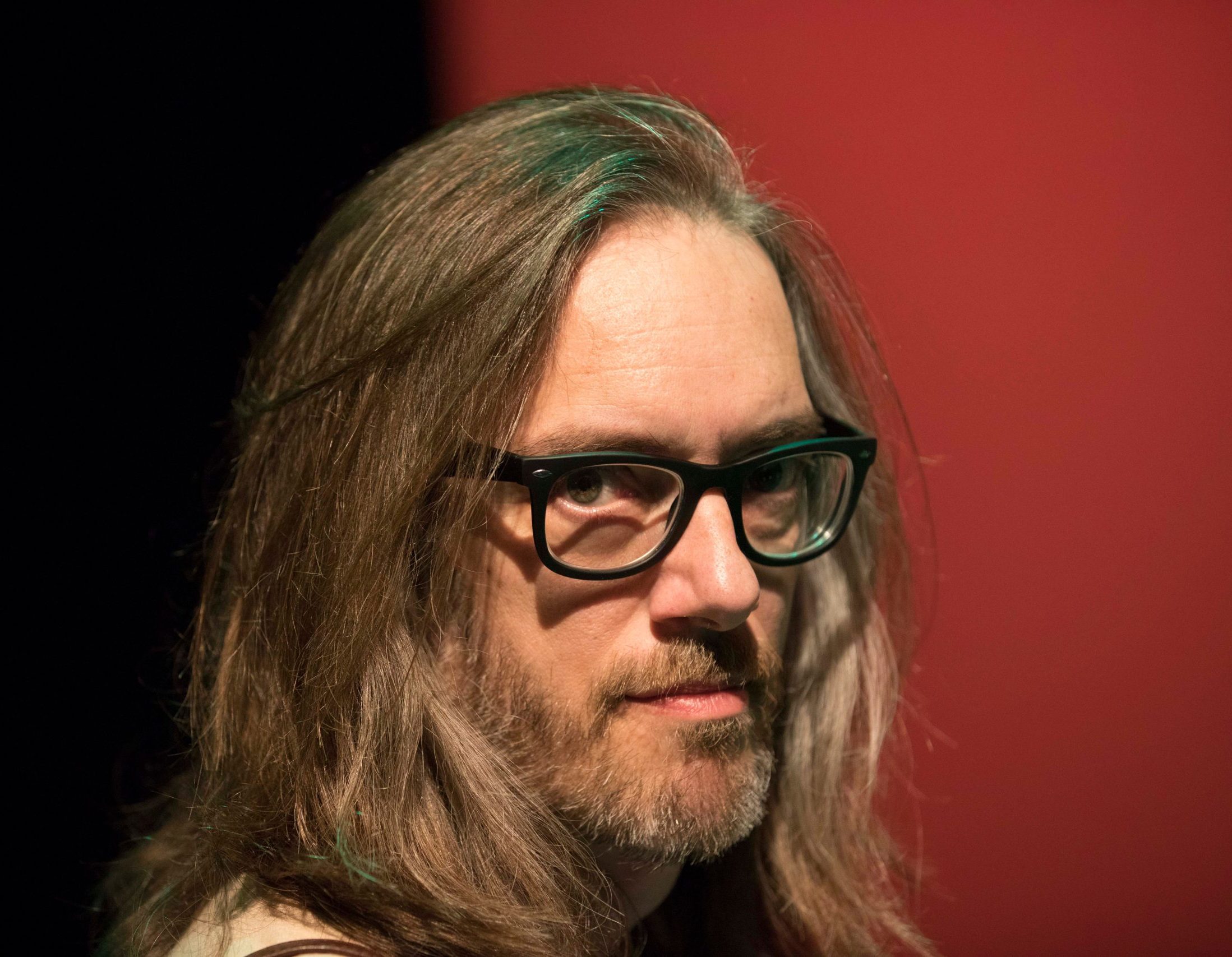


Sound designer and composer Ryeland Allison’s career spans decades in music technology, from groundbreaking Roland developments in the 1990s to his new Roland Cloud patch collection for the XV-5080: Mystic Adventure. A key figure within Roland’s extended creative family, his work has helped shape multiple eras of synthesis and sampling. He also spent years working alongside Hans Zimmer on major film scores, including Inception, The Dark Knight, and countless others. Across studios, stages, and R&D environments, he has remained deeply involved in the evolution of music technology, while working ceaselessly to preserve the magic of systems and sounds that defined popular culture.
Waveform Wizardry
Throughout his career, Allison has moved from analog tape to early digital formats to modern DAW workflows, always adapting rather than resisting change. A multi-instrumentalist driven by curiosity, he recalls sitting in studios as a child thinking, “What is this wizardry?” It’s a mindset that carried him from four-track experiments to big-budget Hollywood productions.
Immersed in rave culture, Allison’s work with Roland in the ’90s placed him at a pivotal moment in synthesizer history, as new digital tools reshaped production. Reflecting on decades of change, he notes, “Every era has its own unique thing. There’s a special feeling recording to analog tape. Similarly, vintage digital gear has its own vibe.”
Based in Los Angeles, we caught up with Allison to talk about his remarkable career in music and sound design—one that continues to influence and inspire other creatives. Like many journeys of this kind, it began at home, surrounded by music from an early age.
Formative Frequencies
You grew up in a very musical family—tell us about that.
My father, Keith Allison, was in a band called Paul Revere & the Raiders, who were popular in the ’60s—they had a string of hits. He was also a solo artist before that and was on television every day. In the days before MTV, he was part of Dick Clark’s television show, Where the Action Is. They would broadcast daily from different locations.
My dad was a teeny bopper idol who had originally come from Texas, so he had a lot of country in him, but he was into rock ‘n’ roll and played with a bunch of different artists before and after joining the Raiders.
What are some of your earliest musical memories?
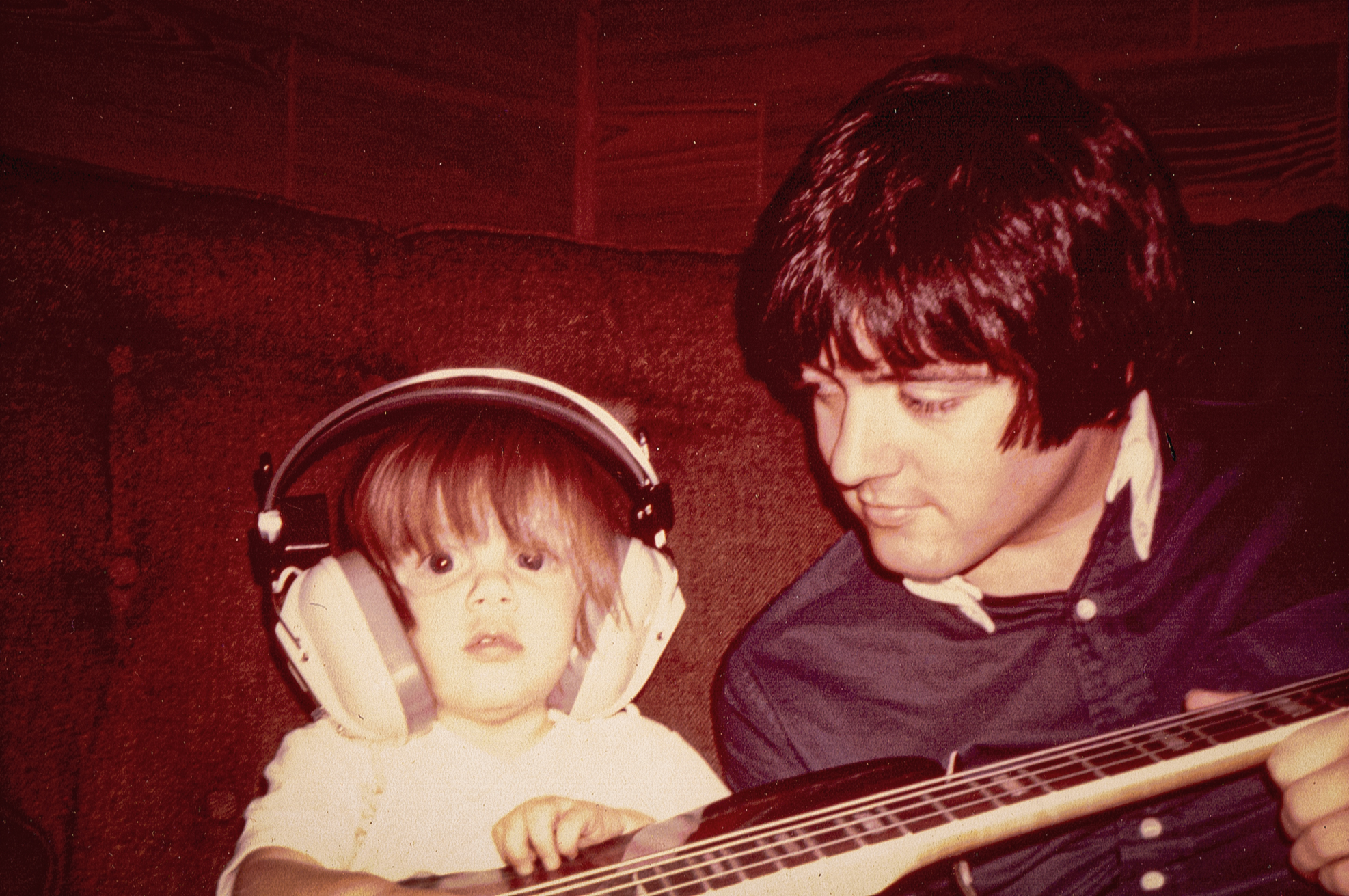
My father played me records from an early age, and I’d sit there with headphones on, listening intently. He also played bass with a headphone amp, so he could plug in and practice. My dad would put those headphones on me, and you can see in photos that my eyes are just wide with wonder, like, “What are these frequencies? What is happening?”
Guiding Starr
What was it like growing up in the 1970s Los Angeles music scene?
From the age of five, my dad would take me to studios. This was in the early ’70s. I got to sit and look at mixing boards, racks of equipment, and glowing tubes. My little head was just like, “What is this wizardry?”
Growing up in LA, I met all kinds of people with my dad. He worked with Ringo Starr, and I’d go to Ringo’s house to hang out with his kids and play his drum kits. I remember we went to Disneyland one time with Ringo and his children—it was a bit surreal.
We had a Disney tour guide who whisked us through back doors and looked out for us. At Ringo’s house, there’d be parties where notable people would play music and have a sort of hootenanny jam around.
"Ringo Starr is a kind and lovely soul. He taught me some deep first principles on the drums, including how to properly play 'Get Back.'"
What did you learn during those formative times?
Ringo is a kind and lovely soul. He taught me some deep first principles on the drums, including how to properly play “Get Back.” In those situations, you instinctively learn how to listen.
You learn how other musicians respond—what works and what doesn’t work in a professional situation. Like, instead of trying to show off, just listen to how other people are playing. It was super inspiring and very formative. I was attracted to it.
When did you start playing in bands yourself?
By age ten, I was playing in a band with a mate at school. He went on to become an incredible guitarist and composer. His name is Anthony Wilson. He’s a jazz legend and played with Diana Krall for years. Anthony is a masterful player, but in the early days, we were playing Kiss and Muddy Waters covers—just having fun at the little local events and school carnivals.
Keys to Success
How did you first get into recording and synthesizers?
Around that time, we did some recording sessions in small studios on a four-track and enjoyed learning about that. By the time I got into high school, I was thinking about keyboards, too. You know, “What are these synthesizer sounds I’m hearing?” I was inspired by Pink Floyd’s The Wall, Kraftwerk, and Tron: [Original Motion Picture Soundtrack] by Wendy Carlos.
With the rise of synth pop and popular music in the ’80s, I saw musicians using synthesizers more and often noticed Roland gear. Like, “Whoa, there are all these different brands on all this cool gear. What do they represent? Where’s that cool sound coming from?”
Also around that time, my father’s bandmate Mark Lindsay lent me his JUNO-60 to experiment with, and I became hooked.
Do you remember a specific moment when you realized synthesizers were changing the future of music?
I used to visit music stores and read Keyboard magazine religiously. There was a synthesizer and equipment showcase here in a North Hollywood hotel hosted by Goodman Music, a local keyboard store, and it was the first time I ever saw a Fairlight. They premiered it for us in this little hotel room.
They pressed the button, and it played “Fanfare for the Common Man” using orchestra samples. It was amazing. I mean, it sounded like a real orchestra, even the early 8-bit model. It was revolutionary, and I realized the whole scene was changing.
Hearing Peter Gabriel’s albums and Trevor Horn’s productions with Art of Noise and Yes, which featured the Fairlight, was so inspiring. I was super tuned into that kind of thing. Throughout high school, I was also fascinated by a band called Scritti Politti and David Gamson’s arrangements—an incredible programmer. Just super tight and harmonically rich.
"In my early professional life, the industry began moving towards mixing down to DAT or recording on reel-to-reel digital tape. Then Pro Tools came along, which was another big change."
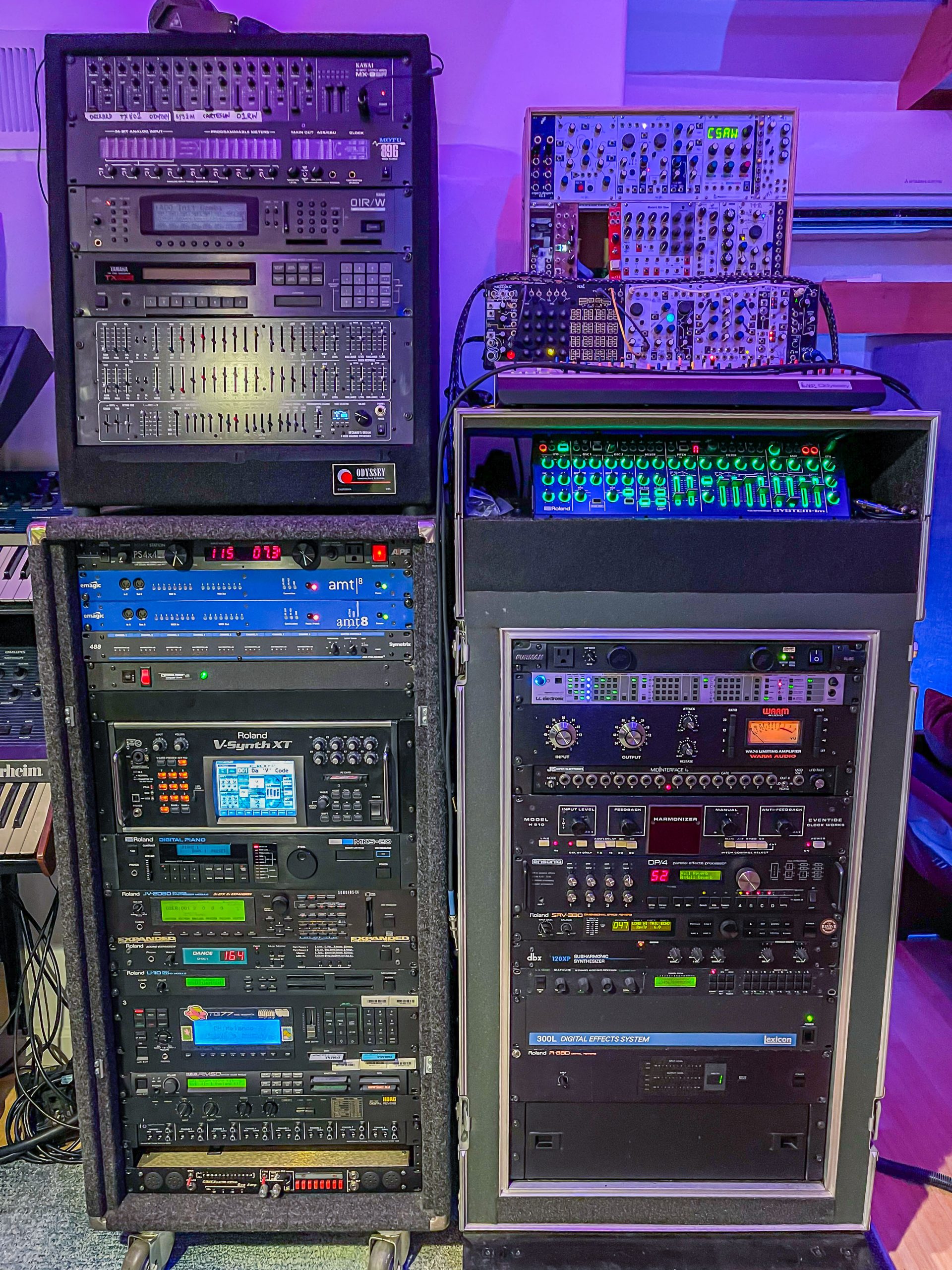
There were all these incredible shifts in music technology and production. All this led to where I am today, 40-plus years later, in a room with 50 synthesizers and racks and racks of gear. It never stops!
Digital Dawn
How did music production technology change during your early years in the industry?
When I was studying music at college, analog tape was still the industry standard. It was the early days of digital technology, when MIDI and sequencing were just becoming popular.
In my early professional life, the industry began moving towards mixing down to DAT or recording on reel-to-reel digital tape. Then Pro Tools came along, which was another big change. Seeing those transitions was incredible.
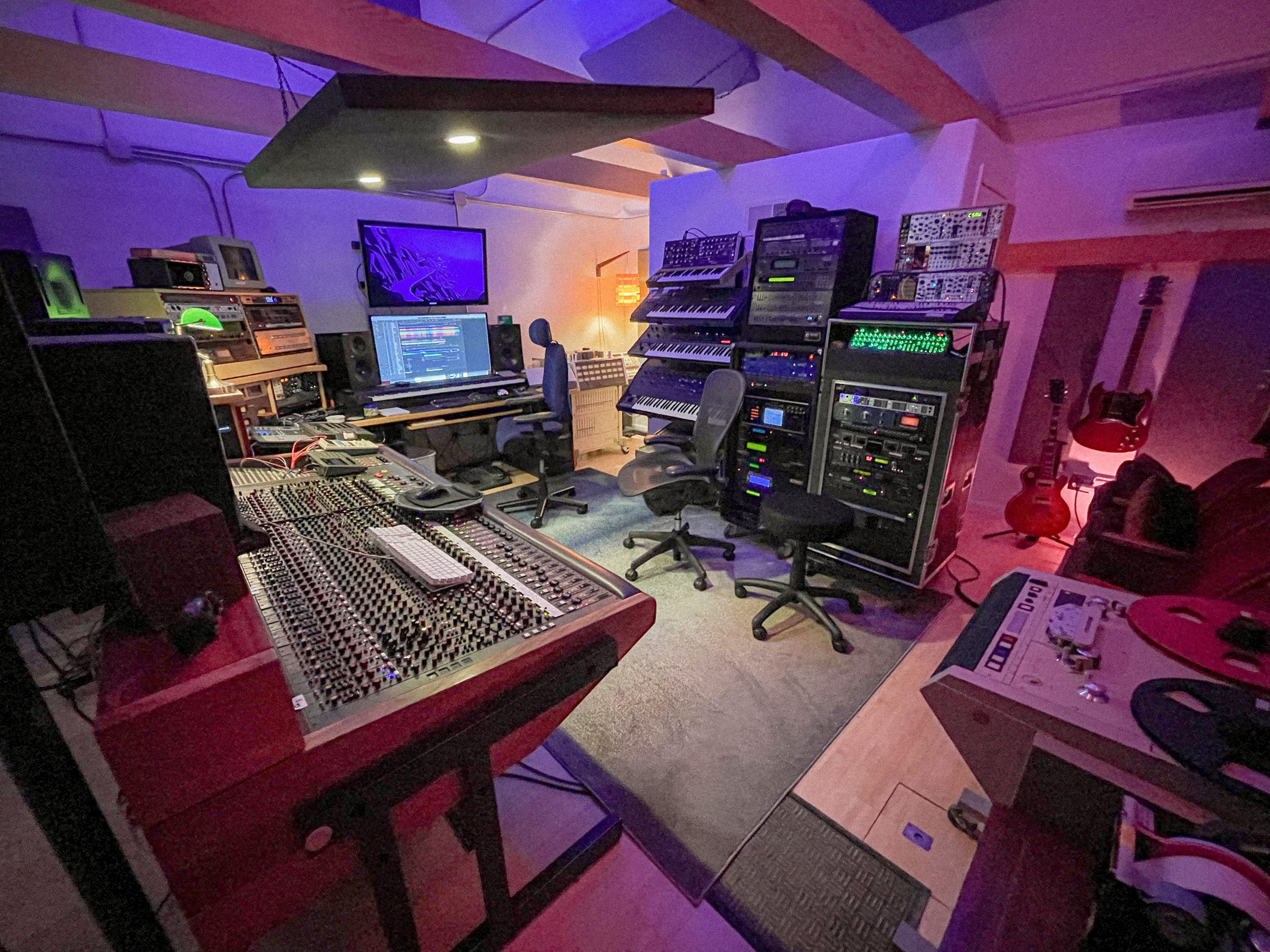
What does your recording setup look like these days?
These days, I’m recording and editing in Logic almost 100 percent of the time, but if I do a live group session with more people at my studio, I use Pro Tools as the input because my HD system has more I/O (96 in and out). I have mic and tie lines from my live room to an analog console and dedicated interfaces. Then I send 64 channels via MADI to Logic.
I rarely need that many inputs at once. For my smaller projects, I use whatever interface is handy for my other laptop or desktop stations here.
How did musicians and engineers react to the shift toward digital tools?
In the guitar world, especially, it seems some people frowned upon digital modeling, but now it’s much more accepted. With keyboardists and in engineering and recording, there wasn’t so much resistance. In the industry I worked in, we were very forward-thinking. We were pushing digital sampling early on.
I got involved with Roland and started working on samples and sound design, which then led to my working with Hans Zimmer. And he was obviously very much synth-focused. Like, “Let’s do sample libraries of orchestra sounds and incorporate the latest tools, the latest technology.”
In the Loop
Do you remember the first time your own live performance was edited and looped digitally?
I do remember the first time we did a session for the film, The Fan, and Alan Meyerson was engineering me on the drum kit. We got a good take, and then he said, “Okay, let’s just take those two bars, and we’ll loop it.” That was the first time I got looped in Pro Tools instead of using the whole track.
Of course, in my world, too, it was fine to do that because we were looping records and grooves and samples and making dance music that way. So it made sense, you know. I was super turned on by the rave culture of early ’90s Britain, as well as all the stuff that was happening in Chicago, New York, and Florida.
There were all these different scenes bubbling up across the world, and listening to all the different records flying around was really enjoyable.
"I thought it was important to stay current, keep going, and keep reinventing yourself."
Keep Calm and Reinvent
Did you perceive a resistance to the progression of digital music technology?
I was never resistant to technological progress, myself. I guess some of the older guard in mix rooms were a bit stuck in their ways, as were some of the older film people. But I thought it was important to stay current, keep going, and keep reinventing yourself.
How do you feel about the current resistance to AI in music?
We’re seeing a lot of resistance to AI now in its infancy, but I think it will be a useful tool like any recording technology. Hopefully, AI will provide more growth and innovation. I’m excited by it. I’ve been embracing the new platforms and paying close attention to them. I’m also going to keep making music with people. I love that. There’s nothing like that unique feeling of sitting down in a room with multiple people making music.
Every era has its own unique thing. There’s a special feeling recording to analog tape. Similarly, vintage digital gear has its own vibe. I’m obsessed with vintage digital samplers now. There’s dance music I made 25 years ago, and some younger people are going, “What’s that? That sounds really fresh!”
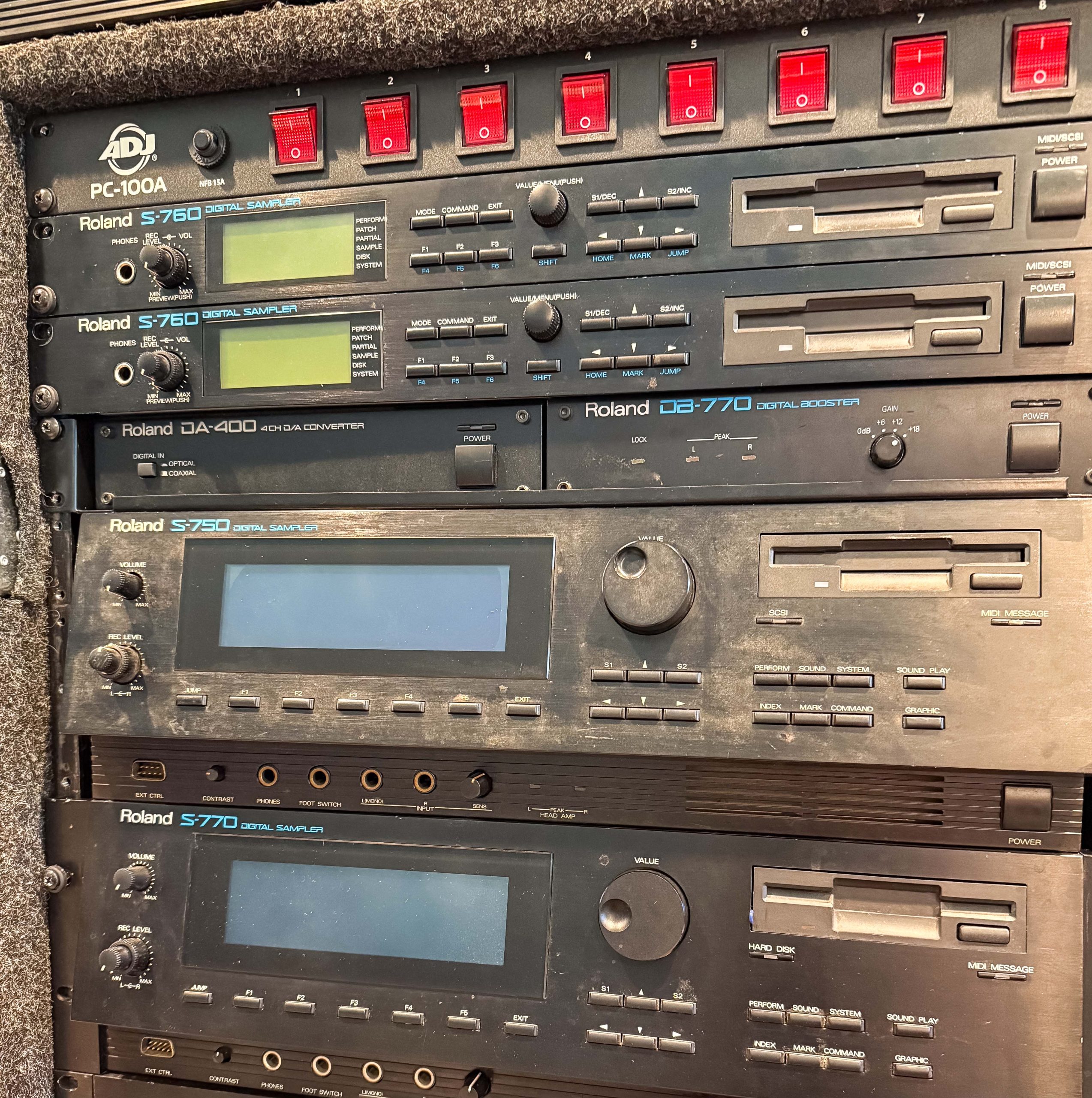
Holy Grail Samplers
What is some of your favorite vintage digital Roland gear?
I’ve definitely got a soft spot for the Roland S-770 Digital Sampler. When I was a young guy, that was the holy grail. The 770 was the top end of Roland’s sampling prowess. I remember hearing about how all the parts were hand-selected. It was over-engineered and had a special sound. The 770 was like the best you could get. It was Roland’s equivalent of a Synclavier or Fairlight—the highest standard.
The Roland S-770 Digital Sampler is a great 16-bit sampler. When I worked at Roland R&D under Eric Persing, we used the S-770 to do all our inputting for the sounds. It was released in 1990, and I used it a lot back in the day.
The S-770 had a special easter egg hidden away in a developer version of the software that very few people have seen: they coded a Tetris game into the operating system. If you triggered this special mode, you could play it right there on the video screen.
Retro Roland
What other Roland gear from the 1990s stands out to you?
I love the whole JV series that launched in the early ’90s, for which I got to program patches. I also love the JP-8000. That’s one of my favorite synths of all time. I still have one.
I demoed the 1994 Roland MS-1 [Digital Sampler] and BOSS SP-202 Dr. Sample when that came out in 1997. The SP-202 was cool—the black unit with red lettering. You could adjust the sample start and end points, and it would do this weird, glitchy reverse thing.
I had an R-8 Human Rhythm Composer [released in 1989] back in the day, and also the rack version, the R-8M [Total Percussion Sound Module]. I later reacquired an R-8 with all its sound cards. Some people still prefer the compressed card sounds that go with the R-8. And then there’s the user experience of those pads and features like the Roll button. It’s a vibe.
What’s it like being part of Roland’s extended family for such a long time?
No one ever really graduates from the Roland academy—we’re all lifers, and I’m still friends with several of the guys from back in the day. I have a very close friend called Bob Daspit, who used to work at Roland R&D. Then there was the great Kevin Lightner, a dearly departed associate and famous synth repair tech who was also ex-Roland.
I was just hanging out with the composer Jeff Rona the other day. Jeff worked for Roland with Jim Mothersbaugh, who was involved in MIDI development. He’s the brother of Mark and Bob Mothersbaugh from Devo.
Studio Student
What were you working on before you got involved with Roland?
Before Roland, I worked for the television composer Mike Post and learned various studio techniques. That got me more familiar with television composing. I worked there for a year and learned how to operate a large-format console, align tape machines, and synchronize videotape to audiotape and MIDI, as they were just starting to use MOTU Performer. I even got to program some synth sounds for a few episodes of Law & Order.
"Before Roland, I worked for the television composer Mike Post and learned various studio techniques. That got me more familiar with television composing."
I also worked as an assistant to television composer Ray Colcord in his home studio. I helped archive his tape library. He mentored me by asking questions such as, “What part of all this studio work interests you the most?” I told him I was fond of sounds, synthesis, and equipment.
Ray had the great idea to introduce me to Jeff Rona. Jeff hired me to input sounds into the [Akai] S1000 sampler. At that time, people would record their sampling sessions on DAT, and so you’d have these long performances that needed to be cut up.
We would manually input the samples from DAT. The procedure was: “Okay, sample this note that was played. The note plays for five seconds. Now stop, edit the start and end points, loop it, then put it in the patch,” you know.
That sounds like a very different approach compared to today’s methods.
Before you could do this on a computer, you had to do it all by hand on the front panel of a sampler. I was getting my little hourly rate, like a little sample monkey. It was a fun gig.
They were doing the same thing over at Roland R&D when Roland had an office in Culver City. Bob Daspit had been working with Eric Persing and introduced me to him. He said, “We need some help because we’re doing a lot of different sample libraries.”
It was just a stroke of luck, really, that I was in the right place at the right time. I was ready, young, and available.
"Eric Persing saw I was into rave music—something he wasn't involved with but found interesting."
New Rave
What space did you carve out for yourself at Roland creatively?
Eric Persing saw I was into rave music—something he wasn’t involved with but found interesting. At the time, a dance music sample library for the Roland 700 series was being developed across genres such as techno, industrial, rave, ambient, et cetera. It ended up being redirected into the SR-JV80-06 Dance Expansion Board for the JV series and the MDC-1 [Dance Sound Expansion] module.
That quickly evolved into working on a library together with Eric Persing when he founded Spectrasonics, focusing on weirder, more esoteric sounds. It became Distorted Reality—a CD-ROM that did very well for us.
Later, some elements of that library were folded into another Expansion Board: the SR-JV80-15 Special FX Collection.
Mystic Adventure
How did your new Roland Cloud XV-5080 Mystic Adventure patch collection come about?
I’d previously worked on a Roland ZENOLOGY [Software Synthesizer series] Sound Pack project with Jim Stout called [ZEZ028] Cinematic Tech. We had fun with that. That was my first foray into designing for the Roland Cloud platform.
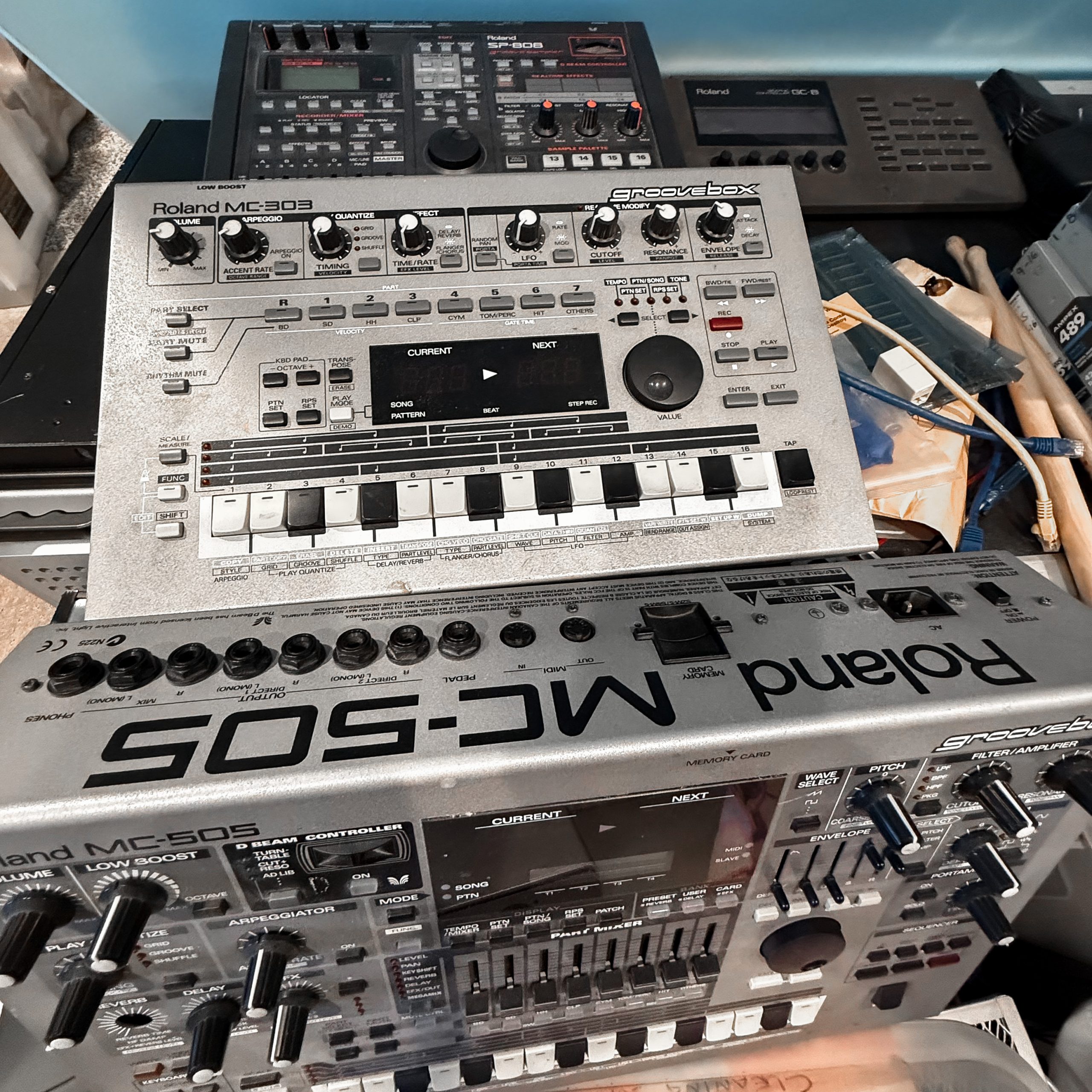
I’ve also previously worked as a roving programmer, creating patches and demos for the JV-1080 and JV-2080 [64 Voice Synthesizer Modules] when they were released [in 1994 and 1997, respectively], as well as wave data, patches, and patterns for the Roland MC-303 and MC-505 Grooveboxes.
I did a demo for the MDC-1, the XP-50 [Music Workstation], and some patches for the JP-8000… The list goes on! I worked as a demonstrator for the MS-1, JX-305 [Groovesynth], and JS-30 [Sampling Workstation]—that quite obscure sampling box from Italy. I was in the trenches at several NAMM shows. It’s been fun. One of the videos we made for the MC-303 has become something quite infamous.
So, I’m quite familiar with PCM-based synth engine platforms. I also owned a hardware XV-5080, and Jim said, “We’ve got the opportunity to do some new sounds for it,” so I was very happy to dig in. I’m so familiar with that structure, and it was very comfortable for me to play in that world.
What direction were you aiming for with the Roland Cloud XV-5080 Mystic Adventure patch collection?
I thought I’d go a little further out than Cinematic Tech with Mystic Adventure. I’ve always been a fan of progressive music, whether it’s electronic or progressive rock bands like Genesis and Yes, or psychedelic rock bands like Egg, Can, and Gong.
I’ve always leaned into those more adventuresome sounds. I hope Mystic Adventure inspires musicians to push the boundaries of their own music. I love inspiring others and giving back to younger people.
"As well as cinematic sounds, Mystic Adventure also falls within the realms of dance music, such as trance, ambient, and soundscape."
What creative possibilities does the XV-5080 Mystic Adventure patch collection offer?
For many years, I’ve leaned into cinematic sounds, and you can easily use the XV-5080 patches in the Mystic Adventure collection for scores. They’re not traditional bread-and-butter pop sounds; they’re more like a palette of effected pads with lots of ear candy. I got to run wild and focus on sounds that interested me.
As well as cinematic sounds, Mystic Adventure also falls within the realms of dance music, such as trance, ambient, and soundscape. There are evolving pads that can sit nicely in a mix or even spark the foundation of a new song—the kind of core movement you can build a melody around, or use as the decorative element you’ve been searching for when other sounds just aren’t cutting it.
Hans Zimmer
Talking of cinematic sounds, how did you get involved with Hans Zimmer?
It all happened fast. I met Jeff Rona, then Bob Daspit, then Eric Persing, and then Jeff introduced me to Hans Zimmer. Being in that mix in LA around ’91/’92 was a very fertile time for me in the industry.
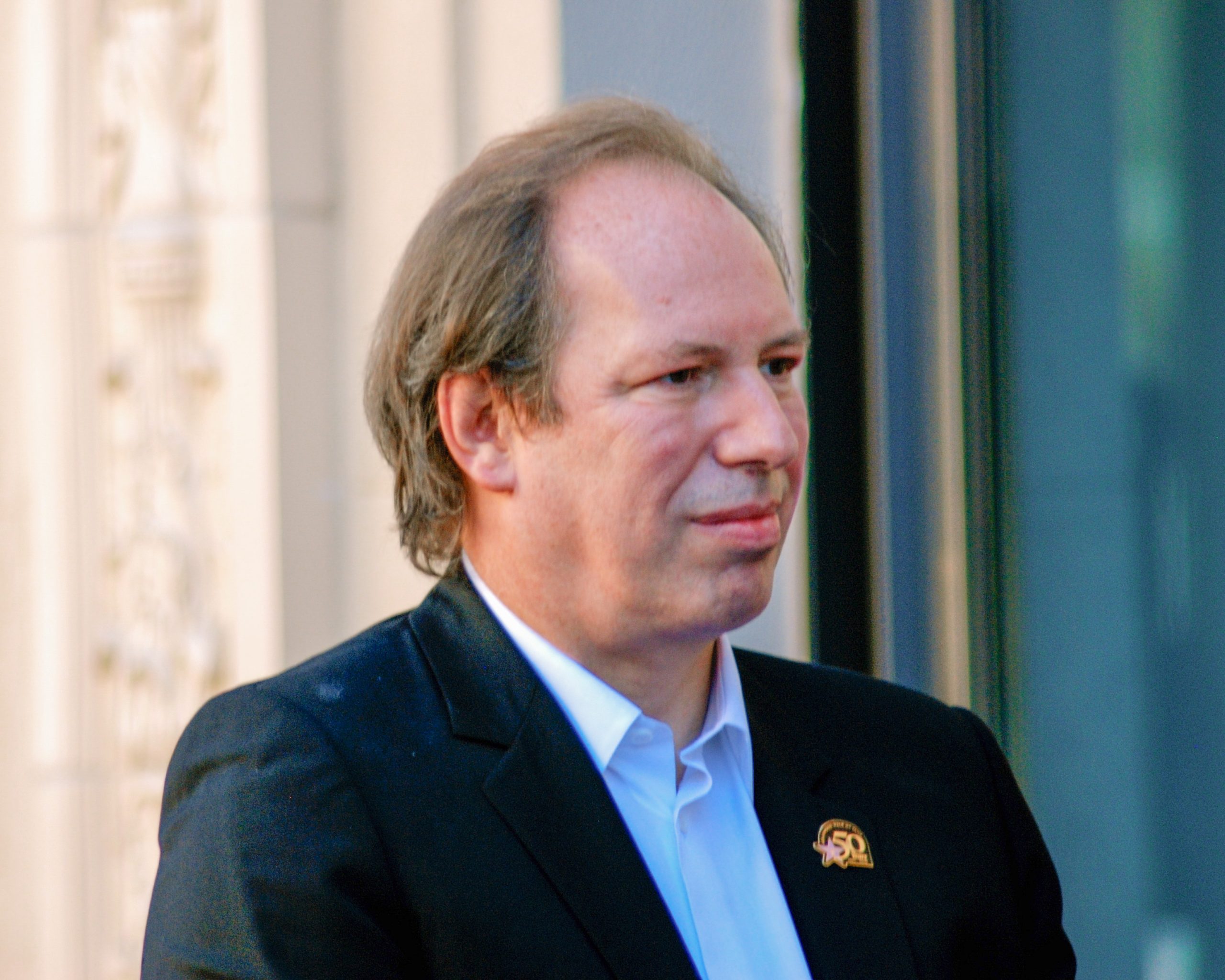
Jeff introduced me to Hans when we were working on some sounds for the movie The Power of One. I had done some African choir patches using the S1000, and Jeff said, “Why don’t you go deliver them to Hans? You should meet him. You’ll like him.”
Jeff has always been that way—very giving and no gatekeeping. That can be a unique thing in this industry.
What was your first impression of Hans Zimmer when you met him?
At that point, Hans had already done several films and was well established. When I met him, he was just so engaging. He was a serious synth nerd and a professional tweaker. I was surprised by that because I thought a film composer might be more of a traditional pen-and-paper composer, but he obviously changed the mold.
"Hans Zimmer and I hit it off, and he invited me back to hang out. He soon started probing me about my abilities."
How did your collaboration with Hans Zimmer begin?
Hans and I hit it off, and he invited me back to hang out. He soon started probing me about my abilities. Like, “Maybe we can use you on this for some drums,” or “Hey, you do remixes,” or “You could help me with some drum programming and add some more personality in that realm.”
Hans was always very open to keeping his tool set as broad as possible—like casting his musical team with specialist characters to achieve the best results that fit his concept.
Creative Sampling
What was your role like once you started working with Hans Zimmer more closely?
Initially, Hans Zimmer hired me to do drum sessions to build up his sample library. We’d rent these amazing-sounding kits and record them in the nicest rooms in town. I’d play as evenly as possible, single hits from soft to loud. It was time-consuming, but the results were great! And in those days, since RAM in a sampler was at a premium, we might record eight velocities and end up using only three of the best-sounding hits.
When Hans Zimmer bought his larger studio space in Santa Monica and started building it out, he found an amazing, empty building that used to be a millinery factory. It had an incredible natural reverberation. I played the large taiko drums for The Thin Red Line in there.
Those days were amazingly great. We did a lot of creative sampling sessions—found objects, percussion instruments, and loads of electronic processing. A lot of times, he would get a new piece of gear and have me take it home for a month and learn how to use it. Then I’d come back and report to him on what it does and how I can help with it.
For instance, the Doepfer Schaltwerk [MIDI Trigger Sequencer] is a large step sequencer—an evolution of Roland sequencers, but with multiple lanes of buttons in a grid layout. It arrived in prototype form with no manual, so Hans asked me, “Ryeland, can you take this home and figure out what it does and help us learn?” So I wrote a little how-to manual by playing around with it.
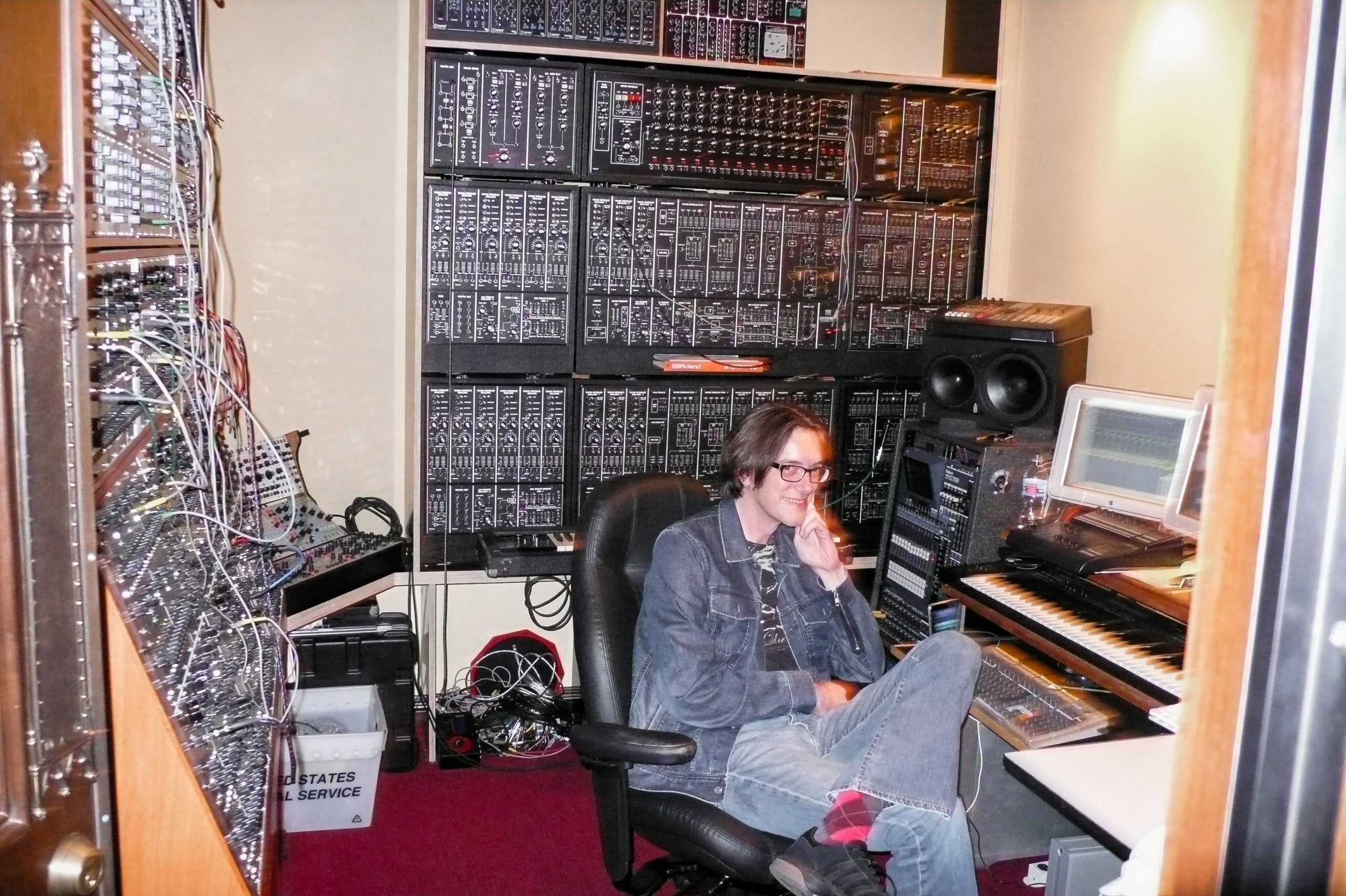
What was your favorite piece of gear that Hans Zimmer asked you to work with?
Hans actually gave me his Roland System 700 [Synthesizer] to use for a month, and I took the whole thing home. I mean, the 700 is the greatest synthesizer ever made, in my opinion.
They’re very expensive to buy these days, if you can even find one. Isao Tomita, the Japanese electronic composer, was a big influence on me early on, and he relied heavily on the Roland System 700.
So, Hans had me take that home, and I just crafted some sounds for him—different percussion and ambient samples. I got to play and learn. It became a gig that helped Hans expand his color palette, too. He was always very engaging in that way.
"Hans Zimmer said, 'I want you to make a hip-hop opera.' That was the brief. So we called it 'Hyphopera.'"
Source Music
How did your role with Hans Zimmer evolve beyond sound design into writing music for scenes?
Gradually, it evolved into him asking me to write source music [also known as diegetic music]. In other words, original music that isn’t necessarily part of the score, but might be something that comes out of a radio in a particular scene, for example.
In this one scene from the film Drop Zone, there’s a boombox playing a hip-hop track, and Hans said, “I want you to make a hip-hop opera.” That was the brief. So we called it “Hyphopera.”
That was the first of many tracks I did with Hans Zimmer, and I just kept cultivating it. I would go away and do my own records, gigs, and remixes, and he would welcome me back. It became an ongoing thing for over a decade, from about ’92.
So it was a good run, you know. A bit further along in 2006, he asked me to come on full-time as one of his “composer buddies” at Remote Control Productions.
What was it like working full-time in Hans Zimmer’s studio during that period?
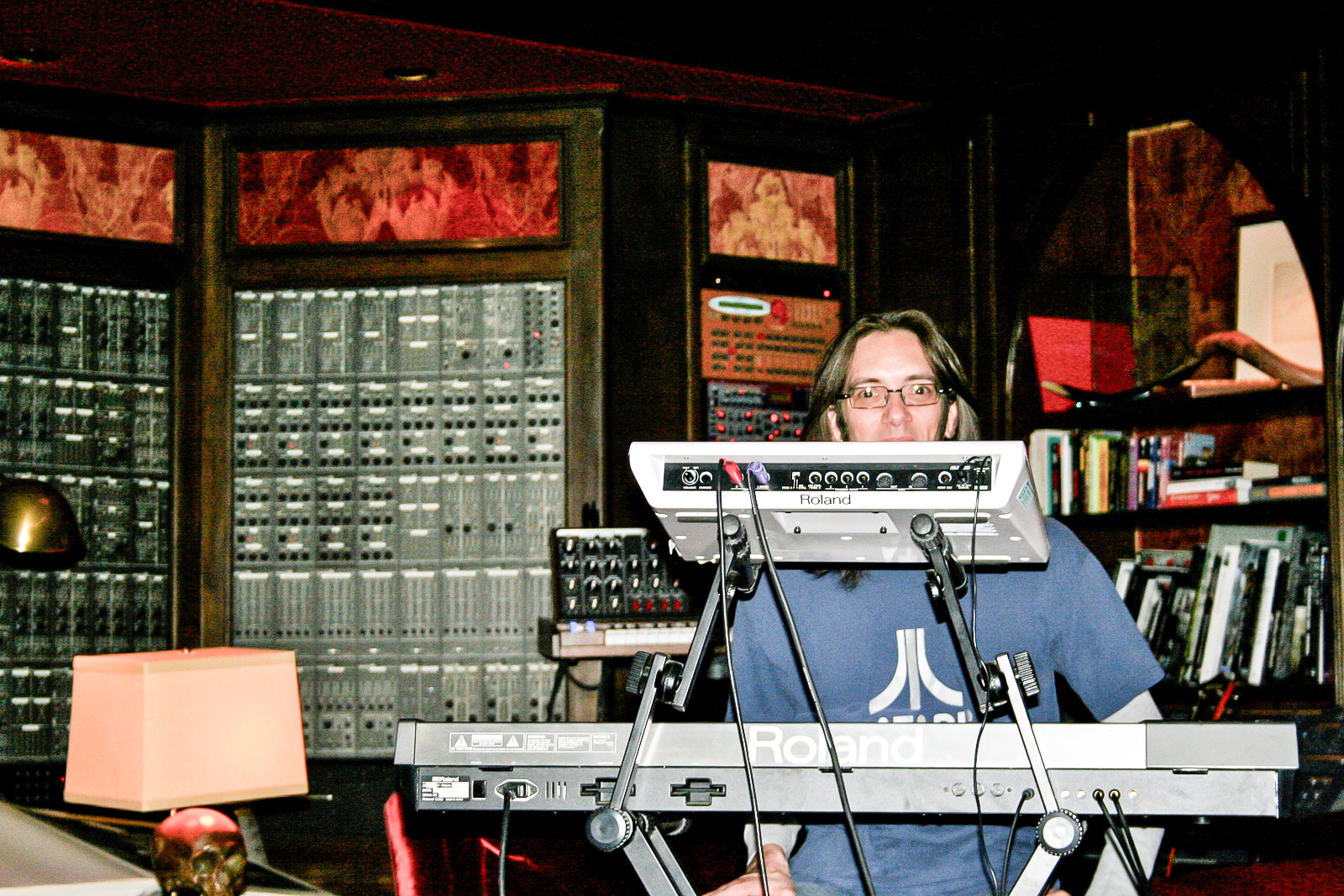
I was in residence there at the studio from 2006 to 2011, working long hours on a lot of projects, like the Pirates of the Caribbean series, The Dark Knight, The Holiday, Call of Duty: Modern Warfare 2, Transformers (with Steve Jablonsky), Madagascar, Madagascar: Escape 2 Africa, Angels & Demons, and many others.
I was on retainer and on call, no matter the day or time. Sometimes, Hans would speak the battle cry: “All hands on deck.”
Deliver & Maneuver
What advice would you give to musicians trying to build a career in your world today?
You have to deliver and maneuver. You also need to not take offense and have a thick skin when working in pressurized environments with huge budgets. I don’t have a bad word to say about Hans.
No one worked harder than him. It was long hours, very challenging, and very rewarding. He drove me hard, but he taught me everything. Hans was very fair. He shared the cue sheet with his team, and I got to participate in the backend of many big projects.
This experience has kept me going over the years. It helped me grow into what I’m doing now: more selective, longer-term projects and vintage curation.
"No one worked harder than Hans Zimmer. It was long hours, very challenging, and very rewarding. He drove me hard, but he taught me everything."
Digital Doctor
How and why do you curate and preserve vintage systems?
I have a large collection of vintage computer systems, so I can open all my old projects. I can reanimate any era from the late ’80s through the ’90s. If I ever need to go back, I’ve got all the plug-ins and sampler sets ready. I’ve got every type of Apple and Windows system, every type of software, and all the old hard drives and SCSI drives—and they’re all functioning!
I can also provide that service if people want to archive, unarchive, and reanimate their projects. I’m happy to help. If someone’s getting rid of gear or retiring from their career, I’m the first to say, “Hey, I can find a good home for that.” I’m not into eBaying or reselling; I just want to archive and keep it.
I collect a lot of this older gear, and it helps my own collection with replacement parts, too. A lot of these things are just going to deteriorate someday, and nobody will be able to fix them. So, it’s important to preserve that.
How do different recording formats compare in terms of longevity and preservation?
I have found that, in the long term, analog tape is still the best medium. It can be physically funky and dusty, but it’ll still play and sound as fresh as a daisy. Whereas the mechanics of digital tape and digital disc storage are a lot more volatile. We’re going to increasingly see a lot of these things fail in the future.
They used to say CDs would last forever, but they flake, and the foil deteriorates. I can’t play some of those pressings because they just evaporate. Like, what happened? We thought DAT cassettes might last forever, too, but the mechanisms go out of alignment and are more error-prone. That was not the long-term storage format we were promised, you know? So analog is still king if you ask me.
Keep Music Live
How do you balance all the different projects you’re working on these days?
I love doing these little tinkering projects, and I still get to do a good bit of music writing, remixes, session work, library music, sound design, and Roland projects. It’s not as intense as it was in the early 2000s or the late ’90s, when it was really busy; I’m more in cruise control these days, which is nice.
"I have found that, in the long term, analog tape is still the best medium."
I love doing tribute gigs, and I still get to play live with some of the old bands I played with—you know, more old rock ‘n’ roll stuff. I’ve done a few shows in Arizona for a family friend who had a good catalog of songs in the ’70s. That’s roots-y stuff—soulful country rock. His name is Jerry Riopelle. He sadly left us in 2018.
Jerry Riopelle still has quite a large following, particularly in the Phoenix, Arizona area. So we go there, and we play. It’s great. I also did a tribute to my father when he passed, and some of his old friends came along.
It’s strange—I’m at a time in life where we’re saying goodbye to many of these legendary acts and musicians. I love the opportunity to play live with people, because otherwise I’m just sitting here in my gear cave most of the time.
Have you noticed a return to more live, performance-driven musicianship in recent years?
There’s a whole scene I hooked up with recently that’s more like hardcore Berklee grad session players. It’s like an athleticism of ability, but there’s a deep soul too. It’s all about precise, live playing, and they appreciate traditional, older styles.
There’s a Steely Dan/Donald Fagen tribute every year, and they get all these great musicians involved—people who are in bands like Scary Pockets and Vulfpeck. They’re funky, they’re jazzy, they’re R&B. They’re all excellent players with a deep vibe.
It’s almost like a renaissance of that scene in the ’70s and early ’80s of carefully considered, innovative, natural players. They’re eschewing modern production techniques and going back to the roots, playing live together in the room. It’s really cool. I mean, it’s great to honor those abilities.
"I played with a fellow named Vince De Franco... We are friends with the guys in the band Tool, so we opened for them and the Melvins a couple of times."
Live & Electric
Have you performed much live electronic music in your career?
Yeah, in the late ’90s, I was involved in a couple of different projects. I played with a fellow named Vince De Franco, who invented the D-Beam featured in Roland devices. He has the patent on that and licensed it to Roland.
Around that time, we were doing some experimental music together using the Roland MC-505, SP-808 [Groove Sampler], and DJ-70 [Sampling Workstation]. He had a guitar rig featuring the Eventide H3000 [Ultra-Harmonizer], and he made custom Max/MSP patches that spat out all this crazy MIDI data.
We would do these weird sonic collages and play around town at little house parties. We are friends with the guys in the band Tool, so we opened for them and the Melvins a couple of times. We also worked together with Tool in my studio, producing a collaboration for a Melvins album on a song called “Divorced.” It features some fun sound design and deep throbbing courtesy of the JP-8000.
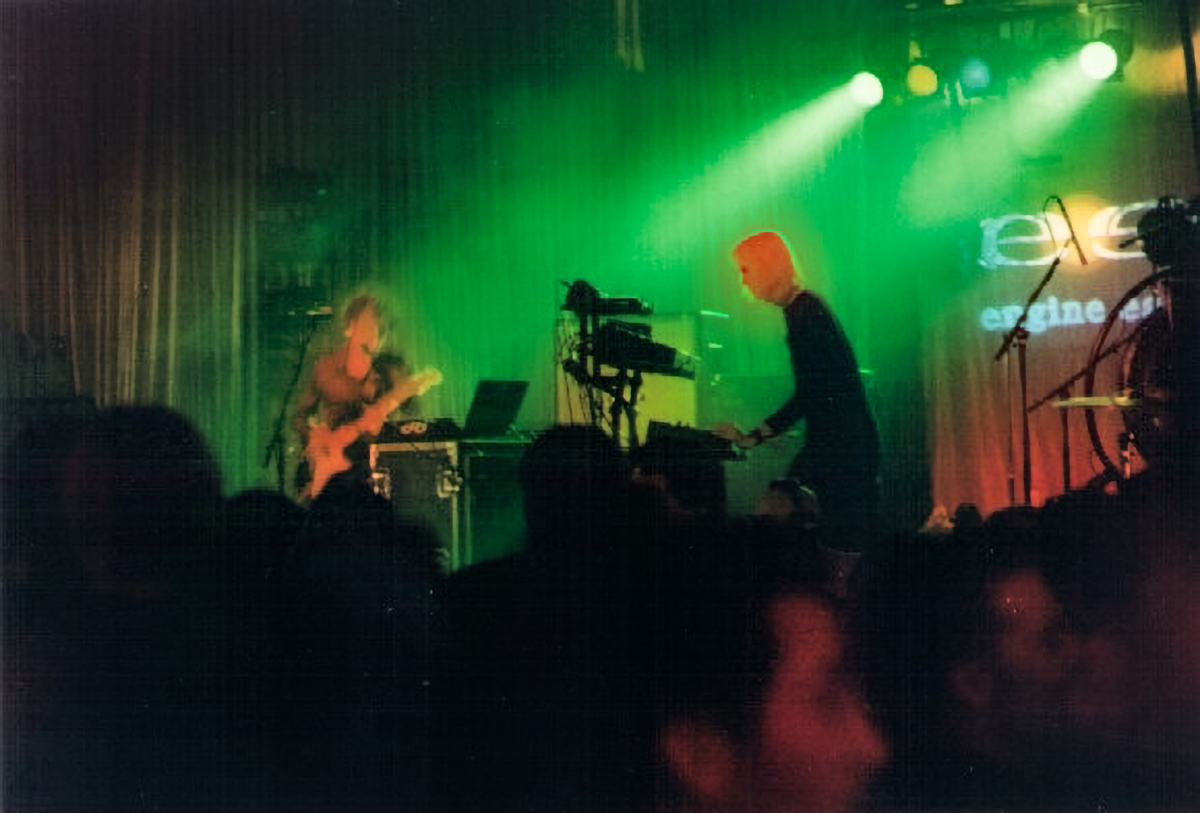
I was also part of a progressive house project called ambr.sea. We played a bunch of shows, 100 percent electronic, all with Roland gear. We used the JP-8000, XV-5080, V-Drums, the VM-7000 mixer, and a VSR-880 [Digital Studio Recorder] for playback.
How has performing electronic music live changed over the years?
Years ago, the struggle was how to perform with the tools we used in the studio, because they weren’t as portable as they are now. These days, it’s a lot easier as there’s so much power in just a little suitcase rig. A friend recently told me he did a whole gig just on an iPad. Even in the late ’90s, Roland had its compact Grooveboxes, so it wasn’t too much of a bother.
I had been a drummer, and so I was used to bringing a load of gear to every gig. I was always striving for a balance of live technique and playback. Yes, there’s going to be pre-recorded things (because that’s the nature of this in some respects), but I think there should be enough live activity to keep it from being a mime show.
Finger Drumming
Did your background as a drummer influence your approach to programming and sequencing?
I believe so. I mean, I spent my high school years wearing headphones, practicing and playing along to the great drummers I loved—especially Simon Phillips with Jeff Beck. I loved those albums from the late ’70s and the ’80s. I’d listen to the finesse and try to mimic that.
Neil Peart with Rush and Alan White with Yes were important to me, as were lots of progressive bands like them. I’d listen to as much as I could and try to keep up with these masters.
That translated into, “I’m going to try to play it on the keyboard,” and “I’m going to try playing it on the drum machine.” So, finger drumming became like an extension of playing a kit.
"I spent my high school years wearing headphones, practicing and playing along to the great drummers I loved... Finger drumming became like an extension of playing a kit."
Do you remember any moments when other drummers were taken aback by your drum programming skills?
I remember doing a session in the early days at a studio with a fellow named Bill Meyers. He worked with Earth, Wind & Fire for many years, and Maurice White was there. Maurice was an incredible drummer and, obviously, all the work he did with Earth, Wind & Fire was amazing.
Bill told Maurice, “Come in and watch Ryeland.” And as I was programming MIDI drums, Maurice White was looking over my shoulder. He kind of shook his head like, “I can’t believe this is how we do it now.”
I’ve got to say, he appreciated what was happening, and it was a wonderful moment I’ll never forget.
How has finger drumming evolved over the years?
Now there are these young guys who finger drum with almost athletic precision. It’s kind of crazy how it’s evolved. It’s hard to do it with subtlety and groove using just your fingertips. You can program drags and ghost notes onto specific keys, so it’s not always a case of having to flutter your fingers, but there are a lot of different techniques involved.
Interestingly, a more detailed sample kit doesn’t necessarily make for the best experience when it comes to playing, programming, and feel. You end up finding the sweet spot.
Lessons in Velocity
What have you learned about tone and velocity when programming?
One thing I’ve learned, after having done so many sampling sessions over the years, is that you hardly ever get the best tone from really high velocity hits. I’ve always found that the sample that sounds the best is a softer hit.
It’s the same thing as guitar fingering, or even your tone and volume knobs—full on isn’t always going to sound the best. You often find the sweet spot somewhere below that.
Do you think people worry too much about repeating the same velocity when programming?
I don’t mind playing something over and over again. You don’t necessarily need a huge amount of variety to get the point of the song across. I mean, a lot of the records we love have used the same sample, which gets triggered over and over. It adds to the overall orchestration somehow.
At the end of the day, people aren’t going to be humming the snare sound when they’re walking out of a gig. It’s like a friend of mine says: “No one’s humming the sound of the console.”
Synth Action
What do you use as your main controller for programming parts?
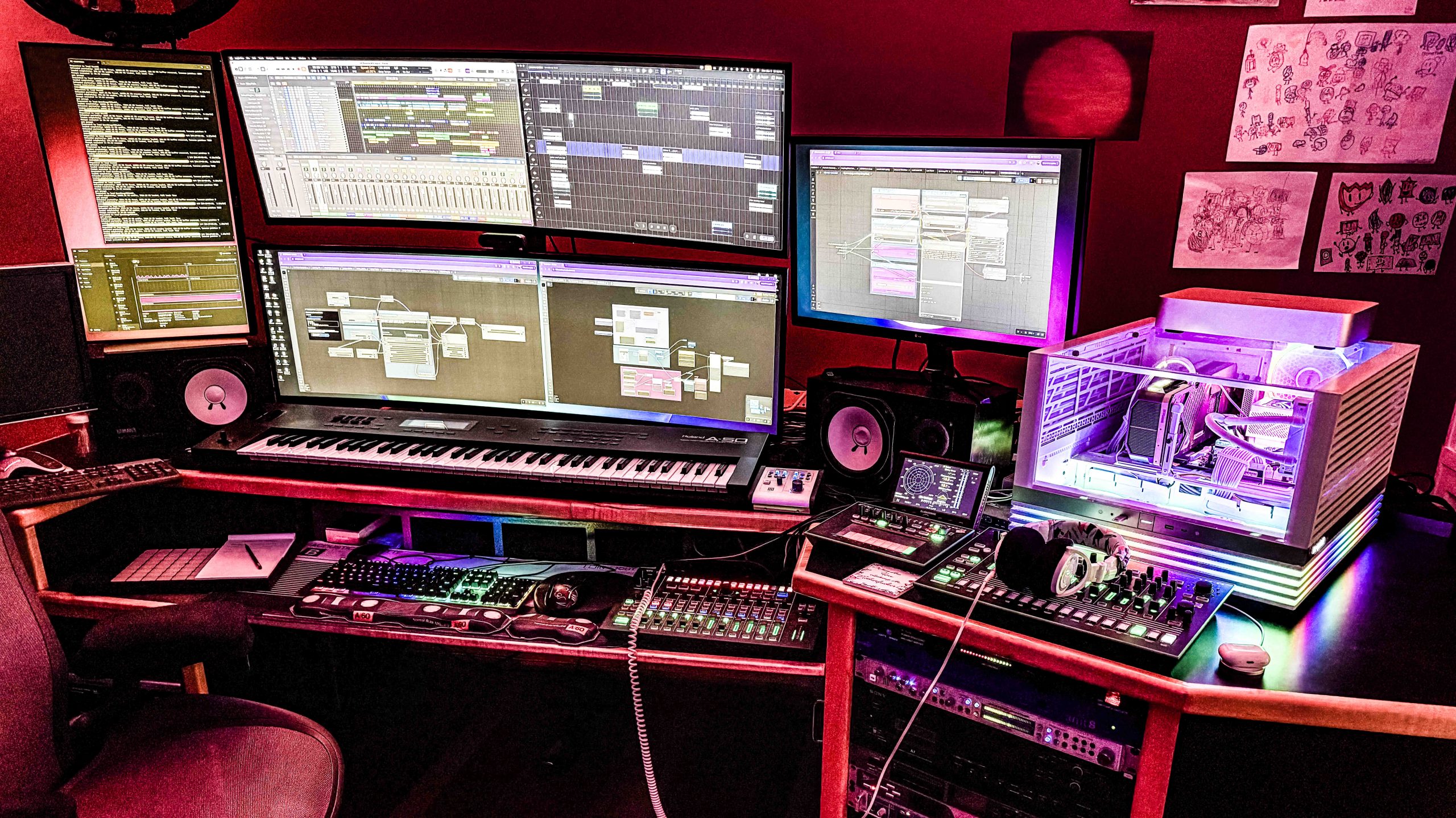
I’m looking at it right now: my Roland A-50 [MIDI Keyboard Controller], which is a synth-action keyboard. It’s got a snappy action; the keys aren’t weighted. Although I love weighted action and playing piano, it’s a different thing.
"I've had a lot of fun with pattern-based programming. I have a Roland AIRA setup at my main workstation."
For synths and funky precision parts, my preferred method is still keyboard for the first/input pass. Then I’ll go into detail in the piano roll or edit list. That’s the way I’ve done it for many years. I use different controller lanes for different things, depending on the patch I’m working on.
How do you use drum machines in your workflow?
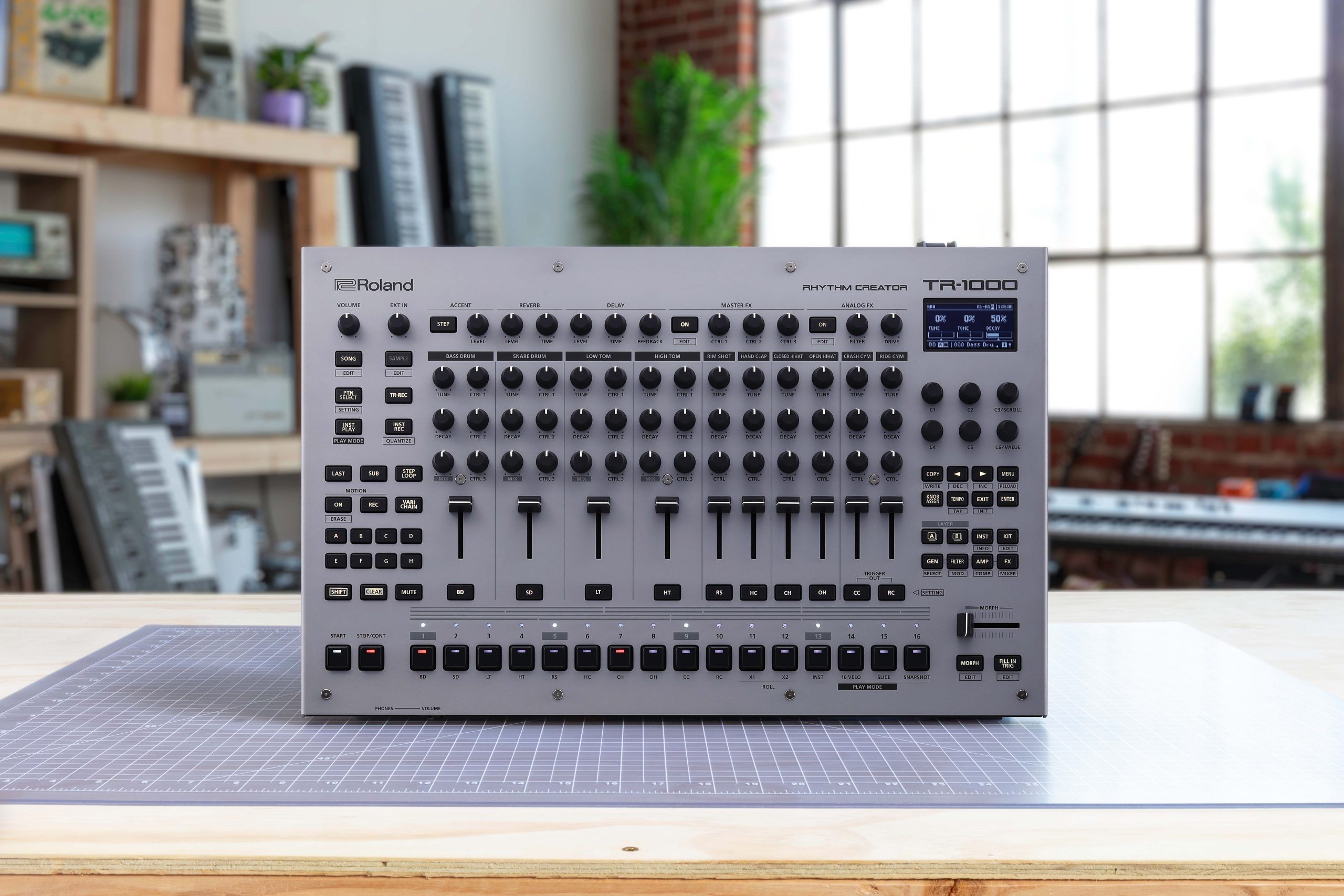
I’ve had a lot of fun with pattern-based programming. I have a Roland AIRA setup at my main workstation, featuring the MX-1 [Mix Performer], TB-3 [Touch Bassline], and TR-8 [Rhythm Performer], which is cool.
With the Roland drum machines like the TR-8, you can get into more traditional, old-school, loop-based programming when you’re in that zone, which is a different world. You can whip up a pattern really quickly.
In the Box
Do you tend to work more in the DAW or with external hardware these days?
Most of the time, I work directly in the DAW. I’ve used a controller keyboard for about 80 percent of the work I’ve done, especially for film composing and the more high-pressure gigs where you need to get things done quickly. Now, it feels like an extension of the QWERTY keyboard.
But, to be honest, there’s nothing that beats a real drum kit, so I’m never going to move away from that completely. Much like there’s nothing that beats a real piano or a real guitar.
Do you have any particularly special guitars in your collection?
I still have my dad’s guitars, including his very special 1957 Fender Stratocaster. It’s pretty beat up, but it’s beautiful. Unfortunately, the original neck was broken, so he replaced it with a 1972 neck. I also get to use my pal’s Gibson Custom Shop reissue Les Paul Standard. He lets me borrow it because he doesn’t have space for it at his place. I also have a beautiful Gibson SJ-200 here for day-to-day strumming.
"In the early '90s, LA had a cool warehouse rave scene."
Rave On
Earlier, you mentioned that Eric Persing noticed your interest in rave music. What do you remember about the LA rave scene in the early ’90s?
In the early ’90s, LA had a cool warehouse rave scene. You might go to a record store, see some goofy-looking person with interesting clothes, and ask, “What’s happening?” They’d pass you a flyer with a number to call on the night of the event, so you could find out where to go.
Or maybe you’d have to go meet some geezer on the corner—you know, some dodgy-looking situation. He’d tell you where the location was. Sometimes, you’d give him money, and then he’d give you the location.
You didn’t even know if there would really be a party. But when you got there (usually some industrial district or other), you could very quickly see there were a bunch of cars that probably shouldn’t be parked up.
How would you describe a typical early ’90s LA rave?
It was bare bones; there was just a sound system and maybe a few lights. There might be a laser, maybe a smoke machine, but the music was just off-the-chain cool. DJs would play all these super-interesting records—sounds I’d never heard before. Thankfully, there was also a local radio station here, MARS FM, that played techno, rave, and breakbeat.
At that point, there were also live shows that were properly promoted. There were major-label acts that were sort of hosting the night. I remember 808 State played (featuring Bjork). I also remember The Farm and Big Audio Dynamite performing. Then local DJs would close out the night until the wee hours, spinning techno and breakbeat.
Rave culture spread pretty quickly, but it wasn’t mainstream at all here in LA. There was enough interest to keep it going, but you had to seek it out.
"Rave culture spread pretty quickly, but it wasn't mainstream at all here in LA."
Underground Energy
How has rave music changed in LA since the ’90s?
There are so many more sub-genres now. My cousin has a beautiful photography studio, and they host a couple of events a year under the moniker printshop.club. They keep it kind of minimal, like 200 people or so. I played a set there not too long ago. There’s still a strong burgeoning underground scene—great energy. It’s really cool.
People perform with laptops, hardware, and modular gear. They feature prototype equipment and bespoke sound systems, artist live sets, video art, and DJ sets. A lot of DJs still spin vinyl, which is really great. There’s a deep appreciation for all kinds of music. LA is huge, obviously, so there’s lots to find, and you have to dig deep.
Do you think anything was lost as rave culture became more commercial?
The club scene that emerged in the late ’90s and early 2000s was all good fun, but it got heavily commercialized. Very quickly, it shifted into posy guys with muscles and go-go girls dancing. I mean, at that point, it wasn’t so much about the scene as it was the spectacle.
Once it was commercialized, it became way more about that kind of thing: less dancing and more standing and watching as we sometimes see in bigger festivals today.
How did the UK rave scene differ from the LA scene?
I was paying so much attention to what was going on in the UK. The British always seem to take things to the next level, especially marketing and production. I got to know some people who worked at British clubs, and it was so great to watch the scene, visit, and see how a proper night was run. It was always inspiring to go to the UK.
Original Spirit
How has the energy on the dancefloor changed over time?
My friend and I were talking about this the other day: what happened in rave and club culture when people stopped dancing face-to-face and really connecting on the floor, and started mostly just watching the DJ? I love seeing older footage where everybody’s just looking at each other, enjoying themselves, and smiling ear to ear.
Have you seen any signs of a return to the original underground rave culture?
Besides my cousin’s events here in LA, I’ve recently seen some great, smaller events in Europe with that original spirit: DJ FUMI in an abandoned warehouse and future.666 at a secret rave in an old swimming pool.
Another friend of mine, a DJ called Jay Duncan, told me about a burgeoning scene in London where they’re holding raves in abandoned areas, which feels more like the old rebel spirit of the early ’90s.
They put on these events in old canal tunnels and other strange disused locations. People amass quickly, and so many ravers are assembled that nothing can stop the party.
Explore more from Ryeland Allison here.