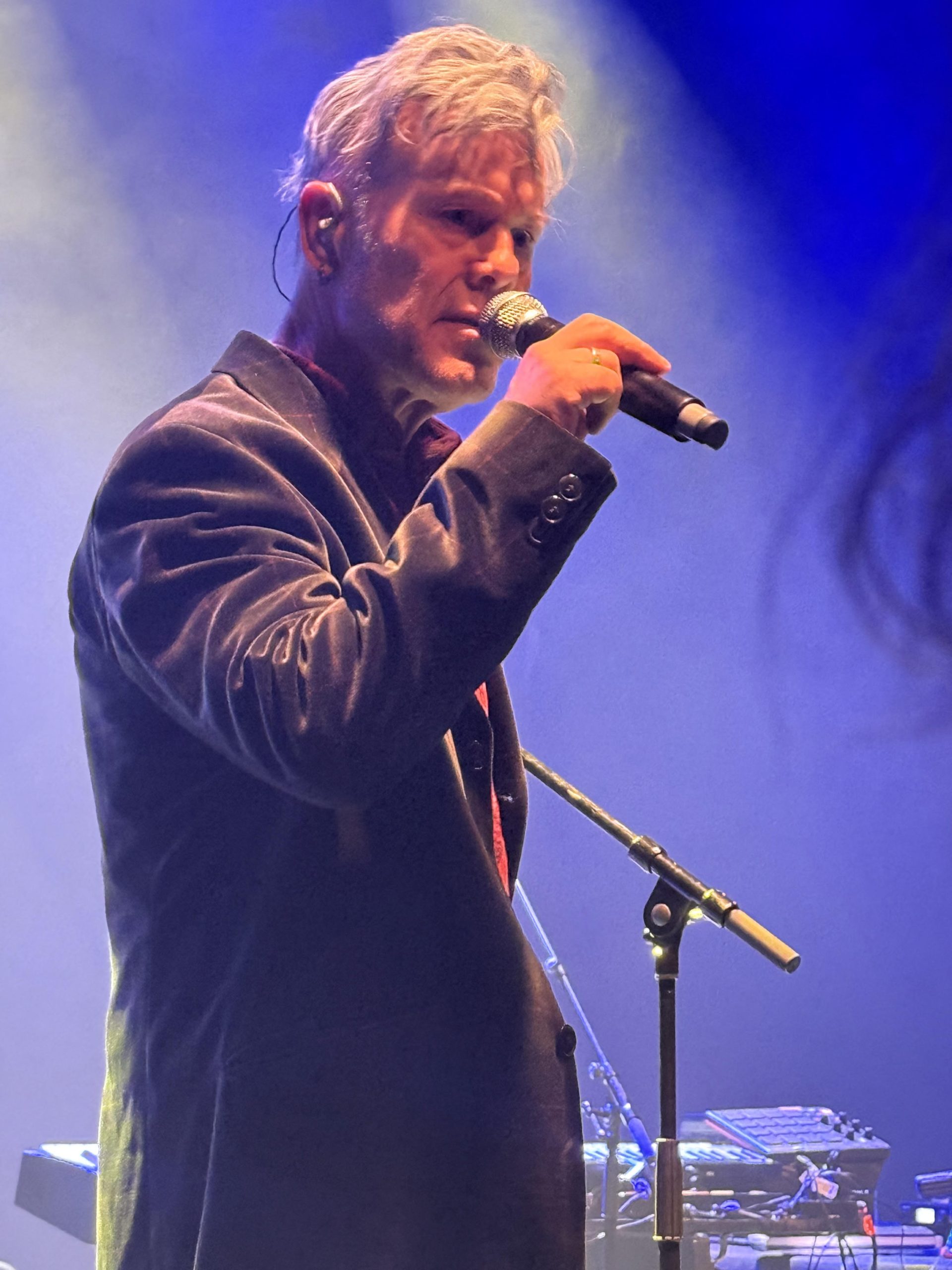
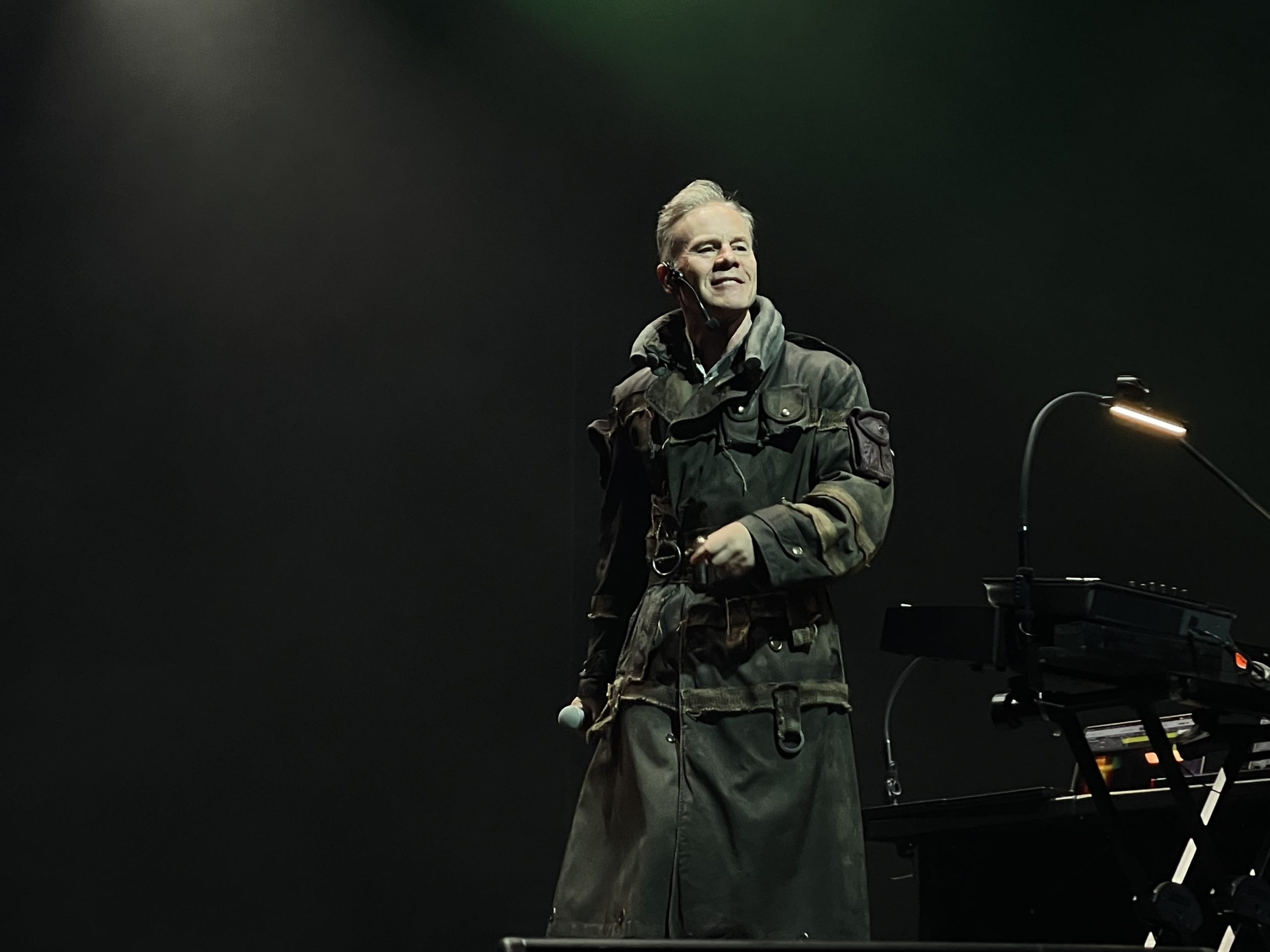
“I’m endlessly fascinated by something new that I don’t really understand,” explains Thomas Dolby of his constant creative quest. “That might be a genre of music or a medium like music videos—or startups you could get funded with some wacky idea.”
Few popular culture figures can brag about a career at the intersection of music and technology like Dolby. Beginning as a brainy ’80s MTV icon before segueing into Silicon Valley entrepreneurship and landing as department head at Peabody Conservatory’s Music for New Media program at Johns Hopkins University, Dolby has always made art out of ideas. And the gears of his mind are continually shifting.
Yet despite emerging from the same cultural soup that gave us Max Headroom and Madonna, Dolby has never remained tied to his decade of initial renown. Follow his career down its lanes and discover imaginative, lyrically detailed songwriting spanning myriad genres and instrumentation.
Arc of a Striver
“There’s a sort of an arc to them,” he says of his circuitous path. “There’s a decade or so when I get very excited about something, and then I peak, start to lose interest, and something else is more exciting.”
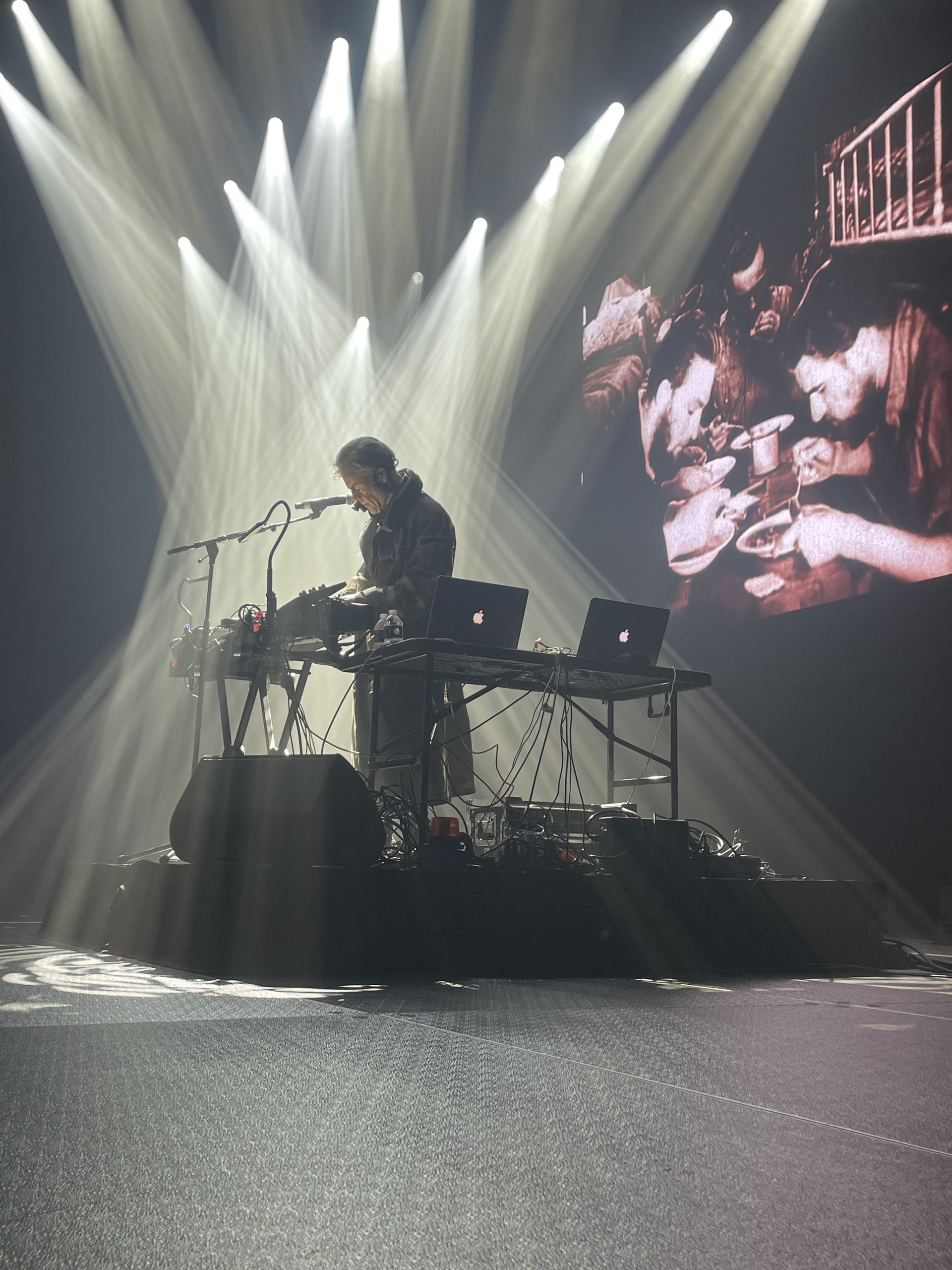
One thing Dolby is particularly enthusiastic about right now is performing live. This July morning, he’s speaking via Zoom from Baltimore, Maryland, a few weeks away from the 2026 Totally Tubular Festival tour with Flock Of Seagulls, Men Without Hats, Bow Wow Wow, and other ’80s faves.
“In a way, I’ve sort of cycled back to the beginning, because I’m out there playing again. But I’m 40, 50 years older, and I have a different attitude.” Dolby’s current set is built around music from 1988’s Aliens Ate My Buick, a Grammy-nominated release that represented a shift to a taut live-band sound courtesy of his group, the Lost Toy People.
"I'm endlessly fascinated by something new that I don't really understand."

The Odd Album Out
“Aliens Ate My Buick album is the odd guy out in the canon of my albums,” he says of the record. Following two successful releases with hits like “She Blinded Me with Science” and “Hyperactive” (not to mention the theme to cult film Howard the Duck), Dolby decamped to Los Angeles to reinvent himself.
“I put an ad in The Recycler and got a sack full of cassettes,” he shares of how the Lost Toy People came together. “We had lengthy auditions, and I picked my band. We came up with some grooves which I would write songs around, then went out and played them in clubs.”
The energy quickly formed the bedrock of a new collection. “It was really tight and funky,” he recalls with a grin. “It had a sort of wild abandon. We went into the studio with Bill Bottrell, later famous for Sheryl Crow, Michael Jackson, and so on, and recorded our club set directly to tape. The whole thing has a live feel to it, which is unlike anything else I’ve done.”
Turning the ignition on with the psycho-noir of “Keys to Her Ferrari,” then making a pitstop at the dub-inflected “My Brain is Like a Sieve,” before driving things home with the 3D funk of “May the Cube be With You,” Aliens is a wild ride even by the artist’s adventurous standards.
He admits the album has proved divisive among Dolby-heads. “There are people who go, ‘I don’t know about that.’ And there are others who say, ‘Oh man, that is the album for me.’” Dolby believes that reaction is part and parcel to the album’s overarching theme of breaking through boundaries. “I’d escaped the UK, escaped the sort of tethers of people’s preconceptions,” he says, “and was suddenly in this world where I could be anything I wanted to be.”
"The whole thing has a live feel to it, which is unlike anything else I've done."
Caught in the Web
It’s a trick Dolby has repeated multiple times. In the ’90s, when the internet was a twinkle in the eye of the music industry, the famous futurist struck his claim in Silicon Valley. Beatnik, his software company, created the iconic Nokia ringtone embedded in over three billion cell phones. Later, he spent twelve years as the music director for TED Conferences.
“For that community of entrepreneurs and technologists, it was their stag party,” he says of the storied period. “I brought in the music to sort of sprinkle some fairy dust on it.”
As an artist with album titles like The Golden Age of Wireless and The Flat Earth, intellectual curiosity is on brand. Still, Dolby’s transition to the world of academia was slightly less predictable. “I left school at 16 with a high school diploma and got into music,” he reveals, “but I’m from a very academic family. My dad was an Oxford professor, and my mom taught statistics.”
"For that community of entrepreneurs and technologists, it was their stag party. I brought in the music to sort of sprinkle some fairy dust on it."
His reason for moving to the classroom is different than the self-expression of music or the challenges of inventing new tech. “There were no mentors for me and no YouTube tutorials—I had to figure it out for myself,” Dolby says. “But that forced me to be creative and find novel solutions to things.”
It’s a way of thinking he strives to pass on to his students. “These days, you’ve got solutions coming from all sides. It’s tempting to think, ‘With a few key presses, I’ll have the answer to this problem.’ But in so doing, you get the same answer as 10,000 other people.”
Navigating the Obstacle Course
For Dolby, the struggle is when gold emerges. “When you hit an obstacle and have to find a way to divert around it, or find a different approach, that’s where your originality and personality kick in,” he says. “I try to pass that on to my students.”
Plus, he can relate to his aspiring charges. Before music television fame, Dolby endured his share of struggles, even busking on the streets of Paris for a spell. It was while doing these impromptu street performances that Dolby learned Mick Jones of Foreigner was seeking his abilities for a ballad the band was working on at Electric Ladyland in New York.
It was producer Robert “Mutt” Lange who put the industry machine in motion. “I was trying to get a publishing deal, and my tape made its way to Mutt,” recalls Dolby, audibly appreciative. “He has amazing ears and spotted that I had something.”
The song was “Waiting for a Girl Like You” from the 1981 smash, 4, and it changed the trajectory of Dolby’s life. “I did it with monophonic notes,” he says. “They gave me an eight-track in Studio B, and I recorded long continuous notes with effects. Then I played the faders, Mutt Lange chopped it up, put it on the front of the song, and the rest is history.”
The next step was for Dolby to impart to the next generation. “The money I made from Foreigner paid for me to record my first album, which I did with no record deal,” he says. “Based on that, I got a record deal with EMI.”
Roland Call
For such a forward-thinking musician, it makes sense that Roland and Dolby go back a long way. In keeping with his visionary persona, he was an early adopter of Roland Cloud, performing an entire concert in the platform in 2018. During an early phase of his career, he used a JUPITER-4 to create a four-track demo of his song “New Toy” for new wave icon Lene Lovich.
He earmarks the JUPITER-8 for providing access to even deeper sonic-sculpting tools and enriching his process. “The JP-8 came along, and it was like, ‘I can gang up two JP-4s and store as many presets as I want.’ And it sounded more shiny and shimmery.”
Another standout Roland instrument for Dolby came from the golden age of sampling. “I needed a combination of a sample and a synth,” he remembers. “The D-50 came out, and it sounded great. Belinda Carlisle asked me to do a session with her for ‘Heaven Is a Place on Earth’ and ‘Circle in the Sand.’ They rented me a D-50, and for payment I said, ‘I want to take the D-50 home and keep it.’” To his relief, they agreed.
"It has everything I needed plus sampling and pads. FANTOM is like a stack of every synth Roland ever made."
After years of touring with a software-intensive setup, Dolby has returned to hardware for the summer’s Totally Tubular dates built around a FANTOM 7 EX packed with ’80s synth models. “It has everything I needed plus sampling and pads,” he confirms. “It’s powerful, but one roadie can lift the darn thing. Plug in a couple of XLRs, and you’re done.”
The wealth of options makes recreating the iconic tones of his back catalog achievable. “FANTOM is like a stack of every synth Roland ever made,” he says. “On my programmed stuff, I feel the necessity to get close to the sound and texture on the record. I can’t leave something out, or I see guys in the front going, ‘He didn’t play that single line at the end of the chorus.’”
The Allure of an Era
To fans of ’80s music, the era seems to evoke feelings of boundless delight. So much so, in fact, that one wonders if Dolby has any ideas about why this material continues to resonate so deeply. Unsurprisingly, he’s got fully formed theories.
“It was the last decade before ‘cut and paste,’” he posits, “which lends itself to symmetrical-sounding music that just sort of cuts off loops. It detracts a little bit from the sort of classical songwriting approach. So that was one thing.”
The biggest elephant in the room, of course, was the nascent cable network changing the way people discovered new sounds. “People were getting hooked on songs on MTV, then calling the radio station to ask for them,” he explains with a professor’s patience. “You had records where people were experimenting with new instruments, plus the ability to get it on MTV and a wider range of radio stations.”
Dolby laments the current overabundance and easy availability of recorded music. “Today, you turn on the spigot, and you’ve got every song ever for free and 10,000 new tracks a day, half of them AI-generated,” he says. “I think if you’re like a 23-year-old music fan, there is this allure for a bygone age when you had a collection of precious gems on your record player.”
"I feel very privileged to be able to play the music that I love, and gratified there are new audiences coming who weren't even around when I did it the first time."
Next Gen Influence
To wit, he’s not preoccupied with the current crop of musical acts. “I’d love to reel off a bunch of obscure artists that I’m really excited by,” Dolby says. “I’m not a big music fan, actually.” Still, one stands out. “I heard Billie Eilish on the radio, and something clicked with me. There was a brain and a sensibility I could sympathize with.”
Imagine Dolby’s surprise when he learned that Billie Eilish and her brother Finneas were weaned on his music. “Somebody tells me, ‘Billie and her dad have a podcast, and they were talking about how he took them on camping trips and spoon-fed them Map of the Floating City.”
His unanticipated influence on Eilish led to a connection with the young artist and her family. “We’ve become really good friends, and I’ve been to a couple of shows,” he says. “Unfortunately, all you can hear is the screaming, which reminds me of the first concert I ever saw—the Beatles in 1964.”
Lost Toy People rehearsals are just around the corner, and Dolby is visibly fired up about the opportunity to get out of the classroom and on the road. Far from mere nostalgia exercises, ’80s packages like Totally Tubular are increasingly multi-generational jamborees.
“I feel very privileged to be able to play the music that I love,” he says, “and especially gratified that there are new audiences coming who weren’t even around when I did it the first time.”