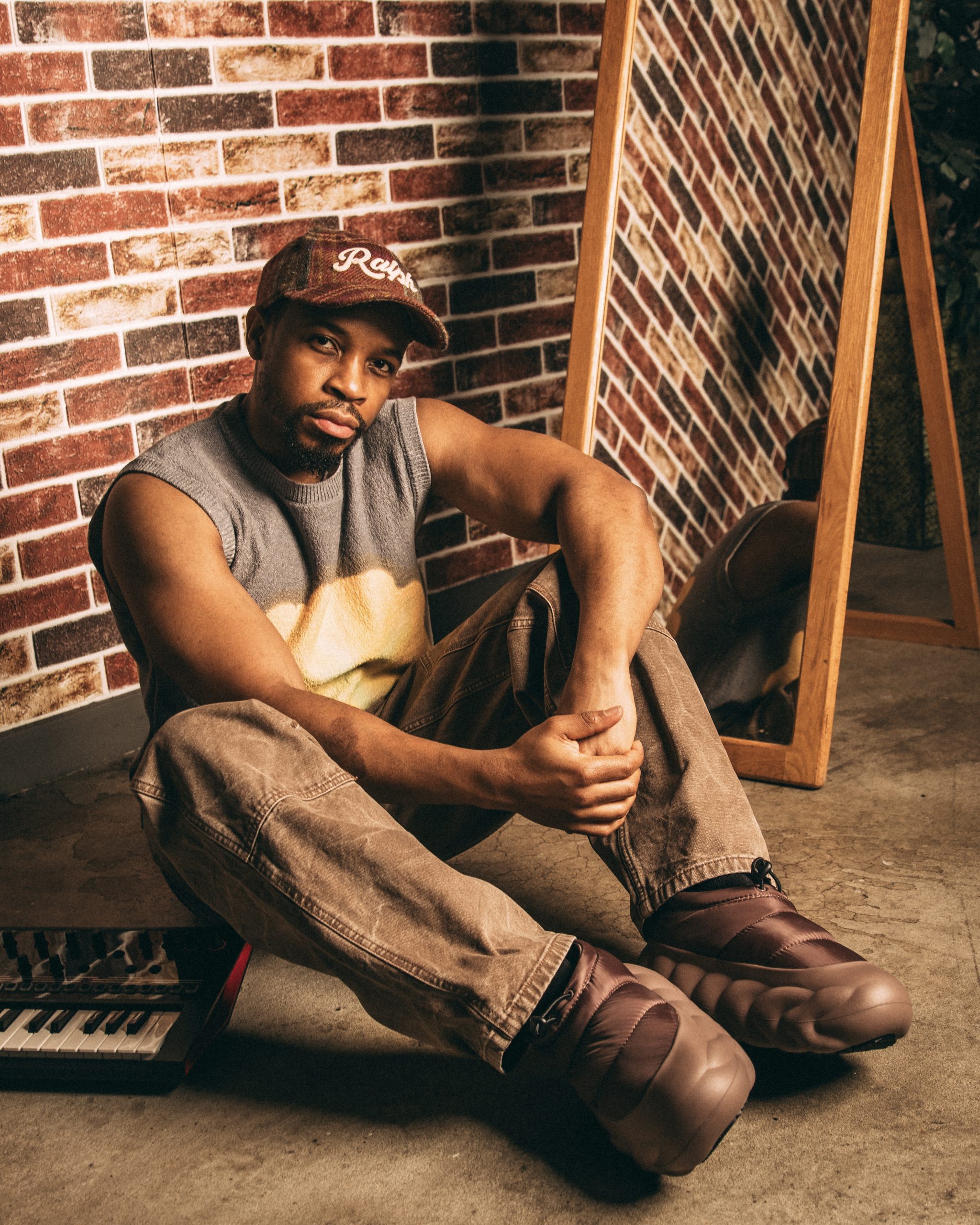


King Lekan, born Olalekan Ajalaagbo, left his native Nigeria in pursuit of better educational opportunities in New York City, but his connection to home and the sounds that shaped him never faded. Drawing on his Nigerian heritage and a talent for reimagining recordings for the stage, he has helped bring Afrobeats to audiences worldwide. Along the way, he has become the go-to arranger and music director for some of the genre’s biggest names, playing a key role in Afrobeats’ emergence as a global cultural force.
Rooted in Rhythm
Where does your story begin?
My story begins in Nigeria. I was always drawn to music, but my parents wanted me to focus on education. Even as a kid, I was constantly making noise around the house. Eventually, my dad hired a piano teacher for my sister. Meanwhile, I was thinking, “What about me? I’m the one making all the noise around here.”
I would sit in on her lessons and bother them. It turned out my sister wasn’t interested in piano, and they realized that I was the one who really wanted to learn. So, I ended up taking the lessons instead.
From there, I started playing piano at church and eventually learned drums, bass, guitar, and other instruments. My mom sang in the church choir. She wasn’t a professional singer, but she definitely had a natural voice. My dad loved percussion, too, so maybe that’s where my musical talent came from. I’m not entirely sure. For both of them, music was more of a passion than a profession—they did it for fun.
And then you moved from Nigeria to New York City?
I moved to New York City about 20 years ago to further my education, but music took over. I met some people here and did some studio work. I used to be in a wedding band back then. Then, I started my own band, Kingsmen. And we’ve been the go-to Afrobeats collective for international artists coming out of Nigeria—and Africa in general. From Davido to Tems to Ayra Starr to Fireboy to WizKid, we’ve performed with the majority of the Afrobeats stars. I’ve also directed and arranged their music.
A Cultural Blend
You mentioned in a previous interview that you had some culture shock when you moved to New York. What was that experience like?
Yeah, it was a culture shock because I was kind of a shy person growing up, despite being into music and having to play in front of people in church. But in New York, people are so open and honest—really being themselves. I was like, “Wait, I can say that? I can really express how I feel freely without being judged?”
In school, kids were so open and free to speak about how they feel and just express themselves. And that was like a culture shock to me. I grew to be more confident in myself.
In Nigeria, you have to be a bit modest in certain things. Even though you’re not being disrespectful, certain things you say could come off that way. But it’s different in America. Saying how you feel does not mean you’re disrespectful. So was the most culturally shocking thing for me.
Do you think that expression played a part in your musical expression?
Yes, I became even more expressive on stage, showing emotion when I’m playing a solo or a chord. However, I feel in that moment, I’m free to express that. I don’t even think about it. Growing up, I was more conscious of it, but once I came to America and started performing on stage, that changed. Even when I talk about music, you can tell I’m very, very expressive. So yes, that definitely comes through in my music.
"Afrobeats is always bouncy, always groovy. You're always gonna wanna dance. It's feel-good music."
Who are some of your influences?
Coming up in Nigeria, there’s an artist called Lagbaja. He wears a mask. I still don’t know what he looks like till today—I don’t think anyone does. He used to play Afro Highlife music and the saxophone. It was feel-good music with an Afro-jazz kind of feel. I was really into jazz growing up, so I loved his music.
Then, in America, I came across Robert Glasper. I went to a few of his shows and met him a few times. He’s amazing on the piano. And just how he expresses himself, he’s not a typical jazz guy. He infuses jazz with hip hop, R&B, and soul.
And when I was learning songs in church, Cory Henry was the guy who everyone studied. Also, Adam Blackstone, who’s a musical director and bass player and just an overall amazing musician, who I look up to on that side of things
African Flavor
Afrobeats takes on many forms. How would you define the genre?
Afrobeats is a fusion of different sounds with African flavor. Afrobeat without the “s” is from Fela Kuti, who is also one of my idols. Growing up, he was really expressive in his music, talking about what was happening and the state of the country at the time.
Afrobeats now can be pop, hip-hop, or R&B-sounding, but you’re going to hear that African flavor—whether it’s the lyrics, the artist’s accent singing or rapping, or in the groove. It’s also feel-good music. Afrobeats is always bouncy, always groovy. You’re always gonna wanna dance. It’s feel-good music.
"A lot of artists coming out of Africa are working hard to cross over. They've helped people understand that the music coming out of Africa is actually really amazing."
Afrobeats has become a global phenomenon. What do you think has driven its growth?
I think it starts with people just enjoying the music—vibing to it online, whether it’s on TikTok or Instagram. That’s really broadened things because now people in different countries can discover and listen to music from different cultures.
And then you have some of the frontrunners of Afrobeats, artists like Davido, who have worked really hard to put out music that’s been recognized around the world. People hear it and think, “Oh, what sound is that?” Then they go check out other artists.
They want to hear more African music, more Afrobeats.
I think that’s really been the driving force behind a lot of artists coming out of Africa who are working hard to cross over. They’ve helped people understand that the music coming out of Africa is actually really amazing. Of course, artists like Tems have crossed over really well, too. They’ve helped people understand, “Hey, Afrobeats is amazing. Let’s tap into this. Let’s hear more of it.” And I think that’s a big part of why the genre has grown so much globally.
Where do you see the genre heading next?
I see it going even further. Everyone is getting a taste of it, but I think it’s really gonna even get bigger, similar to how Caribbean music, reggae, has become huge. Afrobeats is gonna get to that level where it’s very, very global. Fans and music consumers really know who these artists are by name, not just by their sound.
I feel like it’s going to get to the level where you’re going to ask some kid in, say, Asia, “Who’s that artist?” And they’ll tell you, “Oh, I like that artist. That’s Davido.” That’s also important—to really know the artist. It means you’ve gone deeper than just the music. You know their sound, you know who they are as an artist, and you kind of understand who they are as a person. I think that’s where it’s headed.
"[Opening for Pharrell] gave me the confidence to keep pushing forward and showed me what was possible."
The Turning Point
Your group, OMG!, opened for Pharrell Williams. How did that opportunity come about?
That was one of my groups when I first moved to America: OMG—Ola, Mojeed, and GC. My name is Olalekan. Mojeed is a phenomenal rapper, and GC is a guitar player. We were a music group back then, and we released a few songs together. At some point, we applied to open for Pharrell and Pac Div. It was a long time ago, so I don’t remember all the details, but we submitted our music and crossed our fingers.
And then we got it. We ended up opening for Pharrell in New York City. That was an amazing experience. I got to meet him, talk with people from his team, and see how things worked at that level. It was a huge opportunity. Moments like that made me realize that I could really build a career in music. They made me want to go deeper, work harder, and make a name for myself as a musician and producer. Looking back, that was definitely a turning point in my career. It gave me the confidence to keep pushing forward and showed me what was possible.
"The energy you put into the studio—sitting down, writing songs, working with songwriters, and crafting the music—you have to put that same energy into your live performance."
Elevating Live Performances
Your group, Kingsmen, has become an elite backing band team for touring Afrobeats artists. How do you adapt to different musical environments when you’re working with a wide range of artists?
Kingsmen has been around for more than 10 years now, and we’re one of the major backing bands for international artists coming out of Africa. I’m the music director and the band’s founder. It’s been an amazing experience—a blessing, really.
One of the most exciting things has been seeing more Afrobeats artists understand how important live music is. The energy you put into the studio—sitting down, writing songs, working with songwriters, and crafting the music—you have to put that same energy into your live performance. That’s what turns someone from liking a song into liking an artist, because those are two different things. When you bring those together—people like the songs, and they like the artist—you’ve gained a fan.
That’s why I go as hard as possible when I’m arranging music for Afrobeats artists. I want the shows to be held to the same standard as an Ariana Grande or Beyoncé performance. I always aim for that level of musical arrangement, so when fans come to a show, they leave saying, “Man, this artist sounds amazing. I really like them, and I want to see them perform again. I want to share their music with other people.”
It’s been an amazing experience working with a lot of top Afrobeats artists.
You’ve worked with artists such as Davido, Asake, Ayra Starr, Tems, and Wizkid, bringing their music to the stage. What does that process look like?
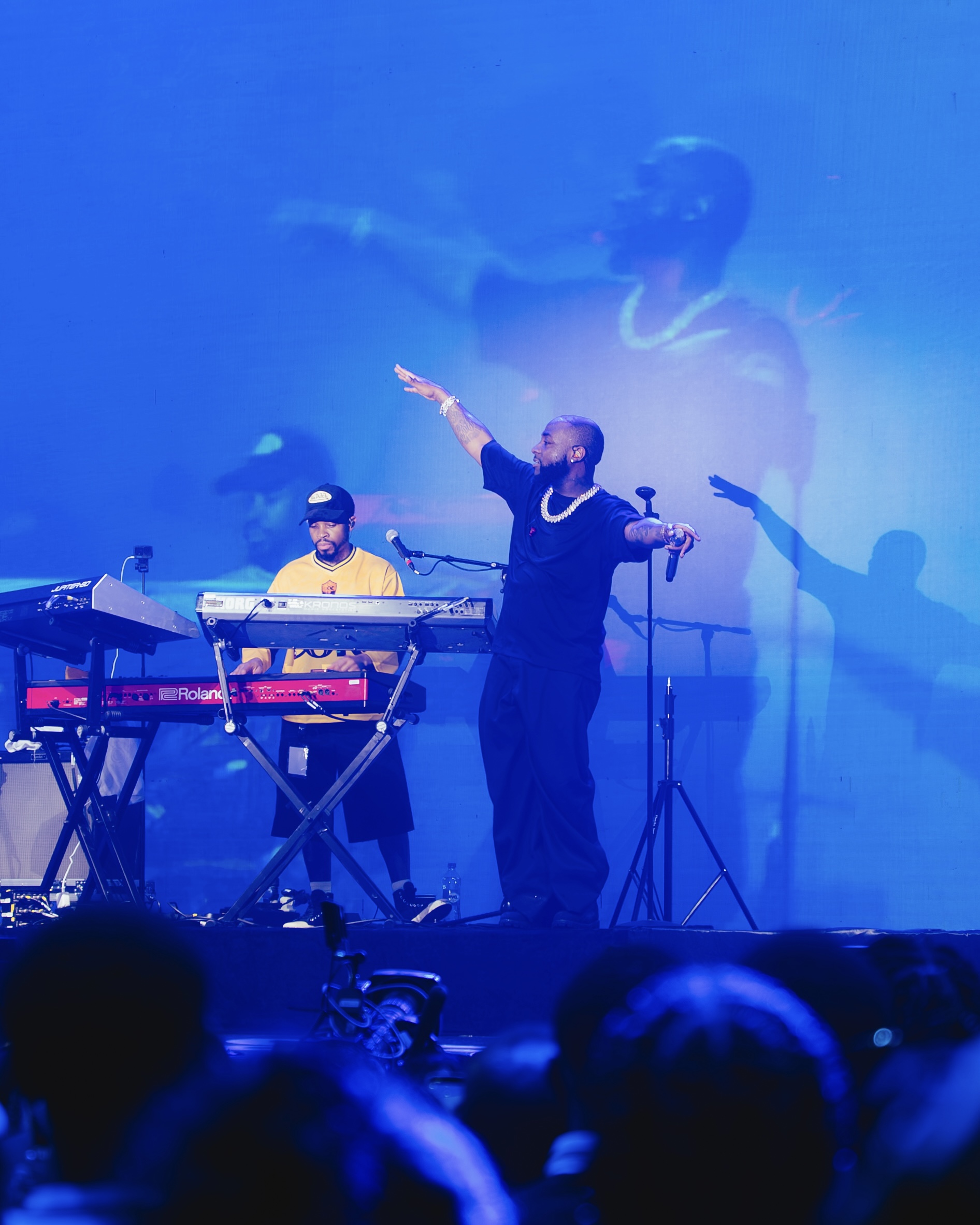
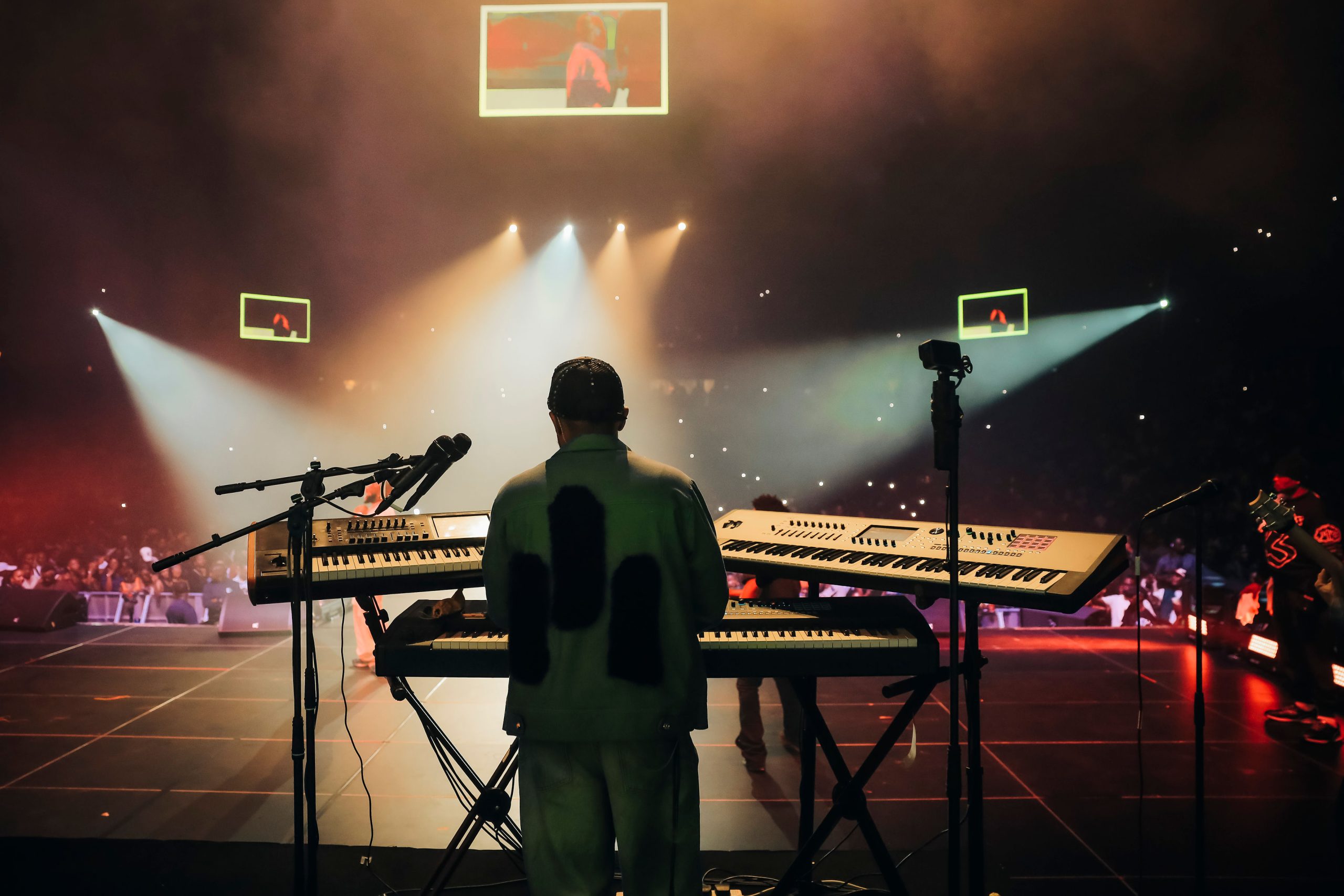
I’m currently working with Davido. One thing I really appreciate about him is how open he is. He trusts my vision, and that’s so important when you’re working with an artist. When an artist trusts their music director and band, everything flows smoothly. He gives me the freedom to create. Not to toot my own horn, but it’s almost like he feels I can do no wrong—and that’s an amazing feeling. It means I don’t overthink when I’m arranging music or preparing for a show. I’m free to express myself creatively while still checking in with him and his team, saying, “Hey, what do you think about this?” Most of the time, he’s like, “I trust your vision. Let’s go with it.”
It’s amazing to work with artists who trust my musical abilities and allow me to help bring their live performances to life. Davido loves performing. He loves being on stage, and that makes me happy because it gives me even more room to create and arrange music in ways that help him shine. When he connects with the arrangements and enjoys what we’re playing live, he’s able to be completely free on stage. And that energy translates directly to the fans. They can feel it. That’s what makes a great live performance.
You MD for him as well. What does that role mean to you?
I take that role very, very seriously. We have a show coming up on August 14 in London, and I’ve already started prepping for that. I wanna really get ahead of it and start sending him ideas. I’m already arranging music. I’ve already started sitting with the music and deciding if I need a violin player, a saxophone player, or a choir. Just prepping, prepping, prepping, and sitting with the music.
One perk of being an MD is getting to listen to unreleased music. He has an album coming out, and I’ve already had it for over a month. I get to listen to the amazing music before the regular fans. I don’t take that for granted.
Onstage Visionary
You’ve worked with major forces in Afrobeats. How does your approach change from artist to artist?
It’s all about understanding what the artist likes and their vision. It starts with a conversation with the artists directly, their management, or someone on their team who understands their live performances. So, once I understand what an artist likes and how they want their music to sound on stage, my work becomes easier.
Then I start arranging the music. Each artist is different. Some of them like a lot of African percussion. Some just want it to be very contemporary. Some artists also want the music to sound just like the record. They don’t want you to alter the sound too much. They want to be as clean as possible.
Sometimes artists don’t really know exactly what they want, and that’s fine. You don’t have to have everything figured out. In those situations, I’ll start throwing out ideas, and we’ll go back and forth. As we work through it, they start to realize, “Okay, maybe I like that,” or “Maybe that’s not the direction I want to go.” That’s part of the process, and I’m completely open to it.
Every artist is different, and it all depends on their vision. And if they don’t have a clear vision yet, that’s perfectly fine too. That’s where I come in. I help them shape it, develop it, and bring it to life. That’s a big part of my role.
Performance Keys
How do Roland instruments play a part in your arranging and performances?
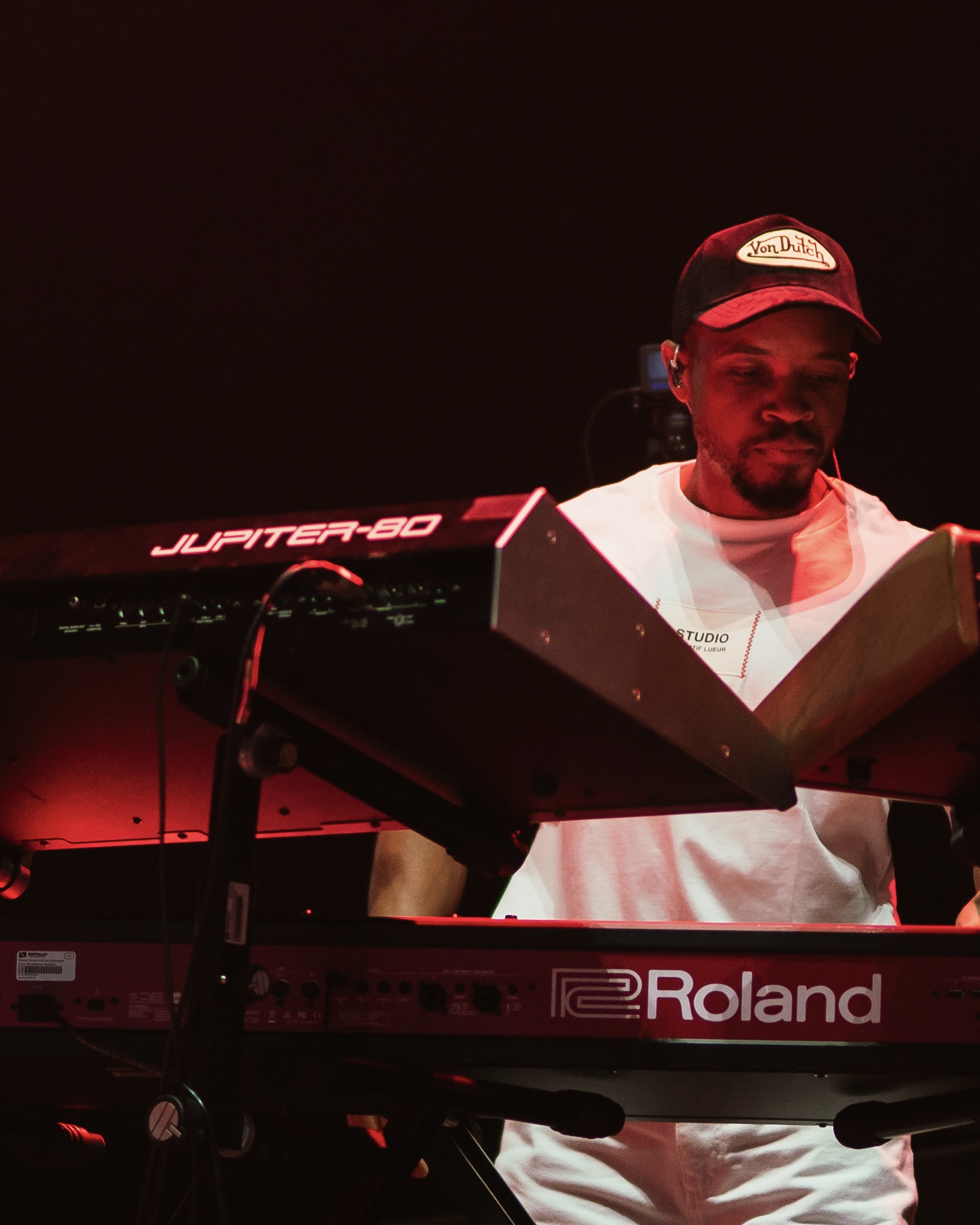
I’ve been using Roland for a long time. It makes everything just so easy, especially the different sounds in the FANTOM 8 EX. I don’t really alter a lot of the sounds. That’s the great thing about the Roland sounds, I don’t have to edit much. Often, I’m on the go, and sometimes we don’t have long sound checks, so it has to be quick. I don’t need to sit with the keyboard and tweak and tweak, and tweak. Most of the time, I use the sounds as is.
"Roland gives you all the tools to shape a sound exactly the way you want it."
Whenever I post a video on Instagram, people always ask, “What patch is that?” I’m like, it’s the exact patch that comes with the keys. I use the FANTOM 8 EX, JUPITER-X, and JUPITER-80 a lot as is. But I’m also a guy who likes to tweak. I like synthesizers. But when I don’t have to tweak them, that’s actually the best-case scenario for me.
Of course, Roland gives you all the tools to shape a sound exactly the way you want it. You can tweak, edit, and save everything, which is great. But with my workflow on stage, I usually don’t have much time for that. I’m focused on ensuring the band is ready and the show runs smoothly. For me, the sounds already work. They sound great right out of the box, and I don’t need to make many adjustments. That’s a big reason why Roland fits so well into my live setup. Overall, Roland is just incredibly user-friendly for me.
How do Roland instruments help you achieve the right feel for each artist?
I play a lot of piano and electric piano sounds, and I’ll usually layer them with strings, pads, or bells. One of the things I love about the FANTOM 8 EX is the feel. The 88-key hammer-action keyboard just feels amazing. I remember going to the Roland Store in the UK before I even got mine, and I was sitting there playing it thinking, “Man, this feels incredible.” For me, that’s a huge part of any instrument. It has to feel right. If it feels good, I want to play.
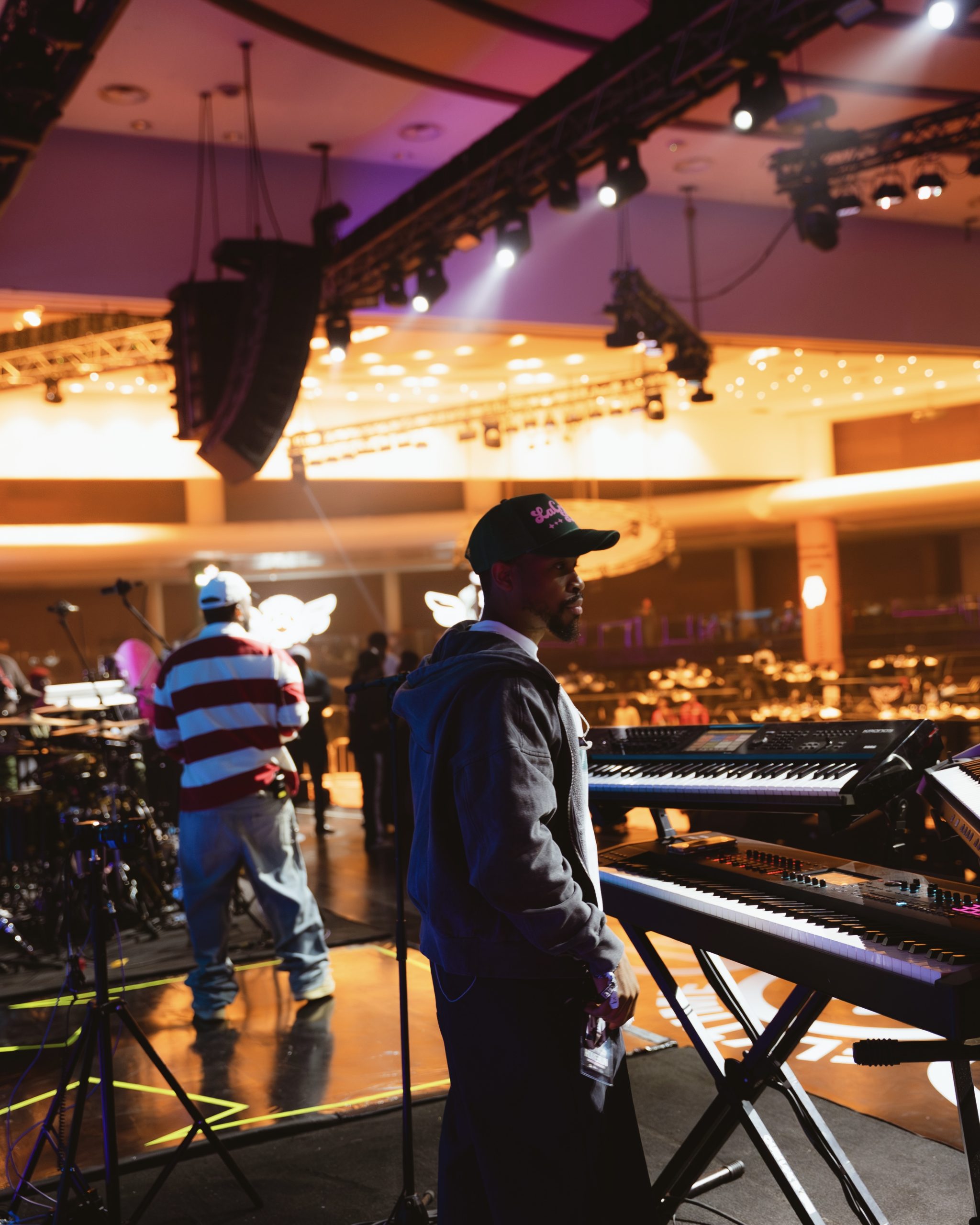
That’s something I’ve always appreciated about Roland keyboards. They feel smooth, responsive, and comfortable. Whether it’s the FANTOM 8 EX, a 61-key board, or even something like the AX-Edge, the playing experience just feels natural. And with the AX-Edge, it’s also lightweight, which gives me the freedom to move around on stage.
The hammer action on the FANTOM 8 EX especially feels amazing. Before I even start practicing, I’m already noodling around, warming up my hands, and enjoying the experience. It feels real, it sounds real, and that’s one of the most important things for me.
"Roland instruments and sounds constantly inspire me to create. Every patch has its own personality and sparks a different idea."
And then there are the sounds. There are so many patches to choose from that I’m honestly overwhelmed—in the best possible way. I love it. Every day, I discover something new when I’m practicing on my FANTOM. I’ll come across a sound and think, “What is this?” Then I’ll spend 15 minutes just playing with it. Next thing I know, I’ve completely lost track of time.
That’s what keeps me inspired. Roland instruments and sounds constantly inspire me to create. Every patch has its own personality and sparks a different idea. There’s always something new to explore, and that’s a big part of why I enjoy playing them so much.
If a young keyboardist or aspiring MD asked you to recommend one Roland instrument to help them grow as a performer, what would you suggest?
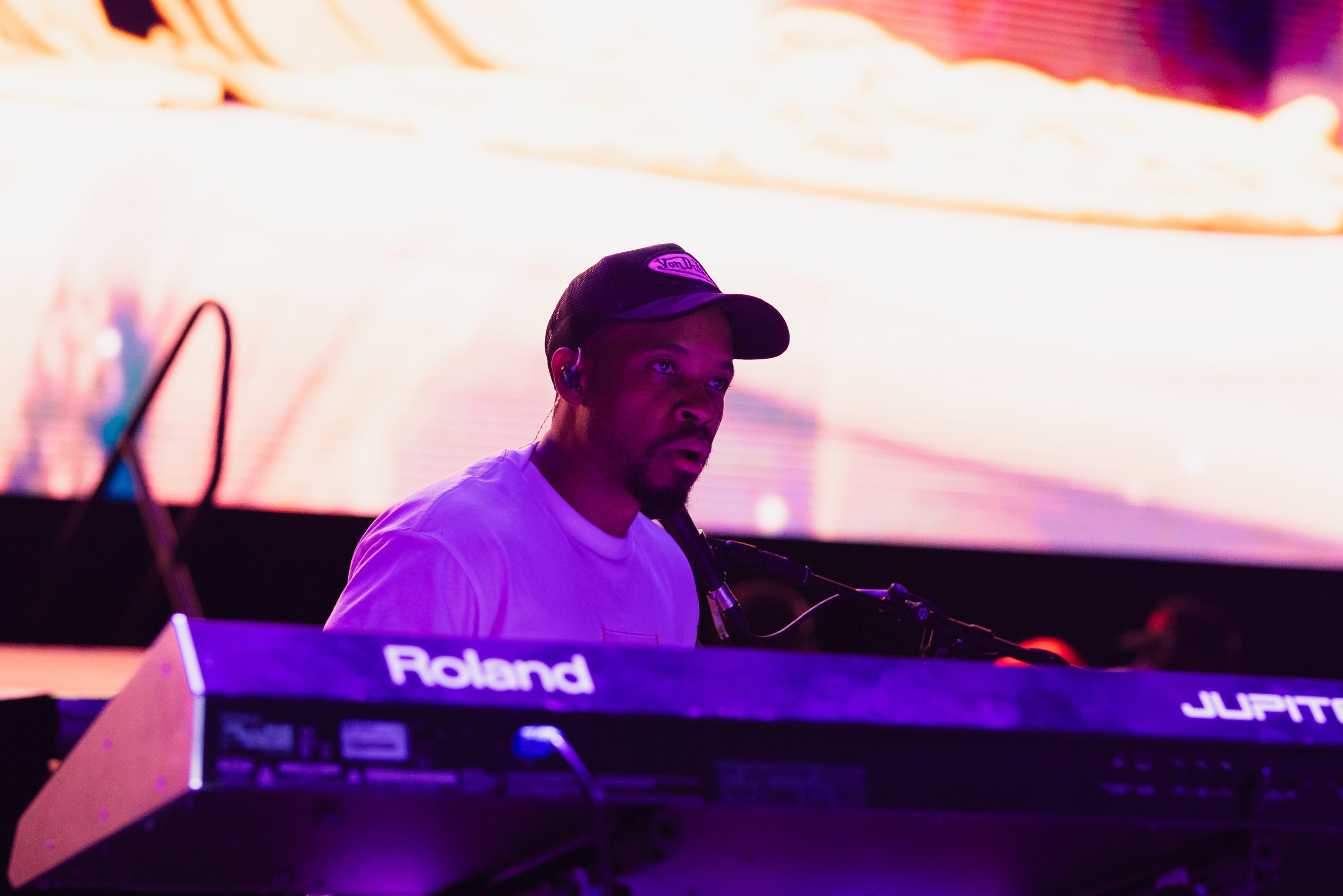
Get the FANTOM 8 EX. It’s amazing, 88 weighted keys—you’re going to love it. It sounds amazing, feels amazing. There are a lot of things for you to play around with: lots of knobs, and a lot you can layer. When you layer the sounds, it sounds incredible. So, for a young music director who wants to start with a Roland keyboard, definitely invest in the FANTOM 8 EX.