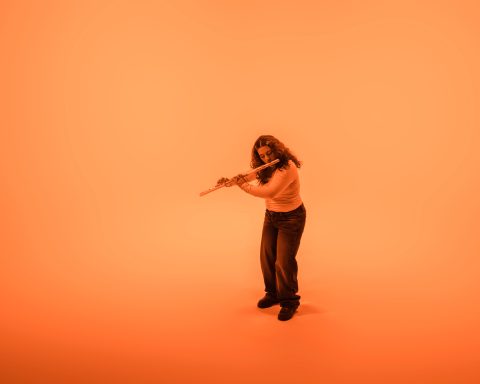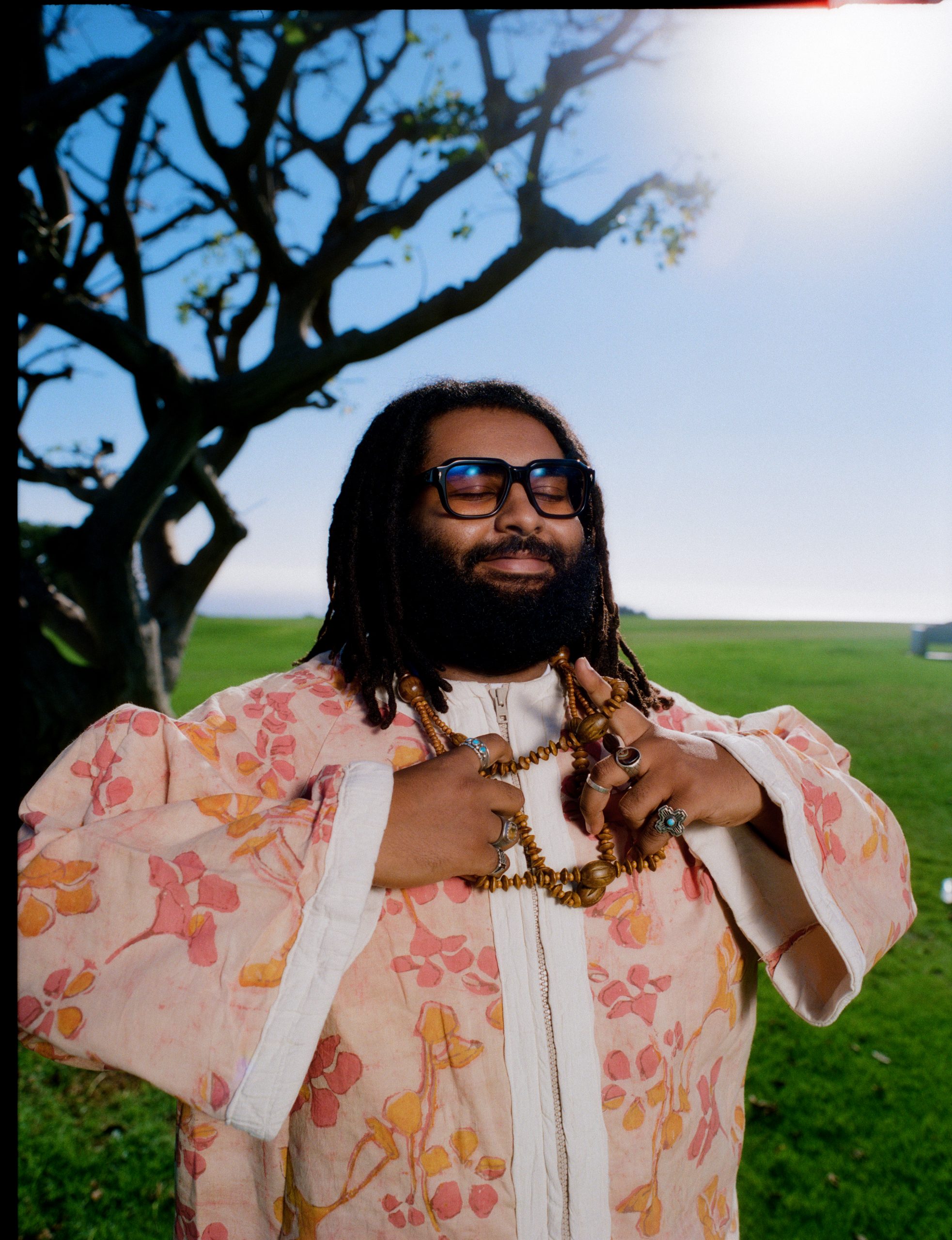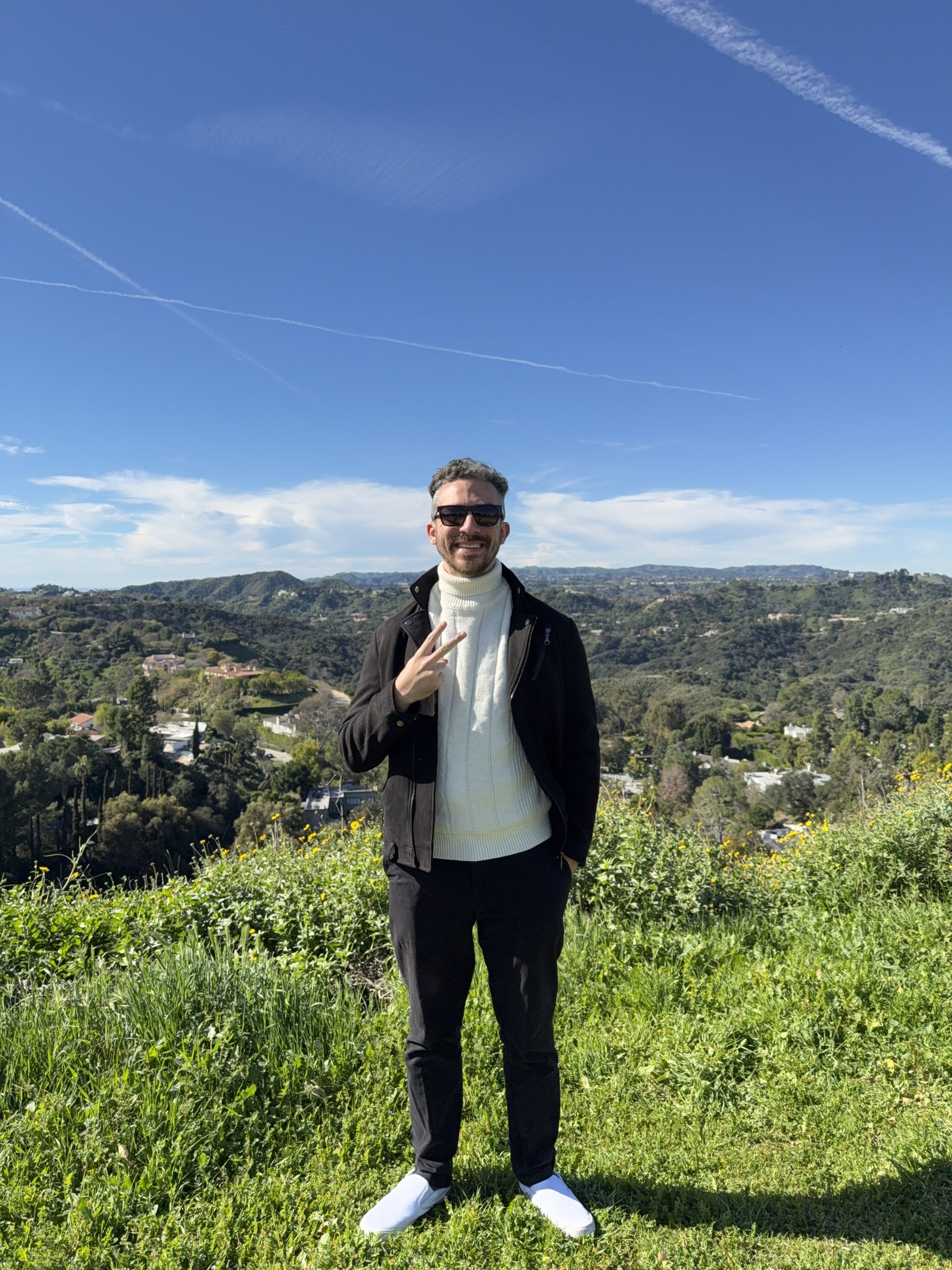


From the practice rooms of Bard College Conservatory of Music to a spot on a Steve Aoki-curated playlist, LA-based DJ, producer, and multi-instrumentalist Martron is a balance of seemingly opposing forces. Drawing on his formal music training, he thrives in the unexpected, seamlessly weaving classical flute and piano into driving EDM tracks.
And others have taken note. Matron has caught the attention of some of electronic music’s more influential voices, including ODESZA, SLANDER, Alison Wonderland, and more.
The ever-evolving rising artist recently leveled up his production setup with a JUNO-D8 synthesizer, unlocking new creative possibilities. In this conversation, Martron reflects on the journey from classical training to electronic music, his quest for unexpected sounds, the gear that fuels his process, and what’s next as he continues to push his sound forward.
Familial Foundation
You’re a classically trained musician. How did you initially get into music?
Music has always been a part of my life in some way. My parents tried to get me to learn piano classically when I was very small, and that didn’t go over very well. But I always had an interest in the arts. My family is artistic—my dad was a drummer, and both of my parents were painters and very expressive people.
The first instrument that I took on without causing a tantrum was the flute when I was nine years old, and I stuck with it. Next, I learned piano and started composing music. Then I started making electronic music, and it’s just been this whirlwind of the arts. I’m grateful for where it’s taken me so far. So really, I’ve been around music my whole life.
"I started making electronic music, and it's just been this whirlwind of the arts. I'm grateful for where it's taken me so far."
How did you bridge into electronic music?
I got into EDM towards the end of high school, but I had always been a Daft Punk fan. I was into rock and metal, and then someone introduced me to Skrillex. And Skrillex is that interesting blend, since he did the rock-and-alternative-punk thing before he got into electronic music. I was like, “Wow, I didn’t know you could do both.”
I went to see him in February of 2012, and the lineup for that show at Terminal 5 in New York was TOKiMONSTA, KOAN Sound, Skream & Benga, and then Skrillex. It was incredible. I was in the crowd just going nuts. I decided I have way too much energy not to be up there doing that. I could see how everybody connected with this music.
When I left the venue with a couple of my friends, I was like, “Yeah, I think I’m gonna do this. I’m going to switch from classical, wanting to be in the Lincoln Center ballroom type of setting, to the club scene.” I can’t believe how far it’s gotten.
Coast to Coast
You’re from New York and now live in LA. How have two cities impacted your music?
I grew up on Long Island and did client work in the city. New York is very, very artsy—more so when it comes to like fashion or visual art. Brooklyn and Queens are where New York music is at its best to me. But in LA, it’s everywhere. And it’s every form of art you can imagine. No matter where you go, it’s always around you.
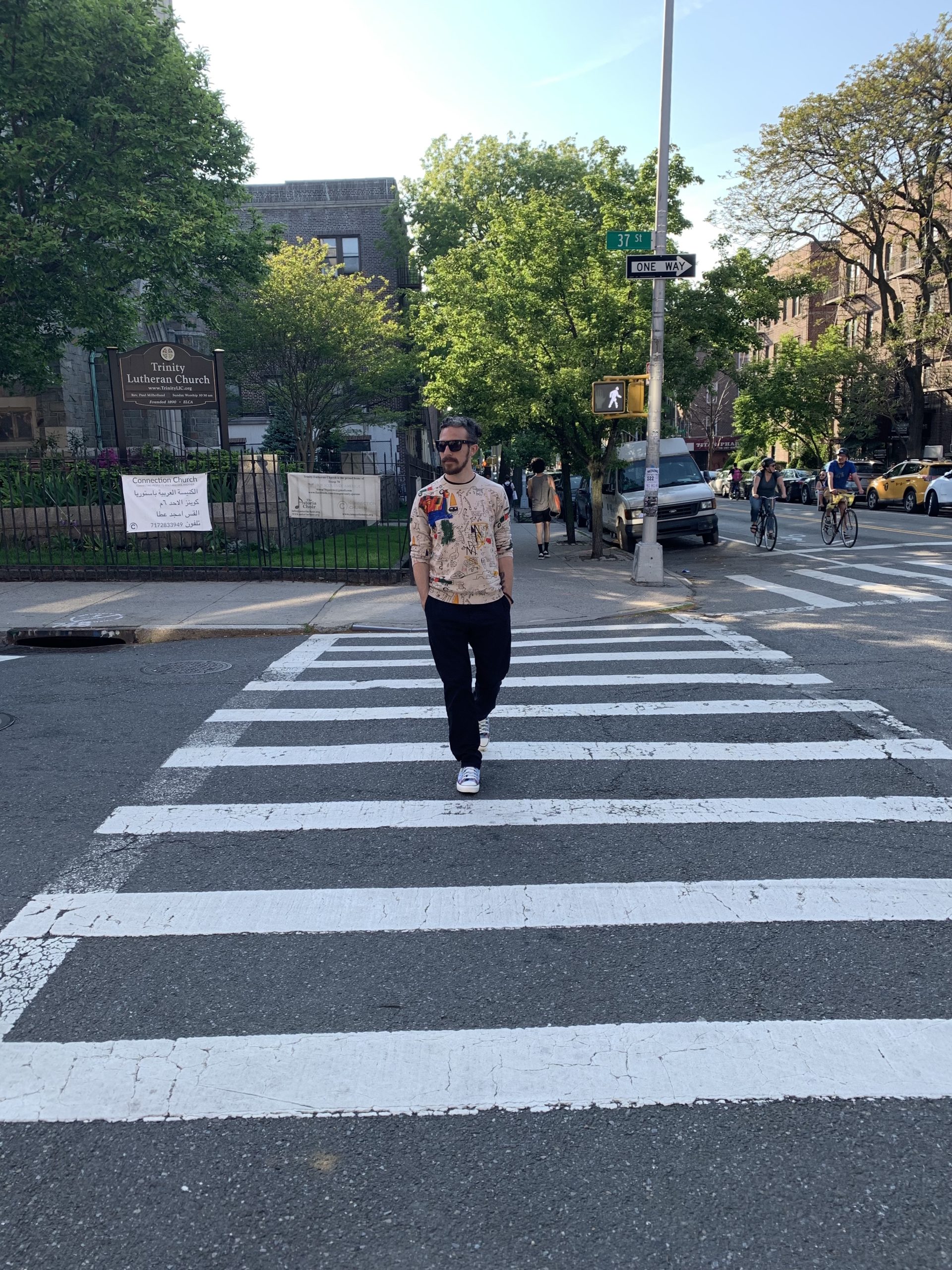
New York definitely instilled in me that hard-working, fast-paced, gotta-get-it-done mentality. And LA has made me feel comfortable being who I am. Because art is everywhere, and I’m an artist. I kind of feel like an alien with what I do, and how I stand out—I’ve got gray hair at 33, it’s weird.
But I just feel comfortable being myself here more than I do in New York, and I genuinely love New York. I’m so glad I grew up there, but I feel more expressive here. I’ve made my best music and a lot of great friends here. It feels very much like home.
When Worlds Collide
You recently released your EP, Passion. On Instagram, you said that this project ties to your classical roots. Can you expand on that?
In that same post, I mentioned that this is a project I’ve wanted to make for a very long time. I’ve always wanted to create something that brings together both the old me and the new me. I grew up classically trained—spending time in practice rooms, attending Bard College’s summer programs as a classical artist. Now my work lives in the electronic world. I’m making everything from house and trap to dubstep and UK garage.
With my previous EP, Resurgence, I started to see real space to connect those two worlds. People often ask what my favorite song I’ve written is, and that’s always a hard question, but I usually come back to “Always,” which closes the Resurgence EP. It’s deeply meaningful to me. I handled the production, played flute and piano, and sang on it—it felt like a full expression of who I am.
"'Always' gave me the feeling that I could finally tie these two sides of myself together."
When I first wrote “Always,” I was going through a rough period. It felt like I was right on the edge—maybe one percent away from rock bottom—but also just starting to pull myself back. That song gave me the feeling that I could finally tie these two sides of myself together. For a long time, I didn’t think I was capable of doing that, or I was too scared or insecure to try. Now, I feel like I’ve done it in a way that’s honest and meaningful—at least to me.
I love that blend. Tracks like “Heart and Soul” started as a straightforward EDM‑pop piano song, and then a month before it was finished, I picked up the flute. That part wasn’t planned at all, but it immediately felt right, so it stayed.
This is a project I always wanted to make, but for a long time I didn’t believe I could—my own doubts kept telling me it wasn’t possible. Now I’ve figured out how to do it, and I’m still kind of floored that I have. It’s something I definitely want to keep exploring in my future work.
Blend to Taste
How do you mesh these things that people generally wouldn’t put together? You don’t generally hear a flute and think, EDM.
It’s true, right? It’s the furthest thing from electronic, club music. But for me, adding something like flute feels natural. Sometimes you hear a sound or an instrument in a track and think, “Are we sure this fits?” Not because it’s wrong in theory, but because one small change could make the entire song stronger.
Any instrument, including the flute, has to be used tastefully. It has to feel right. That part is subjective, of course. What works for one person might not work for someone else, and that’s okay.
There are times I pick up the flute and immediately know it belongs. And there are other times when I know just as quickly that it doesn’t. Maybe someone else would hear it differently, but I trust that instinct.
"It’s the furthest thing from electronic, club music. But for me, adding something like flute feels natural."
On Passion, the flute appears on three different tracks, and each one serves a completely different purpose. On “Heart and Soul,” it’s celebratory—it’s the closing moment, the emotional lift at the end of the song. On “Ghost Mode,” it’s darker and more mysterious. I picture something cinematic, almost like a samurai moving through fog. When that flute comes in, it signals that you’re stepping into something deeper.
At the end of the day, it always comes back to feeling. If the sound supports the track’s emotion, it works. And for me, it fits exactly where I’ve chosen to put it.
Sampling the Unexpected
You also built a track around a spinning chime you saw online. What other kinds of unexpected sounds have you sampled?
When it comes to those videos, I really have to talk about this one because I haven’t shared it much publicly. I’m a huge Peggy Gou fan—I’ve loved her work for a long time. I saw her at Coachella a couple of years ago and had one of those moments where you just think, “This is it for me.” She’s amazing.
I was scrolling through her Instagram stories one day and saw something that immediately caught my attention. I saved it because I knew I wanted to try doing something with it, and that’s how that video came together. Honestly, I’ve been making stuff like that for years—I just haven’t been great about putting it out there.
And sometimes it’s more personal. Friends will leave me voice notes, and I’ll sample them just for fun. I’ve made a lot of weird things over the years. My closest friends will absolutely lose it if they see this in print, but years ago in New York, a few of us were playing The Legend of Zelda: Ocarina of Time using a randomizer mod that completely scrambles the items you get. I had the worst luck imaginable. There was one mini‑game I worked on for hours, finally beat it, and got the worst possible reward.
To cope, I ripped the song that had been looping for hours, layered the Fresh Prince of Bel‑Air theme vocals over it, added the Seinfeld bassline underneath, and built a glitch‑hop beat around it. That was my way of processing the frustration. My friends still bring it up—it’s become this running joke over the years.
That Peggy Gou video was the first time I shared something like that publicly, and I really loved the process—both the music and the visual side. Going forward, I definitely want to release more of that kind of work. Sometimes it’ll be playful or comedic, sometimes more serious, but it’s something I’m excited to keep exploring.
"Friends will leave me voice notes, and I’ll sample them just for fun. I’ve made a lot of weird things over the years."
The Ultimate Notification
Your song “Blooming” was recently featured in an Apple ad. How did that collaboration happen?
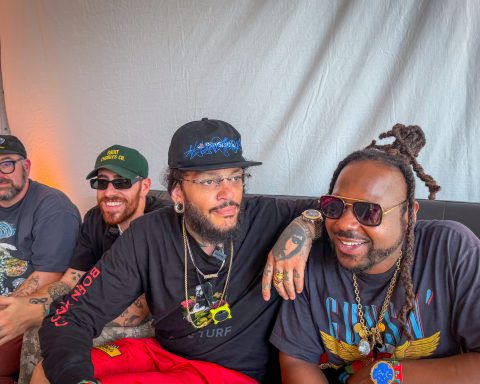
First off, shout out to my boys Benny and Aaron from Bronze Whale. They’re family to me. We’d been friends for a while before the track came together. Aaron has his solo project alongside Bronze Whale, and he originally had a demo called “Bloom”—or “Blooming,” which I know can be confusing because there were a couple of versions floating around. He and I went back and forth on it for a while, and then Benny got involved. Once the three of us started working together, it really clicked.
After it came out, the track just took off. It landed on SiriusXM and the Brownies & Lemonade playlist, started charting, and seemed to be everywhere all at once. We were also working with a sync licensing company that really believed in the song and began pitching it out. That led to it being picked up for a BMW spot, which already felt surreal.
Then one day, I woke up and saw a notification that said Apple had mentioned me in a comment. I thought it was probably one of those “You won a $20 Google gift card” spam posts with 30 people tagged. But when I checked, it was actually Apple. I completely lost it. I texted Benny and Aaron immediately, like, “Guys—this is Apple.”
Apple ended up loving the track and used it in their Shot on iPhone campaign. I’m still kind of giddy about it. Last I checked, the video had around 2.3 million views, which is absolutely wild to me. I know numbers aren’t everything, but that’s still pretty unreal.
"As artists, we all make sacrifices—financial, emotional, social—to do what we love and eventually turn it into a full‑time reality."
Support Spotlight
You’ve received nods from industry titans like ODESZA, Steve Aoki, and SLANDER. What does that kind of support mean to you?
It means a lot. Steve Aoki’s impact on EDM—and music in general—can’t be overstated. My first major‑label release was with Dim Mak, and I love everyone on that team. Their motto, “By any means necessary,” really resonates with how I approach music. As artists, we all make sacrifices—financial, emotional, social—to do what we love and eventually turn it into a full‑time reality. That mindset felt like a perfect fit.
Seeing artists like ODESZA add one of my tracks to their playlist was surreal. They’re giants in the industry, so moments like that feel incredibly validating.
The same goes for SLANDER and NGHTMRE. They were doing a back‑to‑back set for Good Vibrations, and I had previously remixed “Bruises,” which NGHTMRE was really supportive of. He shared it on SoundCloud, and I’m incredibly grateful for that support.
Another moment that really stuck with me: I made a bootleg—or edit—of “Scream” by Whyte Fang, which is Alison Wonderland’s side project. I’ve been a fan of hers for years. I posted it online, and she retweeted it with, “This is sick.” I remember getting the notification while I was on La Brea, about to drive home, and moments like that are wild.
It’s cool that these people I listen to all the time and support were suddenly checking out my work and showing love. That kind of validation isn’t something you expect, but it feels really good. It makes you feel like you’re doing something right. It’s a strange feeling, but an amazing one.
A JUNO Conversation
You recently added the JUNO-D8 to your setup. How has that synth inspired you?
I love that thing. I’ve been a huge Roland fan for a long time, but I’ve never had one until recently. It has absolutely changed the game for me. My previous keyboard was lightweight, with 49 keys, and the keys were thin and clicked constantly, but it did what it needed to do.
"I like turning up the [JUNO-D8's] reverb and delay and just letting it reverberate in the room. It seriously feels like I'm sitting in the Sydney Opera House, fully immersed in what I'm playing. "
But the JUNO-D8 is like that on steroids. It’s twice as long and heavy as hell, but it makes me feel like I’m playing a real piano. Every note I hit means more on it than what I’ve played in the past. I feel more equipped to play with it. I’ve already written a few different songs with it, and I absolutely love it.
Are there any like sounds or patches you find yourself gravitating towards?
Honestly, I’m a simple man. I really love the grand piano. The other sounds, like the strings, are great, but I love the standard grand piano. I like turning up the reverb and delay and just letting it reverberate in the room. It seriously feels like I’m sitting in the Sydney Opera House, fully immersed in what I’m playing. It’s incredible.
How does the synth fit into your workflow?
All I really do is plug it in. Since it has USB‑C, I just take the charger from my MacBook, pop the end off the block, plug it straight into the JUNO, and start playing. I hit record, try a few ideas, see what sticks, and let it unfold naturally.
I don’t fight or overthink it. I let the music—and the JUNO—do its thing. It’s almost like a conversation: this is what it wants to do, this is what I want to do, and we meet somewhere in the middle. I let the vibe take over, and some really great stuff has come out of that process.
The first thing I made on it was a prog‑house, deadmau5‑style plucky track. While recording, I remember thinking, “This is so cool.” I definitely want to release it. I just need to find the right setting for it. But you heard it here first: it was made on a JUNO-D8.
"It’s almost like a conversation. I let the vibe take over, and some really great stuff has come out of that process."
Looking Ahead
What’s next for you?
Last year, without going into too much detail, I went through a really low period in my life. I touched on that a bit with “Always.” After taking some time to sort myself out and reflect, I ended up pouring everything into music. I made the Resurgence EP in about a month, basically from May to June. It all came together very quickly.
Right after that, I dove straight into Passion, which I worked on from early June through mid‑to‑late January. I was creating nonstop for seven or eight months. Since then, I haven’t jumped straight into another full‑fledged project. I’ve been letting Passion sit and breathe, because I really love that record and want to give it space to fully land.
At the same time, I’ve been sitting on a lot of ideas. I’m torn between a few directions—maybe a project focused on lighter material, like classically influenced, melodic electronic music, or something heavier and more aggressive. It could be a smaller four‑track EP, or I might combine both sides and make another seven‑track mini‑album. I’m still figuring that part out, because I genuinely have a lot of music that I’m excited about.
I recently did a guest mix on Gary James’ Insomniac Radio show and premiered a few unreleased tracks. The response was really encouraging, which makes the decision even harder—in a good way.
So right now, I’m definitely working on the next project. I just haven’t decided which direction comes first. I’m taking the time to choose the right path.