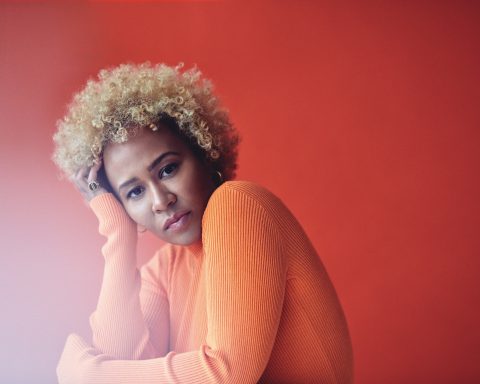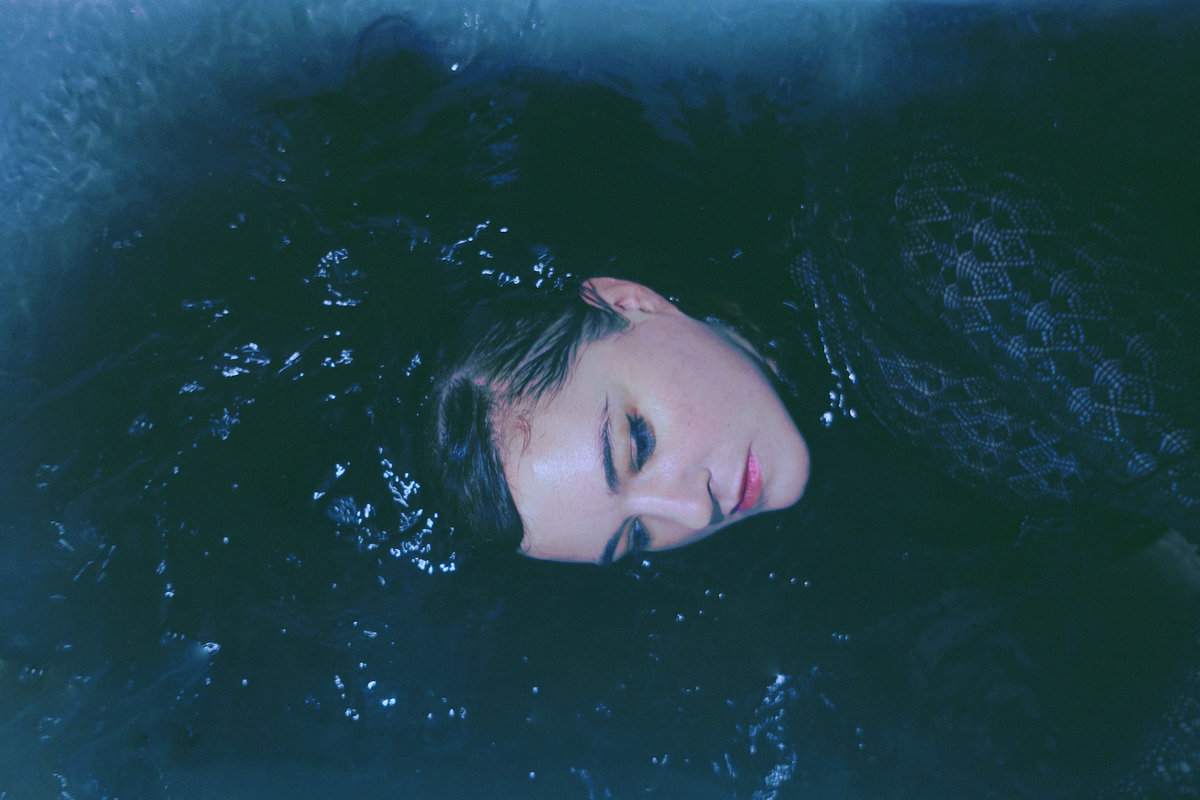


Drawing on a childhood steeped in choral singing, Julianna Barwick transforms simple melodic fragments into immersive, cathedral-like soundscapes, using her BOSS Loop Station to capture ideas in real time. Across a body of work that straddles the intimate and the expansive, her music has come to occupy a space where ambient composition and vocal instinct quietly meet.
Her latest album, a collaboration with harpist Mary Lattimore titled Tragic Magic, was written and recorded in Paris’ Museum of Musical Instruments. No stranger to changing up her workspace, a sense of place runs through everything she does, whether she’s recording at home in California or responding to the shifting light and landscapes of Nordic Europe.
In the conversation that follows, she reflects on everything that has shaped her approach over time, from early experiments with looping, to the hardware and environments that continue to inform her sound.
Layers of Voices
You started singing very young, didn’t you?
Yeah, my dad worked for the church when I was growing up, and I sang a cappella with the congregation. My mom was also in a vocal group and would sing all the time at home with this beautiful soprano voice. So, from birth, I was hearing my mom sing at home and the congregation at church with all different layers of voices.
We would sing rounds, which is kinda like looping, and we were in these really reverberant spaces. I don’t know if they were big rooms or if I was just tiny, but it sounded huge! I was doing that three times a week, along with summer camps—just surrounded by choral singing all the time. Then, in fourth or fifth grade, I joined the school choir and stayed there all the way through high school. I started taking private voice lessons too, and was in an opera chorus.
Did you study music formally?
I moved to New York for college, but didn’t want to do music, so I was a photography major. Music was such a pure joy for me, and I didn’t want to spend my weekend dreading having to compose something for Monday morning. I didn’t necessarily think I was going to be a musician, or even a photographer. I just knew I wanted to be in New York. I knew it would lead me somewhere exciting.
What music were you listening to around that time?
I’ve always just been an avid music lover—really all over the place. In high school, I was obsessed with people like Björk, Tori Amos, and Fiona Apple, and loved groups like The Pharcyde, Digable Planets, and Beastie Boys. And then 2005 was the height of popularity for people like Joanna Newsom, Sufjan Stevens, and Animal Collective, and I was seeing them all in Brooklyn. I was obsessed with record stores and just being in that world as a consumer, too.
"With the looper I could come up with a melody and surprise myself with where it wound up. It just happened magically and I fell in love with it."
A Pillowcase Full of Cassettes
So, how did you get started making your own recordings?
I had a Fostex 4-track at home in Tulsa, and somebody gave me a guitar somewhere along the way. I was just messing around but never got totally psyched about anything I was doing. Then, when I moved to New York, a good friend of mine had a delay pedal which had a looper function. He was like, “Check this out Jules!” and showed me how to make a loop, and I straightaway said, “Can I borrow that?”
I bought a multi-pack of Maxwell cassette tapes, made tons of little looping songs, and found someone who could put them onto a computer. This was around 2005 or 2006, so we uploaded them onto MySpace.
When did you make the jump from MySpace to physical media?
I asked someone I worked with if they knew how to make CDs, and they told me I had to get the music mastered first. I had no idea what he was talking about. I didn’t even have a computer! So, I packed all the cassette tapes that I’d been making in a pillowcase and took them to Paul Gold at Salt Mastering. That was a whole new world to me. I eventually ended up getting a computer that had GarageBand on it and did a free workshop on how to use it at the Apple store in Soho. I just followed my nose with a lot of it, and I’ve been doing the same ever since.
Was that looper something that unlocked a style for you? Or was it a tool that allowed you to make music the way you’d always wanted?
A little bit of both. I’d never really thought about looping my voice, and don’t know that I’d heard it being done before. But, at the same time, I wasn’t very good at sitting down and composing music. It was boring to even think about. With the looper, I could just come up with a melody, loop it, and then keep building and building, and surprise myself with where it wound up.
It just happened magically, and I fell in love with that process. And I still love it! Long after I started making music, I would hear (William) Basinski or (Brian) Eno, and think, “Oh, that’s cyclical, like what I do,” but there was no real inspiration for what ended up happening.
So, does every composition start with an improvisation?
Yeah. I don’t have a bank of melodies that I draw from or anything, I just plug in the mic—usually with effects—then start a loop and see what happens. I very rarely stop after I’ve started. I try to build on it, and it either becomes something I absolutely love or something I’m just okay about, but I don’t think that I’ve ever just stopped something and discarded it.
"My sound is called AMRAP—As Much Reverb as Possible!"
When it Sounds Magical, it’s Done
How do you know when a loop is finished?
It just sounds complete, you know? I’ll sometimes wind up with two or three congruent loops all happening on different channels of my BOSS RC-50. That’s my workstation. I could use that thing with my eyes closed! So there’ll be 2 or 3 layers all the same size but doing different things. Then I’ll dump those onto the computer and do a little bit of tinkering, bringing different loops up and down at different times. When it sounds magical, it’s done. I assume it’s the same with painting—where it just feels finished at some point. But it’s not in my nature to labor over something. It happens pretty instantaneously.
And that process is the same now as it was in 2006?
Absolutely. I got the RC-50 in 2006, but even before that, I was doing the same thing with the delay pedal and cassette tapes. Even on this latest record (Tragic Magic) with Mary Lattimore, I brought the RC with me to Paris, and it’s all over the record. I like the hardware-ness of it. I like the knobs and being able to fade things in and out. I also like it not being on a screen, you know? I wouldn’t know how to build a loop on Logic. The RC is my writing partner. It’s an extension of my brain!
Are you using any other pedals?
I use a vocal multi-effect. I just put reverb on everything. My friend Alex Somers (who produced 2013’s Nepenthe) calls the sound AMRAP—As Much Reverb as Possible!
Back and Forth
Alex Somers was the first producer you worked with, right?
My first three records I made all by myself. For Sanguine, Florine, and The Magic Place, there was nobody listening while I worked. I was just doing my thing. And then Alex reached out and asked if we could work together. He’s the most adorable person that ever lived and so talented, so it was an easy yes. That was the first time that I let anyone into that world, and he was the perfect person to break me out of my bedroom recording habits.
How did that collaborative element affect the creative process?
Alex’s house in Iceland had a studio upstairs and I would just create like I normally do, improvising and building loops. He’d be downstairs but listening to everything. I would do that for an hour or two, and then he would come up and be like, “What was that one thing you did earlier?” and we’d work together from there.
You’ve gone on to collaborate with others on numerous projects. Did you take any learnings from Iceland into those?
After the experience with Alex, I was more comfortable with exposing myself and working back and forth with somebody. I ended up making a record called Believe You Me with Helado Negro. Not a lot of people know about it, but we released it under the name Ombre. He would have a track that he had built up, and I would improvise something over it. That was more like straight singing rather than loops, which was new for me. But, yeah, it was all about growing each time.
Your new record, Tragic Magic, is a collaboration with Mary Lattimore. How did that project come about?
Mary and I have known each other for so long. We’re both loop artists, and we have always been able to magically align when improvising. Mary had worked with a French label called InFiné Music, and they had a relationship with the Museum of Musical Instruments in Paris.
They asked us both if we would be interested in making a duo record there using the instruments that are on display. So, Mary chose some harps, and I picked some synths to play around with, including a Roland JUPITER. We only had a few days there, so we just plugged them in, and I followed my nose like I always do. I just twiddled knobs until something sounded cool.
"There are shows where I'm almost in the same emotional space as when I recorded it."
Circumstance Synthesis
You’re touring that album now. How does the live experience differ from recording?
We’re normally just doing the same thing live that we did when we recorded—building the vocal loops live over what Mary’s doing. Nothing’s talking to each other. We wouldn’t know how to do that. Mary makes her harp loop, and I try and match it. We don’t use in-ears or MIDI or anything like that. The samples I’m triggering are pre-prepared, but I’ve always created all my vocal loops live.
Your live shows can be quite emotional for the audience. Is it the same for you, or are you focused on the performance?
It’s very dependent on the room, the mood, the equipment, the sound person. All those factors go into it. But yeah, I usually have a really good time. There are shows where I’m almost in the same emotional space as when I recorded it. But it’s a very different experience from recording to performing.
When I’m writing, it’s spontaneous and free, and it takes a little bit of work to figure out how to recreate something that was made in the moment. Piecing together a stack of vocals that were totally improvised, you know? But it’s still so much fun for me. And if the soundcheck is amazing and the levels are sounding good, then I can really let it rip, you know? In 20 years, I’ve only had a couple of spectacularly horrible moments!
You’ve also worked with AI to create immersive audience experiences. How did that come about?
This was for the Sister City Hotel in New York in 2019. It was an AI-triggered generative lobby score. So, I worked with a music technologist, and I created soundscapes for the different times of day—morning, midday, afternoon, evening, and night. There was a camera on the roof that would capture certain events, like a bird flying by, clouds forming, or the sun breaking, and I also composed sounds for each of those. Then the AI would go down into this musical program that the music technologist made, and my music was the bank of sounds it drew from.
There were effect triggers too, so certain events would cause it to bring in lots of delay or something. It was such a cool project and I’m very thankful for it. I liked that it was using AI as a tool rather than getting it to make music. I ended up releasing it as a cassette tape called Circumstance Synthesis.
Follow Your Nose
You’ve made music all over the world. Do you think the geography of these different projects affects them?
Nepenthe was recorded in the cold and dark of Iceland. We took day trips to places like the Gullfoss waterfall, and I just remember being gobsmacked by nature. So, whenever I hear a song from Nepenthe, I can kind of feel that Icelandic chill, you know? But on the flip side, I made most of Healing is a Miracle in my kitchen in L.A. So, I can definitely be influenced by an environment I’m in, but I don’t necessarily need it to make music that is coming from my heart.
"I'm emotionally attached to my RC-50. It went everywhere with me at the beginning of this whole adventure, and I made my sound on this thing."
How about hardware? How essential are BOSS Loop Stations to making your music?
I love the gear I have. They’re all discontinued models, so I have backups of everything. I actually have three RC-50s. One is dead, but I still have it because I’m so emotionally attached to my machine. It went everywhere with me at the beginning of this whole adventure, you know? And I made my sound on this thing, so it means a lot. It’s the same with the SP-404. I have 2 of those and have used them since forever.
Finally, do you have any advice for musicians looking to get into looping?
Read the free manuals and go to the free workshops. You don’t need to spend a fortune. When I started, I had absolutely no money. So just experiment. Nearly every MacBook has GarageBand on it for free. That’s where I started and I literally only switched to Logic last year. Everything up to and including Healing is a Miracle was done on GarageBand. Just follow your nose.