

As a child in Tokyo, Keigo Oyamada watched Yellow Magic Orchestra turn avant-garde electronics into a national obsession. It was a lesson in the coexistence of experimental music and pop that would shape and inform everything Oyamada made as Cornelius, a principal figure of the ’90s Shibuya-kei music and art scenes and beyond.
Decades later, that same YMO orbit brought him alongside Ryuichi Sakamoto, first as a collaborator, then as something closer to resembling family. Speaking from his native Japan, Oyamada pays tribute to his mentor while discussing Flipper’s Guitar’s gear experiments, the Roland CR-78’s nostalgic pulse, and his hotly anticipated new collaborative LP, Refractions.
YMO Influence
How important was Yellow Magic Orchestra to you and Japanese culture when you were growing up?
In the late ’70s and early ’80s, when I was an elementary school student, YMO was a massive presence in Japan. They weren’t just for music fans; they appeared on TV variety shows, and their music played normally out in the streets. Looking back, it was quite a rare phenomenon for a band to make such experimental electronic music while simultaneously achieving massive popularity.
The first YMO record I listened to properly was ×∞Multiplies (Zōshoku), which an older cousin had recorded onto a cassette tape for me. It featured short comedy sketches between tracks, and as a kid, I was initially drawn to those, but I gradually grew interested in the music itself.
The TV commercials for FUJI Cassette that aired back then also left a strong impression as they were quite surreal with experimental visuals. Encountering things like that during elementary school definitely had a big impact on me.
Did the band also influence you as an aspiring musician?
YMO symbolized a new era of Japanese culture—not just through music, but technology, design, fashion, visuals, and humor. Around the same time that Space Invaders and the Walkman were spreading globally, YMO were part of this new wave of culture transmitted from Japan to the world.
What was particularly massive for me was the realization that experimental music and pop do not have to contradict; you can do quite avant-garde things and still make them accessible to a broad audience. That feeling has stayed with me ever since I started making music.
Originally, YMO were seniors I looked up to with awe. Later on, I was blessed with opportunities to make music and perform alongside them, and they looked after me in so many ways. Sharing so much time with each of them and collaborating on countless projects was one of the most significant chapters of my musical life.
"YMO symbolized a new era of Japanese culture—not just through music, but technology, design, fashion, visuals, and humor."
A Mentor
The passing of Ryuichi Sakamoto was a big loss for music. Can you tell us the special influence he had on you?
As mentioned, YMO were extremely popular in Japan when I was a child, and Sakamoto-san in particular felt larger than life—almost like a star transcending the bounds of a typical musician. He often appeared on TV, and for an elementary schooler like me, YMO’s music was a natural part of my everyday surroundings. Of course, I never could have imagined back then that we would one day play music together.
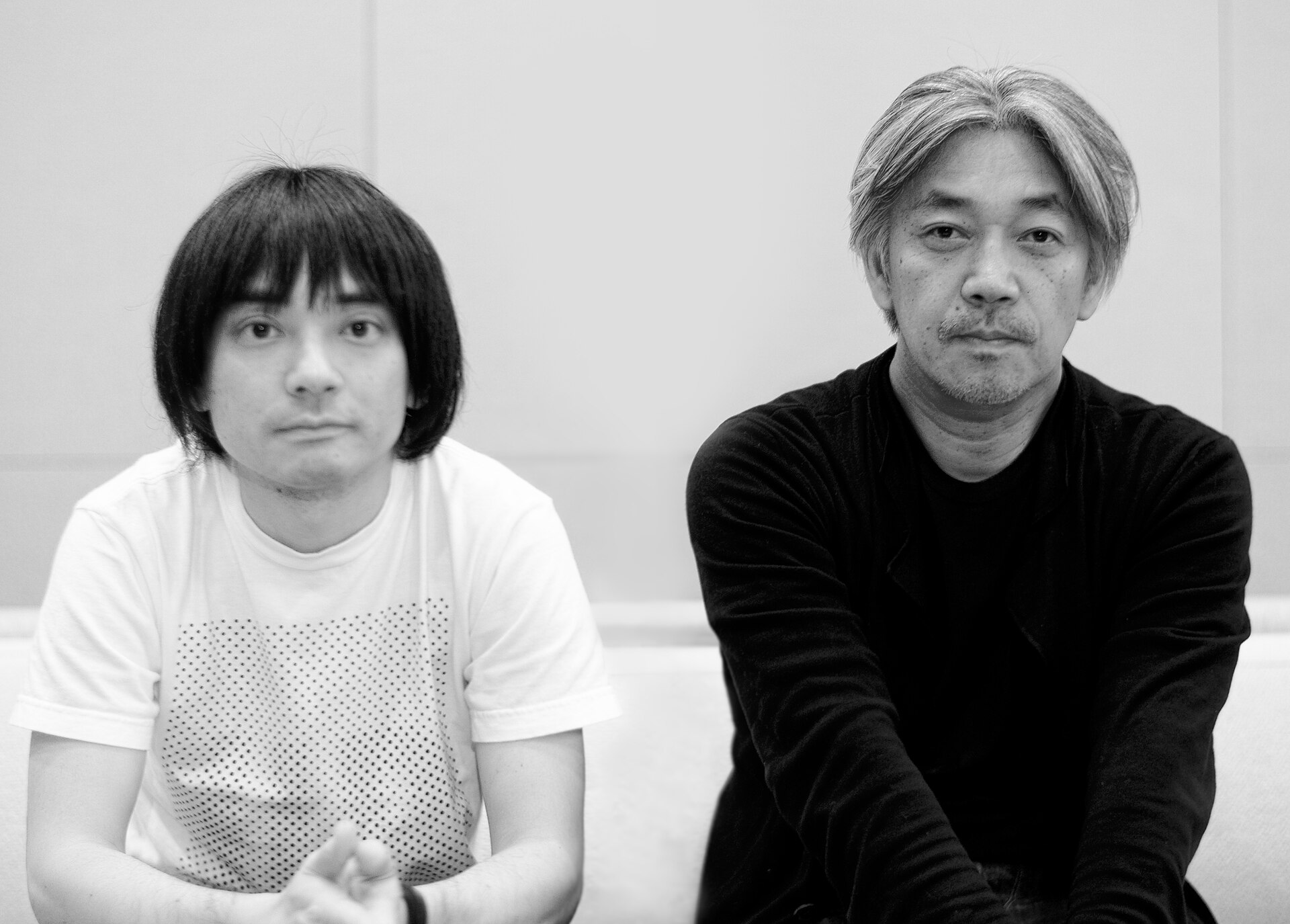
We didn’t genuinely connect until the 2000s when Haruomi Hosono-san invited me to participate in the production and live shows for Sketch Show. From there, opportunities to perform increased, and I even joined YMO’s live shows as a guitarist. Around the same time, I was also called in to play on the recording of Sakamoto-san’s solo album Chasm, and later joined him on tour.
How did your sense of mutual respect grow from there?
Through making music and touring, Sakamoto-san grew very fond of me, and I don’t think I ever told him this directly, but I quietly considered him a mentor figure in my life.
The influence that Sakamoto-san had on me goes far beyond specific musical techniques. It’s his infinite curiosity toward music, his attitude of embracing new things across genres, his extreme delicacy toward sound itself, and how he continued to engage attentively with people and social issues in his personal life outside of music. I could never hope to be exactly like him, but seeing all of that up close gave me a profound example of how to live as a musician.
His passing remains a huge loss, but to have actually made music and shared a long stretch of time with someone I looked up to as a star in my childhood is a truly monumental experience for me. I can no longer talk or play music with him directly, but I’m sure I’ll keep learning from the music and the mindset he left behind.
"I don’t think I ever told him this directly, but I quietly considered Sakamoto a mentor figure in my life."
Flipper’s Guitar
When you started the band Flipper’s Guitar, were you already experimenting with electronic instruments?
During the Flipper’s Guitar era, the equipment we used changed depending on the period. For the first album, we recorded the live sound of a regular five-member band, but from the second album onward, when we became a duo, we tried out lots of gear.
I think we even used a Roland TR-808 at some point, but on the third album, we took more of a sampling-collage approach. I was only in my early twenties at the time, so it was a period when I was exploring all sorts of equipment and techniques.
As a solo artist, you started to turn everyday natural sounds into rhythms. Was there a specific tool or workflow that made this possible?
That started with the album Point, when DAWs started to become capable of handling both audio and MIDI freely. It caused a major change in my music because, for the first time, I was able to see waveforms visually and started to become very conscious of sound placement and how to create negative space.
The Roland CompuRhythm CR-78 became part of your setup. Why did you choose a 1978 analog drum machine over the newer, programmable options?
I love the cute and nostalgic tone of the CR-78 and was really impressed by how Plastics (’80s Japanese new wave band) used it in place of a drummer. In fact, I still own the same machine that I had during that period.
For recording, I tend to program using sample-based audio off the machine, but back then I used its sound iconically—especially around the time I was in charge of the soundtrack for a show by Japan’s public broadcaster teaching children about design and art.
"I love the cute and nostalgic tone of the CR-78."
What other Roland tools were you using in the ’80s and ’90s?
I later owned and used a Roland TB-303 on the track “Volunteer Ape Man” from my early album 69/96, and really loved its unique tone. In addition, I frequently used the Space Echo up until the Fantasma era and still love its distinct, tape-induced flutter and tone.
The sheer size of the unit eventually led me to stop using it, and I sometimes use plugins that mimic these kinds of sounds and effects, but hearing the sound of the actual hardware makes me realize just how different and truly amazing the real machine is.
"I frequently used the Space Echo up until the Fantasma era and still love its distinct, tape-induced flutter and tone."
TikTok Fame
More recently, one of your older tracks, “Typewrite Lesson,” found a whole new audience on TikTok. It must be strange to watch a B-side find success 30 years later?
I was surprised when the play counts on streaming services suddenly started increasing. When I looked into it, it seemed to be buzzing on TikTok and YouTube Shorts. On YouTube, various people have uploaded commentary videos matching the audio with visuals, and they’ve become linked to conspiracy theories claiming that the song is peppered with secret codes about brainwashing, a surveillance society, and the collapse of America.
I was really surprised to see that, apparently, it has become established lore since that song was more or less made as a joke for an album bonus track. I find the phenomenon itself interesting, but I don’t really feel any personal connection to it.
Art of Collaboration
Your latest LP, Refractions, features a lot of collaborators, including Sean Ono Lennon, who sings and writes lyrics on “Aeons.” What does Sean bring out in you that other collaborators don’t?
Not only do Sean and I share musical tastes, but we also have common interests across recording, instruments, art, and film, so I feel we can share certain sensibilities without the need for a lot of detailed explanation. At the same time, through his unique perspective, the song expands in directions I could never have thought of on my own, and that distance is what makes collaborating with him so interesting.
Beyond singing and writing lyrics, he can play a variety of instruments and has a deep understanding of arranging and recording. On “Aeons,” rather than just having him add vocals to a finished track, he joined the process midway, incorporating ideas like slide guitar and synths to help develop the song together.
"Not only do Sean and I share musical tastes, but we also have common interests across recording, instruments, art, and film."
You also have a long-standing friendship with Arto Lindsay, who also appears on the LP.
I’ve known Arto since the 1990s. The connection began when he was staying in Tokyo and happened to see a poster for Fantasma and later the video for “Star Fruits Surf Rider.” He got in touch, and since then, the relationship has continued in different forms over many years.
There are many things I find compelling about Arto, but I’m especially drawn to the contrasts: the softness of his voice against the violence and unpredictability of his guitar, or his relaxed, almost detached presence alongside a very sharp intelligence. He contributed lyrics and vocals, and his voice and words brought a texture to the song that I don’t think I could have created on my own.
Tell us about the Monochrome Set, a band that was making music while you were in Flipper’s Guitar.
I’ve loved Bid from and The Monochrome Set since I was a teenager, and first met him when they came to Japan. We lost touch for many years, but I went to see them play again seven or eight years ago, played guitar on a few songs with them in Japan, and started meeting up when I was in London.
As “You Make Me Cyborg” developed, it became a simple, eight-beat post-punk song, and asking Bid to sing it felt like the natural thing to do. There’s a kind of low-budget sci-fi quality to his lyrics, and something theatrical and fictional in his delivery that suited the song very well.
What connects all of these collaborators, including Shintaro Sakamoto, is that there was already a relationship and a sense of trust, and I knew that passing an idea through each of their sensibilities might change them into something I could not have arrived at alone.
"In a Cornelius live show, the entire performance—not just the sound—is structured within a single timeline."
Live Synchronization
Your forthcoming live shows will see you return to London and the US. What can listeners expect from your performances?
In a Cornelius live show, the entire performance—not just the sound—is structured within a single timeline. The visuals react precisely to individual sounds, or conversely, the structure of the sound becomes visible through the visuals, creating a very tight synchronization.
However, rather than everything being completely pre-programmed, I also place high importance on the fluctuations and tensions that are born when humans actually perform live within that framework.
Since Refractions was created with live performance in mind much more than previous works, I think people will be able to experience it as something much more physical and distinct from the record. Whether you know the songs or not, I hope you’ll enjoy the feeling of stepping right inside a world of sound, light, and visuals.