The in-demand drummer discusses stepping into legendary roles, balancing touring and original music, and the hybrid tools that shape his sound. Photos courtesy of the artist

Hybrid drumming fuses the traditional acoustic drum set with the latest digital percussion technology, enabling players to perform with the electronic sounds and processed textures that drive modern music styles. Since 2003, Roland sampling pads and acoustic triggers have revolutionized this style, and they’re regularly used everywhere, from indie gigs to arena stages.
Instruments like the TM-6 Trigger Module, V-Drums VAD516, and SPD-SX pad make powerful partners for hybrid drummers, allowing them to incorporate loops, one-shot sounds, and melodic phrases into their musical universes. Every drummer has a unique story about their approach to blending traditional and electronic elements. Nic Collins’ professional career began at age 14, drumming with his legendary father, Phil Collins.
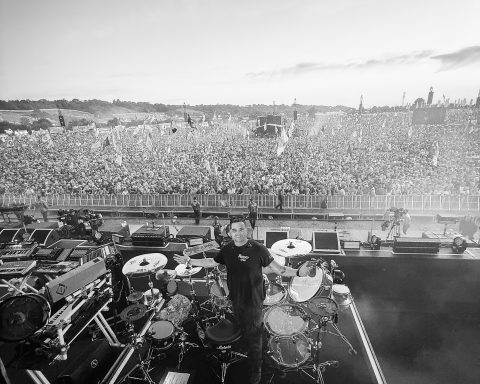
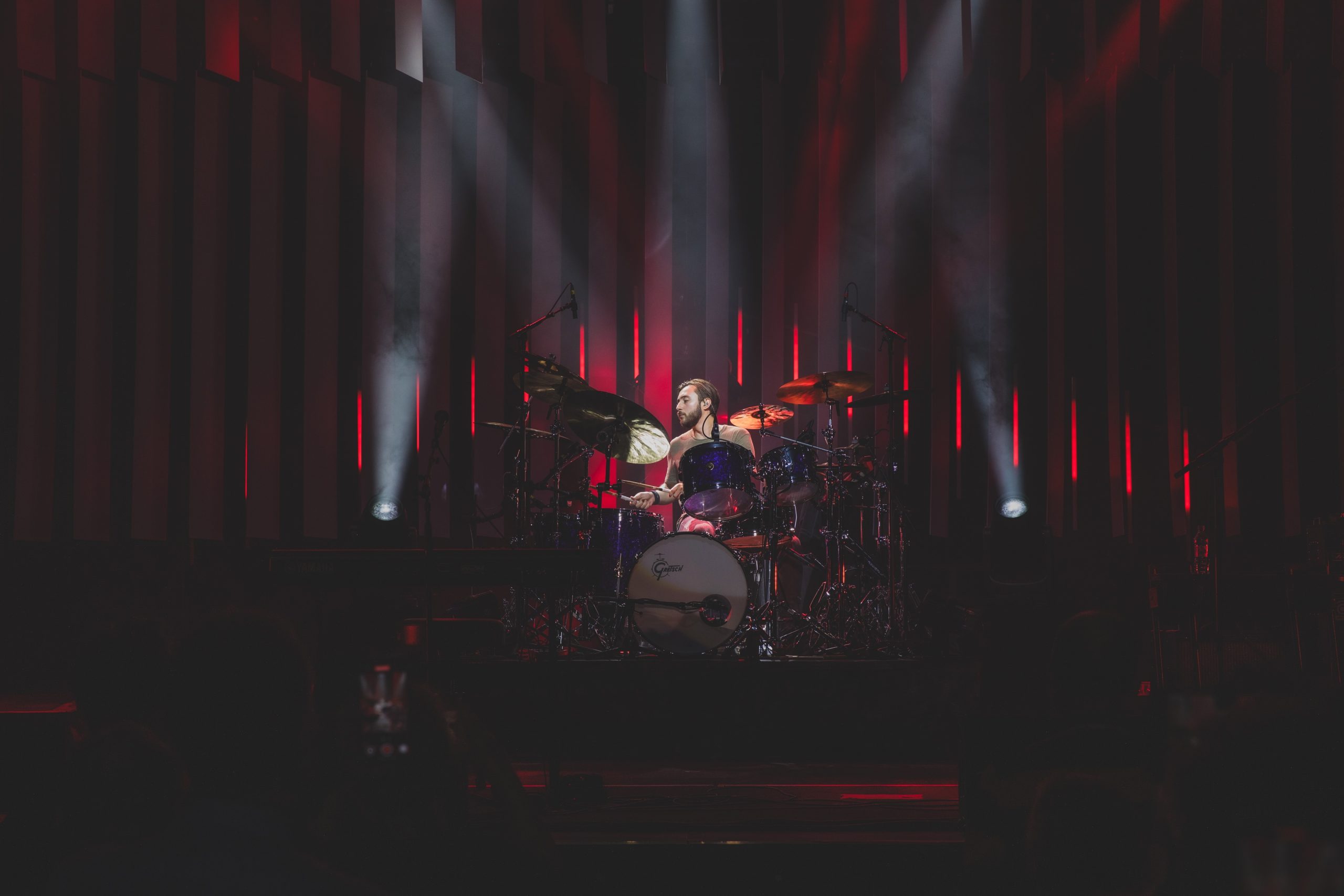
Since becoming the youngest member of the Genesis and Mike + The Mechanics lineups, Nic Collins has made a name for himself by appearing in various educational videos with Drumeo, in studio sessions, and as a main-stage featured artist at drum festivals around the world. The versatile drummer sat down to discuss lessons learned while touring with his dad and Genesis, finding his voice, and the essential hybrid gear that supports his sound.
The Backbeat
You grew up surrounded by music. When did you realize drumming was something you wanted to pursue professionally?
“I started playing drums when I was about three years old, so it was always part of my life. At that age, though, you’re not thinking about whether it’s going to become a career. I just loved playing.
When I moved to Miami around 11 or 12, I joined the school band and started playing with other kids. The more I played, the more I enjoyed it, and I realized it was what I wanted to spend my time doing. After spending time with friends who played in different bands, something began to click. That was the moment I thought, ‘I want to be in a band. This is what I want to do.’
Once you get that bug, you start diving into music, discovering new bands, and becoming obsessed with it. The more I played, the more it cemented that this was what I wanted to do with my life.”
Who are some of your influences?
“Growing up, my childhood heroes were John Bonham, Taylor Hawkins, and Chad Smith. As I’ve gotten older, drummers like Danny Carey, Gavin Harrison, Abe Cunningham, and John Theodore have become huge influences. Then there are legends like Stewart Copeland and Jeff Porcaro, whose work I’ve continued to discover and appreciate over time.
I tend to gravitate toward heavier music, but I try to expose myself to as many styles as possible. More recently, someone like Larnell Lewis has been incredibly influential. I think it’s important to keep an open mind because you never know what’s going to inspire you. Honestly, I could give you a laundry list of drummers who have shaped the way I play.”
Generational Genesis
You started playing with your dad and then stepped behind the kit for Genesis at a very young age. What did that experience teach you about preparation and performance in a professional setting?
“It was incredible, and I’m so grateful for that experience. Not only for the opportunity itself, but because it gave me a firsthand look at how things work at the highest level of the music industry.
It was interesting because I was touring with my dad and Genesis at the pinnacle of touring, while at the same time, I was starting my own career and building my own band. You get to see what it takes to deliver professionally, but also all the work that happens behind the scenes.
One of the biggest lessons was learning how to work with people in a professional environment. It’s very different from being in a band with your best friends. You’re not just bickering with each other; there are expectations and responsibilities that come with the gig.
I also knew people would assume I got the Genesis gig because I was Phil Collins’ son. I understood why people might think that, so it motivated me to do my homework and make sure I earned that seat. I was incredibly meticulous in my preparation because I wanted to prove I belonged there.
It taught me the discipline required to prepare at that level and also the difference between being a hired musician and being a band member. As a hired player, your job is to make the artist and the band feel comfortable. You want the audience to hear the songs they love, not some completely different Nic Collins version of them.
Looking back, there are probably songs I’d approach differently now, but I’m incredibly thankful I got that experience when I did. It taught me so much.“
You play music that spans generations of audiences. How do you balance honoring the original parts while still bringing your own voice to the music?
“The great thing about drumming is that everyone has their own voice, whether they intend to or not. You can put ten drummers behind the same kit, and they’ll all sound different.
Growing up around my dad’s music and touring with Genesis definitely made that world feel natural to me. Those sounds and that style were already part of my musical DNA. At the same time, I’ve spent years developing my own influences that have nothing to do with Genesis, so that naturally comes through as well.
Whenever I’m hired for a gig, my priority is always doing what’s right for the song. I learn the most recent live versions, but I also go back to the original recordings to identify little details, fills, or parts that may have disappeared over the years and deserve to come back.
Every role has been different. Playing with my dad was different from playing with Genesis, and Genesis was different from Mike + The Mechanics. I’ve enjoyed wearing those different hats. It keeps things fresh and gives me the chance to explore different approaches as a drummer.”
The Mashup
What does hybrid drumming mean to you?
“Hybrid drumming can mean a lot of different things depending on the context.
From a live perspective, I think it’s an amazing way to expand what’s possible behind the kit. I’ve used the Roland TM-6 module for years with Genesis and Mike + The Mechanics because there are certain iconic sounds from those records that simply need to be there. Whether it’s a big gated snare or another signature sound, triggering those samples helps recreate the songs accurately.
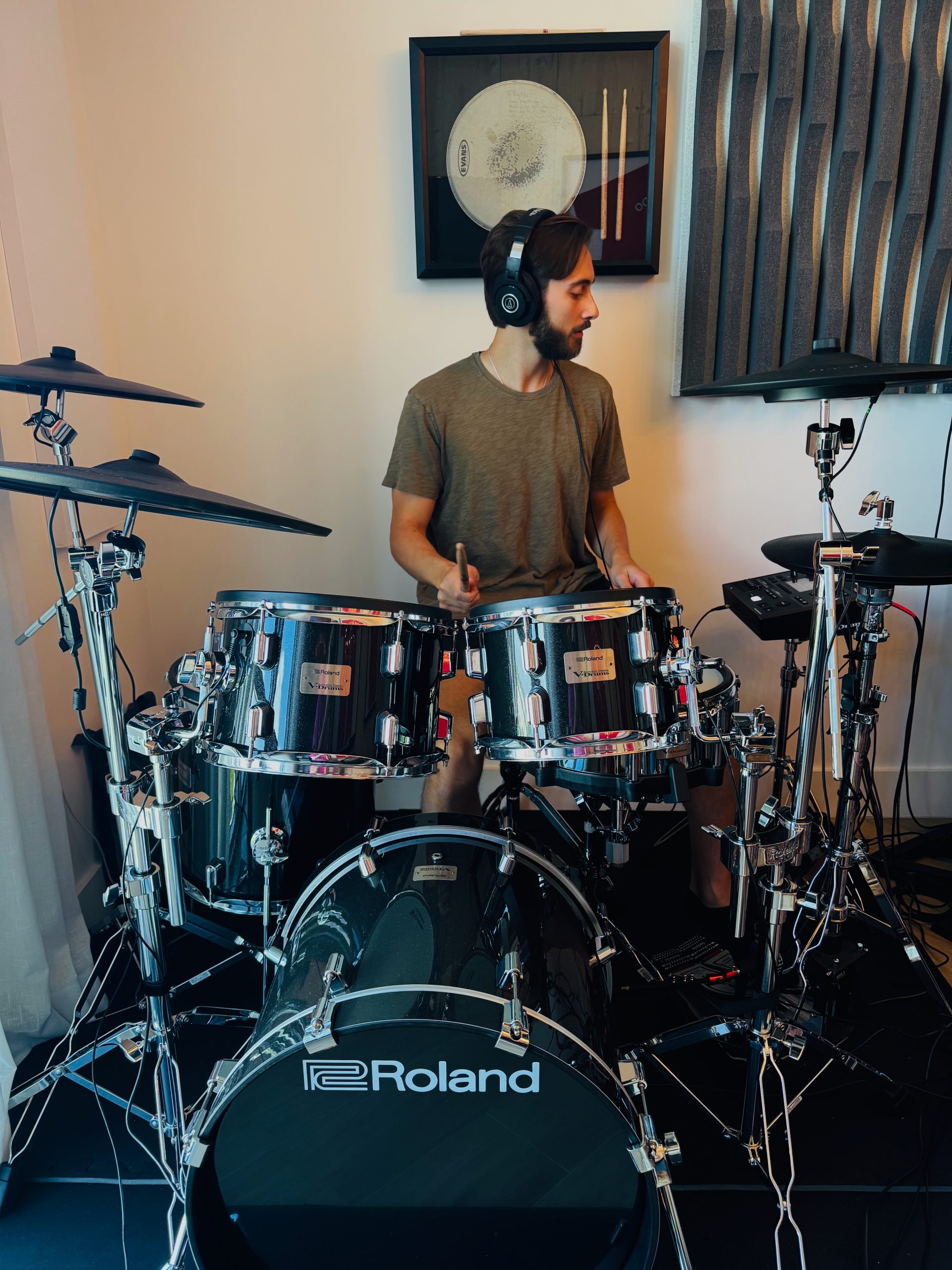
Creatively, it’s become just as important. Having different sounds available instantly can completely change the way you play. More recently, I’ve been spending a lot of time with the VAD516 at home, and one of my favorite things is being able to quickly jump between kits and sound libraries while writing or practicing.
Sometimes simply hearing a certain drum sound pushes you toward a different groove or musical idea. It’s a great way to spark creativity. And when I’m working on demos, being able to MIDI-record performances and change sounds afterward is incredibly useful.”
Spotlight: VAD516
Are there any kits in the VAD that you gravitate toward?
“Lately, I’ve been spending a lot of time with the Large Room kit. The toms sound great, the kick sounds great, and I tend to like a lot of ambiance in drum sounds, so that one really speaks to me.
There’s also a fat snare patch that I keep coming back to because it’s just really satisfying to play. And then there’s a ringy 12-inch-style snare that works well for more pocket-oriented funk and fusion grooves.
Honestly, though, I love scrolling through random kits and seeing where they take me. The customization is a huge part of the fun. I can take elements from one kit, combine them with sounds from another, and build something completely new. It keeps the whole experience creative and experimental.”
You use the VAD at home and triggers onstage. How do you switch between those two worlds?
“I’ve only recently started spending time with the VAD, and for me it’s primarily been a creative and recording tool.
That’s a completely different mindset from live performance. Onstage, everything has to be airtight. Once you’ve dialed in a sound, especially when you’re recreating specific sounds from classic records, you don’t want to be changing things every night.
A lot of the work there comes down to technical details like threshold and sensitivity settings, especially when room acoustics and stage volume can affect triggers. That side is much more methodical.
At home, it’s the opposite. It’s all about experimentation. Anything goes. You’re free to explore ideas and sounds without worrying about consistency night after night.
That said, I’ve never toured with V-Drums in a live setting, so it’s something I’d be interested in exploring in the future.”
Spotlight: SPD-SX
How are you using your SPD-SX?
“The SPD has been a constant part of my setup, whether it’s with my dad’s band, Genesis, Mike + The Mechanics, or any of my personal projects.
The reliability is huge. I know it’s going to do exactly what I need it to do in the heat of the moment.
In my touring work, the SPD was often used for things like 808 sounds and other supplemental percussion. But I’ve also used it where I’ve had to trigger synth layers and additional textures. I like to use a couple of BT-1 trigger pads connected to the SPD as part of my kit setup to trigger auxiliary sounds more efficiently. The SPD does what I need it to do, no matter the context”
For your personal projects, are you primarily loading your own samples or using stock sounds?
“It’s a mix, but most of what I’m using is custom.
For some of the percussion-based sounds, we’ll create patterns on a Roland TR-8S, process them in Pro Tools, and then sample those into the SPD. So a lot of those sounds still originate from Roland instruments.
Beyond that, I’m loading synth parts, chords, and other elements we’ve created specifically for songs.
When it comes to 808s and more traditional drum sounds, I’m often using Roland sounds as a starting point. The quality is so good right out of the box that sometimes there’s no reason to overcomplicate it. If it already sounds great, it works.”
On the Road
You have an upcoming tour with Mike + The Mechanics.
“Yeah, we’ll be out in May and June of 2027, and I’m incredibly excited to be asked back. It’ll be my third tour with them. We’ll be playing throughout the UK, as well as Germany and Austria.
It’s a fantastic group of people, and it’s an opportunity I’m really proud of. I’ve been fortunate enough to work with Mike through Genesis and then continue that relationship within Mike + The Mechanics. Every tour has been a great experience.”
How do you balance being a touring drummer while also managing your own projects?
“Fortunately, most of the touring I’ve done hasn’t been nonstop year-round touring. With Mike + The Mechanics, for example, we’ll do a large run, and then there might not be another one for a couple of years.
The key is staying engaged with your own projects while you’re away. If records are being mixed or plans are moving forward behind the scenes, I try to stay involved and keep things progressing.
Then when I get home, it’s full speed ahead. I don’t want to lose momentum.
I also enjoy the contrast. Being able to step out of one musical world and into another keeps everything exciting. The different responsibilities and perspectives help prevent things from becoming stale.”
How does your mindset change between being a band member and being a hired musician?
“In personal projects, what you’re hearing is me. I’m not trying to serve a specific legacy or fit into an established role. It’s much more personal. There’s also a different dynamic because everyone I’m collaborating with has an equal voice. If you have an opinion, you share it.
As a hired musician, your role is to support the artist. If they want something played differently, it’s not about your personal preference. It’s about serving the music and making them feel comfortable.
That said, the two worlds have informed each other. Touring has taught me to be more open to feedback, ideas, and criticism. Bringing that mindset back into a band environment helps everyone work together more effectively.
When everyone focuses on improving the song rather than protecting their own territory, the music benefits.”
Start Your Sound Engine
What's your advice for drummers interested in adding triggers, an SPD, or other hybrid elements to their setup?
“Stay curious and don’t overwhelm yourself. A lot of drummers see the technology side of things and immediately think it’s intimidating. I still find myself figuring out cables, routing, and setup details all the time.
The biggest thing is finding what works for you. There’s no one-size-fits-all approach. Some drummers fully embrace hybrid setups, while others only use electronics occasionally.
Use the technology in a way that feels natural and inspires creativity. If it helps you make music and enjoy playing more, then you’re doing it right.”
Forward Motion
What does the future hold for you?
“Right now, I’m staying busy with touring, clinics, and session work, which has been great.
Ultimately, I’m always chasing that feeling of creating something meaningful, something I’m proud of and excited by. That’s what keeps me motivated.
And, of course, performing live is still the thing that scratches the itch more than anything else. I’m fortunate to have touring opportunities lined up, and I’m always hoping for more chances to get out in front of an audience.”
Carolyn is Sr. Brand Copywriter for Roland. She lives in Los Angeles with her husband and two Mini Schnauzers and enjoys digging through vinyl, books, and thrifted clothes.