

What does the cosmos sound like? If plants could make music, what would they play? Joey Dean, better known as Natural Symphony, is turning these questions into award-winning electronic music and art installations. Using specialized self-built devices, Dean transforms electrical plant signals into musical notes, Jupiter’s radio frequencies into basslines, and uses cosmic particles to control sound and light.
Dean and his floral collaborators have brought their nature-inspired creations to some of the world’s most celebrated stages and events, including Glastonbury, Burning Man, the Royal Chelsea Flower Show, and most recently, Amsterdam Dance Event (ADE).
Ahead of ADE, Dean traveled deep into the rainforests of Sabah, Malaysia, where he captured plant and celestial data for Vinorun, an immersive installation inspired by traditional ecological knowledge of the region’s Momogun communities and the rinait chants of the Bobolian people.
Working with collaborators from Pertubuhan Kolektif Seni Budaya Sabah, EarthSonic, The University of Manchester, and the British Council, Dean’s field recordings and environmental data became part of a rich creative tapestry that also included audio and visual material gathered by the wider team.
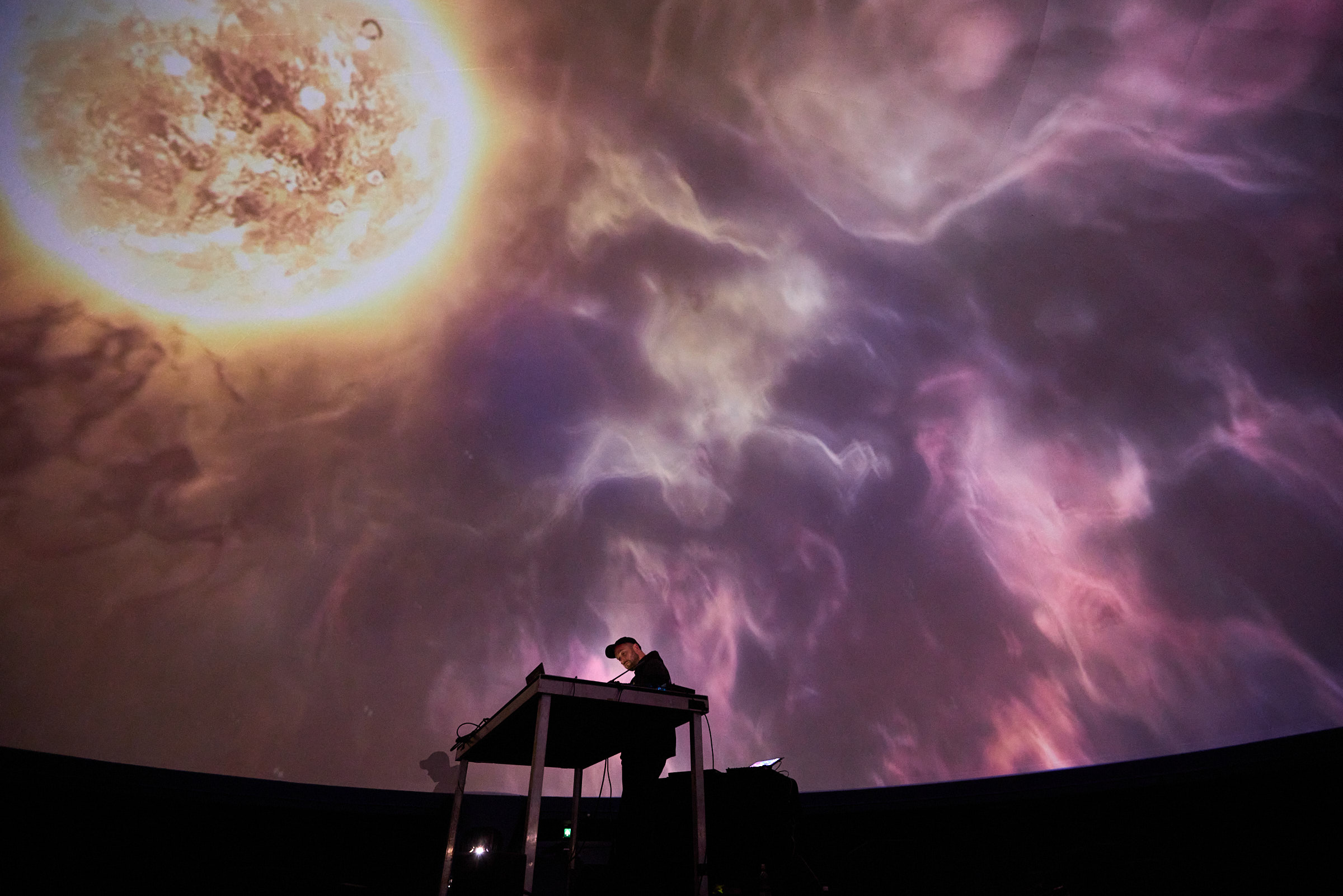
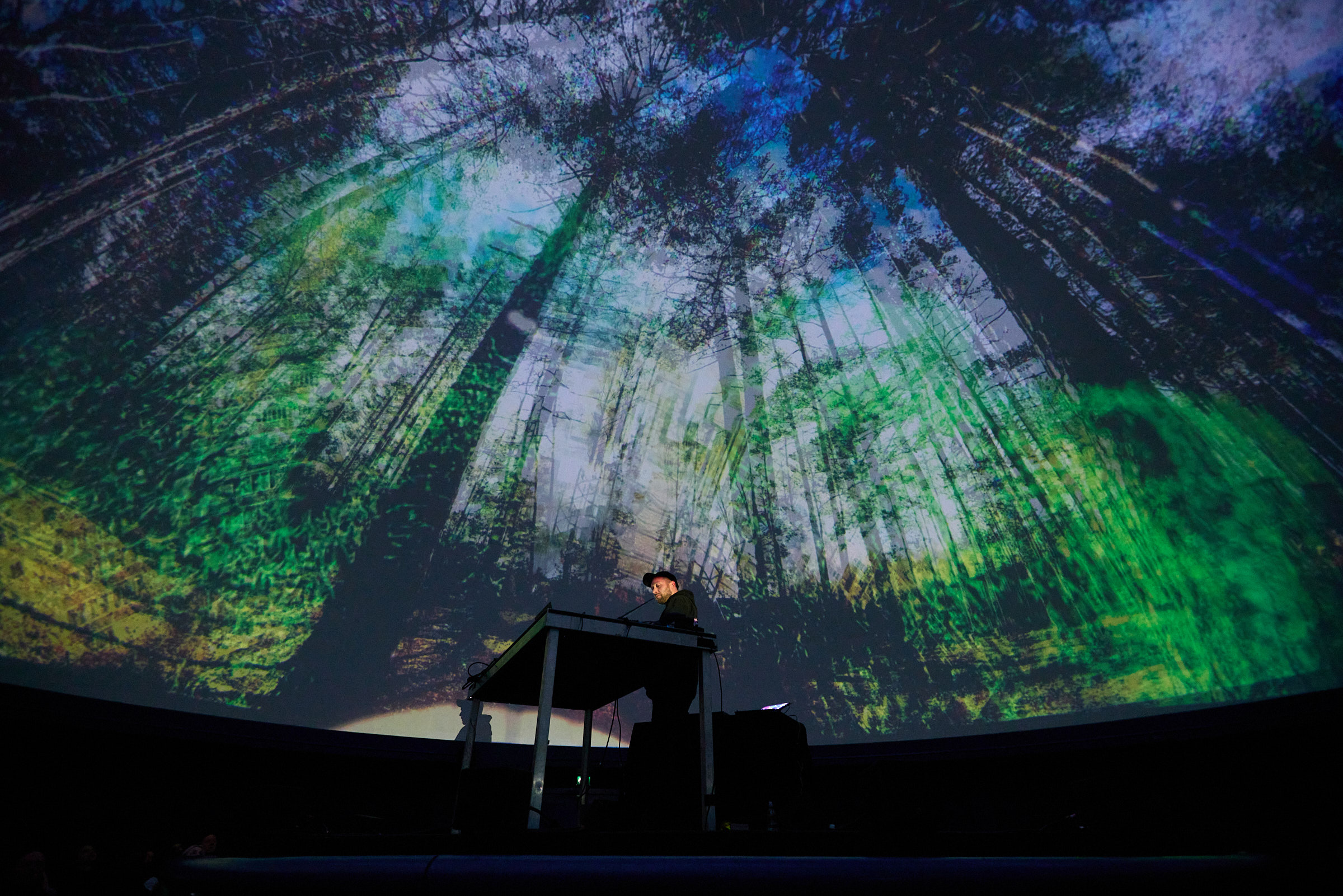
Together, these elements formed the foundation of an original composition by Paul Hartnoll of Orbital, while visual artists Ben Sheppee (Observatory) and Alastair Lomas transformed the project into a multisensory installation that debuted at ADE.
Days before the installation’s premiere, we sat down with Dean to discuss the motivations behind his unique work, the devices that help turn data into dance music, his philanthropic work in the Amazon, and hopes for humanity’s reconnection with the natural world that surrounds us.
When Music Made Sense
Where does your musical journey begin?
A lot of what I had growing up was these electronic sound toys. I remember having this little box with a fake CD stuck on it and some drum pads. I always used to ask my dad to take the plastic CD off because I was convinced you could put other CDs on it. He’d say, “No, you can’t. It’s just a toy.”
My mom and dad were both quite musical. There were always records around the house, and my brother was really musical too. I always thought I was a bit weird because I didn’t really like music, and everybody else did. Everyone seemed so passionate about it, and I remember thinking, “I don’t really get it. Is there something wrong with me?”
Then I remember going to my cousin’s house when I was a young teenager. He was a bit older than me, and he put on some happy hardcore and trance. I remember thinking, “What’s this?”
It was the first time I’d really been exposed to electronic music, and that’s where the journey began. I started diving into this new world of music that I actually connected with and realized I wasn’t the weird one after all. I just hadn’t been listening to something that resonated with me.
Tickets to Perform
As the years went on, I got into DJing and collecting electronic music. I found house music, became a resident at Egg, and spent many years DJing there. They used to give me 25 tickets for every show, and I’d have to sell them myself.
For quite a few years, I stood outside train stations, trying to catch anyone heading to the club so I could sell them a ticket. I was doing anything I could just to play. And over the years, it evolved, and I started performing live.
The Language of Nature
You create music using natural frequencies. Can you walk me through your setup and how it works?
I like to explore the language of nature and the cosmos through music and art. I’ve built a lot of unique devices that allow me to do that.
One of them allows plants to control sound and light. The device is actually based on lie detector technology. Instead of outputting the electrical signals inside a plant to a graph, I output them into Ableton.
Each different electrical variation is given a different task. It might be that 0.1 millivolts triggers the note A, 0.2 triggers B, 0.3 triggers C, and so on. It’s almost like giving the plant fingers to play a keyboard.
The problem is that it sounds like a child smashing a keyboard because the plant doesn’t have any musical skill. So, I wrote a couple of patches that shift each electrical value into the correct key and gently move the timing so everything stays in sync with the drum pattern.
That allowed me to get plants controlling synthesizers in time with drum machines. That’s really how it started.
Since then, it’s developed a lot further. I’ve built various pieces of unique equipment. I have one that listens to the electromagnetism of the Northern Lights. I’ve recently built one that listens to stars and black holes, and I’ve built an antenna that listens to the radio frequencies of Jupiter.
"A lot of my basslines come from the hum of Jupiter. The project is backed by the European Space Agency now, and I'm collaborating with them at ADE as well."
A lot of my basslines come from the hum of Jupiter. The project is backed by the European Space Agency now, and I’m collaborating with them at ADE as well.
Everything I do is about exploring frequencies in nature and the cosmos. The same goes for my immersive art installations.
One installation uses holograms inside an infinity-mirror room, but the plant inside controls the animation and the spatial audio. The deeper message is helping people recognize that nature is alive. It’s just as alive as you are. It’s alive enough to control a laser.
People can interact with the plants as well, and there’s an immediate response. That’s what makes it so captivating.
Musically, it’s kind of like working with a band. It fills me with inspiration because many of the melodies and patterns wouldn’t be something a pianist would naturally come up with. There’s no obvious logic behind them.
With traditional music, you can often predict where a melody is going. There’s a flow to it. The patterns I get from plants and stars are much more random.
Sometimes I’ll listen for 20 or 30 minutes waiting for something magical to happen. Then suddenly it does, and I think, That’s it. I’ll start sampling those little moments that come through from nature and build music around them.
Remote Frequencies
How do your different locations affect the samples that you get?
For the cosmic side of the project, location makes a massive difference.
The best place I’ve found so far is Iceland. I originally went there to develop the Northern Lights device and spent about three weeks driving around, chasing auroras. While I was there, I started wondering whether there was anything detectable from stars other than visible light. That question sent me down a huge research rabbit hole.
What I discovered is that stars, black holes, and our own Sun are constantly emitting cosmic particles. Earth is being bombarded by these particles all the time. I started researching how to detect them and eventually began working with a Geiger counter, which is typically used for detecting radiation. As cosmic particles hit the tube inside the device, they create electrical signals that I can use to control sound and light.
The challenge is that these systems are extremely sensitive. If you’re close to a city, an electrical grid, or even power lines, you’ll pick up interference. To get the cleanest signals, you need to be somewhere with very little human-made electrical activity.
That’s why Iceland has been so good for this work. You can drive for hours into the middle of nowhere and be surrounded by nothing but nature and the cosmos. In England, where I’m based, it’s much harder to escape power lines and other sources of interference, even in the countryside. So for the cosmic work, Iceland has definitely been the best environment.
For the plants, though, location doesn’t make as much difference technically. I spend a lot of time in the Amazon through my charity work, and that’s probably been the most incredible place to work because you’re surrounded by such an abundance of life. We’ve recorded ancient trees, huge vines, and all kinds of plant life. Wherever you turn, there’s something fascinating to connect with.
The focus of the project isn’t really field recording. It’s more about frequency. But I do record environmental sounds from time to time. The jungles are full of sounds we’re simply not used to hearing, and those textures can be really interesting when layered into techno or drum and bass.
"The jungles are full of sounds we're simply not used to hearing, and those textures can be really interesting when layered into techno or drum and bass."
A Natural Connection
Does the age of the plants have any effect?
Not really—what I’ve found far more interesting is how plants seem to respond to the people around them. Trees and plants often react differently depending on who’s nearby. One thing I’ve noticed is that children seem to get particularly strong responses. When children approach the installations, the signals often become much more active.
That’s probably one of the most fascinating things I’ve discovered through this work. There seems to be an unseen connection between nature and humanity.
It’s also something I try to explore through the installations because people can experience it firsthand. You can interact with a plant and receive an immediate response. Sometimes I walk into an installation and find people sitting quietly, meditating with the plants.
Watching those interactions has been incredible. It’s one of the clearest examples I’ve seen of people reconnecting with nature in a direct and personal way.
Seeds of Sound
You mentioned your work in the Amazon, both musically and philanthropically through Seeds of Sound. Can you tell us about your work with Indigenous communities there?
I got to a point where the project was starting to do really well. I was playing venues and festivals that had once felt like impossible dreams, and I suddenly realized that this wasn’t a solo project. It’s a collaboration with nature.
Some of my plants have been to more festivals, clubs, and countries than most people. If you take them away, it’s just me standing there. The melodies and patterns in my music come from plants, stars, and natural systems. I didn’t feel it was fair that I was the only one benefiting from something they were such a vital part of.
So I asked myself a simple question: if I were a plant, what would I spend my share of the money on?
The answer was the Amazon.
I started reaching out to organizations and eventually connected with a project called Yakum. They invited me out to Ecuador, where I was shown their reforestation work and introduced to the Indigenous communities they collaborate with. What impressed me was their focus on restoring ancestrally important food sources and repairing land damaged by industry. They weren’t building monocultures of coffee or cacao. They were restoring ecosystems that mattered culturally as well as environmentally.
Around the same time, a friend of mine who works as a filmmaker for National Geographic suggested we document some of the work happening there. We began traveling back and forth to Ecuador, making films and spending time with local communities. Through that process, we witnessed many of the challenges people were facing firsthand.
"[Through Seeds of Sound], music wasn't just helping preserve culture. It was creating connections between communities that had often remained separate."
Many Indigenous communities were being pushed into situations where they needed cash income, often simply to pay for basic necessities like clean water. Talented musicians and artists were leaving their communities to work for industries such as oil companies or moving into towns, and with that came cultural erosion. Suddenly there were new pressures, new lifestyles, and new distractions pulling people away from traditional practices.
That led to the creation of Seeds of Sound.
The goal was to support musicians and artists financially without requiring them to leave behind the culture that made their work unique. We started funding community-driven projects. One musician, Roxana, began teaching children how to build and play traditional instruments. Other projects focused on preserving musical traditions and passing knowledge between generations.
The program grew quickly. We now have artists from six Indigenous nations involved.
One of the most powerful moments came when we invited participants from all of those nations to gather together for a creative workshop. Some people thought it was a terrible idea because there were longstanding divisions between different groups. But by the end of the gathering, everyone was playing music together, sharing ideas, and helping one another solve problems.
That was when we realized the true power of the project. Music wasn’t just helping preserve culture. It was creating connections between communities that had often remained separate.
Space to Grow
The next idea was to build a permanent creative space, but that created another challenge. Every proposed location sat within the territory of one group or another, making it difficult for everyone to feel comfortable using it.
Then one day, my charity partner and I were swimming in a beautiful river deep in the jungle. We joked about how perfect the location would be for a future cultural and creative center. A few weeks later, after I’d returned to England, he called and told me the site had come up for sale.
It was primary rainforest, surrounded by active gold-mining operations. If we could buy it, we could protect it.
We put together a proposal explaining the vision, reached out to businesses and supporters, and remarkably, within a few weeks, we had raised the money. We actually completed the purchase this week.
Now we’re moving into the next phase. Infrastructure needs to be built, access routes need to be created, and the site needs to be prepared. It’s a long-term project.
For me, though, it represents everything this journey has become. Nature isn’t just my inspiration; it’s my collaborator. The success of this project has allowed us to support communities, protect rainforest, and create opportunities for musicians whose voices might otherwise never be heard.Eventually, Seeds of Sound will become a record label and creative platform where Indigenous artists can release music and reach wider audiences. There is so much incredible talent there, and very few pathways for that work to be heard globally.
None of this was something I ever imagined when I started. But the project has continually taken me to places I never expected. Sometimes it feels like the other half of my band, nature itself, decided it was time to show me its world after years of me carrying plants around the world to clubs and festivals.
It’s been an extraordinary adventure.

Star Patterns
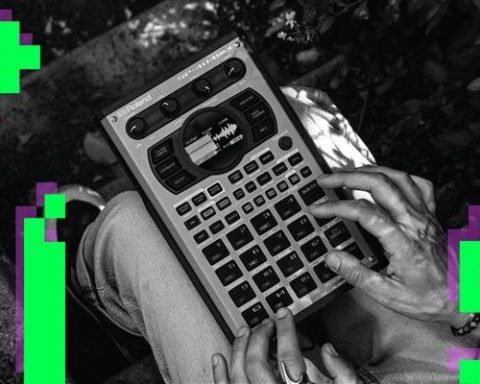
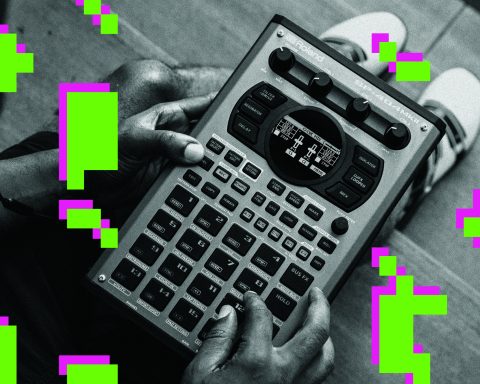
You’re running your Cosmic Particle Device through an SH-4d. How is that synth helping you translate those sounds?
What I get from the stars, in particular, is patterns.
The device I’ve built uses a Geiger counter, so every time a cosmic particle hits the tube, it generates a signal that I can convert into MIDI. What you’re hearing is essentially a reflection of the stars interacting with the device.
I design the sound, and then the stars play it.
That means I can have the stars perform bass lines, arpeggios, pads, or whatever sound I’ve programmed. You’re not hearing the sound of the star itself. You’re hearing the way the star plays the sound I’ve created.
It’s actually the same principle I use with plants. The plants aren’t creating the sound either; they’re controlling how the sound is played. If you put a piano in a room, every person would play a different melody on it, but none of them would sound like a piano. The piano is simply the instrument. In the same way, the stars and plants become the instrumentalists rather than the vocalists.
They’re not connected to microphones. They’re controlling musical information.
The Northern Lights and Jupiter are a little different, though. In those cases, I’m actually working with frequencies coming directly from them. What you’re hearing is the sound they’re making
"I've been connecting the star device to the JUPITER-08 and experimenting with the oscillators, creating all these wild sounds while letting the stars control the melodies."
Capturing Jupiter
You’re also using a JUPITER-08?
I am, yeah. I’m using it with the star device as well. That just felt right to me. I thought, if I’m working with the cosmos, then a JUPITER has to be part of the setup somehow. I’ve been really blown away by it, actually.
How are you using it?
I’ve been connecting the star device to it and experimenting with the oscillators, creating all these wild sounds while letting the stars control the melodies.
It’s been an amazing experience. I’ve never had the chance to play an original Jupiter, so having something this portable has been fantastic. It’s small enough to take anywhere, and it’s become a really useful part of the setup. I’ve spent hours just exploring sounds and letting the stars drive the performance.
Living in a Living World
You’ve said that we’ve lost our connection to nature. Do you think we can restore it?
That’s really the whole point of this project. I grew up in East London, and to me, trees were just decorative. They lined the roads and sat in parks, but I never felt any connection to them. They were simply part of the background.
It wasn’t until I started this project, and especially until I spent time in the Amazon, that I realized how disconnected many of us have become from the natural world.
Walking into the Amazon feels like stepping back into what it means to be human. Within a week or two, your body begins to sync with the sunrise and sunset. You’re surrounded by food, medicine, and life. Everything feels connected. The food tastes different. Time feels different.
Then you return to modern society.
I remember coming back after spending two months in the jungle with Indigenous communities and arriving at the airport. Suddenly there were advertisements everywhere. I became incredibly aware of how disconnected we are from the environments we evolved in.
It’s nobody’s fault. Most of us grow up in towns and cities, and that’s all we’ve ever known.
What struck me was how little many of us understand about the living world around us. We don’t know which plants are food, which are medicine, or how ecosystems support us. We’ve become dependent on systems that make those connections invisible.
That’s really what the project tries to highlight.
"We're part of nature too. Yet many of us spend our lives surrounded by concrete, disconnected from the environments that originally shaped us."
I remember someone once saying to me, “Your machines can’t work because trees are just made of wood.” That comment stuck with me because it showed how much work there is still to do in helping people see nature as something alive rather than something decorative.
We’re part of nature too. Yet many of us spend our lives surrounded by concrete, disconnected from the environments that originally shaped us. Sometimes I wonder if that separation contributes to why so many people struggle with anxiety, stress, and depression.
One of the nicest things is hearing from people who tell me, “You’re the reason I talk to my plants now.” Even something that simple feels meaningful. It’s a reminder that people are starting to pay attention again.
For me, the project isn’t really about music technology. It’s about helping people recognize that we’re living in a living world and encouraging them to rebuild a relationship with it. That’s the message behind everything I do.
Sacred Samples
You’re also involved with the EarthSonic and In Place of War project in Borneo with Orbital. How did that come about?
I work closely with both EarthSonic and In Place of War. In Place of War is a charity, and EarthSonic is its sister record label. Their projects focus on places affected by conflict, environmental change, or other global challenges, using music and art to tell those stories.
One day, Ruth from the organization called me and said she had an opportunity I needed to hear about immediately. I was literally walking to the shop for milk.
She told me that Orbital was involved in a project in Borneo. They needed someone to travel there with a filmmaker, work with the region’s chief priestesses, document the experience, and gather audio and visual material that Orbital and filmmaker Ben Sheppee would later turn into an immersive piece.
The catch was that I’d potentially be leaving the following week. I went to buy milk and came back with a project involving Orbital.
It was an incredible experience and completely different from anything I’d done before. I’ve worked with Indigenous communities in many parts of the world, but Borneo felt entirely unique. The forests were beautiful, the culture was fascinating, and the whole experience was unlike anything I’d seen.
While we were there, we recorded stars, trees, vines, sacred chants, interviews, traditional instruments, and environmental sounds. The priestesses also work with seven sacred plants, using their seeds to create bracelets worn during ceremonies and chants.
I brought everything back into Ableton and built a huge library of material from the trip.
The filmmaker documented the entire experience, and all of the recordings were sent to Ben Sheppee and Orbital for the final production.
What’s unusual is that I’ve barely seen any of the finished work. I’ve heard a few snippets, but ADE will be the first time I experience the completed piece properly. In many ways, I’ll be discovering it at exactly the same time as the audience.
That’s a really exciting position to be in because I’ll be seeing how all of those experiences, sounds, and stories have been interpreted and woven together for the first time alongside everyone else.
In Orbit
What was it like knowing you’d be experiencing the finished work at the same time as the audience?
Yeah, it’s definitely a unique experience.
A few months ago, I had a Zoom call with Paul from Orbital. He’d been listening through all the recordings I’d sent over and wanted more context about some of the plants we’d recorded. He was asking what specific plants they were, what they were traditionally used for, and how I typically work with those recordings in my own music.
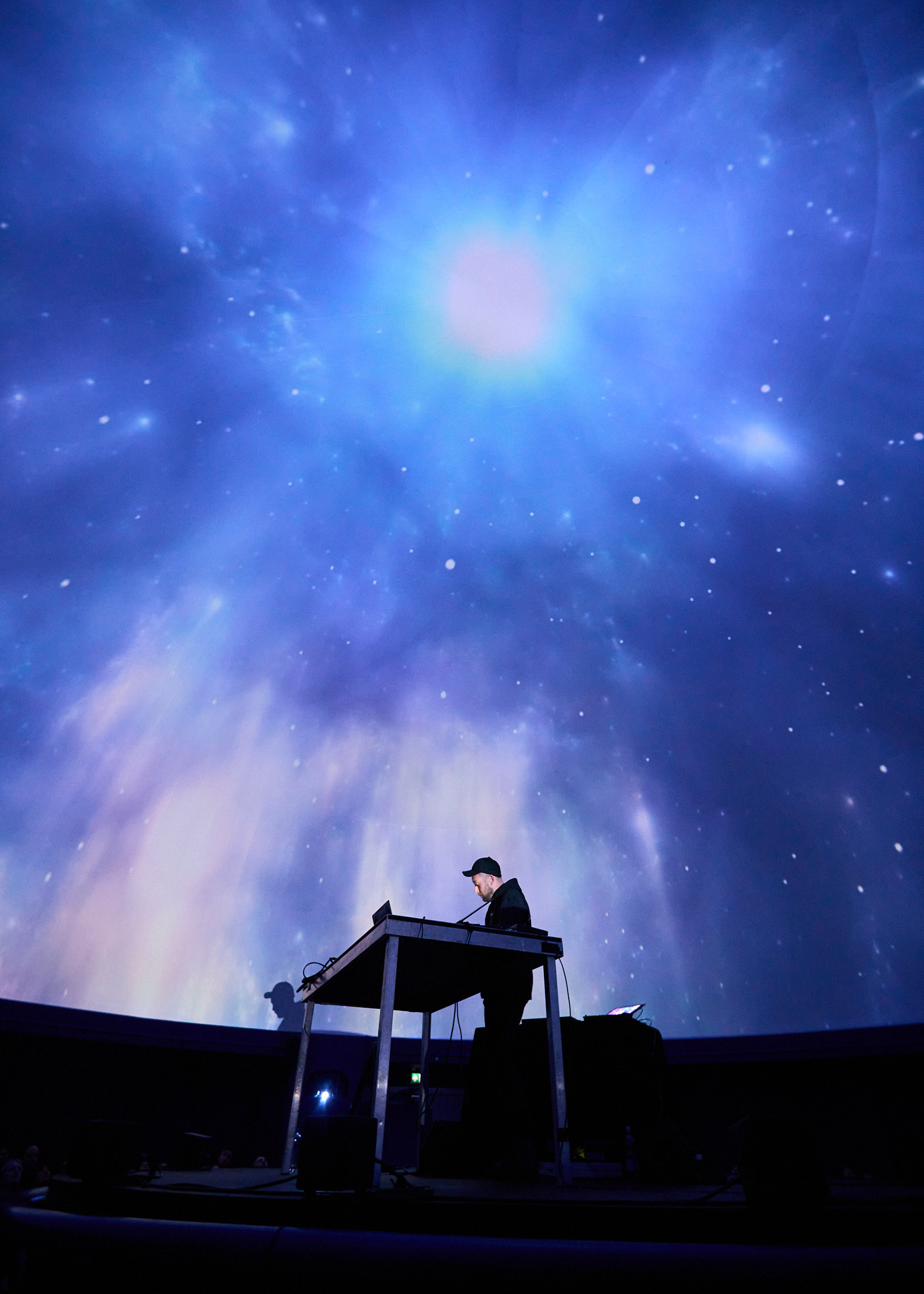
He also asked whether I preferred the samples to be used in full or whether he could take smaller snippets from them. I told him to use whatever worked creatively because that’s how I work myself. I rarely use an entire recording. I’m usually looking for a moment, a texture, or a melody that inspires me. I’ll record a huge amount of material and then pull out the little fragments that really spark something.
We ended up talking for hours, not just about the project, but about plug-ins, production techniques, and all sorts of music-making topics.
For me, it’s honestly been a real honor. Orbital was one of the artists that inspired me when I first started getting into electronic music. They were part of that original journey of discovering this whole world. So to now be involved in a project with them is pretty mind-blowing.
"If the installation gives people a glimpse into another reality and helps them think differently about their connection to nature and to other cultures, then I think it's done its job."
A New Perspective
What do you hope ADE attendees take away from your installation and performance?
What I really love about this project is that it gives people a glimpse into a completely different relationship with nature.
The community we worked with in Borneo lives in a way that most people will never have the opportunity to experience firsthand. It’s not something you can simply buy a ticket for. We were fortunate to spend time with them at a very specific moment and document a way of life that many people would otherwise never get to witness.
I think that’s one of the most valuable aspects of the installation. It allows people to step into a world that feels entirely different from their own, even if only for a short time.
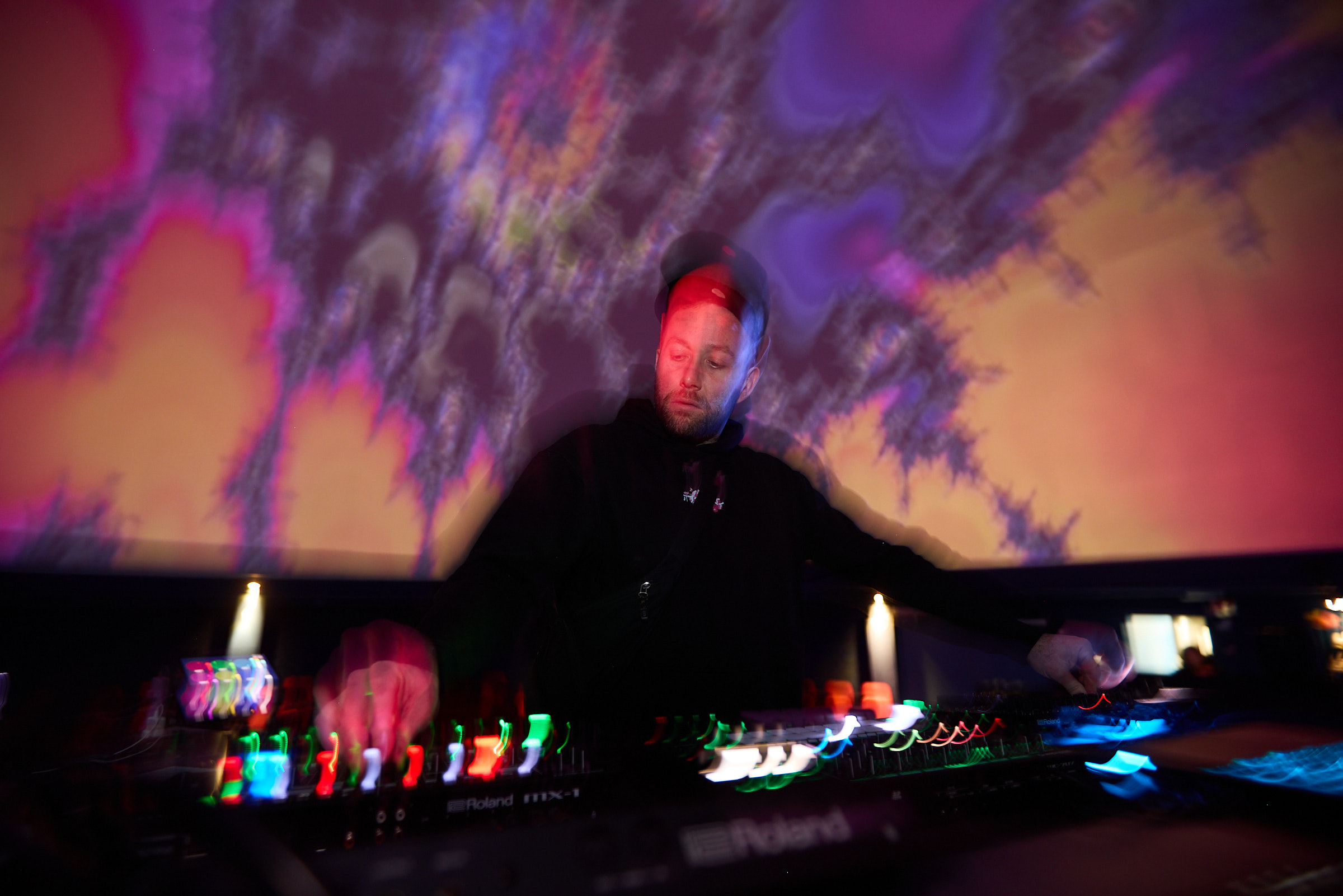
I’m also genuinely curious to see what I take away from it myself.
I was there during the filming and recording, but I still don’t know exactly how all of those experiences have been woven together into the final piece. So much happened while we were there that the story could have been told in countless different ways. In a sense, I’ll be discovering the work alongside everyone else.
Ultimately, though, I hope people come away with a broader perspective.
We’re all living on the same planet, but we’re all having very different experiences of it. Whether you’re in Europe, the Amazon, Borneo, or somewhere else entirely, people have different relationships with nature, community, and daily life.
I think there’s something really powerful about being able to see the world through somebody else’s perspective, even briefly. If the installation gives people a glimpse into another reality and helps them think differently about their connection to nature and to other cultures, then I think it’s done its job.