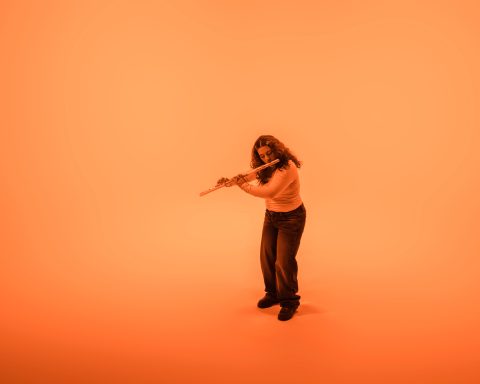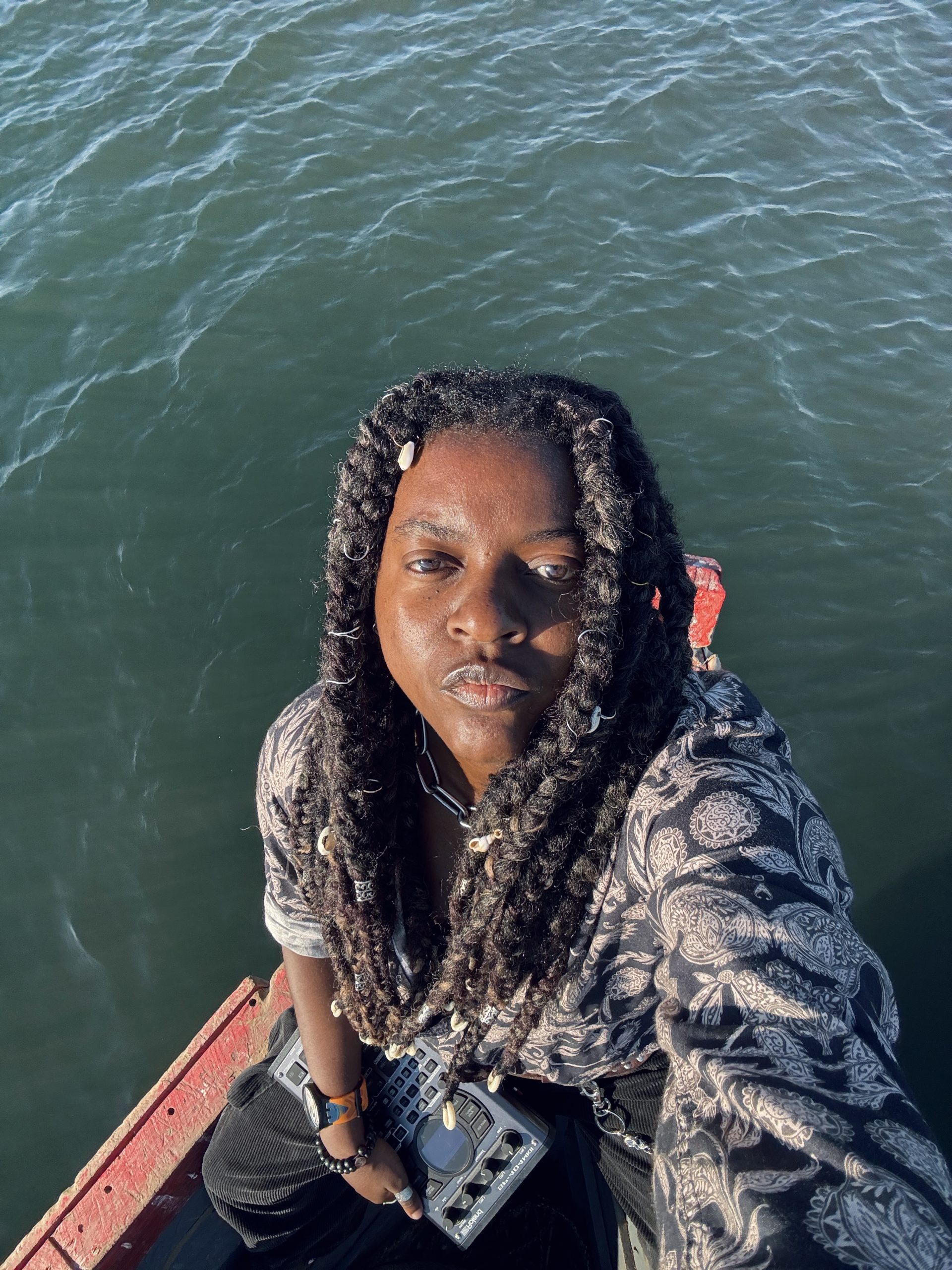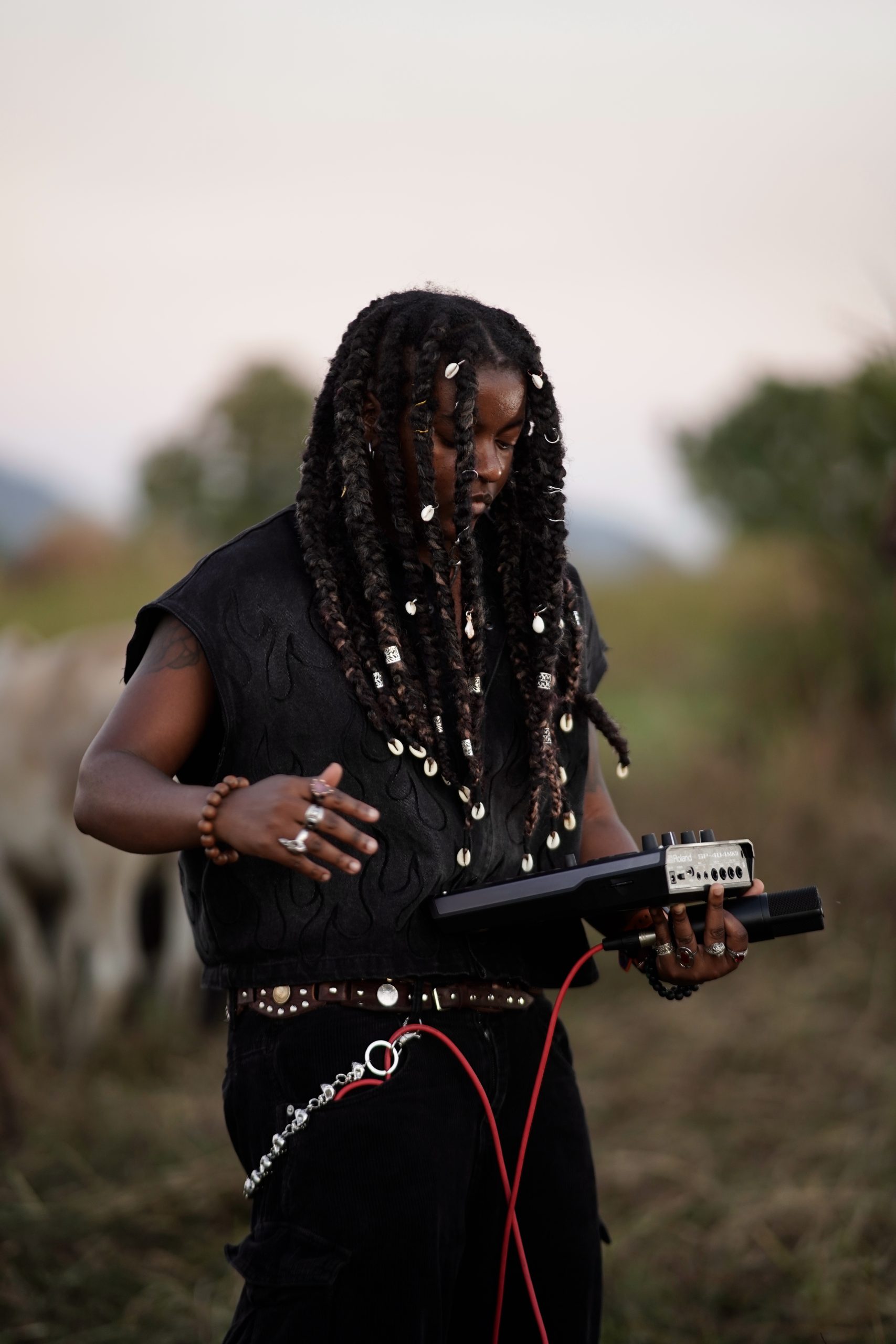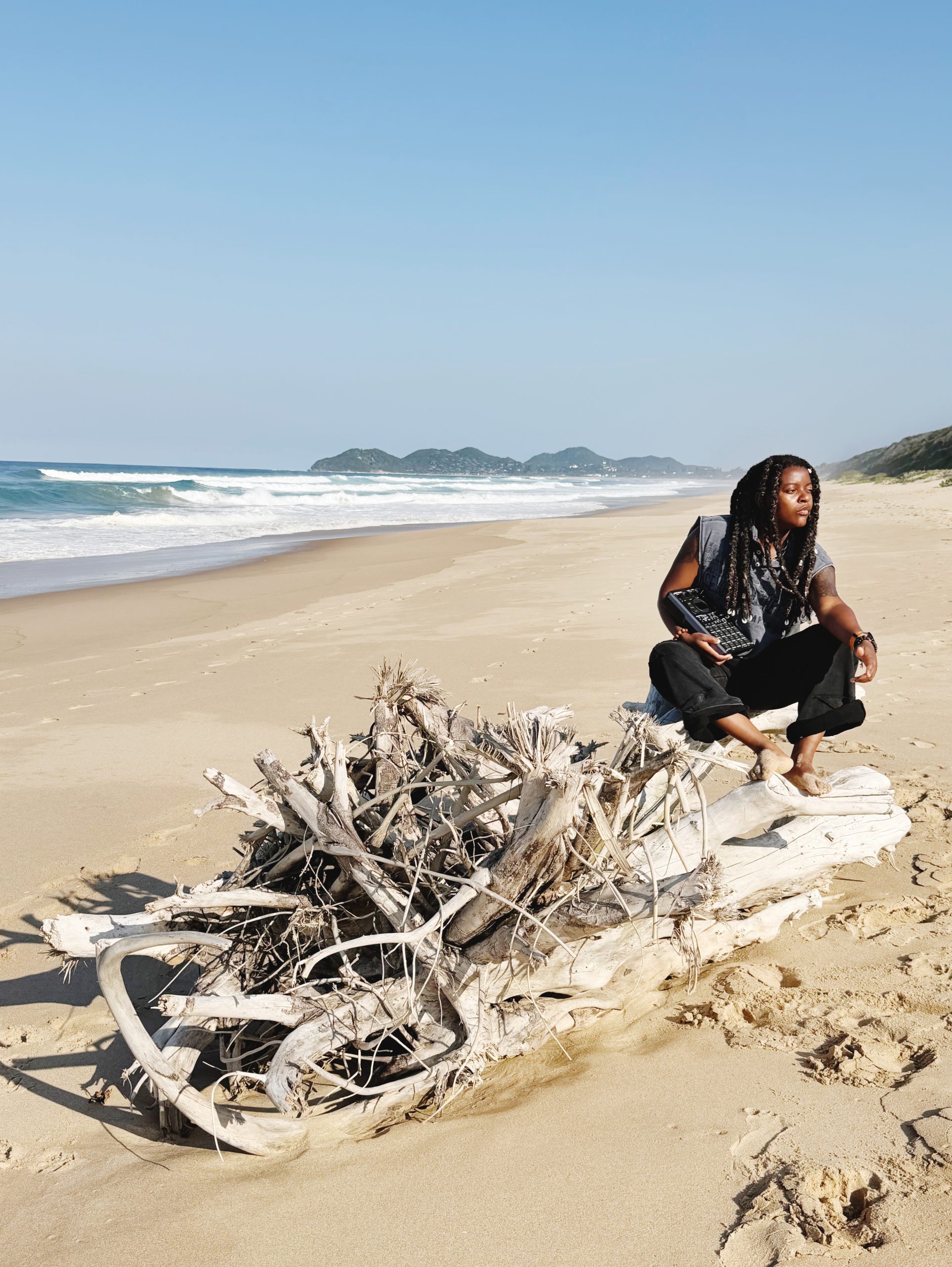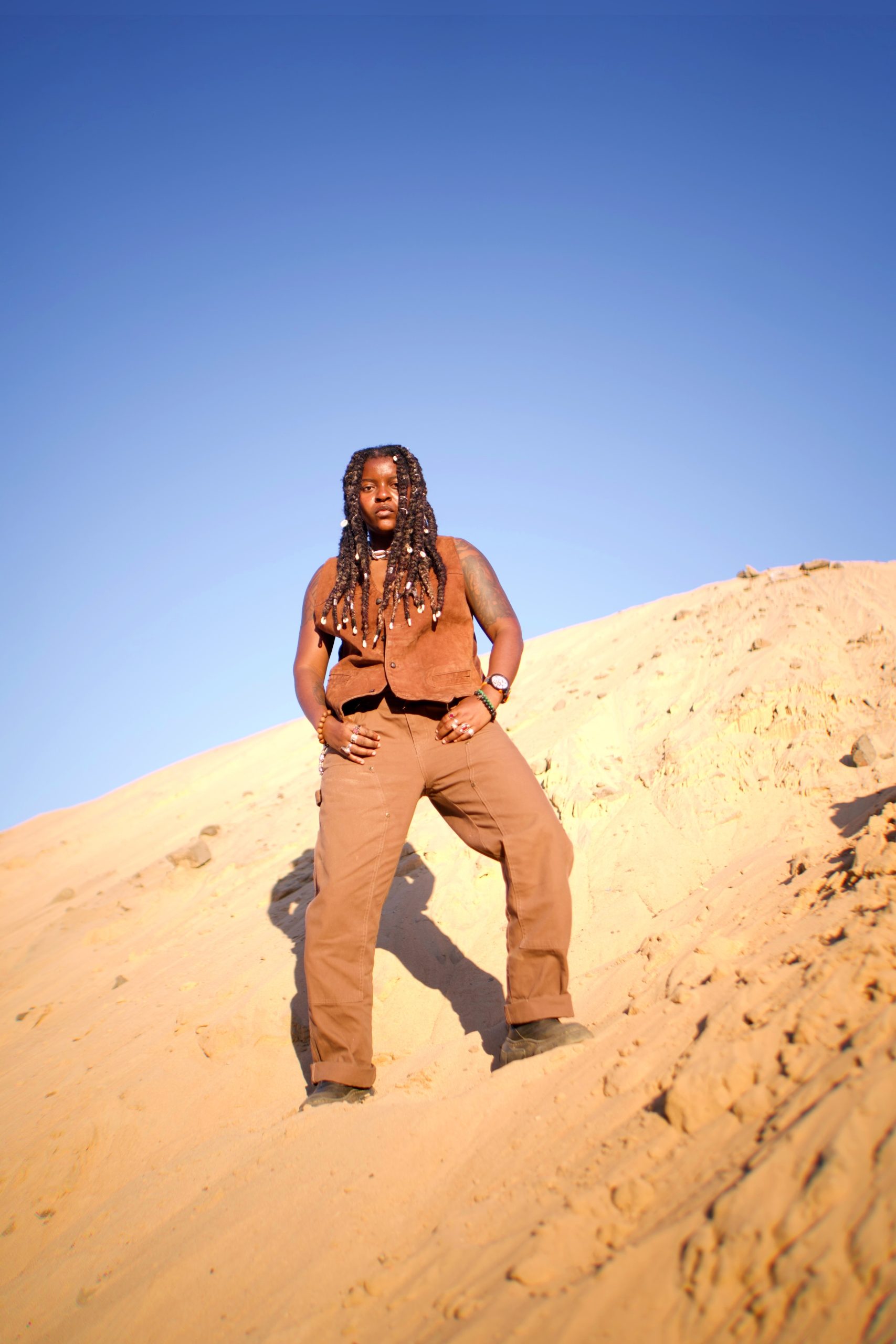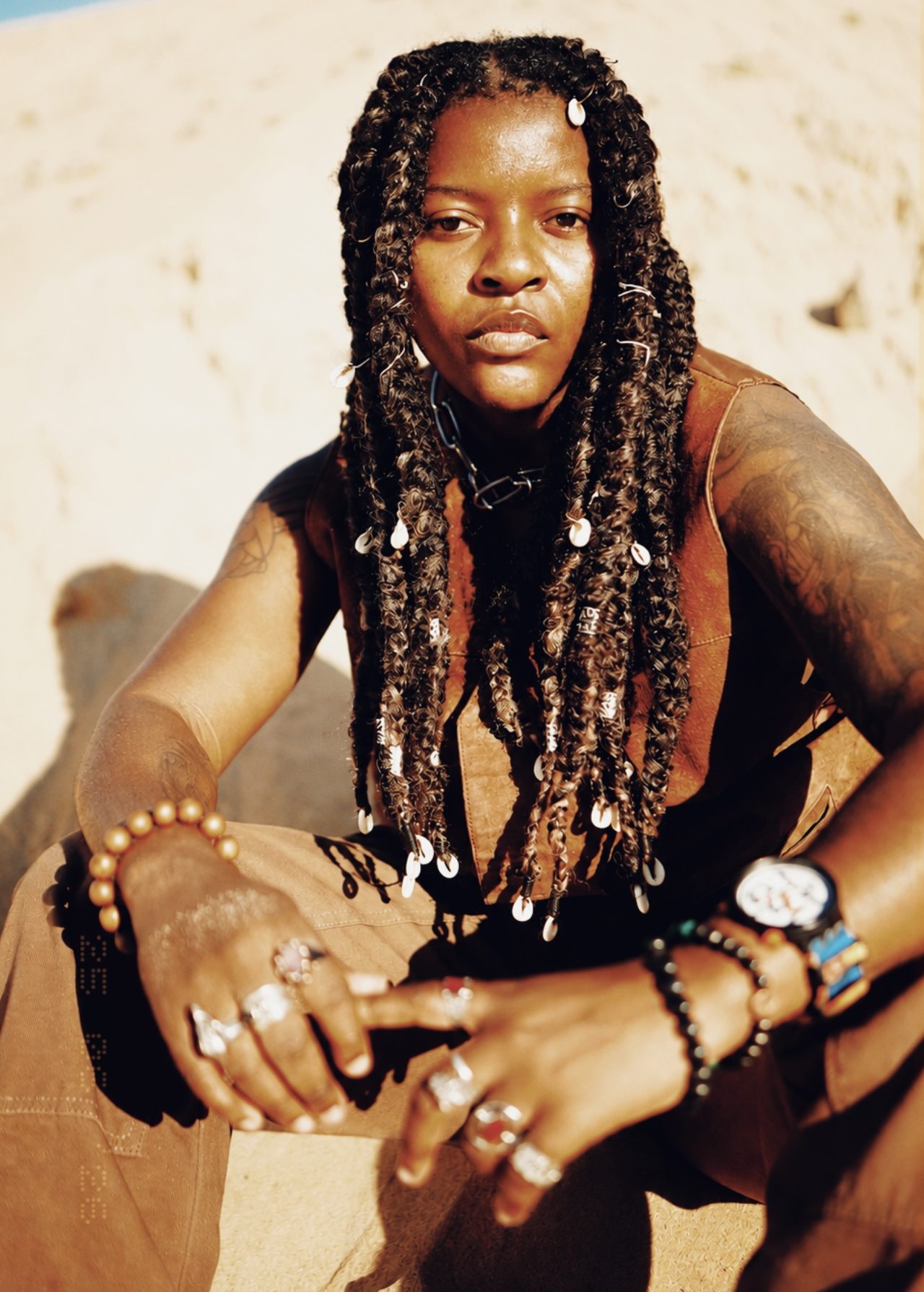


Positioned between Tanzania, Mozambique, and Zambia in Southeast Africa, the Republic of Malawi is one of the world’s least-developed nations, mired by a rural economy and landlocked location. It’s also a place of immense natural beauty and artistry. To musician and activist Chmba, Malawi’s well-being is the cause to which she’s dedicated her life, even as her creative career has taken her across the globe.
Today, Chmba is speaking from her home, surrounded by art and books. It’s visible,” she admits of her country’s challenges. “Right now, I’m lit up with a power backup because we have no power. We have no water. Usually, we have a fuel crisis. This week has been good, but there are all of those things you see.”
Drawn to the Sound
Her own musical journey began early. “Since I was a kid, I’ve been around a lot of sound,” she says. “My parents had me while they were in college. My dad had a boombox and was into break dancing.”
Chmba’s parents modeled the curatorial approach. “There were cassettes coming through Malawi from South Africa, the US ,and the UK,” she recalls. “I was the toddler, and my Dad would be like, ‘Go get that cassette with the lady in the blue dress,’ and he meant Donna Summer.”
It wasn’t long before she was pulling her own faves together. “I started making mixtapes from a young age. In Malawi, our tech usually takes a little longer. I grew up around cassettes, eventually CDs, and slowly got into digital playlisting.”
Soon, peers started to take notice of her growing skills and invited her to spin at local events. “I started DJing in my teens for friends’ parties, and eventually my friends gifted me a DJ controller.”
The sounds of electronic music fascinated Chmba as she developed a performance style, with sounds from around the globe contributing to her emerging creative identity. “I was obsessed with Daft Punk and a group from South Africa called GoldFish, who had interactions between electronics and Afro percussion,” she says, recalling two formative acts.
Synths held an unusual allure from the start. “South African singer Brenda Fassie also used a lot of synth in her bass lines,” Chmba says. “I didn’t even know what a synthesizer was as a child; I just knew whenever I hear that thing, I’m drawn to it.”
"I didn't even know what a synthesizer was as a child; I just knew whenever I hear that thing, I'm drawn to it."
Let Us Shine
Chmba’s drive for social advocacy is impressive, and like music, she came to it early. At age fifteen, she founded Tiwale, “a youth‑led organization based in Malawi that supports women and gender minorities through education, vocational training, and entrepreneurship.” Tiwale (Chichewa for “let us shine”) continues to impact the lives of young people in meaningful ways.
“When we started in 2012, child marriage was still legal in Malawi. We criminalized it in 2018, and a lot of our work has been just around supporting young women.” But there are barriers for much of the population the org serves, which it works to address.
“The challenge is digital access,” Chmba says. “Lots of folks who are vulnerable to child marriage don’t have access to a computer or even a digitized phone. So we do digital literacy workshops: ‘This is a QWERTY keyboard. This is a computer. This is the internet.’”
From there, pathways to other opportunities emerge, including the chance to explore the arts. “We have programs for DJing and music production. We also offer scholarships for folks to go back to school.” Tiwale expands financial options for the people the organization assists. “We create opportunities: micro-loans, business loans that are interest-free.”
Tiwale continues to fuel Chmba, even through difficult times in society. “Half of my life now has been with Tiwale, and it’s been such a delight to work in the community,” she says. “I won’t lie, the last few years have been challenging aid-wise, as the world shifts. We’re looking at ways we can keep the work going and keep it sustained as well.”
"The last few years have been challenging aid-wise, as the world shifts. We're looking at ways we can keep the work going and keep it sustained."
Heritage
The intersection of music, history, and social action is natural for Chmba and is reflected in her deep protectiveness for the widespread popularity of Africa’s musical culture. “I see it more as heritage, a root,” she says. “When people say Afrobeat, my mind goes to West Africa and Fela Kuti, Pat Thomas, that whole era of sound.”
She clarifies how the current Afrobeats genre differs from its forebearers. “Today, there’s Afrobeats—people like Burna Boy. It’s exciting for me to start to see these avenues being created, but we’re also seeing the influence of the bigger countries that have made their sound a little more exposed globally.”
As a natural sociologist, the way the music of the continent moves intrigues Chmba. “I can go into how it’s traveled,” she says, eyes flickering with curiosity. “There’s the influence of diaspora as well. You have a large Nigerian diaspora, West African diaspora, and you start to see ways that the West African sound has traveled a lot more.”
Eclectic Africa
As prevalent as these styles have become, to Chmba, the diversity of Africa means the influence is only beginning. “I feel like we’ve only tapped into 1% of the sound coming out of the continent. I think of Ethiopian jazz and Congolese music—this weird in-between between like pop, Afrobeat, and house.”
And the study never ends. For example, Chmba discovered another subset of a style on the project. “That was the moment where I really learned a lot about Zambia’s Zamrock, their Afro-psychedelic era. A lot of songs that came out some time ago still deserve their flowers.”
Much of Africa lacks the infrastructure many Western artists often take for granted. While forging her own artistic path, Chmba remains keenly aware of the discrepancy between a continent bursting with talent and artists’ ability to earn a living from their efforts.
“There’s a lot of educational work to do in terms of like, how royalty distribution works,” Chmba explains. “There’s so much potential in the music industry across the continent, audience-wise, and so much talent that’s untapped. The conversation is really encouraging investors in sound.”
"There's so much potential in the music industry across the continent, audience-wise, and so much talent that's untapped."
Overlapping Worlds
As for her own career, the word is spreading about Chmba. Her unique approach has attracted some high-profile collaborators, including the endlessly culturally relevant Nile Rodgers. The pair worked on the soundtrack to a photographic retrospective of legendary Malian photographer Seydou Keïta.
“These photographs are such a vibe. He just really captured a lot of the ’70s, ’80s, Afro fashion world—especially across West Africa,” Chmba says of Keïta’s iconic work. “Nile was invited to curate a soundtrack experience as you move through those photos in the museum. What would be sort of like the sound of the time.”
Chmba goes on to share how the Chic guitarist approached her for the project. “He said, ‘I know someone who dresses like that, fashion-wise, but also likes that sound,'” she reveals. “Brooklyn Museum wanted it to be intergenerational and included the artists who are making the sound now. It’s a one-hour mix that was truly an honor to piece together alongside Nile Rodgers.”
She’s engaged with Rodger’s audience in a visceral way as well: opening for his band onstage in Stockholm, Sweden. “One of my favorite gigs that pushed me was at Avicii Arena, opening for Chic and Nile Rodgers,” she says. “I see the crowd, and it’s full of beautiful disco heads. I had to do a little flip, but it was exciting to meet them halfway.”
For someone as grounded as Chmba, the line between her creative career and outreach work has been easy to navigate. “With Nile and Angélique Kidjo, I’ve come across both of them through development work, so it’s been an overlap of worlds, because I’m an activist and an organizer.”
Still, that doesn’t keep the butterflies from fluttering a bit. “Obviously, I’m like a massive and burning up inside to want to talk about music,” she admits. The meetings led organically to opportunities. “We’re talking about community impact, and suddenly I’m like, ‘I was really inspired by your song, and they’re like, ‘Send me your stuff.’”
"Brooklyn Museum wanted it to be intergenerational. It's a one-hour mix that was truly an honor to piece together alongside Nile Rodgers."
Sculpting
In a crowded electronic musical space, Chmba’s combination of atmosphere and rhythm stands out from her peers. She offers insights into how she constructs the layered musical tapestries found on singles “Uchi” and “Okongola.” “When I was starting out, I’d start with percussion. But now I’ve been more drawn towards the sound.”
At that point, the sculpting begins. “I start manipulating it and trying to make out some chords,” Chmba explains. “My new songs are melody-driven first, and then I get into the rest of the build-out. I want a very intense emotional feeling, which can be hard with house, but I want it there.”
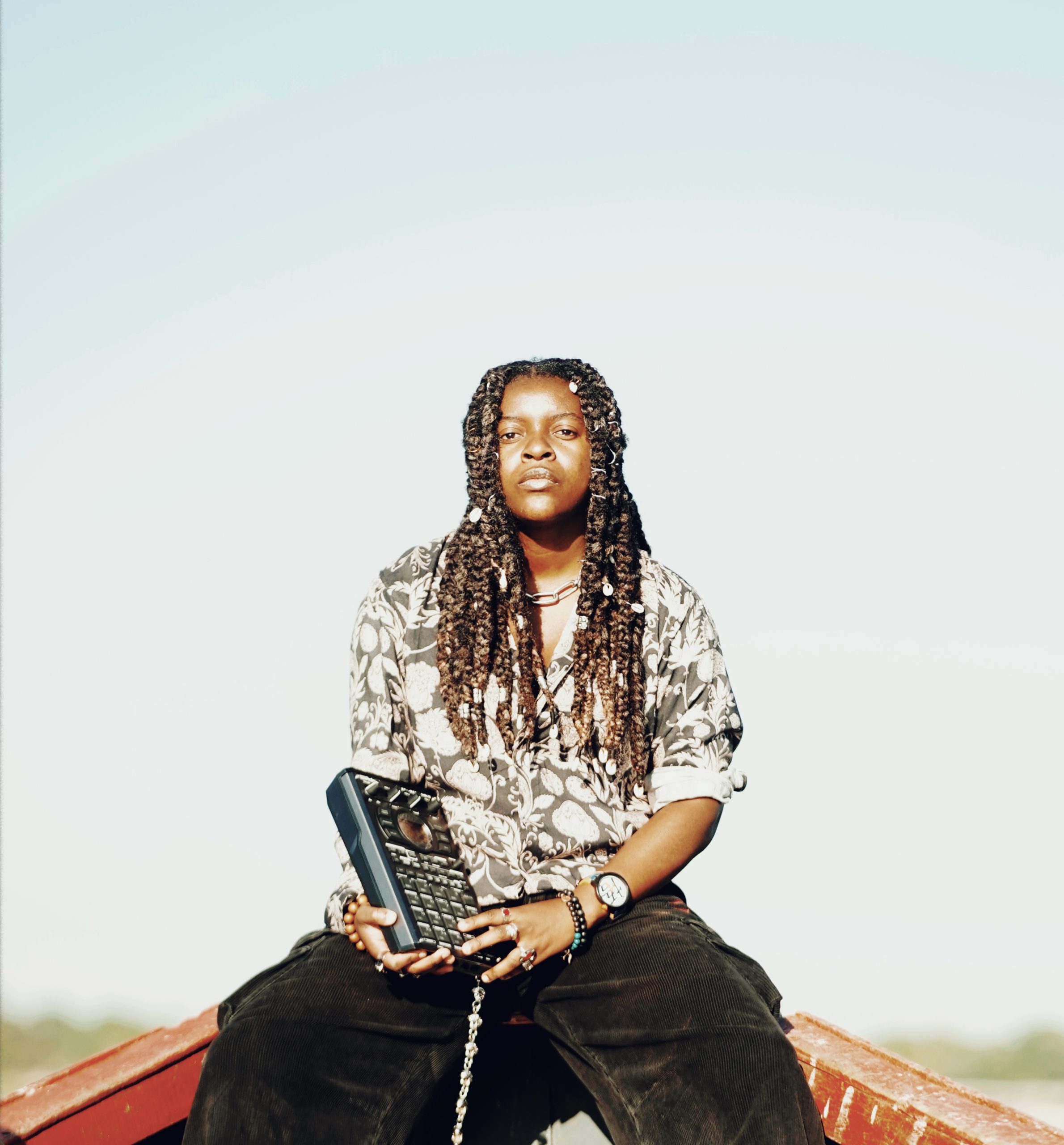
As a true musical historian, the SP-404MKII has proven a useful companion. “I’ll use 16 tracks and load up little samples of different sounds,” she says of her 404 method. “I enjoy thinking about arrangements with it, exploring how different sounds can interact.”
Chmba’s own style is constantly evolving, with numerous releases forthcoming. She likens her approach to sculpting. “It’s all clay,” she says, “but some of it’s hard clay that’s a little dry, so we’re going to work with attaching a few things.”
Life, Art, Activism
It’s deeply personal music, which means the work isn’t always without emotional effort. “There’s been an undeniable correlation between personal life events and the sound that I create. My first EP was a grief EP. It was after I lost my mom, and I was moving from shock to anger to acceptance in my process.” Sometimes, the muse demands a different path. “My last drops have all been about, you know, dreaming, finding, and discovery.”
These aspirations align with Chmba’s overall attitude toward life, art, activism, and her country of origin. “I’m challenging people to find joy despite all the challenges,” she says. “It speaks to the chaos in the world right now, where one can get lost in the hopelessness of the news and everything that’s going on.”
"I think about the kind of energy that I carry and what I pour into the world."
“A few months ago, I was getting groceries,” she begins. “Someone came to me and said, ‘I listen to your song ‘Dream’ every day on my drive to work. It’s a chant for me: I can do this. I’m living my dream. I’m going to make this happen.’”
Chmba is moved by the memory of what her song meant to the listener. The fan reaction also confirmed the value of the signal she’s sending out through her songs. “I’m spiritual,” she states resolutely. “I think about the kind of energy that I carry and what I pour into the world.”