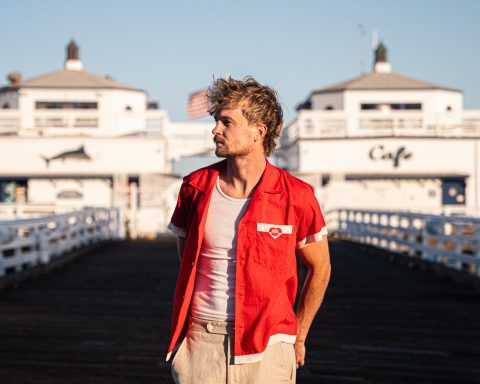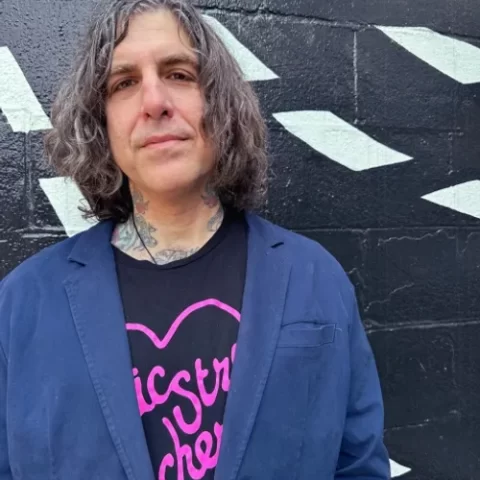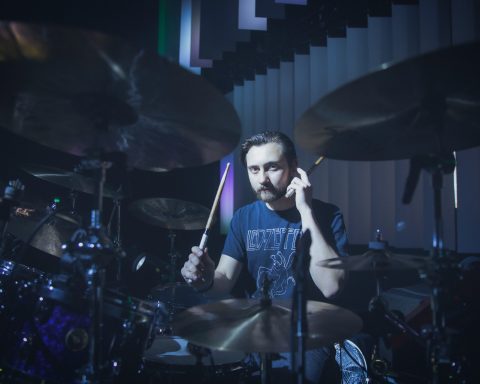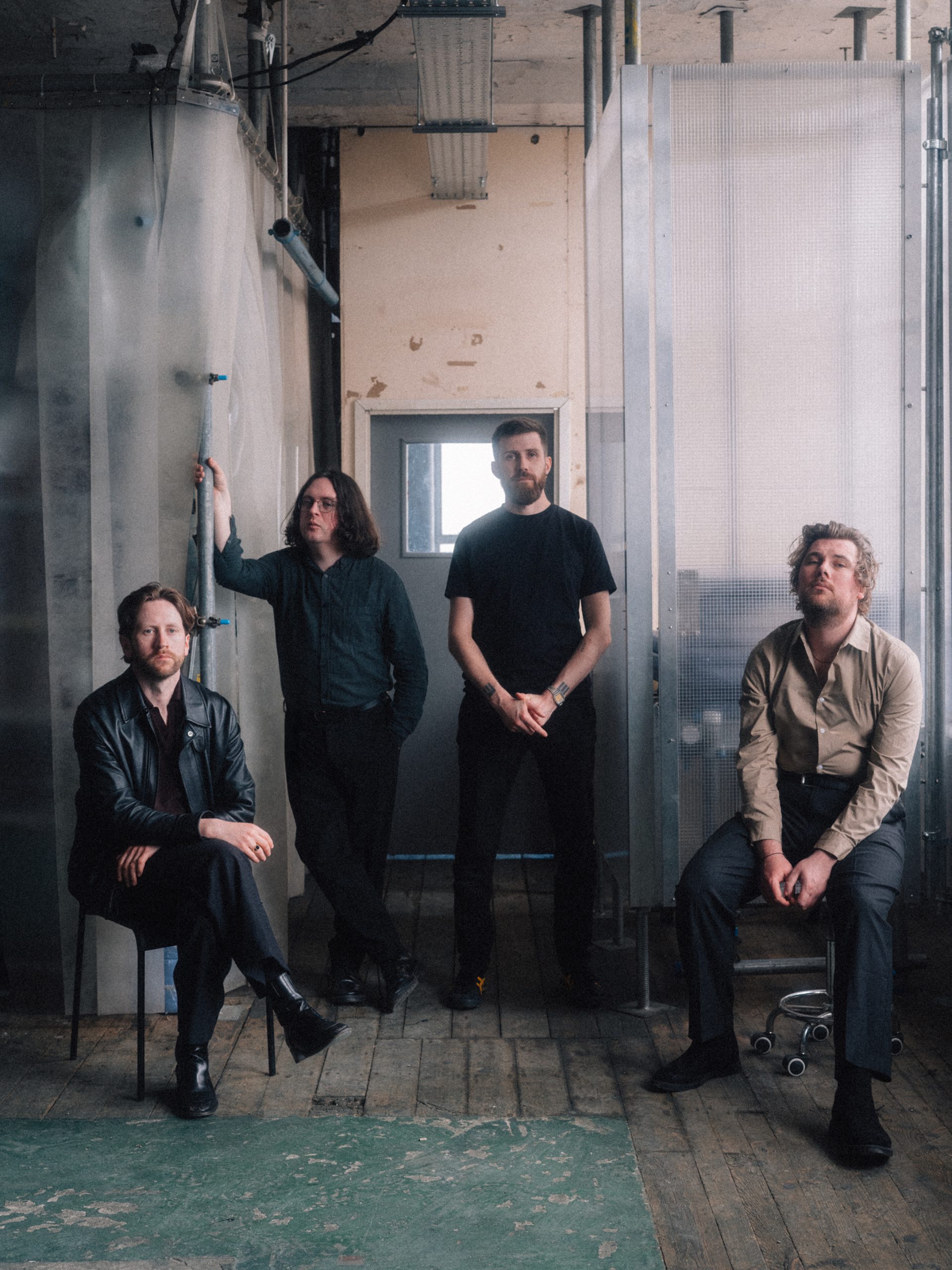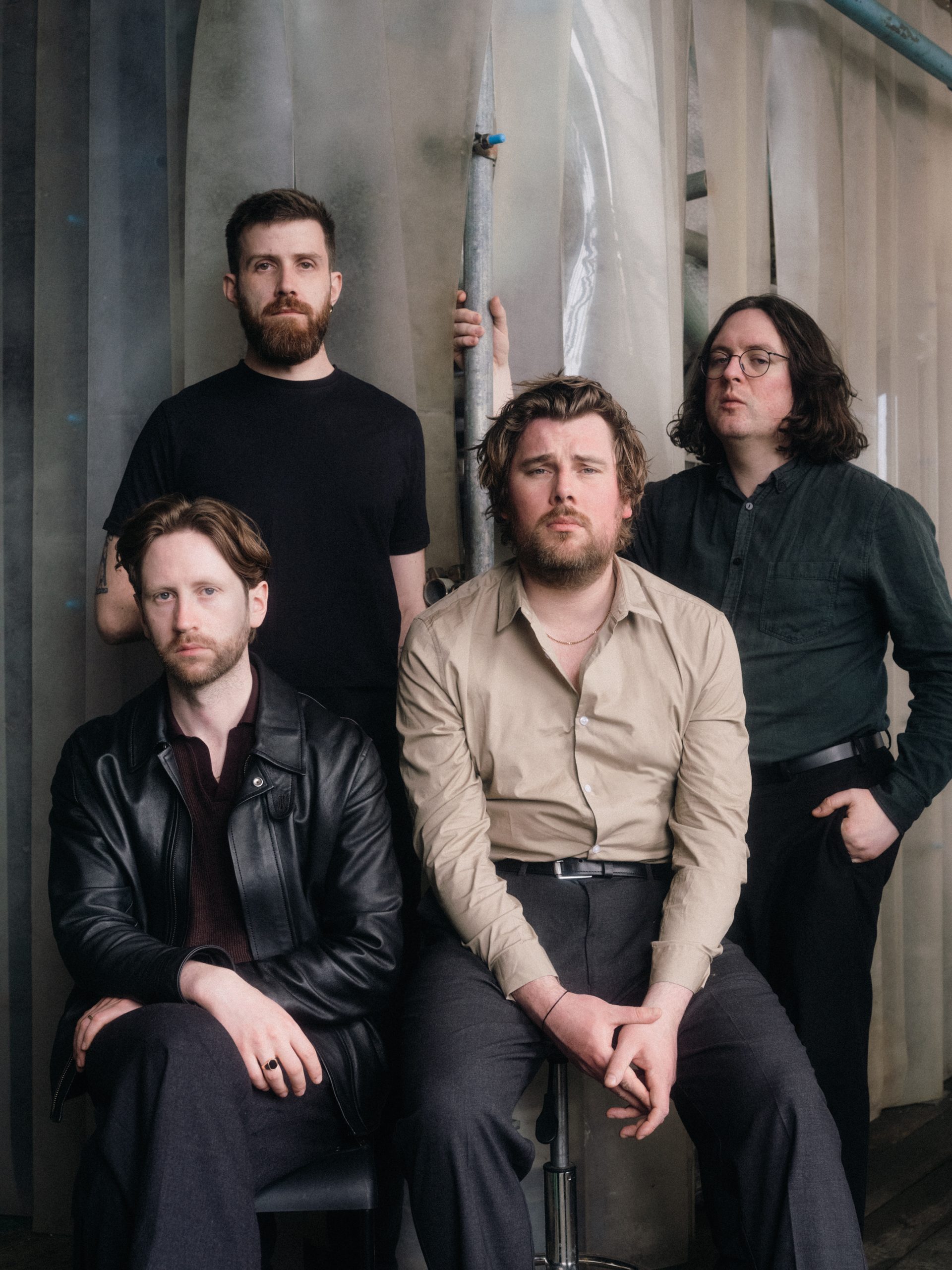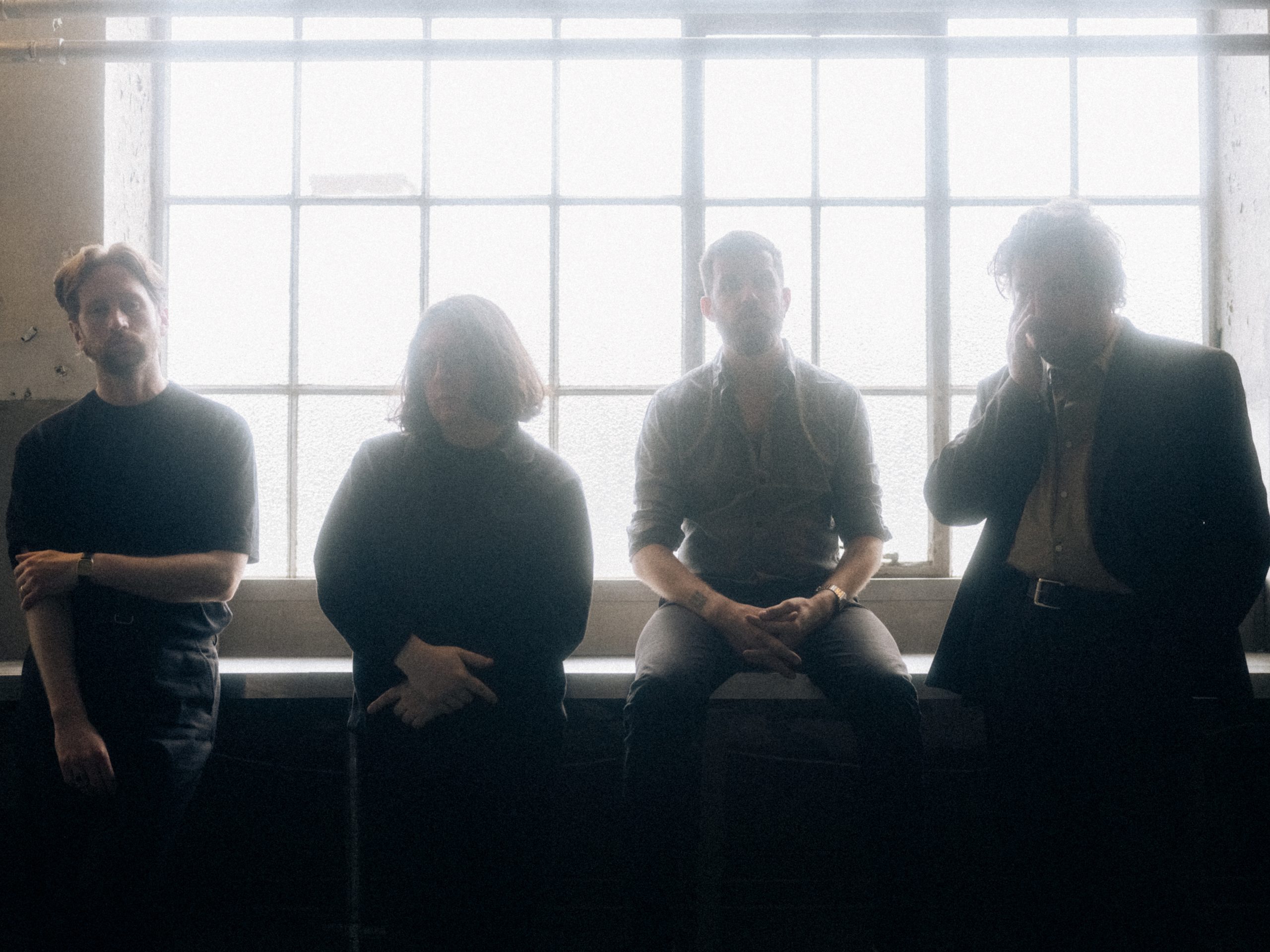


Gilla Band is the definition of uneasy listening. With its dense slabs of dissonance, jumpy polyrhythms, and vocal provocations, the Dublin group’s sound works like a rake to the mind, clearing away the debris as it incites aural abreaction. Oh, and it rocks. The band achieves its aims while defiantly avoiding anything resembling a cliché, musically or lyrically.
“The goal is to think critically about what you’re doing,” explains guitarist Alan Duggan. “Is this doing something new? Is this something that’s exciting for us to listen to, or are we just doing something that another artist has done?”
Melting Minds
Duggan is speaking from outside Detroit, where the quartet played the night before at Third Man Records, the clubhouse of one Jack White. “Gilla Band Melted My Brain, and I Loved It,” hollers the headline of a Midbrow rundown of the gig. Sounds about right. Tonight, Chicago gets its dose, the next stop on the band’s longest US run to date.
The effusive tone of the show write-up makes sense, as abrasive rock music is having a moment. Since forming in 2011 under its prior moniker, Girl Band, the group has seen the emergence of a bumper crop of misanthropic post-punk combos, many of whom credit Gilla Band as a formative inspiration on their art.
“I remember when the Fontaines lads released their first record, they graciously talked about us being an influence on them. We saw the same thing with Idles, and then those bands got huge,” Duggan shares. “Particularly on this record, we’ve noticed it a bit more.”
The record to which he refers is Pugnello, Gilla Band’s fourth, and the recipient of widespread acclaim, including Pitchfork Best New Music as well as Stereogum and Guardian Album of the Week. One wonders if the members can feel the groundswell of press attention from within a sequestered tour van as it rumbles down North American highways.
“I was talking to the rest of the band about this,” Duggan says about the outpouring of journalistic appreciation. “It’s cool that people seem to like the album when there is no radio hit, no viral TikTok thing, and we’re not the young new hot band anymore.”
"It’s cool that people seem to like the album when there is no radio hit, no viral TikTok thing, and we're not the young new hot band anymore."
The No Cliché Club
Maybe not altogether new, but the band is certainly having a scalding moment. And on its own terms. In addition to brash soundscapes and pounding grooves, one of Gilla Band’s differentiators is vocalist Dara Kiely’s idiosyncratic writing style, which approaches mental health struggles and other weighty topics in unconventional ways. He once scribed an entire album without using a single pronoun.
“With Dara’s lyrics, he’s always been very abstract and cryptic,” Duggan offers. “That’s still there, but there are some themes that are more identifiable or universal, like grief, that people might latch onto. It’s hard to say because he was shouting about Power Rangers for ages.”
The group’s staunch refusal to simply mine rock music’s past for parts means Gilla Band continually challenges itself to create something fresh. In the case of Pugnello, the writing and recording process occurred over the course of four years. Taking some time to gestate is not a problem for this lot.
“One of the nice positions we found ourselves in is it’s not the thing we rely on as a living,” Duggan says of the group’s unhurried, uncompromising methods. “We’re not like, ‘We need to get a record out because we need to get tours in to pay bills. We can take our time.’”
Sculpting heavy, inventive music that doesn’t use existing tropes means treating each element of the mix like a science experiment. Working from its own converted rehearsal space gives the band freedom to toy with various elements without the external stressors of a studio environment.
“My thing at the start was, ‘How do I make the guitar not sound like a guitar?’” Duggan says. “Further through our discography, we narrowed in more on how you mess with the overall track and got into sound design. It’s meant that utilizing drum machines and synths has felt a lot more natural.”
"My thing at the start was, ‘How do I make the guitar not sound like a guitar?’ It's meant utilizing drum machines and synths has felt a lot more natural."
A Gradual Descent into Synthesis
Natural is the right word for the seamless way Gilla Band splices techno-imbued beats and icy pads into Pugnello tracks like “The Angelus” and “Three Hands Clapping.” The results evolved over the album’s four-year gestation period. “It’s been a gradual exploration,” he explains. “Back in 2021 and 2020, I started getting quite into synthesis and drum machines and stuff I never really explored before. I ended up getting a JUNO-60 and a TR-909.”
While he initially procured the vintage instruments for his other project, The Null Club, they quickly began to appear in Gilla Band productions. “There’s a bit of JUNO on ‘Alogia,’” Duggan confirms. “It’s at the start as this warpy element. And there are definitely 909s dotted throughout the record.”
The band utilizes the TR-909 in a number of ways. “It beefs up what we do,” he says, “and we take the drum machine and run it through the pedal board, which immediately manipulates it as well.”
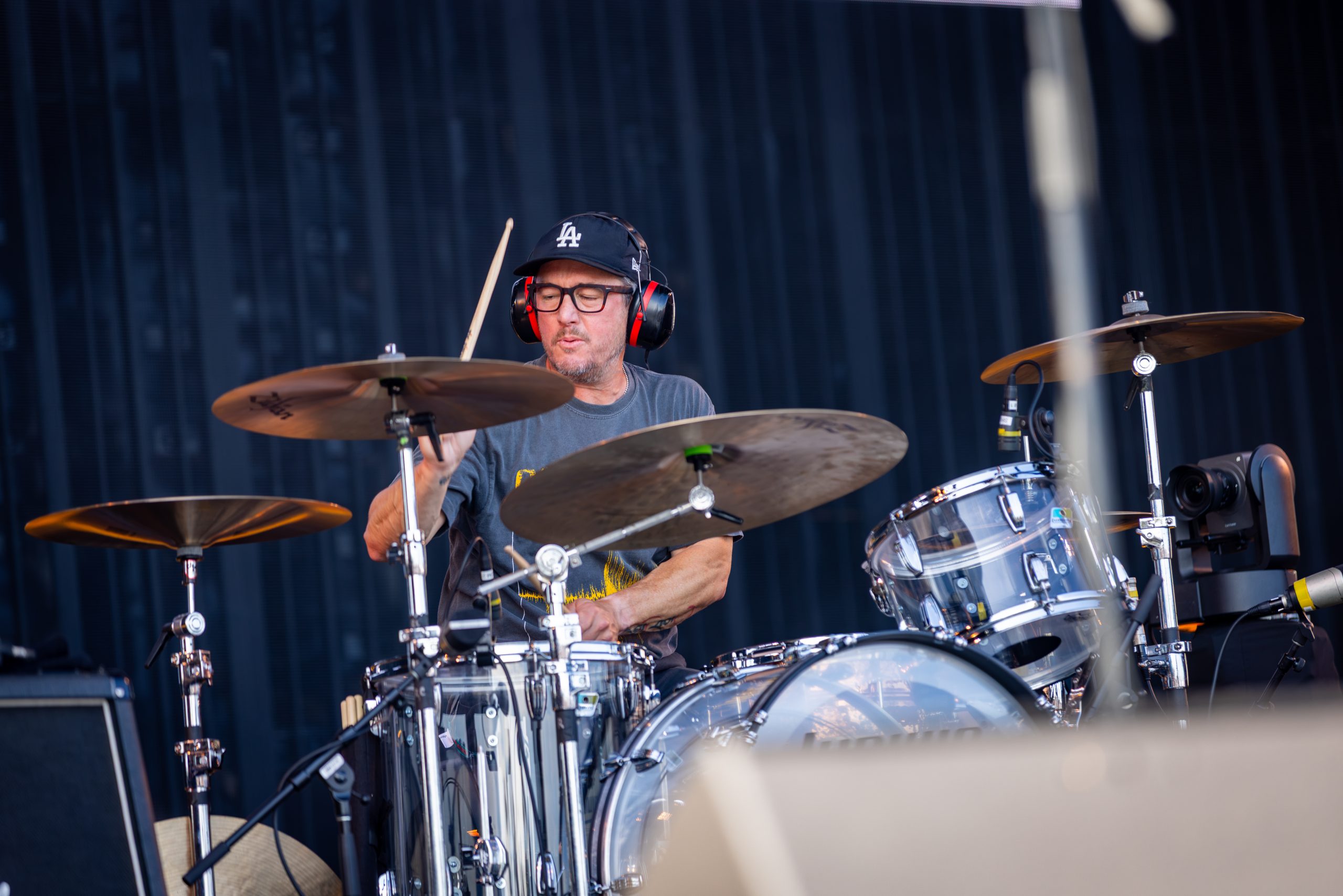
When translating the dense layered album into performance-ready tracks, drummer Adam Faulkner leans on the SPD-SX PRO. “It’s a mix between him and me,” explains Duggan. “He has some one-shot elements on the Roland pads and maybe an intro loop into the track.”
A dedicated sonic tinkerer, Duggan runs another onstage station, allowing him to recreate the drones and other album nuances in the live experience. “I’ve got my pedalboard, which includes the BOSS DD-3 and a synth table with a MIDI keyboard and mixer. I’m taking my guitars and sending that into Ableton.”
"More than we knew at the time, Roland was absolutely sending us down a certain road and sparking ideas that would become songs."
All that processing goes through a trio of AC-30 amps, adding to the visceral heft of Gilla Band’s aural attack. “It’s definitely quite full-on, but it’s cool,” Duggan says of the volume. The message is clear: pack earplugs before attending a show.
Even with the emphasis on analog gear, Duggan is not opposed to convenience when the situation demands it. Especially when the alternative is lugging delicate classic gear on the road. “When touring with the Null Club, instead of bringing the JUNO-60, I’ve got the JU-06, which I can put in my bag.”
It Takes a Team
At a decade and a half into its career, Gilla Band chooses to employ a division of labor that plays to each member’s strengths. “Adam runs the tech side of the live show, so he does the channel list and knows all the patching,” Duggan says. “When it comes to recording in the studio, that’s Daniel’s (Fox, bassist) world. He did the mix on the record and runs the studio when we’re recording drums.”
With his focus on the big picture, Kiely brings a different skill set to the table. “He’s not into the tech,” admits Duggan of their frontperson. “But he can say, ‘That sounds cool, or that doesn’t sound cool,’ where we might get into the woods. It’s nice having that voice.”
Another key player in the Gilla Band story is Rough Trade Records, the legendary UK label that launched The Smiths and The Strokes, and is currently home to Sleaford Mods, Warpaint, and others. The alliance with Rough Trade came about early on, when the band played the UK’s famed Great Escape Festival.
"When Rough Trade reached out, it was like, 'That's mad.' I watch documentaries on this label, you know what I mean?"
“Geoff (Travis, founder) came down to see us, and Dan came to see us a month or two later in London with Jeanette,” Duggan says of their discovery story. “They offered the deal from there, and we worked it out quickly.”
The weight of the moment wasn’t lost on the young band—this was, after all, Rough Trade, a name synonymous with independent music. “When Rough Trade reached out, it was like, ‘That’s mad.’ I watch documentaries on this label, you know what I mean?”
Considering the label’s pedigree, they remain remarkably hands-off in terms of the band’s choices. From the start, they praised the unit for its self-sufficiency and integrity, likening it to Steve Albini’s seminal noise-rock act Shellac.
Complete Creative Control
“Every decision is ours, and we get full creative control,” Duggan stresses. “I just don’t know how we would operate in any other environment, to be honest. The main thing we’re trying to do is get the record to where we want it to sound as opposed to like, ‘This would work better for radio.’”
While not actively pursuing pop radio airplay, the band doesn’t shun input, mainstream or otherwise. Still, their taste generally veers toward the more esoteric end of the spectrum. Duggan calls out hip-hop duo Armand Hammer and Saved! by the Reverend Kristin Michael Hayter (aka Lingua Ignota) as recent standouts for him.
"All of us are actively looking to listen to music that we've not heard before, whether that's new or old. Good ideas can come from anywhere."
Of Hayter’s album, he says: “It sounds like a film—really intense, very cinematic. It doesn’t sound anything like us, but I took a lot of personal influence from how hands-on the sound design is.” The effect on Pugnello, while subtle, is a great example of where Gilla Band fits into the avant-garde zeitgeist.
The diversity of its influence pool points to the group’s operational philosophy: openness. It’s something Duggan loves about Gilla Band’s creative process. “I think everything’s kind of up for grabs,” he says. “I think all of us are actively looking to listen to music that we’ve not heard before, whether that’s new or old. Good ideas can come from anywhere.”