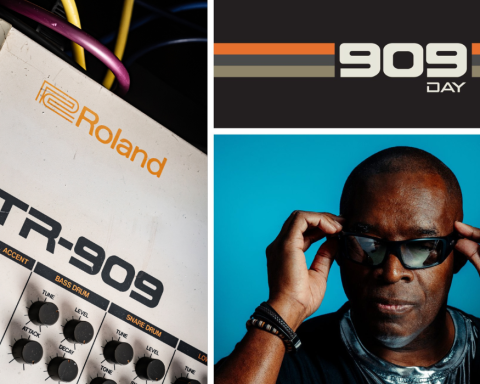
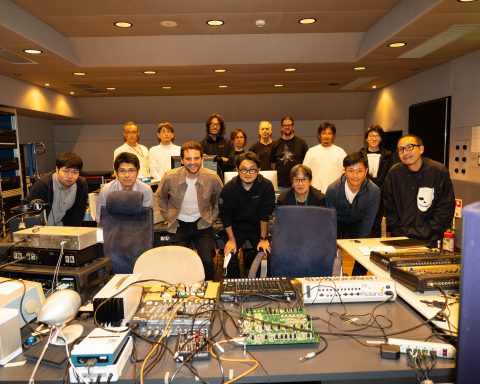
Stillness. Sound. Community. Music can create space for reflection, connection, and wellbeing, so what would emerge from combining these practices in a single intentional environment? As part of ADE 2026, the ZERØBPM collective hosted a three-day Ambient Meditation Ritual at De Thomaskerk, an Amsterdam church and community hub, on October 23–25, 2026, featuring 33 globally recognized artists.
In conjunction with the DJ sets next door, celebrated audio artist Nadia Struiwigh facilitated a guided experience and open studio with musical instruments, including the Roland n/vision, Mood Pan, and more. Struiwigh shed light on her involvement and what she hoped attendees garnered from the epic experience.
Healing Abilities
Along with your musical artistry, you are also a sound therapist. How did this factor into what you do with ZERØBPM?
It’s part of enabling human creativity. Rather than only experiencing sound as a visitor, we can create and heal parts of ourselves with electronics. A lot of times, these things are seen separately: healing abilities, sound therapy, and electronic music. If you merge them together—frequency or sound itself—they can have a profound influence on our emotions, nervous system, and sense of connection.
Do you work with individual clients?
At the moment, no, because I focus so much on my artistry and film composing. But everything I’m doing right now—especially film composing and ambient concerts—contains my knowledge of the frequency range. Instead of one-to-one healing sessions, they’ve become group sessions. My work is about encouraging people to actively explore, interact with, and create sound, rather than simply consume music. Making electronic music accessible to everyone is something I feel very strongly about.
"Making electronic music accessible to everyone is something I feel very
strongly about."
Slowing Down
Tell us about ZERØBPM.
ZERØBPM is an organization that focuses on slowing down in music and life. It’s a collective, event organizer, and record label consisting of a small core team of creatives, artists, and volunteers, rooted in underground electronic music. The wellness industry is booming, and we see that we need to slow down. They focus on events centered on live acts and DJs from the club or underground music scene. For example, when I performed on Sunday, it was literally zero BPM—layers of sound.
How did your workshops come about?
I saw there were two rooms in the event listing. This inspired some ideas: What’s happening in that space? How could it go back and forth? Because I lead workshops, I thought, “If everything is done in silence, could we have silent workshops in the front room where people listened and observed what the tools enable and what occurs?”
The front room of the church was where people were received and had tea. That area and the open studio provided space for them to talk and interact. In the main hall, people experienced the music in silence. When things were happening in the main hall, a gong sounded. That was my cue to start. I facilitated four workshops over Saturday and Sunday on the themes of earth, space, and water.
"ZERØBPM is an organization that focuses on slowing down in music and in life. It’s literally zero BPM—layers of sound."
Tell us about the environment and gear in the front room.
We had three mirrored pillars with three activities for attendees so they could listen, touch, and create. The vibes were metallic, silver, and cool. For the workshops, I sat on the floor, and there were silver pillows. It was all very spacey. We placed two stands on the side, with the new Roland Boutique synth n/vision, the TR-1000, Mood Pan, and a few other products, such as the SH-4d.
How did people behave in the main hall?
Participants sat upright on cushions or chairs, so it was very intentional. The idea was not to sleep, but to really go within, feel what you feel, and vibe with the music. It was active listening, basically.
A New Form of Ambient
Were most of the artists performing from the ambient world?
No, actually. More came from the underground techno scene and dance scenes. They curated sets for the event, but some presented new work or new projects. The world is very much leaning towards ambient these days, because we are overwhelmed. The ’90s are making a comeback, though I don’t hear ’90s ambient returning. The ’90s were more eclectic. This is a new strain of ambient with long pads and long notes.
You hear a lot of trippy underground techno these days. That trippy side has been taken from techno, and that’s the ambient we currently hear.
"The world is very much leaning towards ambient these days, because we are overwhelmed."
People think of techno as being the polar opposite of ambient music, but what you’re saying is that this is all sound to play with.
I personally have ADD, but there are a lot of people on the spectrum who can listen to techno and become calm because it’s repetitive. It overpowers their emotions. And that’s also why I love techno. There aren’t a lot of riffs and different verses. It’s an ongoing heartbeat. I always say ambient and techno aren’t that far apart. It’s just a different drive to the same place.
Were you familiar with the three meditation leaders?
One of them, I’ve known for a long time. She is into Feng Shui. A lot of people at the event were advanced meditators. From my experience, it can be a very intense experience, depending on the frequencies used and the scales. How you create the story influences the journey people take. As we are all different, it relates to how we connect with certain sounds.
"We are distracted. We cannot find the stillness to listen to ourselves. With active listening or being the creator, you find your voice."
Different Vibrations
As a musician and film composer, what do electronic instruments offer that is unlike their acoustic counterparts?
If you look under a spectroscope, everything has a different vibration. That’s the coolest thing about electronic music: we can literally emulate sounds. I can put you in a whole different environment now if I want to.
What would be your kind of ideal state for people leaving your workshops or the whole event?
It might sound like a cliché, but I feel the world is lost in distractions. We are distracted. We cannot find the stillness to listen to ourselves. With active listening or being the creator, you find your voice. You find what truly gives you whatever feeling you need to experience. Perhaps you come away with sadness, feeling, “I missed my chance; I need to do this.” Or maybe it touched something inside and made you think, “Wow, this is what life is about.” Feeling. We’ve lost feeling in this world.