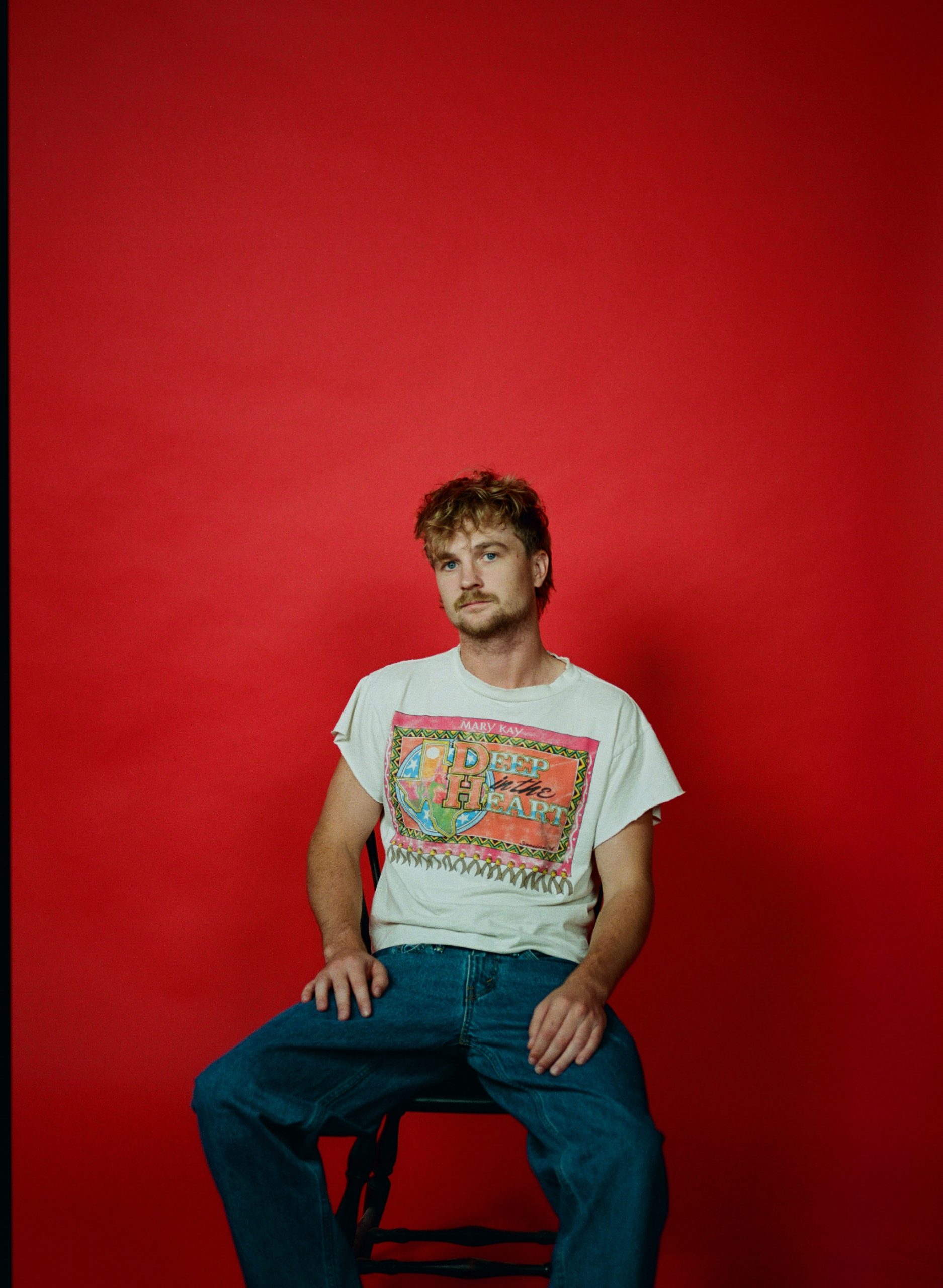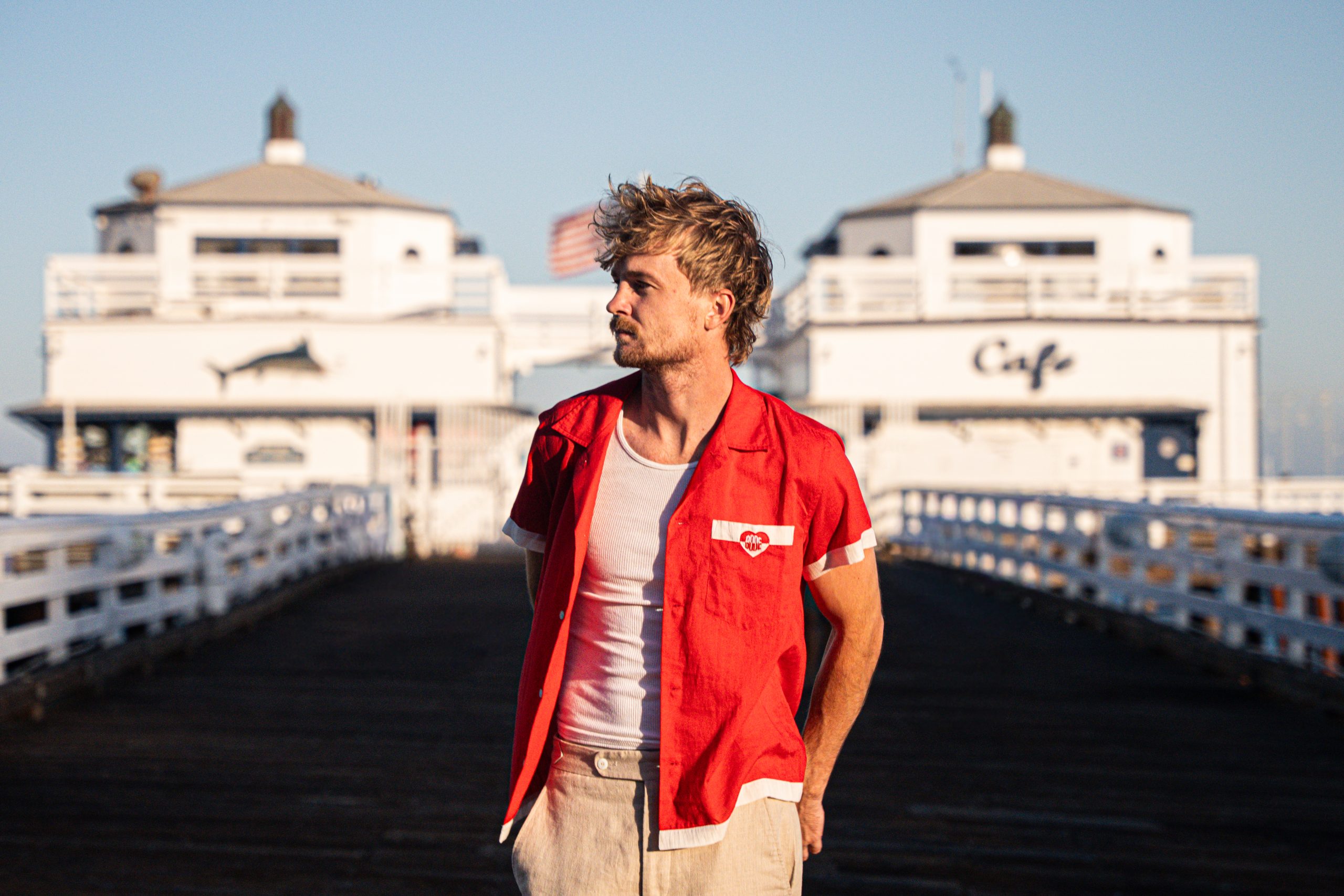
Blending a laid-back mix of genres not limited to surf rock, jazz, pop, hip hop, and reggae, Surfaces is the kind of feel-good music reminiscent of lazy weekends on the water. Formed in 2017 in College Station, the band gained traction as a duo of Colin Padalecki and Forrest Frank, eventually breaking onto the Top 40 scene with their 2019 single, “Sunday Best.” A year later, the duo collaborated with Elton John on their single, “Learn to Fly.”
After six studio albums, Frank left the group to pursue a solo Christian music career. Padalecki continues to carry the Surfaces name, recently releasing All the Space Between, his first album as the band’s sole creative force. We sat down with Padalecki to discuss the band’s evolution, his creative process, and the magic within vintage instruments.
Songwriting Roots
Where does your musical journey begin?
I grew up in a small farm town just outside San Antonio in South Texas. A lot of my early memories revolve around country dance halls, weddings, and traditional country music. At home, there was always a lot of classic rock playing, so those were really the first sounds that shaped my musical taste.
No one in my immediate family was deeply involved in music, but my cousin Alexa plays piano and sings incredibly well, and she’s actually been featured on some Surfaces records. My brother and another cousin both played guitar, and when they were learning, they were playing a lot of Jack Johnson. I think he’s the gateway artist for so many people who pick up an acoustic guitar. So, I grew up listening to tons of Jack Johnson, and of course, hip-hop was always around too. Then, in college, I went through a big indie rock phase, which exposed me to even more styles and sounds.
All of that helped shape my songwriting. I’ve always been fascinated by writing. Around age 15, journaling turned into poems, poems turned into songs, and eventually, I started learning music production, so the songs had somewhere to live. That led me to write songs for my cousin Alexa, which was really the earliest version of Surfaces. Later, Forrest joined, and the rest is history.
The Process Evolution
So the lyrics came first and then the music. Is that still the case?
They used to. These days, that’s much rarer for me. Back then, I was still figuring out my creative process. Now, my process usually starts with a chord progression. The chords inspire melodies and phonetics that come out almost as a stream of consciousness. Once the melody appears, the words tend to follow naturally.
How long does a typical production take?
I’m more of a songwriter than a producer, so for me it’s really about how long it takes to create a song. Early on, I could write something in ten minutes or a couple of hours. Now, it’s much slower. I don’t know if that’s because I overthink more or because I care more deeply about what the song is trying to say, but now a song can take anywhere from a week to several months.
"I'm not someone who cares much about awards, and I've certainly never built my career around them, but collaborating with Elton John feels like the award."
A Mythical Collaboration
You worked on a song with Elton John during the pandemic. What was it like collaborating with such a legend?
It was incredible. I’m not someone who cares much about awards, and I’ve certainly never built my career around them, but collaborating with Elton John feels like the award. Even if we had never released the song, the experience itself meant everything to me.
I have so much admiration for that generation of songwriters. Elton is such a wizard on the piano. Bernie Taupin could write these beautiful lyrics, and Elton had this ability to take the words off the page and bring them to life through his piano playing and voice. Working with him felt almost mythical.
He was an absolute pleasure to work with, and honestly, it still doesn’t feel real that I got to collaborate with him in that capacity for as long as we did.
How did the collaboration come about?
I started writing what became “Learn to Fly” during a rehearsal for a late-night television performance. After the rehearsal, we went back home to Texas and fleshed the idea out into a demo. We sent it to our managers, who loved it and asked if they could share it around. At that point, we really hadn’t collaborated with other artists.
Somehow the demo reached Elton while he was in Australia. Since he doesn’t use a cell phone, he reached out via email and told us he’d been hearing our music and had also heard the demo. He said he’d love to help us finish it.
When we got that news, we completely lost our minds. I honestly thought my managers were pranking me. Over the next four or five days, we worked together to finish the song. It was an amazing experience.
Going Solo
You recently released your seventh studio album, All the Space Between, this summer. Do you see the album as a new direction or a continuation of Surfaces?
A little bit of both. As people know, Forrest left the band before this album to pursue Christian music, so naturally, there were a lot of questions about what Surfaces would look like going forward. For me, it meant going back to the core question: Why do I write songs? Why do I keep carrying the torch of a group I started in high school?
I went through a really difficult year mentally in 2024, and making this album became one of the best ways for me to understand what I was going through and find the silver linings. I knew things would never be the same.
Surfaces started as a trio, became a duo, and now it’s just me. Through a lot of reflection and healing, I’ve come to accept that. It will never be the same, and that’s okay. My job now is to embrace the change, be as authentic as possible in the songwriting, and make the best album I can. I feel like I achieved that while capturing a very important chapter of my life.
"Music is meant to be shared."
Was it easier or harder making the album on your own?
I still worked with plenty of collaborators on the production side, but the songwriting was largely mine. I’ve always loved collaboration. Music is meant to be shared. I love the sense of community that comes from building something with other people, whether that’s in a writing room or just making music with a friend.
I definitely missed some aspects of having a creative partner, but I also built a new ecosystem with both longtime and new collaborators. It felt wholesome and familiar. At the same time, there was something freeing about writing exactly what I wanted to say without needing to double-check it with anyone else. That was a really meaningful part of the process.
The Social Impact
“Call Me When You’re Home” has gotten a lot of attention on TikTok. What’s it like seeing so many different interpretations of your music?
I try not to focus too much on it. That doesn’t mean I don’t appreciate the support. I absolutely do. But I think there’s a fine line between appreciating people’s reactions and becoming dependent on their affirmation, which can be dangerous for your mental health.
I think that’s one of the big challenges artists face today. We’re expected to constantly promote ourselves through reels, TikToks, and social media. When a post doesn’t perform well, it’s easy to start feeling like it’s a reflection of your worth as a person.
I’ve tried to separate those worlds. I love when people connect with my songs and find meaning in them. That’s what makes music powerful. But I try not to get too caught up in either the positive comments or the negative ones. I share the music because I feel called to make it. If people enjoy it, that’s amazing. If they don’t, that’s okay too.
@surfacesmusic call me when you’re home, out now
♬ original sound - surfaces
"Everyone goes through hard things. Rather than dwelling on them, I wanted to take those experiences, find the silver linings, and share them in a way that felt empowering."
That’s a very healthy perspective.
I’m not going to make everyone happy.
Finding Silver Linings
Your songs often feel optimistic and uplifting. Is that a conscious goal, or does it happen naturally?
I think it’s both. Growing up on Jack Johnson had a big impact on me. Not everything he writes is happy, but he has this beautiful way of observing the world and appreciating life for what it is. That perspective definitely influenced me as a songwriter.
I love sad songs too. Some of my favorite music is deeply emotional because it helps people feel understood when they’re going through something difficult. But with this latest album, I found myself trying to reframe things. Some of the songs clearly reflect tough experiences, but I wanted to avoid feeling sorry for myself.
Everyone goes through hard things. Rather than dwelling on them, I wanted to take those experiences, find the silver linings, and share them in a way that felt empowering. That’s been the mindset behind this album and, honestly, a few of the records before it as well.

Is there a lyric from the new album that especially captures where you are in life right now?
Yeah, there’s a lyric that goes: “I won’t ask for rain on my parade just to say I’m right.” That line really resonates with me. Sometimes it’s easy to get caught up in a victim mentality or focus on everything that’s gone wrong. It’s important to talk about your struggles and not bottle things up, but I also try to remind myself of everything I have to be grateful for.
That lyric is my way of saying I don’t want to look for reasons to be unhappy just to prove a point. I’d rather focus
on the good in the world than constantly search for something to complain about.
"It's hard to describe, but listening to those [JUNO] sounds feels like being wrapped up in a giant lava lamp."
Lava Lamp Sound
Switching gears, you used a JUNO on Hidden Youth. What made you choose that synth?
Forrest always had one around, and whenever he’d pull it out, it immediately set a mood. Hidden Youth was heavily inspired by indie and psychedelic rock, and when I think of a JUNO, I think of artists like Tame Impala and Beach House. The sound is so recognizable. The moment you hear those pads, you know it’s a JUNO.
It’s hard to describe, but listening to those sounds feels like being wrapped up in a giant lava lamp. You just want to float, sway, and disappear into the atmosphere of the song. That’s what I love about it.
I’m also a huge gear nerd. I was working recently with Chase Lawrence from COIN, who has a JUNO-60 in his studio, and we were using it again. Every time I see one, I get excited. It’s one of those instruments that can instantly make a chorus feel bigger.
Do you remember any specific sounds or presets that became a key part of that record?
Honestly, not by name. Whenever I’m around a JUNO, it’s mostly a lot of experimenting and button-mashing until something interesting happens. That’s what I love about old synthesizers. You stumble into sounds you never would have planned.
I remember using that approach while making “I Can’t Help But Feel.” There are a lot of synth textures in that song that came from simply exploring and following whatever felt exciting in the moment.
“Sometimes it feels like stories are trapped inside [vintage instruments].”
Did experimenting with the JUNO inspire songs, or were you fitting it into ideas that already existed?
A little of both. On songs like “Open Water” and “Cherry Blossom,” the synths were a huge part of creating the atmosphere. A JUNO is really good at building worlds.
I was talking about this recently with Chase. We got onto the topic of vintage instruments, and I said that sometimes it feels like stories are trapped inside them. As a songwriter, I really believe that.
Whether it’s a beat-up vintage guitar or a JUNO synthesizer, you can pick it up and suddenly songs start appearing that never would’ve existed otherwise. That’s why I still love physical instruments. There are so many emulations and digital recreations now, but there’s something special about interacting with a real instrument, fumbling around, and discovering sounds by accident. That’s where the magic happens.
The more we can keep music physical and human, the more we preserve what makes music special. In an age of AI and constant technological changes, that’s something that’s always going to matter to me.
Music for Adventure
What’s inspiring you creatively right now?
I’m currently in that post-album phase where I’m asking myself, “What do I do next?” And honestly, it’s exciting. There’s nothing I feel like I need to prove right now. I’m just exploring and seeing what makes me happy.
After making a very acoustic, songwriter-focused record, I’ve found myself diving back into synths and more uptempo music. I’ve been drawn to songs that make me want to get outside, go on an adventure, run, get on a boat, or just experience life. That’s really what I’m chasing at the moment: adventurous, uplifting, fast-paced music.