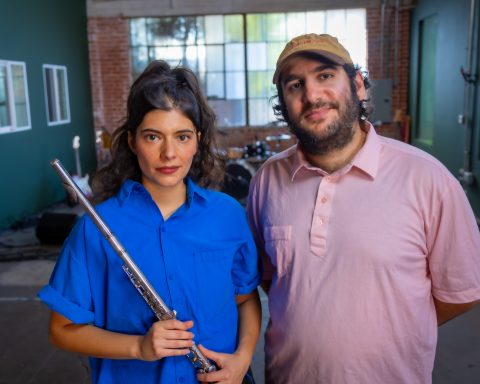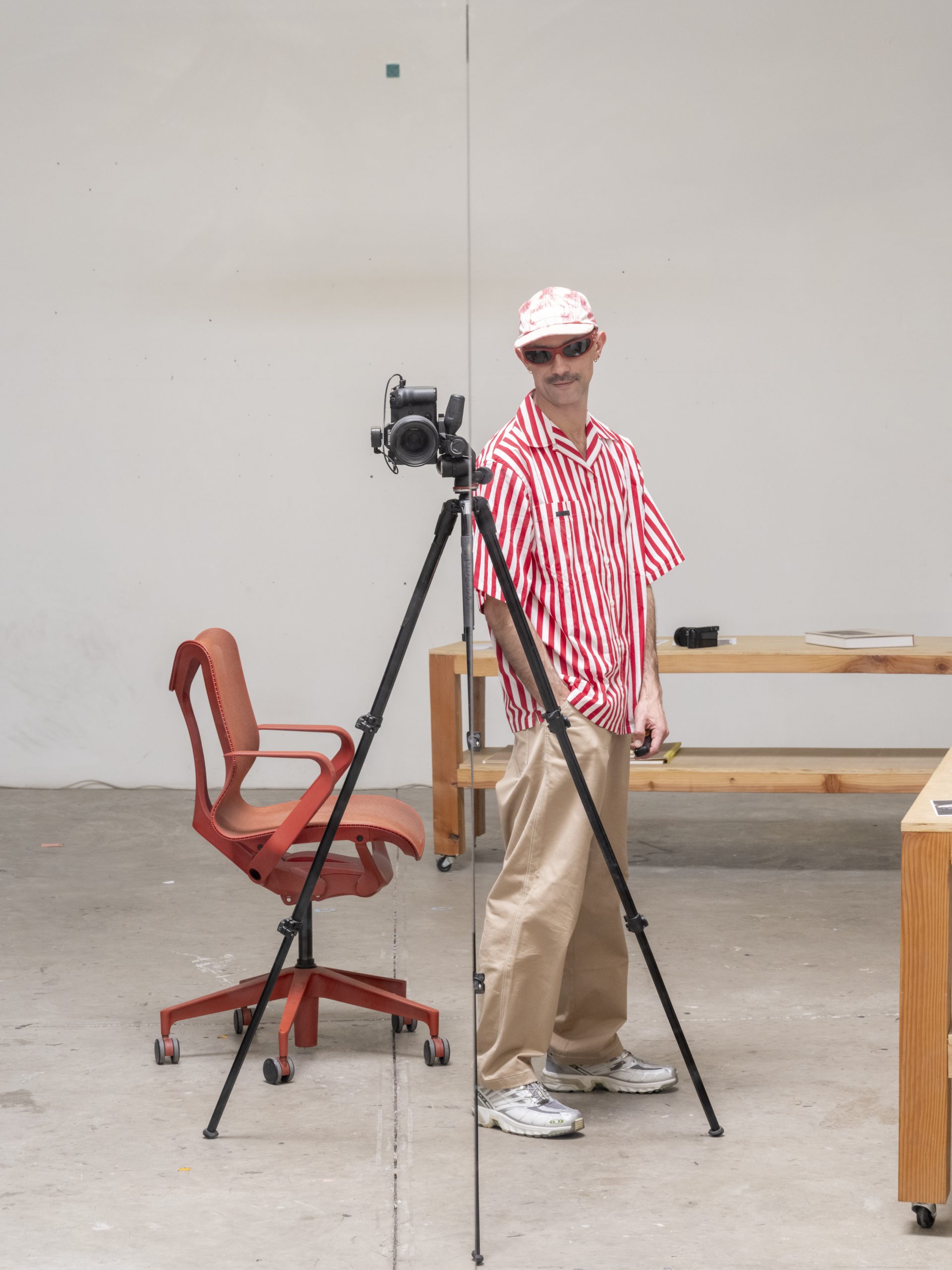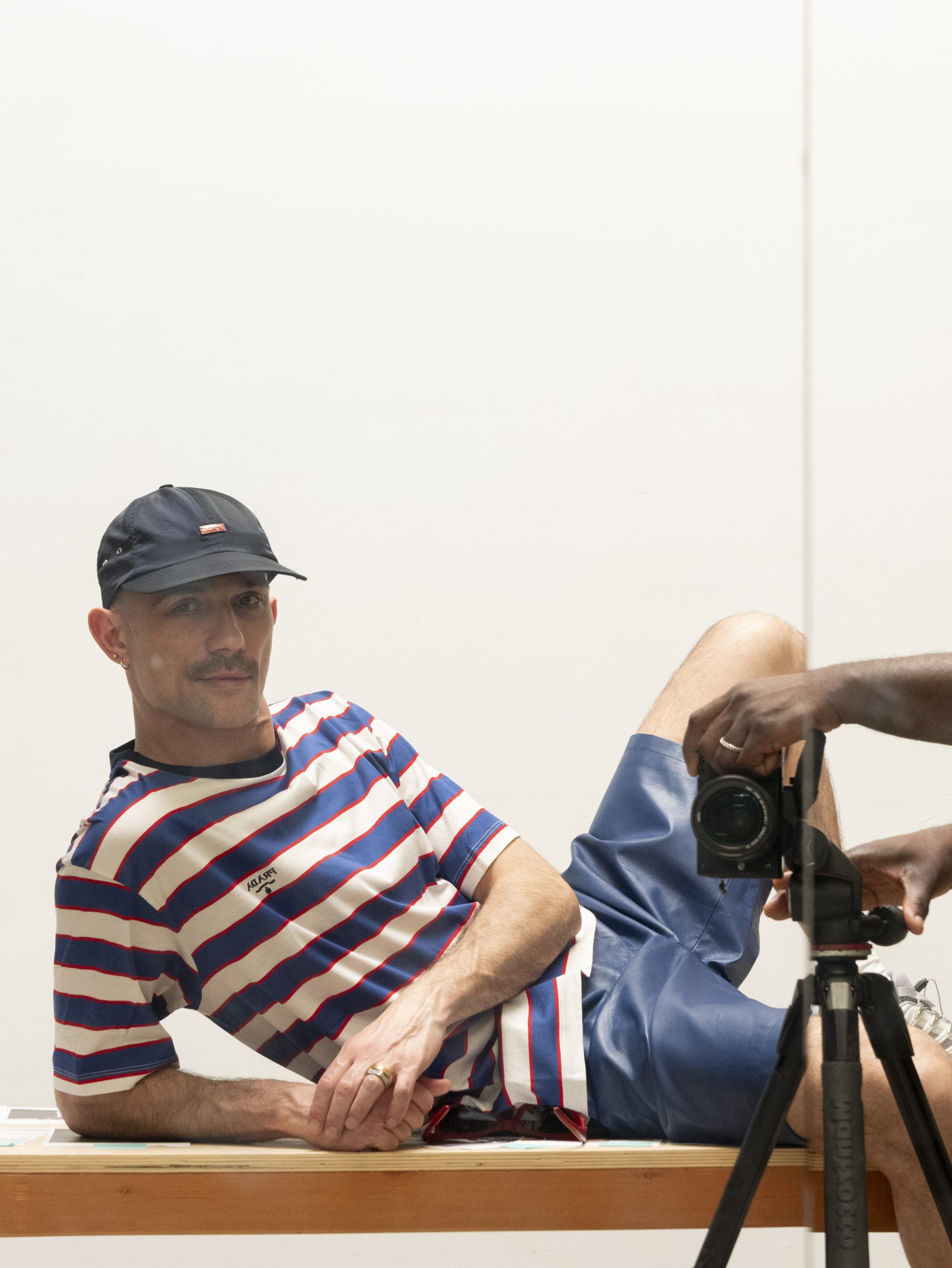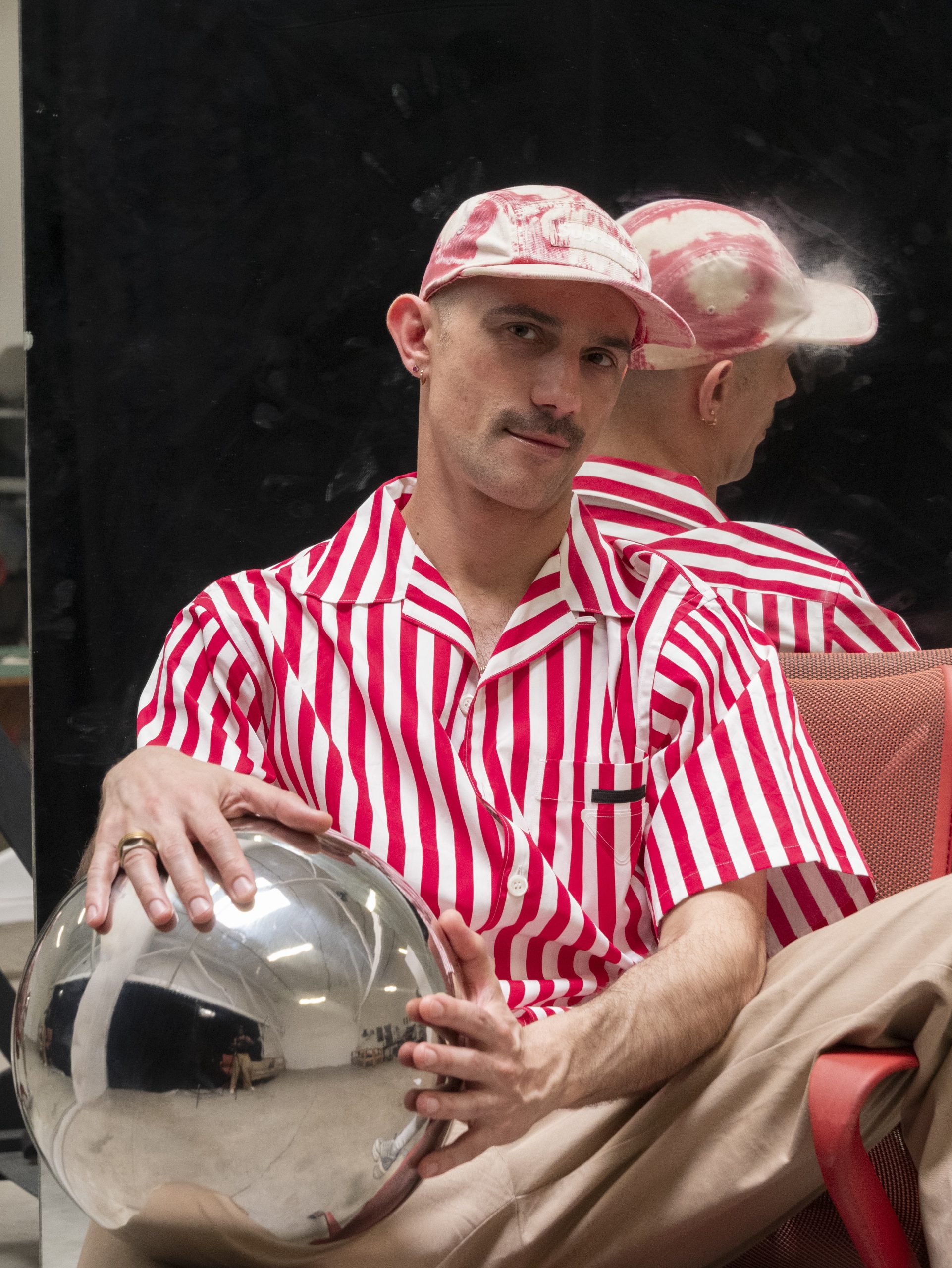


The move from a small Italian village to Milan was already a dramatic shift for Massimiliano Pagliara. But that bustling fashion center was nothing compared to the cultural melting pot he found when he reached Berlin. It was in the German artistic epicenter that Pagliara discovered his multiple callings, first as a dancer and choreographer and later in the world of music. Over the ensuing two decades, Pagliara has made his mark as an in-demand global DJ and a savvy producer. His lush, melodic tracks pulse with analog warmth and pull influences from an array of eras and styles, blending the insistence of techno with disco’s decadent pulse.
Acknowledging the twenty-year milestone, Pagliara is celebrating the sound he’s cultivated by dropping an anniversary compilation, 20 Years Of Massimiliano Pagliara: Selected Unreleased Works, on his imprint, Funnuvojere Records. It’s been a minute, but those early Berlin days bring back a torrent of memories. “I was learning new synthesizers and drum machines and trying to express thoughts, feelings, emotions without knowing exactly what I was doing,” he says. Somewhere along the line, he found his sweet spot. “I think it has a deep and unique Massi sound, which is kind of retro-futuristic cosmic disco.”
Village Memories
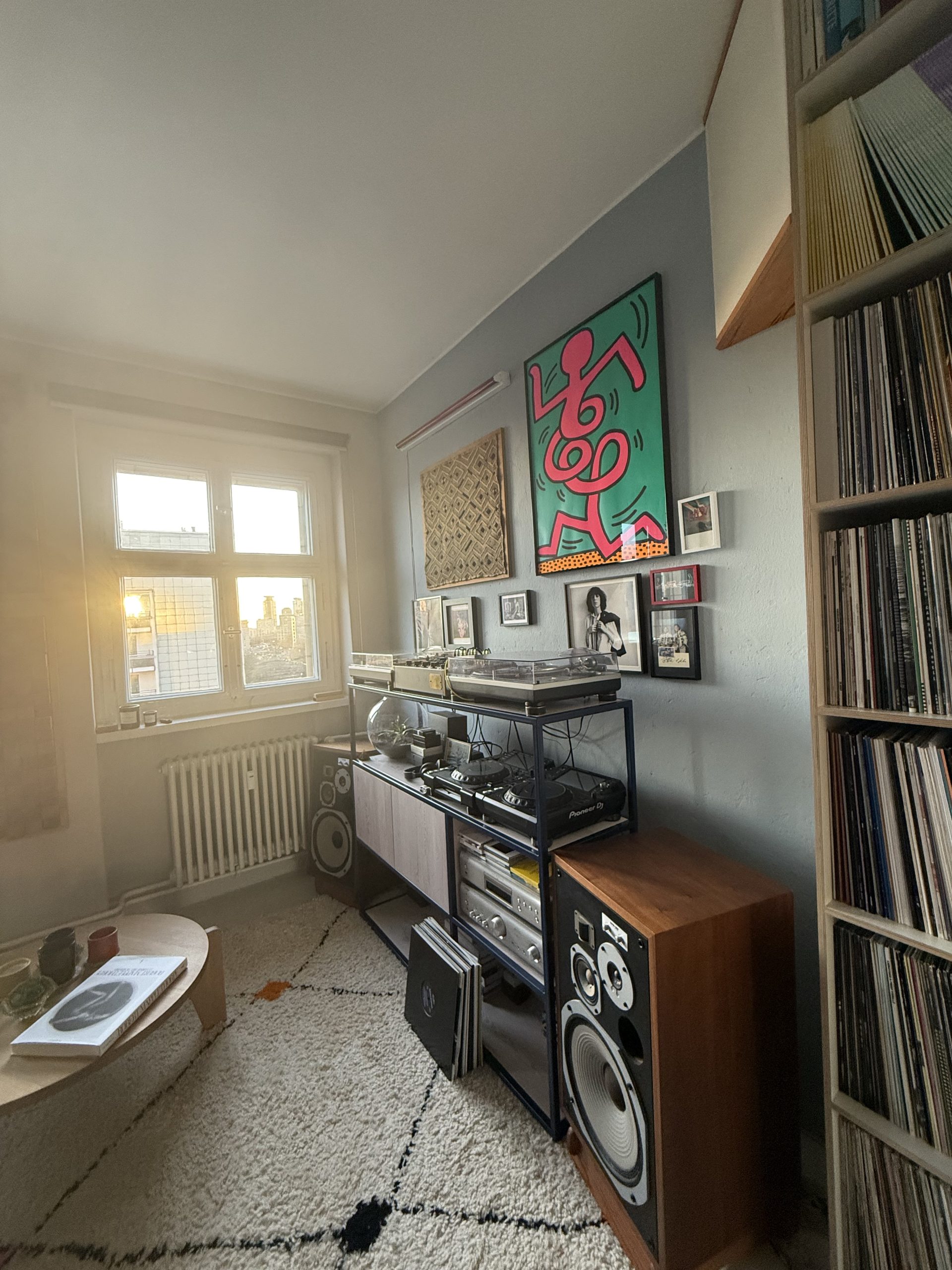
Speaking via Zoom from his light-filled home, flanked by books and artwork just out of frame, Pagliara has a boyish, upbeat demeanor. Flaunting a stylishly low-key outfit topped off by a pink baseball cap and faded yellow t-shirt, he could easily be in the crowd at one of the clubs he headlines. He also tells a great origin story. “Unfortunately, we didn’t have much in our little village. So, we had to create our own musical universe,” recalls Pagliara. “We would go to high school during the week, and on the weekends, it was like, ‘Let’s go get pizza in a friend’s basement.’”
During those formative years, Pagliara hung tight with neighborhood pals, ingesting everything from hip-hop staples like ’90s Snoop Dogg and Cypress Hill to his personal favorite: Nirvana. “I was so obsessed with Kurt Cobain,” he says. “Arrested Development is one of my all-time favorites, and my very first concert outside of my hometown. I went to see them in Milan, and it was incredible.”
Back then, no genre was truly off limits. Still, despite its presence in his current aesthetic, disco wasn’t on the agenda yet. “Around 2005, 2006, there was a big revival,” he says. “That’s when I started to dig into Italodisco and disco. I became one of the new producers creating sounds with retro disco appeal and well-recognized machines like the 808, 909, 606, 303, and beautiful JUNO pads.”
But all that would come later. First, an adventure awaited him in Germany.
Berlin Dreams
The magnetic pull of Berlin proved impossible to ignore, leading Pagliara away from Italy and to one of the world’s electronic music hotbeds. “Milan was my first big city, but Berlin was something completely different,” he says about the life-altering move. “It was darker, rougher, and more chaotic. But at the same time, everything felt incredibly free and fascinating.”
The cosmopolitan metropolis dazzled him. “I was young, curious, and very much into the nightlife. I met so many incredible, talented musicians and DJs,” Pagliara shares. “Coming from a conservative background, especially as a gay man, and seeing all these different people coexisting so naturally, was powerful and inspiring.”
“I came in the early 2000s, and Berlin was another planet. I remember walking around and feeling this strong creative energy everywhere.”
Pagliara can’t overstate the importance of his adopted home in his development and the radical shift it represented. “I came in the early 2000s, and Berlin was another planet,” he says. “Back then, I was a dancer, and had nothing to do with music, although music has always been a big part of my life.”
That sense of openness and freedom, combined with the rich techno scene, resonated deeply, and sounds began to swirl inside him. “I remember walking around and feeling this strong creative energy everywhere. There was so much space for experimentation, individuality.”
Eventually, the pool of experiences coalesced into a personal style. That vibe tapped into Pagliara’s early enthusiasm for rock, reggae, and rap, then infused it with the raw energy of club life. A distinct strain of electronic music emerged; call it a “Massi sound.”
A Personal Project
Now, two decades and numerous releases later, DJing takes him all over the world. While balancing a dizzying diary of dates, including multiple residencies, Pagliara doesn’t have scads of time to reflect on past achievements. However, this moment in his career feels different. He calls his anniversary project of unreleased material “the most personal music” he’s ever released.
“Everything was deeply emotional,” he says of those first attempts. “These were early experiments when I was so naive. I was finding my way, learning things from my heart without much knowledge or technical skill.”
Many musicians would let lost material expire in cardboard boxes, but Pagliara is a completist. “I have to finish everything I start,” he admits. “I had this old hard drive with lots of raw sketches. I found lots of interesting, inspiring material, something like 35 tracks. I finished all of it, then made a final selection of 20.”
The resulting collection is a cornucopia of musical delights. From the driving, empowering opener “Anything (featuring Maja)” to the fizzy bounce of instrumental “Cool Breeze,” the release is a testament to Pagliara’s quality control. Few acts could cull a track list this solid from previously cast-off song ideas.
“These were early experiments when I was so naive. I was finding my way, learning things from my heart without much knowledge or technical skill.”
Voices
A consistent aspect of the Massimiliano Pagliara discography is collaboration. Names like Kid Simius and Alessandro Tartari dot the anthology. While his music incorporates numerous intersecting styles, many of Pagliara’s best-known works feature guest vocalists. He usually captures their voices in person, adding a sense of immediacy to the recordings.
“I hardly ever share files back and forth,” he says. “This is what is so special about collaborations. It’s an exchange where you learn so much from each other. Together in the studio is just another level of magic.”
The 2009 track, “Sometimes at Night,” has proved his biggest hit to date despite its mournful mood. “It’s a broken heart song,” Pagliara says. “I had just broken up with my boyfriend. Molly Nilsson and I duet on it, which makes it extra melancholic.”
One standout on 20 Years Of Massimiliano Pagliara: Selected Unreleased Works, “It’s in Your Eyes,” featuring Venezuelan artist Aérea Negrot (aka Danielle Gallegos), also has a layer of poignancy for Pagliara.
“We met around 2007 when both of us were quite unknown, and I was working on a record which came out on Rush Hour,” he says of first encountering Negrot. “We recorded two tracks, and one has been sitting there all these years. I was so touched because she passed away three years ago.”
On “We Can Touch the Sky,” Pagliara even waltzed out to the front of the mix to take a lead vocal; it’s simply what the track demanded. “There is probably another singer out there that can do this better,” he says. “But it’s more emotional this way.”
"My dear friend Daniel Wang showed me a Roland SH-101. That was my introduction to analog synthesizers, and it was totally mind-blowing."
Synth Heaven
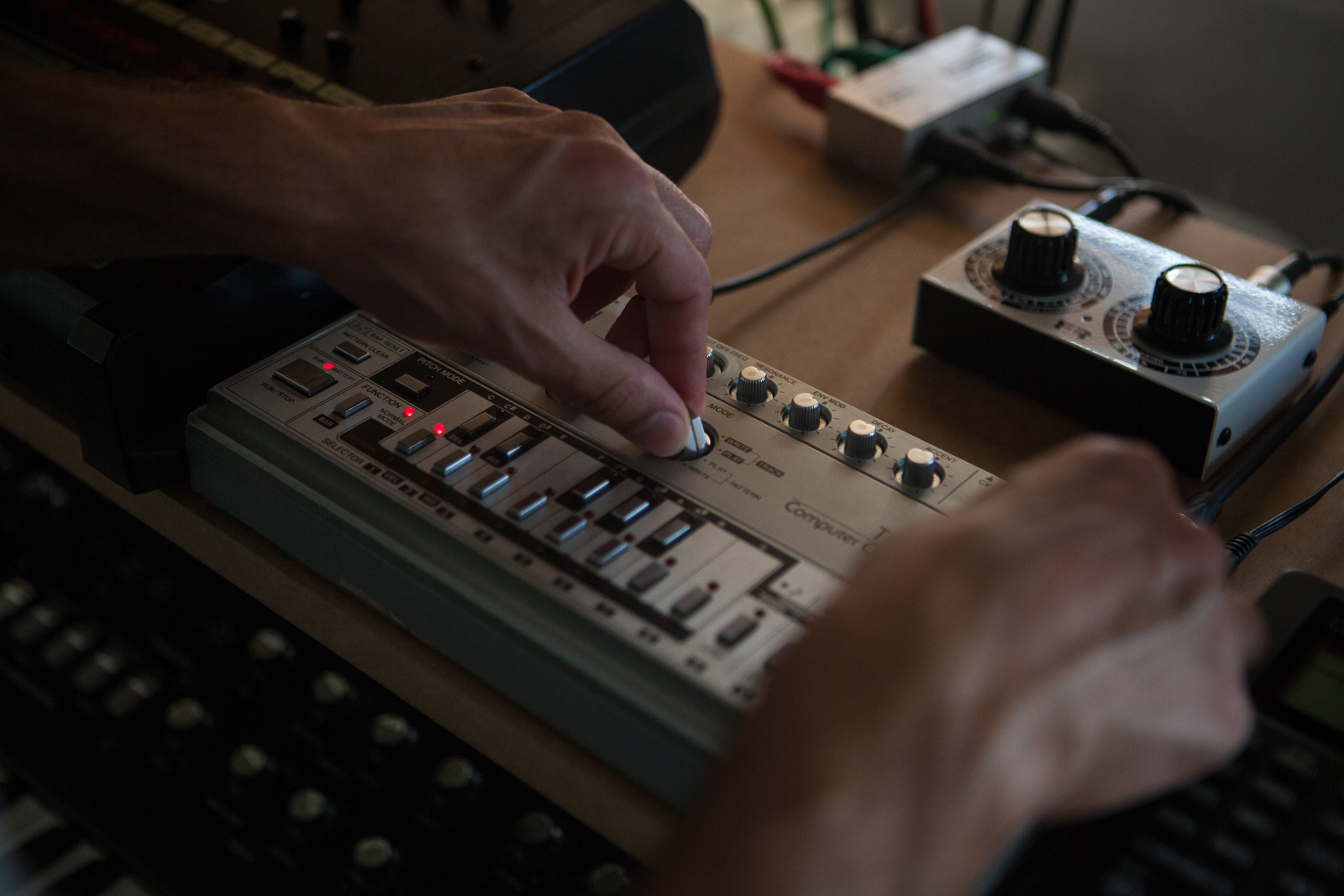
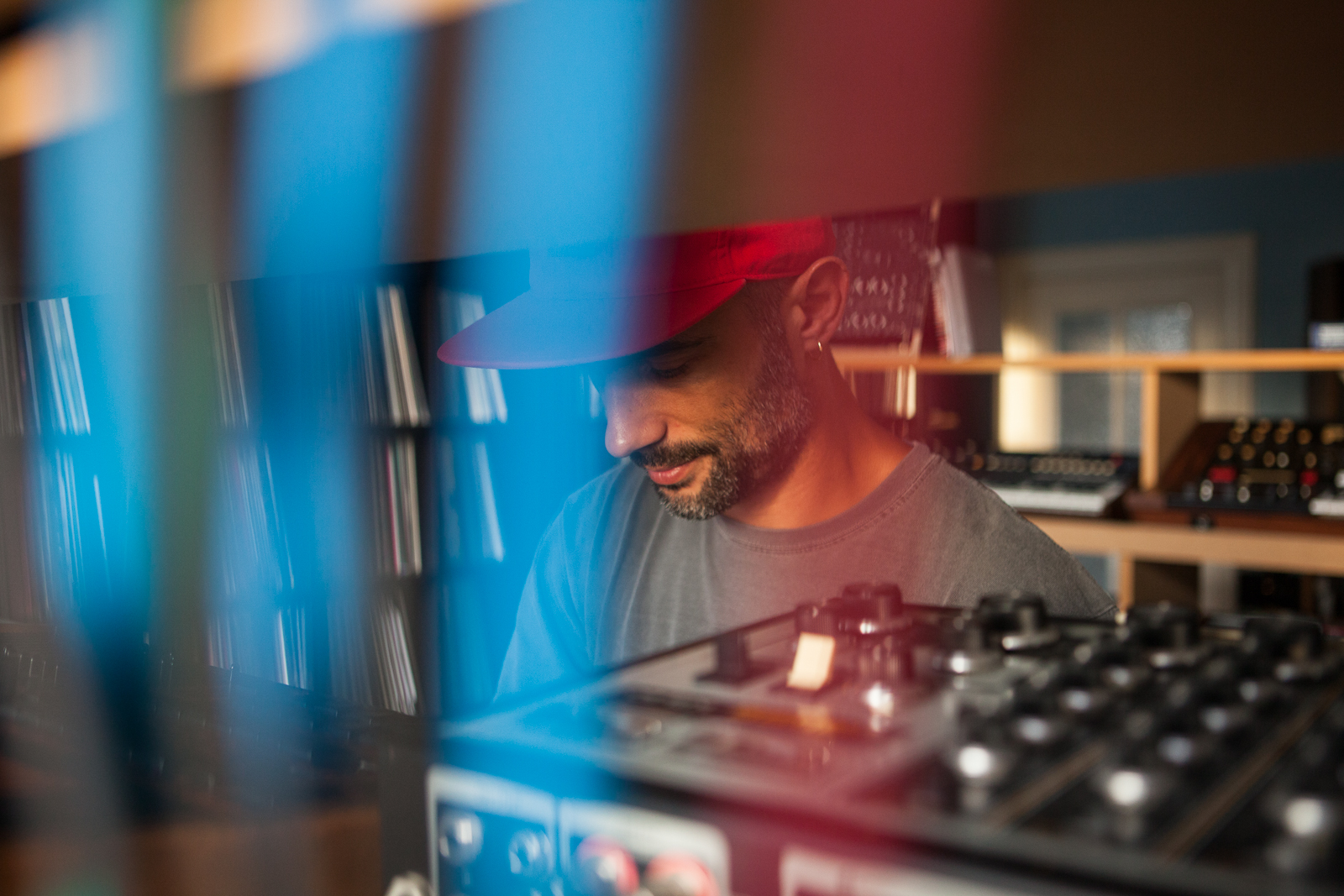
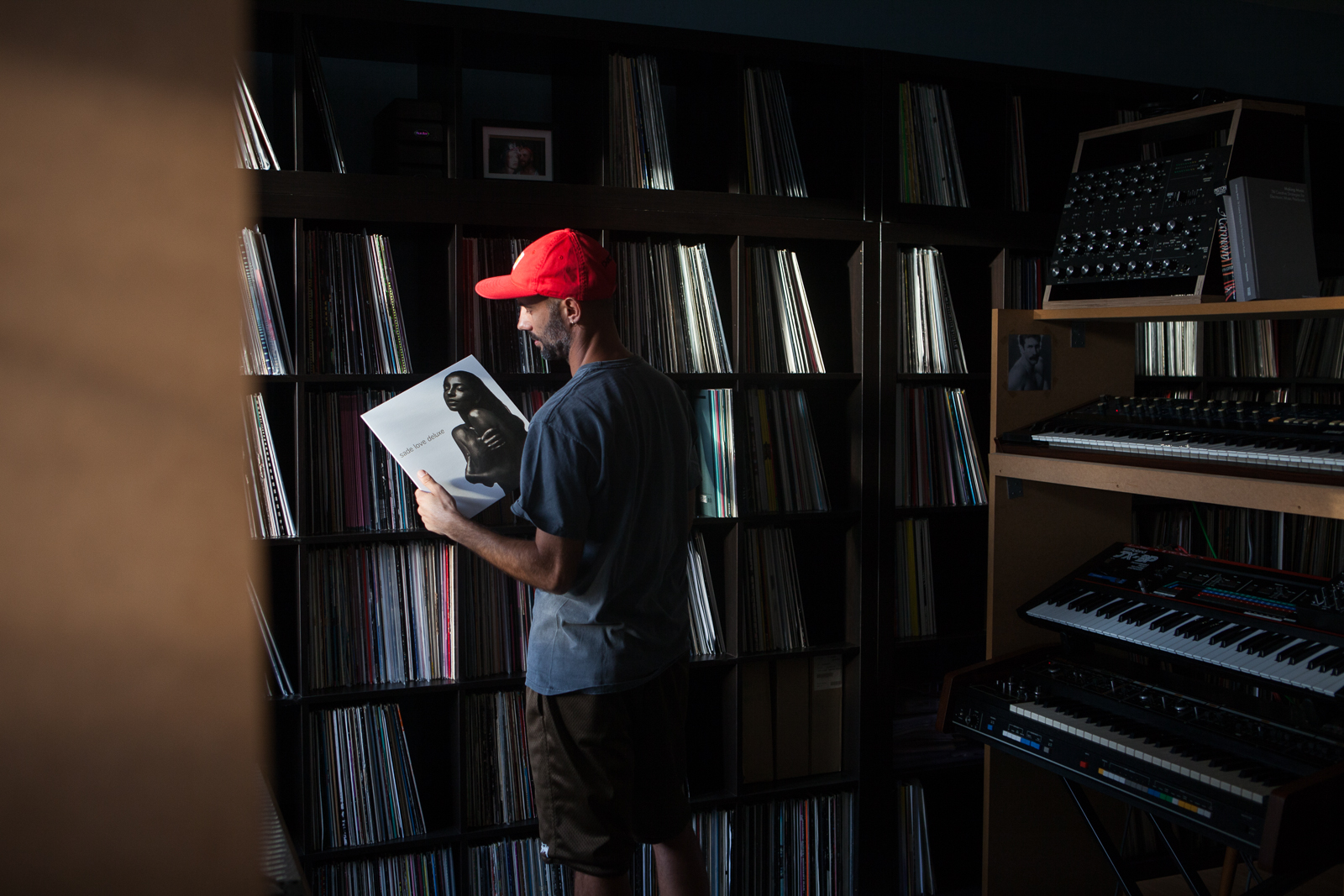
Pagliara owns an enviable collection of vintage gear with which he concocts his electronic alchemy. Ever a people person, it was a personal connection that led him to synths and Roland instruments in particular. “I started collecting machines in 2006 when my dear friend Daniel Wang showed me a Roland SH-101,” he shares. “That was my introduction to analog synthesizers, and it was totally mind-blowing.”
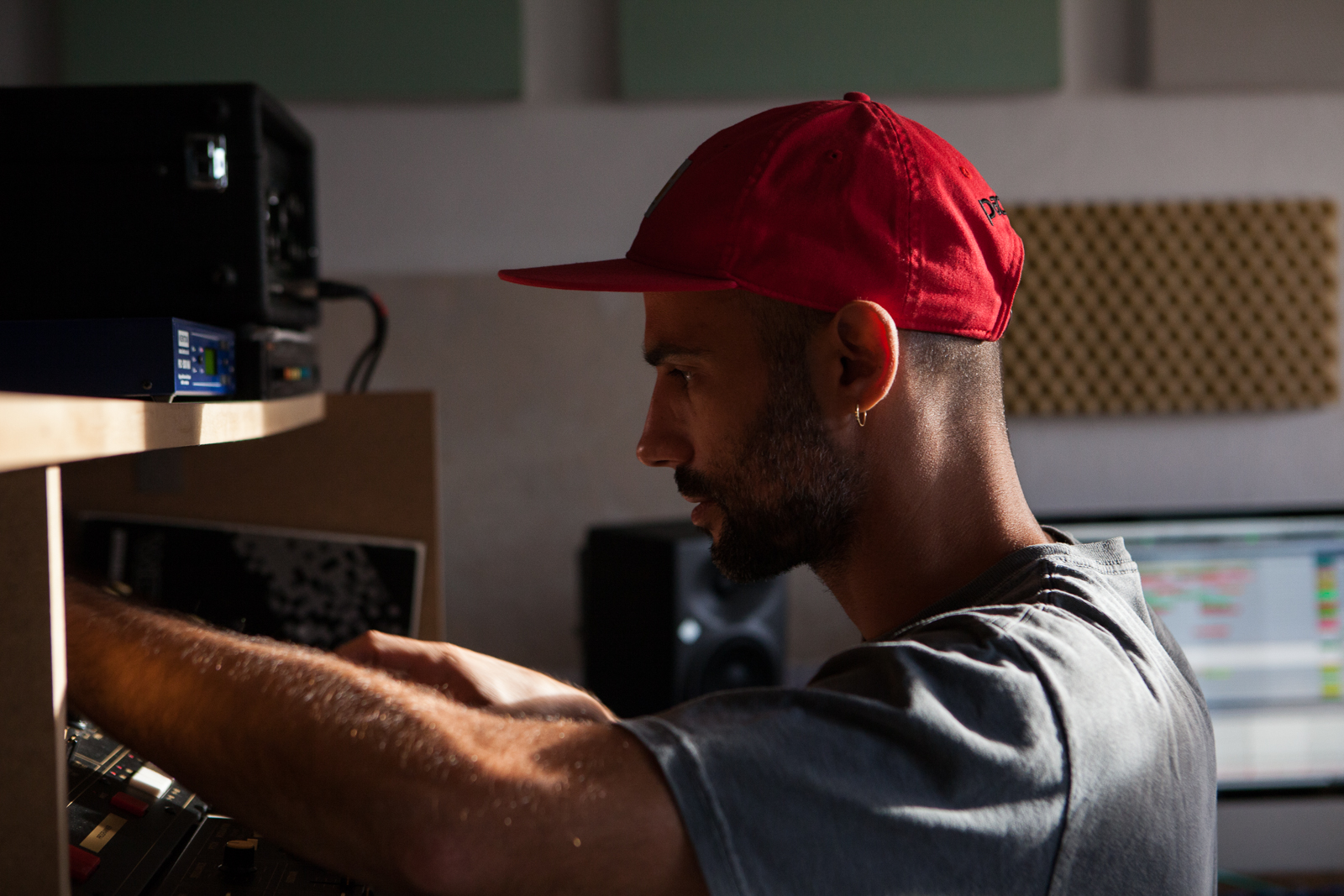
Pagliara’s background in physical performance informed his fledgling experience as a producer. Sitting still is not how he creates. “Coming from dance and being into movement, I need to play instruments because staring at my computer screen and using a mouse is too limited,” he says. “I need to be touching knobs, faders, and everything.”
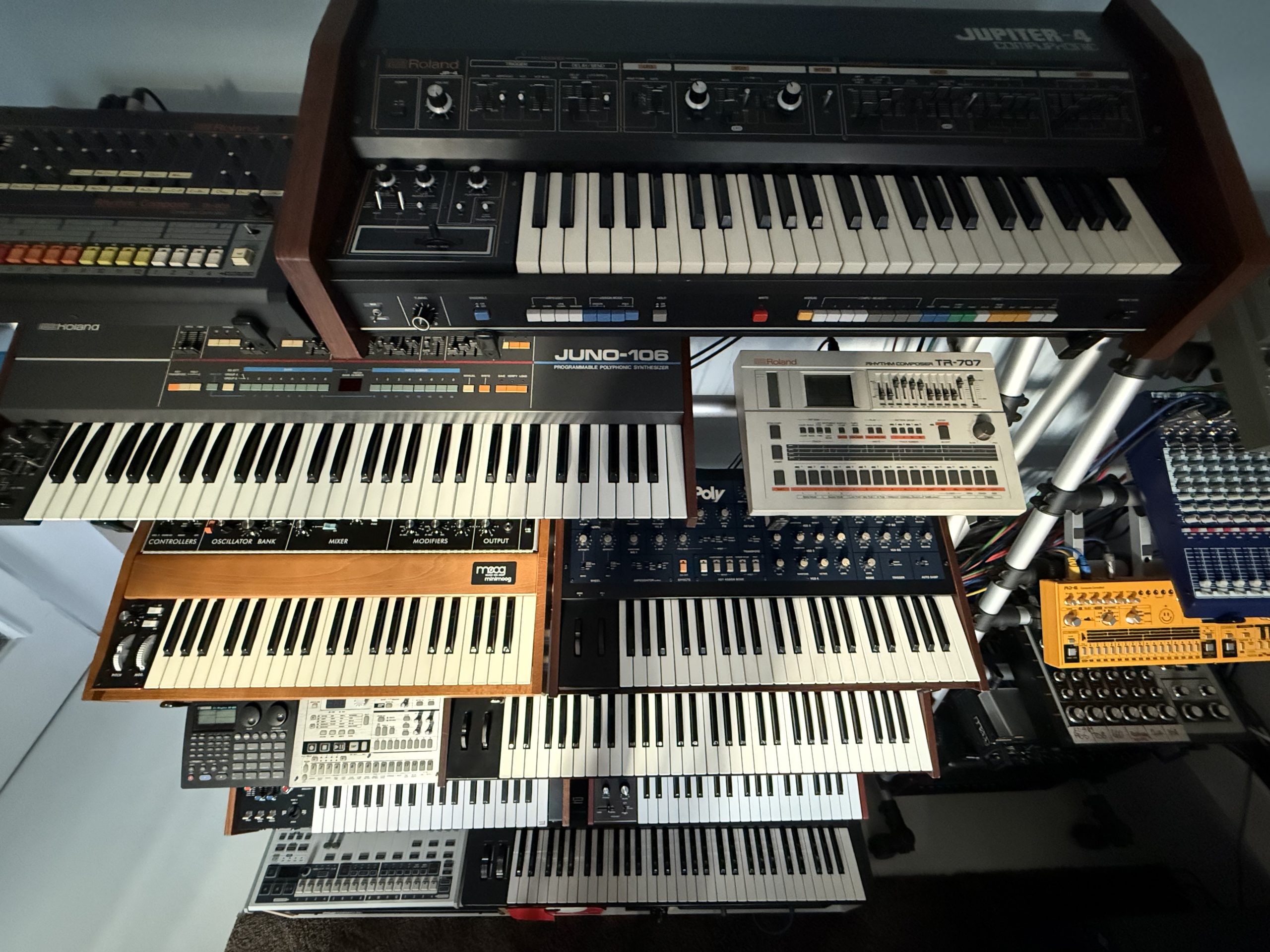
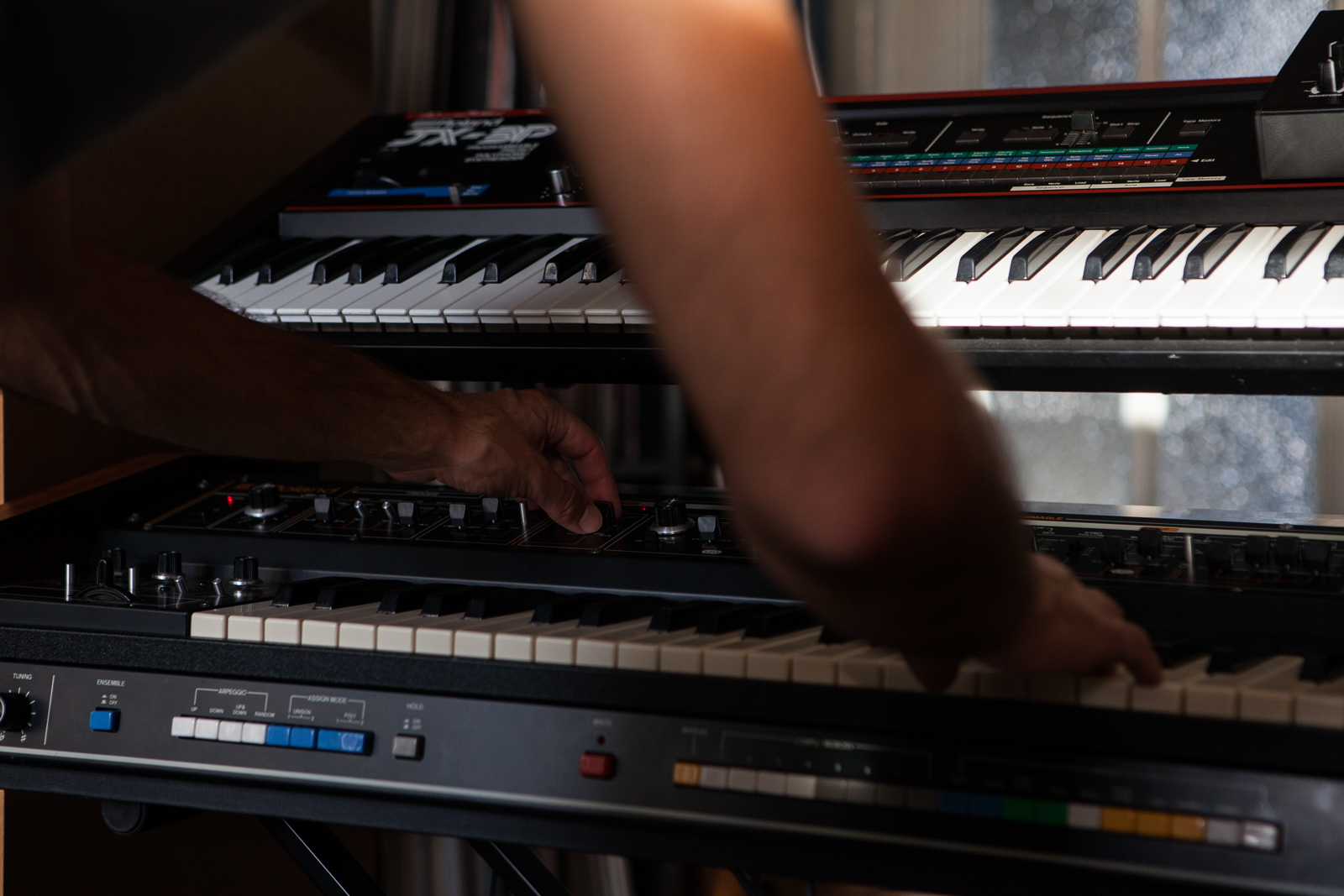
The SH-101 was the first step in what became an ongoing love affair with keyboards. “The Roland SH-101 was the first monophonic synth I got myself on eBay for 500 bucks,” recalls Pagliara, “followed by the JUNO-106, which I paid 300 bucks for at the time. I mean, that’s so crazy.”
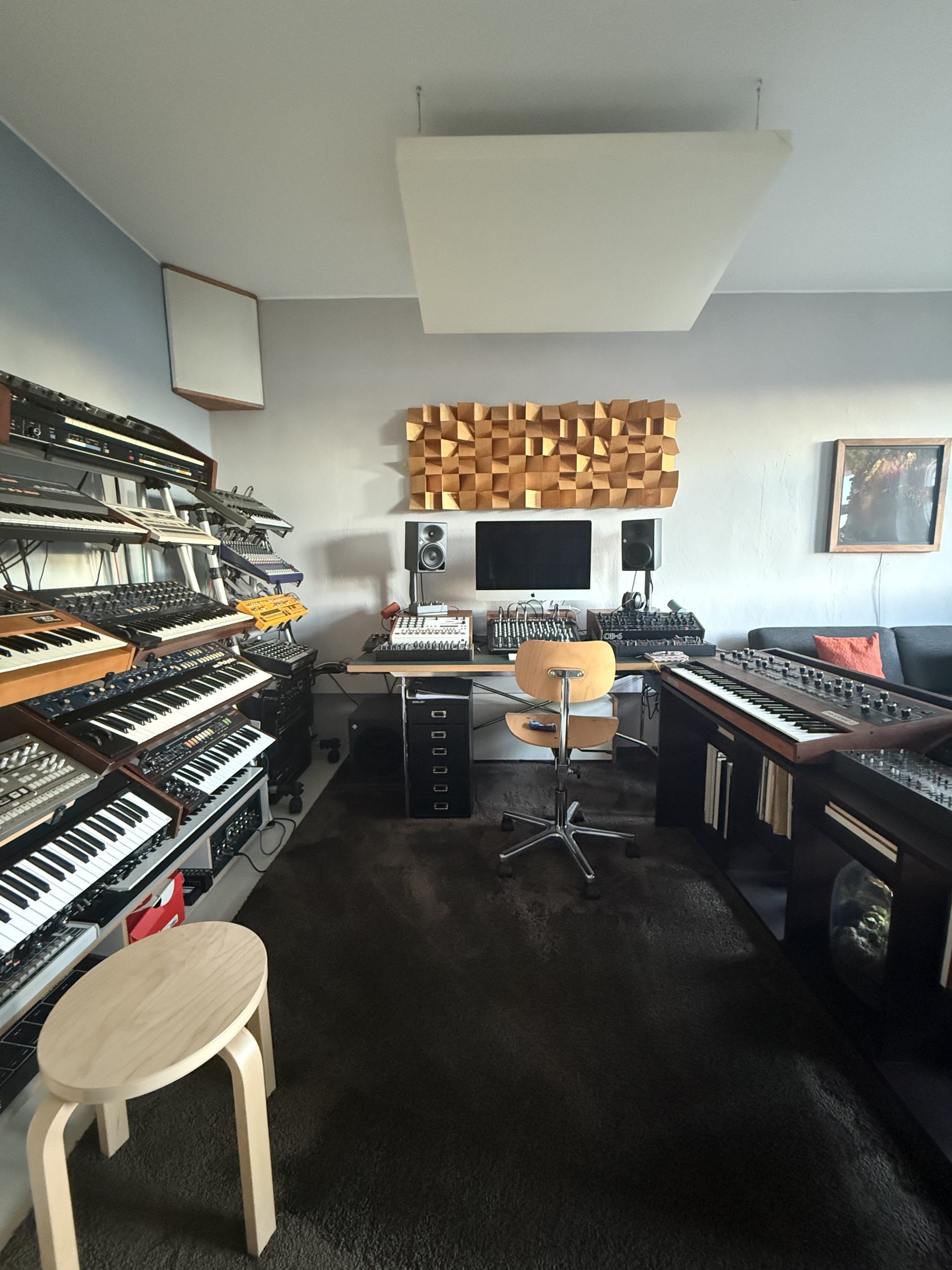
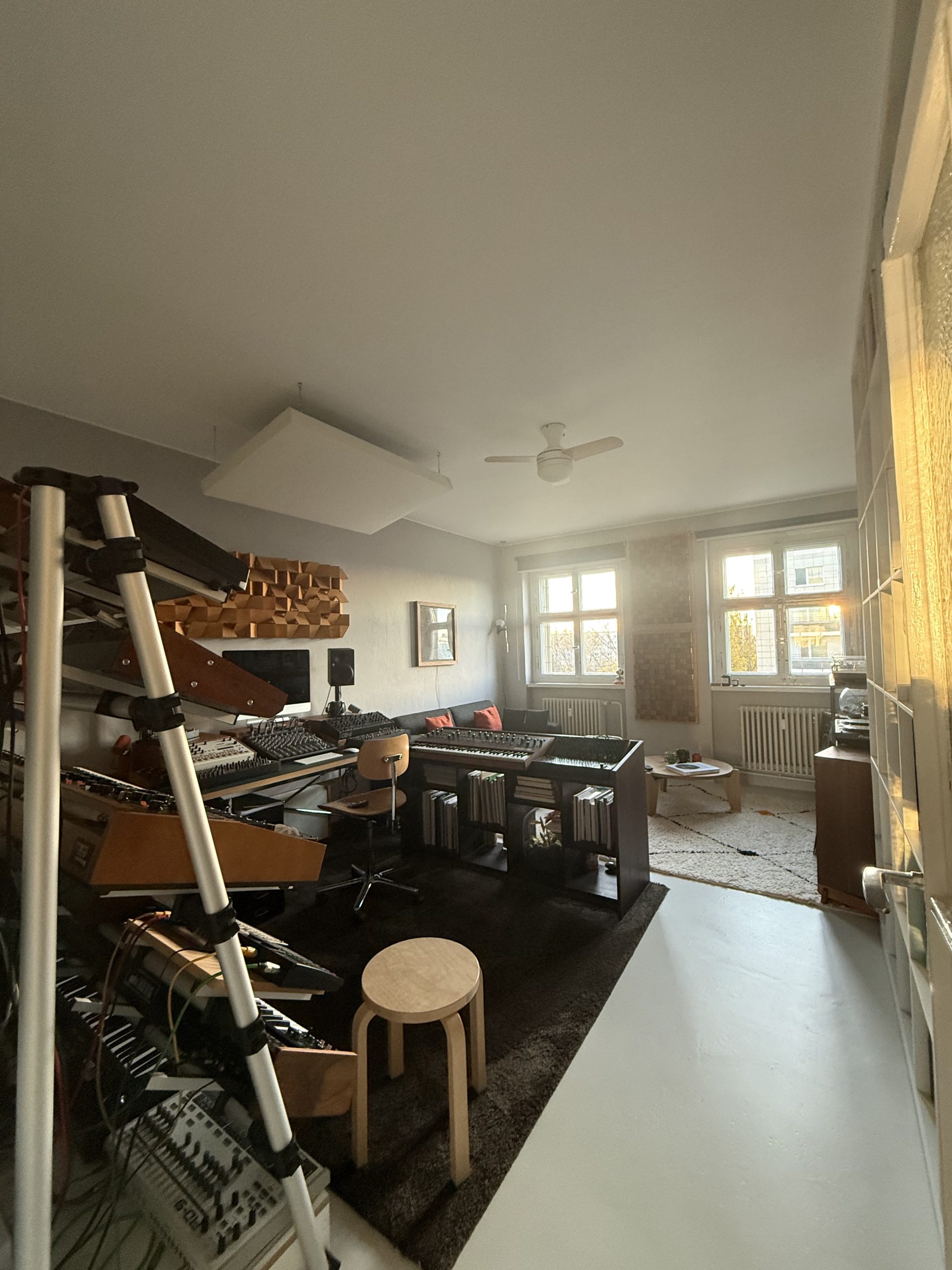
Studio 2026
Studio 2018
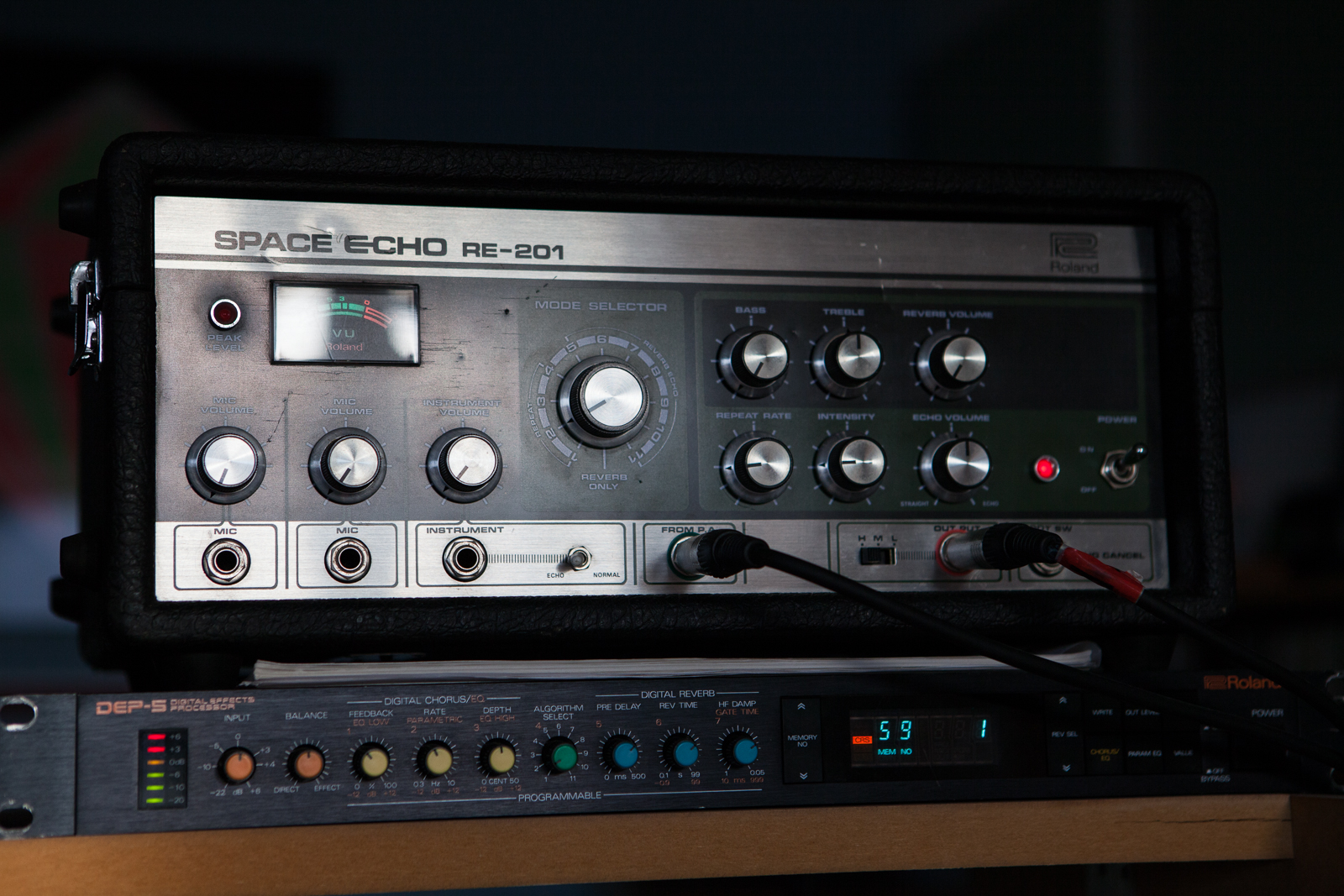
Over time, his Roland collection swelled to include prized pieces like the TR-707, TR-727, TR-808, TR-606, TB-303, JX-3P, JX-8P, JUPITER-4, SH-2000, DEP-5, and the SDE-2000. There are even oddities like the BOSS KM-60. “It’s incredible,” he says of the six-channel mixer, “especially for drums, because if you push up the gain, you get this saturation, almost distortion effect that adds texture and extra warmth.”
During the lean days of the global pandemic, like many touring musicians, Pagliara had to make some difficult choices. As a way to make ends meet, he found himself parting with a few valuable machines and some vinyl. Yet, when asked what two items he would grab in an emergency, the answer comes quickly and resolutely.
“I would definitely take the JUNO-106 and my 808,” Pagliara says. “Those are the two most essential, and you can hear both in pretty much every track I’ve made.”
For the JUNO, he has a particular fondness; it’s become a trusted compositional companion. “Whenever I’m lost in the studio and can’t find the bass line I want, I just need to turn on my JUNO-106. It always works. It’s incredible.”
"My favorite thing is when I can hook as many machines as possible together, press play, and everything is triggering something. That's when I get into a trance."
The Old and the New
As he works, Pagliara loves watching his studio come to life as instruments talk to each other. “My favorite thing is when I can hook as many machines as possible together, press play, and everything is triggering something,” he says, invoking the Rube Goldberg effect that thrills many an electronic musician. “That’s when I get into a trance.”
Despite his affection for “old music and old machines,” Pagliara also uses virtual instruments from Roland Cloud in his productions. “I don’t want to romanticize too much about these vintage things because at the same time, I’m always very curious and open to learning new things,” he says. “And I actually strongly believe the combination of these two worlds—old analog and new digital technology is the best.”
For several years, Pagliara even worked for Ableton, expanding his knowledge base and production toolkit. “I love the flexibility of a DAW and all you can do with it,” he says. “And using plug-ins mostly for sound processing and editing.”
Live Experiment
And while most of his performances take the form of DJ sets at hot spots around the globe, there are occasional outlier events. For example, Pagliara recently played ten of the twenty tracks from 20 Years Of Massimiliano Pagliara: Selected Unreleased Works at Panorama Bar in Berlin with live accompaniment.
“It basically was me DJing and mixing, and I had six musicians playing along with me: two keyboard players, one guitar player, percussion, and two singers.” The venue’s strict no-video-or-photography policy meant the exclusive event went undocumented. Yet perhaps that’s part of the magic: It’s here, and then it’s gone.
“I was basically the director. Mixing things, EQing, and taking care of the sound,” he says of the one-off night. “It was really beautiful because, obviously, I played that room so many times. But this live with orchestra thing—it’s just another level, another experience. It was so, so, so special.”
Such cross-disciplinary experiments are in keeping with his swath of interests. Art comes in many forms, and Pagliara is here for all of them. “I’m very eclectic in general,” he confirms. “Music is my biggest passion, but I’m very into movies, fashion, visual arts, and books. Something I just read can trigger pictures or sounds in my head.”
"Since I started making music, I've had the luxury of having a home studio, and my neighbors never complained. My entire discography was made here in this building."
Dancing Through Life
Pagliara is a quiet contradiction: the world-famous DJ who also relished being at home. His apartment is a sanctuary, offering stability amidst the madness of touring life. “Since I started making music, I’ve had the luxury of having a home studio, and my neighbors never complained,” he says. “My entire discography was made here in this building.”
That growing legacy reflects all the joy, pain, and self-discovery of the past twenty-six years. And, although happily ensconced in his musical pursuits, Pagliara’s past life as a dancer still has a way of peeking out. “People tell me I dance a lot while I’m DJing,” he says with a smile. “They say, ‘We can tell you used to be a dancer.’ It comes naturally to me. Every weekend is a workout.”