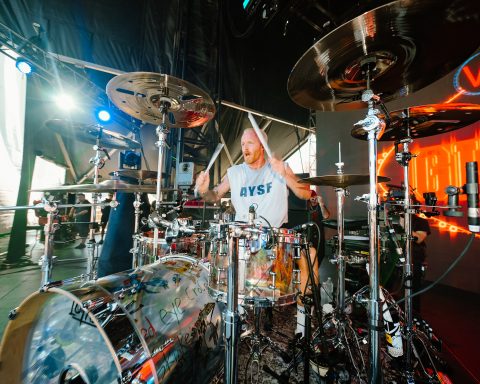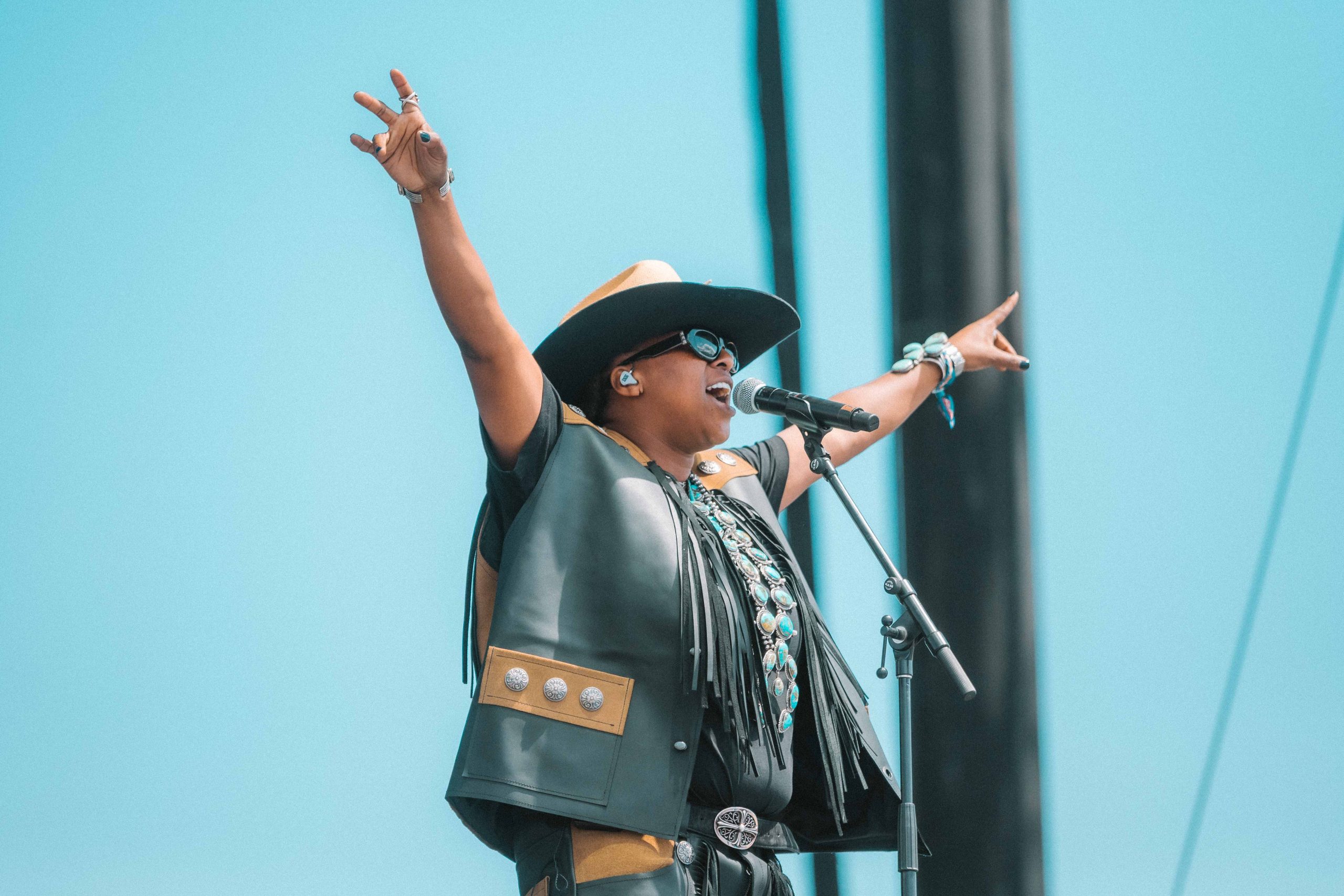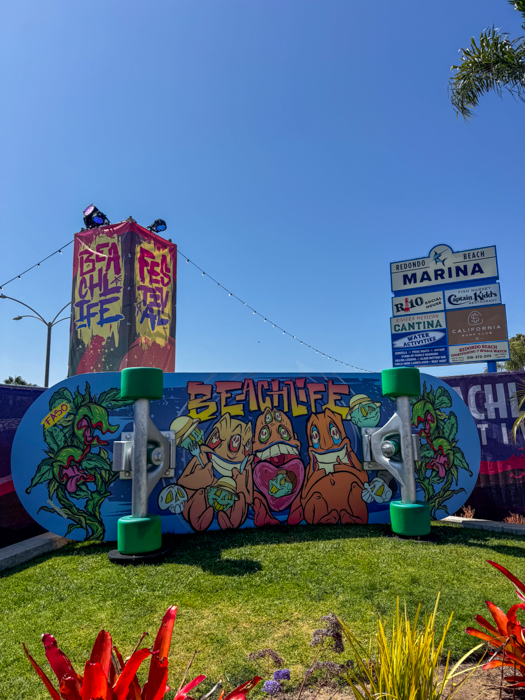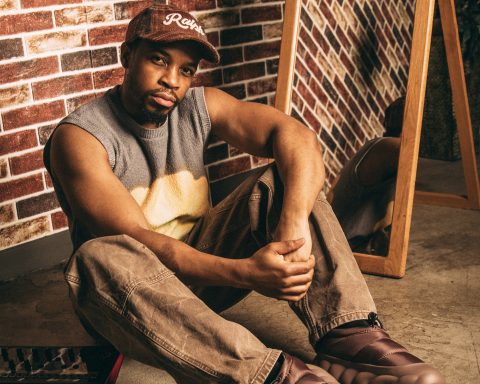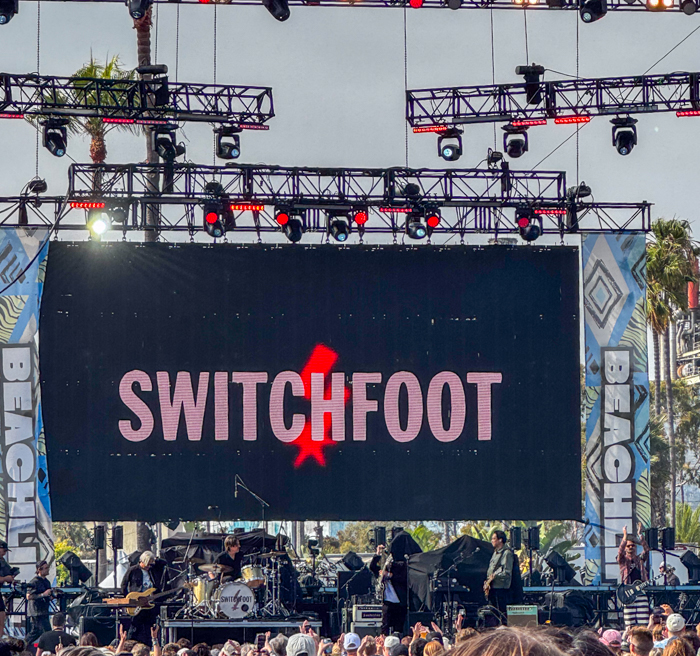


For more than three decades, Switchfoot has balanced raw, riff-driven rock with sonic exploration, and drummer Chad Butler has been a quiet architect of that evolution. Ahead of their BeachLife Festival set, Chad dives into his hybrid drumming approach, festival flexibility, and the creative freedom that comes from blending acoustic drums with electronic tools like the SPD‑SX, V‑Drums, and classic BOSS gear.
Meanwhile, Boaz Roberts offers a guitarist’s perspective, providing insight into how tone, dynamics, and gear choices affect Switchfoot’s sound. From shaping the band’s upcoming fourteenth album to reflecting on three decades of making music together, the discussion reveals how instinct, collaboration, and the right gear help Switchfoot bring every era of their catalog to life—night after night.
The Hybrid Rig Rundown
Could you run through your rig and what you’re using for your hybrid setup?
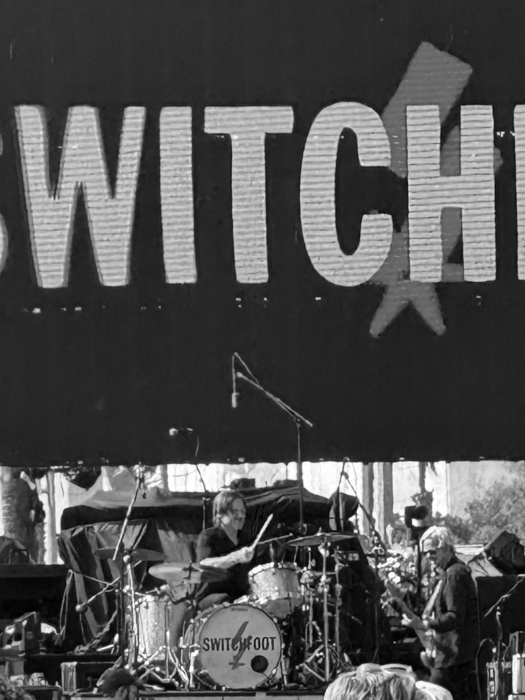
Chad Butler: I play several Roland items on stage. I’ve got the SPD-SX and run triggers off the acoustic drums; I’ve done that for a long time. I’ve got the KD-10 external kick pedal. I love it, it’s so solid. I run electronic sounds off the SPD, blended with the acoustic drum sounds. Our front-of-house guy loves that. I use them in every song to layer kick and snare, bring in samples from the record and studio sounds, and then play one-shots on the SPD throughout the show.
I’ve got probably 60 or 70 kits, because we have thirteen albums as a band, so there’s a lot of songs and a lot of samples from those songs that I reference during the show. At any point, we might decide to do an older song, so I’ve got the Switchfoot archive of songs, kits, and patches all set up.
It’s funny for a rock band that actually makes a set list, we never follow it. We really feed off the energy of the crowd, and so many times somebody in the front row will hold up a sign with a song that might be three or four albums ago that we hardly ever play,
and I haven’t touched those samples since. But I’ve got them in the SPD, archived and ready to go. I can reference that kit, bring out those sounds, and start the song.
It’s a blast for me to be able to access such a wide variety of sounds live. It’s the dream to go beyond just acoustic drum sounds and layer in everything that’s in your head and in the studio, then actually bring it all onstage in real time.
I’ve also got a couple of round PD‑8 pads hidden in my kit for additional sounds. I’ll use a Y‑splitter out of the SPD to access four external triggers, isolate them as different hi‑hat sounds or 808 flavors, and tuck them between cymbals and toms so they’re really accessible.
As a drummer, it’s about economy and physicality. If I’m playing on the right side of the kit, getting all the way back to the left can be tough, so I’ll place an external trigger between, say, the ride cymbal and the floor tom to make it playable. That increases my ability to perform parts that would otherwise be challenging if I were relying on a single piece of gear. Spreading everything out and integrating the pads into the kit makes it both effective and really fun.
I had a V‑Drums kit set up in the dressing rooms so I could work on parts while we were touring. By the time we got back from the road, I had all these demos flushed out. When we went into the studio, I already knew the parts, which was incredibly helpful. At the venues we play, you often can’t fit a full acoustic drum kit in a dressing room, but V‑Drums are super portable and easy to set up—and that’s been a huge plus.
And I also have V-Drums at home.
"I have a favorite metronome—the BOSS Dr. Beat. It’s my favorite click sound I’ve ever used."
Chad Butler
A Vintage Beat
Boaz Roberts: Another fun detail is the way you’ve used the same click forever.
CB: Yeah, I have a favorite metronome—the BOSS Dr. Beat. I believe it’s the original one with the yellow sliders for volume and accents, quarter notes, and triplets. It’s my favorite click sound I’ve ever used. I’ve tried the more modern tones, and they just don’t cut the same way. This one has just enough top end to sit in the mix without being abrasive.
I can run a line through from our keyboard player when a song generates the click there, but I can always kill it if we want to change tempo or rearrange things on the fly. And it has a nine-volt battery in case the power goes out. The show must go on. You gotta have a backup to the backup. I love that piece of gear. I bought, like, six of them on eBay because they’re discontinued, so I have a stockpile.
Festival Flexibility
Things like set times, stages, and weather can be pretty unpredictable in a festival setting. How do your how triggers keep you consistent?
CB: I’ve played the SPD for a broken-down acoustic gig before—just the SPD and maybe a pedal with no acoustic drums, and that’s super fun. It still feels like you’re playing a drum kit even though it’s really stripped down. I love that. And it’s portable. I fly with an SPD, my Dr. Beat metronome, the external trigger pedal, and the clip-on snare and kick triggers wherever I go. Those fly with me, no matter what.
How do you decide what sounds are triggered versus what we’re playing live?
CB: In the studio, we do a lot of layered electronic sounds with live drums. After the record is finished, I’ll go back through the tracks, sometimes add more layers, and then turn them into one‑shot samples. That way, I’m triggering multiple sounds at once, which makes everything sound really fat and unique.
A lot of the time, I’ll lean more into electronic sounds in the verse, playing one‑shots on the SPD and using the external kick trigger, then build up to the chorus. When the chorus hits, the acoustic drums come in along with the snare kick trigger. So, the usual approach is electronic sounds in the verses and breakdowns, then big drums for the chorus.
Do you have any advice for drummers who are just starting their hybrid journey?
CB: It really opens up your sonic palette—new colors, new sounds, new possibilities. It’s endless. When I discovered how quickly and easily you could incorporate layered electronic sounds, and how well that translated through the PA, it completely opened up my world as a drummer. I felt like I could more accurately replicate what we were doing in the studio and bring that into a live environment on stage.
In the Studio
You’ve got your 14th studio album dropping June 26. How did that writing and recording process compare to earlier Switchfoot records?
CB: We worked with Mike Elizondo in Nashville, and that was a really great experience.
BR: We spent a week or two there and then finished it at home.
CB: We did basic tracks at his studio in Nashville, and man, that’s like a playground. He’s got so much good gear.
BR: Beautiful equipment. Obviously, lots of Roland equipment too. You know, all the vintage pieces. I have the RE-501 Chorus Echo; that’s my favorite.
CB: Mike’s got some JUNOs that will melt your heart, and we used the JUNO a lot on this record. As a whole, it feels like a return to form—back to those earlier Switchfoot records that were more rock, more riff-driven, when we started out as a trio.
I saw Nirvana play when I was fourteen, and witnessing the power of a true power trio made me want to replicate that. That’s what pulled me into music in the first place—playing in the garage with my friends as a teenager. It’s been such a joy to come back to those kinds of guitar riffs and build songs from that foundation again.
Dynamic Velocity
BR: It’s got lots of big riffs, but the drums are some of the more complicated drums I’ve heard in a long time. Maybe more heavy lifting on the drums than on the guitar parts.
CB: I grew up on Motown and ’90s hip-hop. So, as a drummer, put a song in four that grooves, and I’m happy. But I’m in a band with guitar players who like to push the envelope with time signatures. It’s a real challenge for me to adapt, but I love it. I embrace that. It’s pushing me. And this record has a couple of songs on it that have pushed my playing beyond what I thought was possible.
BR: You have some crazy parts on this album. And how Chad designs the velocity touch of the hybrid rig is really unique, because he has such a specific playing style that makes Switchfoot sound the way that it sounds.
Young people should learn more about synthesis. You really need to spend time with Roland gear. It might not be as black-and-white as turning touch sensitivity on or off, but more about developing a synthesis of the equipment to make it work with your rig.
Certain songs on the album, there’s zero velocity. Everything is 100% the whole time. But there are other songs where he’s really dialed in the velocity and sensitivity of the hybrid rig, so it feels like Chad.
CB: That’s a good point because I do tend to play pretty dynamically. I think the stylistic range of our songs as a band is really wide. We have the heavier guitar riff rock stuff we’re known for, like “Meant to Live” and “Stars,” but also more intricate, delicate stuff. And navigating that is challenging.
In the studio, I think of a particular song on this new record for “Same Blood,” I remember Mike Elizondo wanting to layer in a specific electronic kick sound. And keep it at 100% velocity the entire song to give it a more aggressive attack.
BR: Yeah, it’s like a full EDM kick.
CB: I play it with my hand, layered with my kick in the verses to give it that attack and that power. And I would never have done that had he not suggested it. But then, the minute we heard that specific EDM kick sound layered in, the song changed. It got so much more energy.
"What a powerful thing music is, that it brings people together. We need more of that unity now more than ever."
Chad Butler
The Power of Music
You guys have been together for three decades now. What’s something about being in a band that long that you wouldn’t have expected when you first started out?
CB: What’s amazing to me is the diversity of our audience. We started out in San Diego just playing for our friends during college, backyard parties, coffee houses, or the club, whatever gigs we could get. Now looking back, these songs have taken us around the world. It’s wild to look out at our audience and see people of all different ages. Some of the people who listened to our music 20 years ago are now bringing their kids.
Playing a festival like this where it’s all kinds of different genres represented by artists from all different styles all playing together, and you look out at the crowd, and it’s a beautiful thing to see people singing the same song together. What a powerful thing music is, that it brings people together. We need more of that unity now more than ever.
During these strange times we’re living in, these moments are more valuable to me than when we first started. I appreciate it more now—how unique the live music experience is. That’s a beautiful moment of unity, and then it’s gone. And you’ll never experience the song the same way again. It was unique because of the people who were there at that moment. That’s what I love.
"It's never lost on me that this is the best job in the world, and I can't even believe I get to call it a job."
Chad Butler
At this stage of your journey, what excites you most about stepping onto the stage together each day/night?
BR: We’re so lucky. It’s so fun.
CB: It’s never lost on me that this is the best job in the world, and I can’t even believe I get to call it a job. Playing music with your best friends and having people sing along is the greatest joy for a musician. And this is continuing to be just this gift that unfolds each show that we get to play. It’s beautiful.