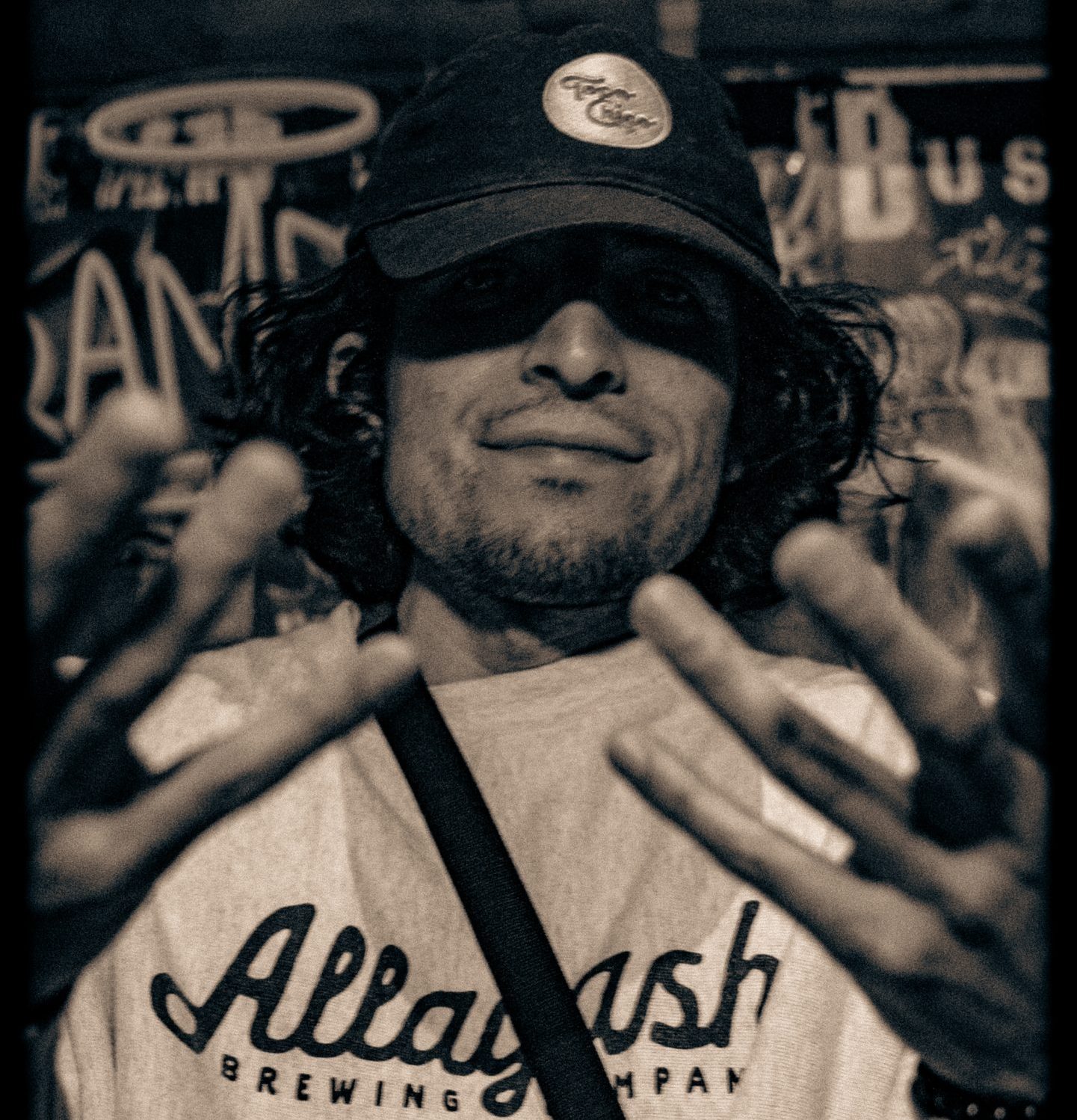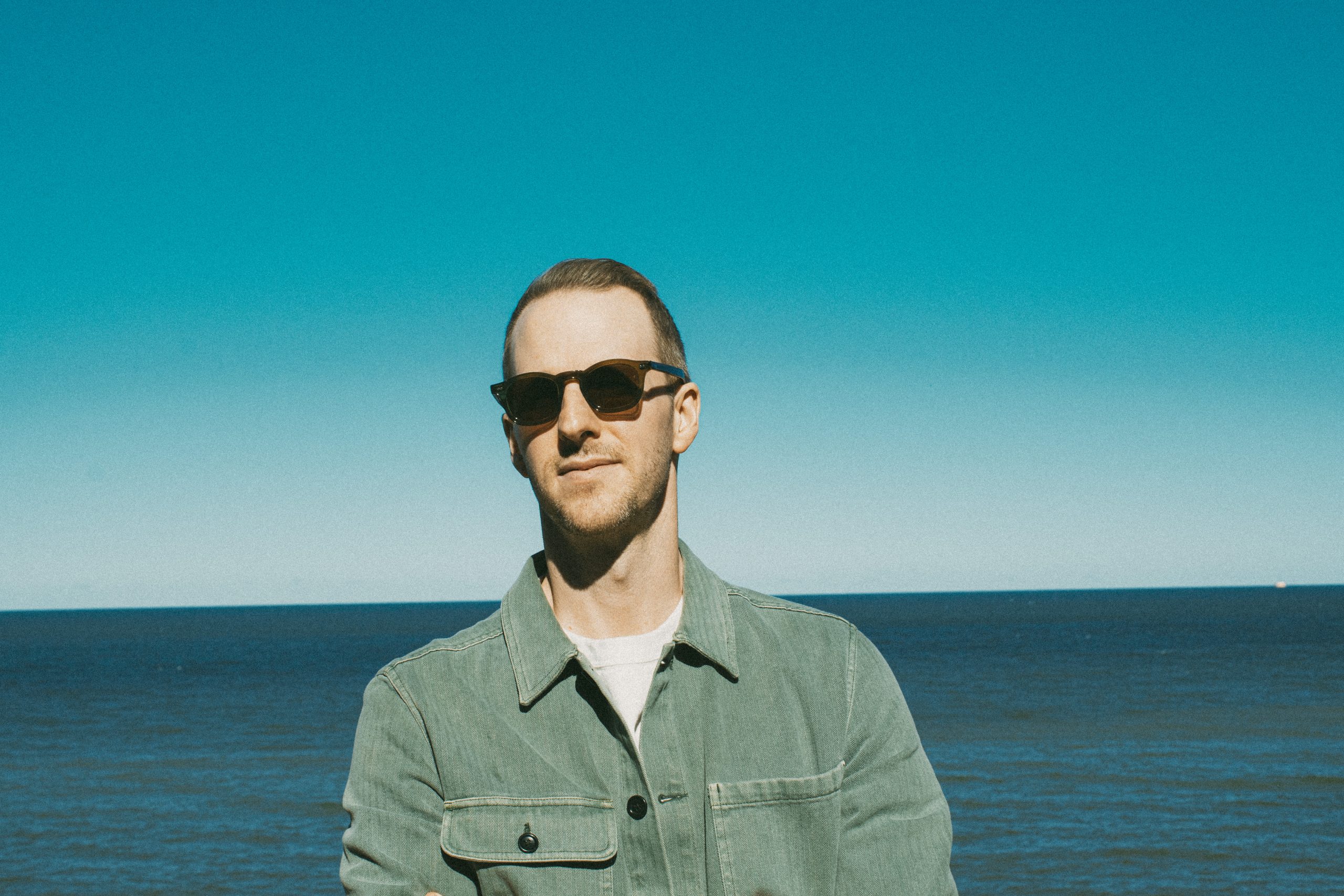


“Up to this point, I didn’t work in a DAW at all. 95% of what I was doing was produced on the 404, you know?” Ted Feighan is speaking about the latest verdant sensory exploration by Monster Rally: Echoes of the Emerald Sands. Seated in front of an immaculately organized art wall in his Cleveland, Ohio, studio, the perpetually beaming beatmaker, visual artist, and songsmith is explaining his stylistic evolution. In specific terms, he’s detailing the drift from a celebrated sample-based approach to building his own Tropicália-influenced musical beds.
More Layers
“I felt a need, almost to prove to myself that I could do it another way,” Feighan says. “I’d always been noodling around with my own other stuff. Finally, the opportunity came for me to make the new record, and I thought, ‘Why not just do it now?’”
First, there were a few technical hurdles to overcome, like learning Ableton. “I have a computer from 2010, and I recorded on GarageBand until this album,” he admits of his low-key tech attitude. “It’s almost like a tape machine. For this one, I needed to have more layers.”
Another challenge came on the compositional side, particularly the release’s collaborative style. “The next biggest thing was showing I could write for a vocalist,” he says. “I’d been making a lot of beats, writing in that way. But this record required more actual songs. So, I was feeling stressed about whether or not I could do it in a way I would be happy with.”
Creating the Perfect Guest List
He needn’t have worried; the resulting genre collisions on Echoes of the Emerald Sands are seamless exercises in prismatic melodicism. It almost feels like Feighan hatched these songs in a room with his vocalists, an eclectic group including LEISURE, Nella, Mei Semones, and others.
So, how did he emerge with such a varied guest list? “I talked to my manager, and we came up with a list of people that we’d love to reach out to,” he recalls. “It was probably 30 people long. Then, lightbulbs went off from there.”
As for what each partners did with their selection, the method was freewheeling. “I gave them free rein,” he says. “Write whatever you want. If you want to add some instrumentation, that’s awesome. If you want to rearrange some stuff, that’s cool too. It was based entirely on vibe.”
"I've got two eight-year-old twin girls, and they're funny, so sometimes the names of songs are
inside jokes."
Kaleidoscopic Wonderland
Those vibes are as unique and well-placed as the dozens of framed pictures decorating Feighan’s home studio. Each nook and cranny of the album is packed with delightful details—from the soothing flute that appears on “Until the Sun Goes Down (feat. TOLEDO)” and “Take You Home (feat. Nella)” to the opening rainstick rattle on “Rosella (feat. Sessa).” The sense of unsuppressed inventiveness even extends to the song titles, which suggest some sort of kaleidoscopic wonderland.
“I had names for all of the songs, so a lot of people based their lyrics on the name of the demo. Half the record still has those original names.” His daughters’ imagination factored in as well. “I’ve got two eight-year-old twin girls, and they’re funny, so sometimes the names of songs are inside jokes.”
For example, one particular pairing was unexpectedly perfect from the get-go. “Blue Bunny is my daughter’s classroom bunny, which is so serendipitous because JORDANN, who did that song, is crazy about bunnies.”
Then there are the twin tales of Gabby and Rocky. “Gabby is a pony from my daughter’s riding camp,” he reveals. “At the same time, we hatched these caterpillars into butterflies. One didn’t even become a butterfly, and his name was Rocky, but he died, so we buried him.”
Once more, the resulting music hit the mark with freaky precision. “When MUNYA came back, it was high drama, smoky French garage,” Feighan recalls. “It’s like you had a dream about Gabby and Rocky.
The Monster Match
The darkest turn on Echoes of the Emerald Sands is surely “If You Want It,” a brooding slow burner featuring Miles Michaud of Allah-Las. “I’m a huge fan of theirs, and I’ve known them since 2011,” reveals Feighan. “I thought that would be a long shot, but it’d be super cool if I could do that.”
Still, the song’s vaguely Gorillaz-esque feel came as a surprise. “I’ve been listening to the Allah-Las forever, but I never realized how much he sounds like Damon Albarn. The beginning track is almost like a monster voice,” he says of Michaud’s eerie vocal turn.
“If You Want It” arrives at an intentional moment in the sequencing—evidence of Feighan’s musical mood management. “I purposely put it right after the song with Nella, which is like Latin R&B,” he explains. “It’s floaty and poppy. And then all of a sudden, if you distorted it, that would be like a doom track.”
"I was like, ‘What does Madlib use?’ And I got this SP-303, and it was the greatest piece of equipment I’d ever owned."
Artistic SPionage
There is a direct line from the cornucopia of influences on a Monster Rally album to the tools he’s used from the beginning. “When I started to do this kind of music, I was obsessed with Madlib, and I was like, ‘What does Madlib use?’ And I got this SP-303, and it was the greatest piece of equipment I’d ever owned.”
The effect on Feighan’s creativity was immediate and satisfying, like the sampler itself. “It made so much sense that it felt like I’d been missing a hand my whole life. And then all of a sudden, I was just gifted my other hand.”
He praises the now-classic sampler’s charming eight-button layout and vinyl simulator; in fact, it’s still a useful recording device. “I play guitar through it all the time. And even I’ve done bass lines through there, and it just sounds so good.”
But the quantum leap for Monster Rally came from the SP-404, which quickly formed the heart of Feighan’s productions. “I always had two 404s. Anything looping would be one, and everything else rhythmically was on the other,” he says. “The beauty about the 404 and 303 is that they’re so tactile and you can play them like an instrument.”
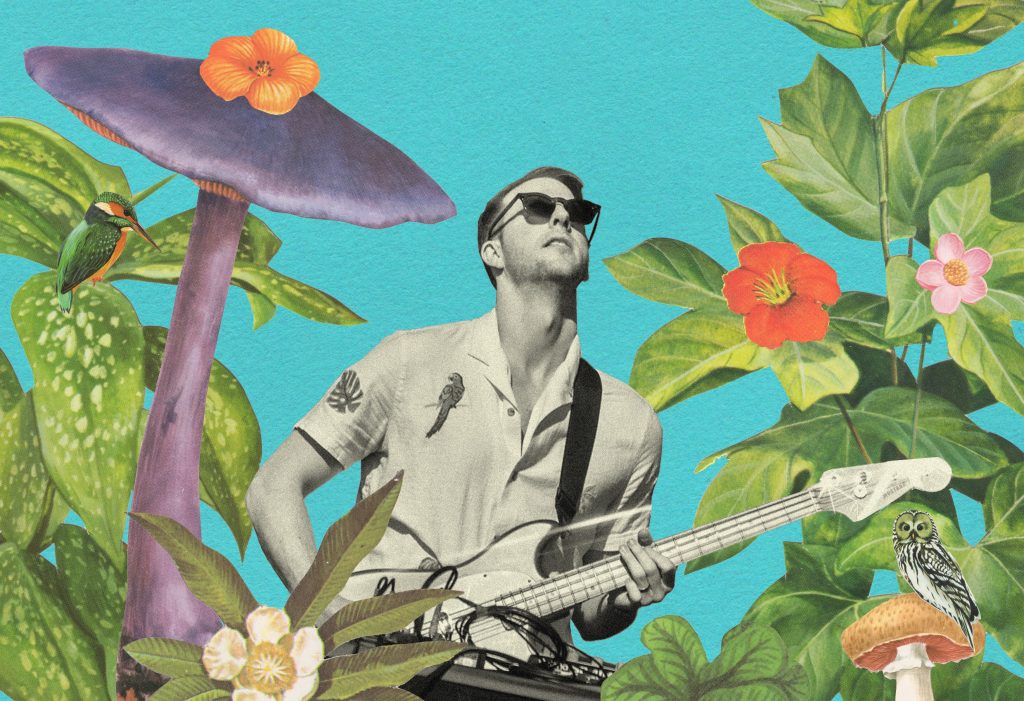
A Trail of Four 404s
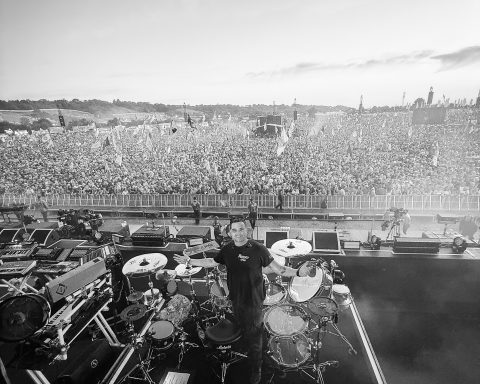
That visceral feel is on full display at recent Monster Rally performances. Expanding on the new album’s arrangements, opener RUMTUM, aka John Hastings, is doing double duty by adding drums and yet another SP to the proceedings.
“The whole joke with us is that we’ve got four 404s,” Feighan says, describing the live setup. “I’ve got a table with two 404s, a MKII, my computer, a bunch of hand percussion stuff, and a bass I play on 70% of the songs.”
"Give Brian Wilson a 404 and imagine what would happen."
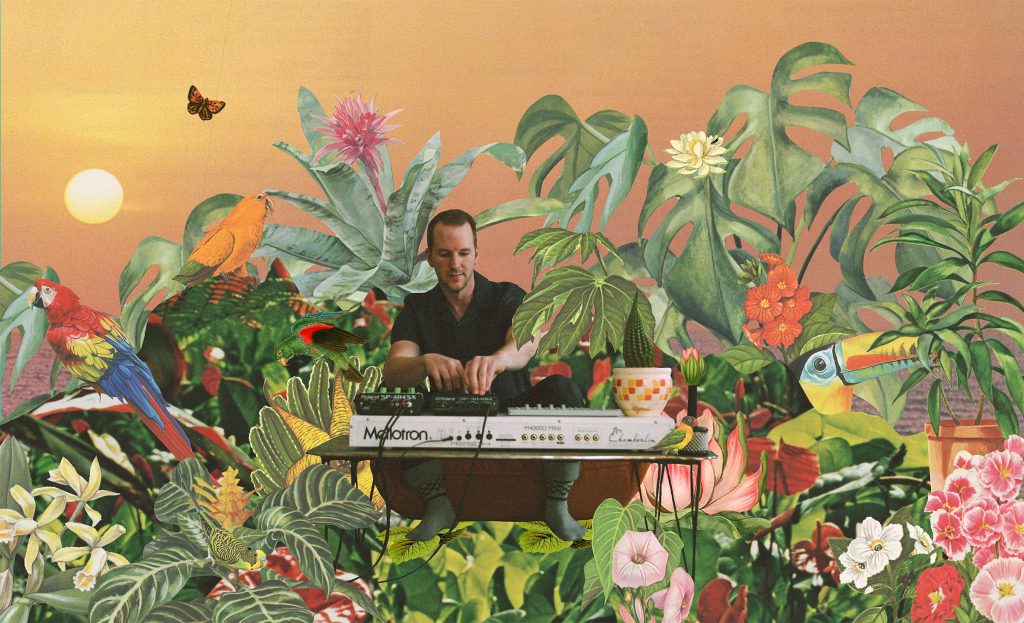
Like the live show, the collages that adorn Monster Rally records are another aspect of the way his music hits. “I make the record, then transition and step into the artwork world,” he says of his visual process. “I have this huge picnic table and all these pieces laid out and a big cutting mat. I basically just go in and create.”
Feighan’s adventurous aesthetic harkens back to pop’s past, and he’s here for it. Take a song like “Flight to Capri (feat. Henry Mancini),” which wears its retro influences on its floral sleeve. “We idealized that era so much for analog sounds and equipment, but they were pushing the forefront of modernity,” he says, smiling widely. “Give Brian Wilson a 404 and imagine what would happen.”