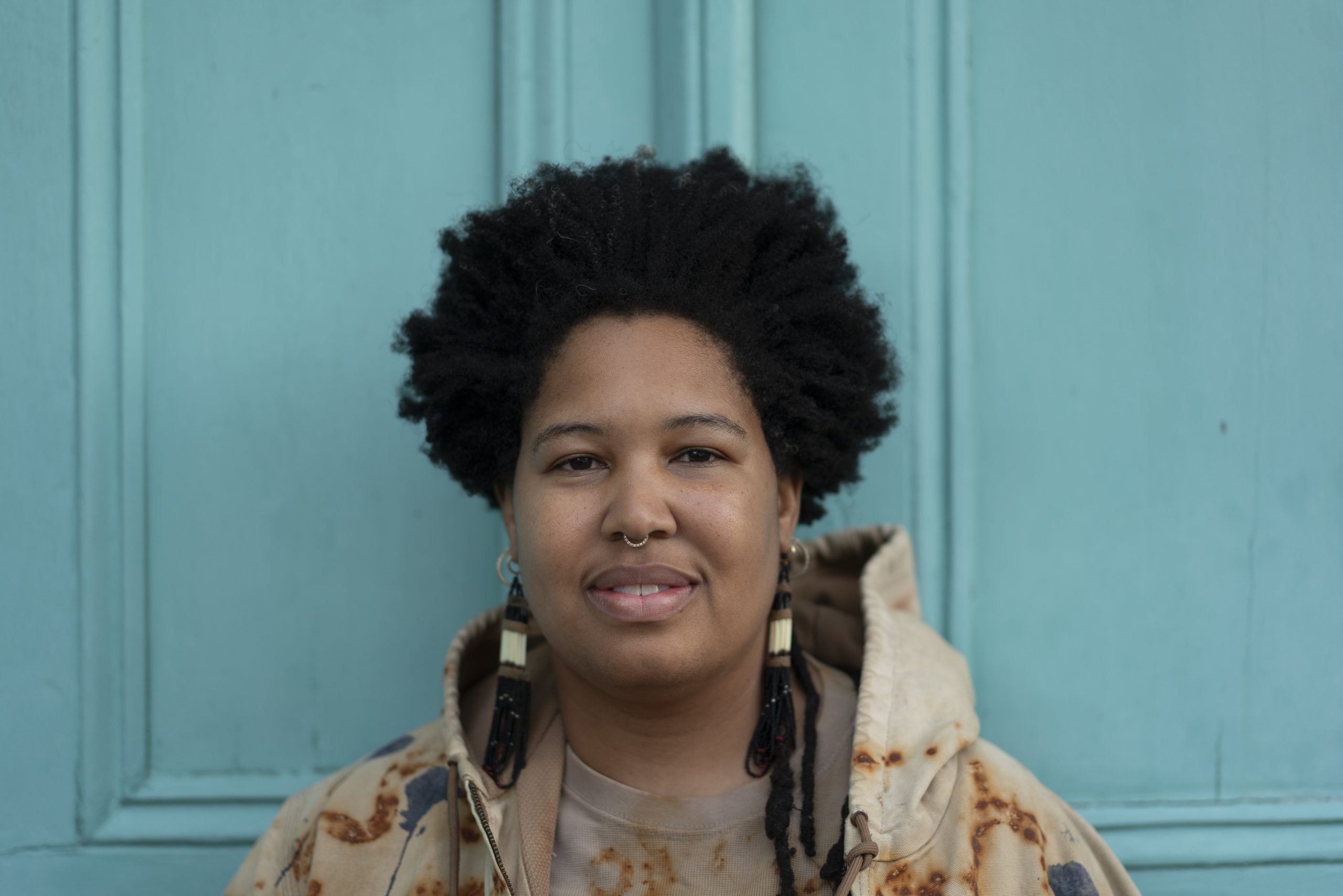


“To awaken quite alone in a strange town is one of the pleasantest sensations in the world,” wrote British-Italian writer Freya Stark. Takiaya Reed, the driving force behind Divide and Dissolve, has no problem with either the solitary life or switching up her environment. “I enjoy being alone when I’m writing music,” Reed says. “It feels like a really lonely process, and I’m into it.”
Even for an adventurer, she’s logged more miles than most. Reed graduated from high school in Texas and later moved to Melbourne. From the jump, her band, Divide and Dissolve, confronted deep emotions and uncomfortable truths through a style both crushing and dreamy. Across releases like Gas Lit and Systemic (Invada) and the group’s first for Bella Union, Insatiable, Reed has spearheaded a brand of instrumental music that transcends boundaries—and even countries.
When in Roam
“It’s more of a gut thing,” Reed says, speaking on the phone from her current outpost of New Orleans. “I don’t have a lot of attachment to where I live. I’m on tour so much that I prioritize feeling comfortable. If I feel grounded, that’s cool with me.”
Texas to Australia is quite the journey, but Reed insists the move came naturally. “I made some friends there, and they were like, ‘Oh, you should come. So I did,” she explains. “No big deal. It felt really organic the way it happened.”
Even with the endless tours and multiple releases since, those seminal years remain central to the Divide and Dissolve lore. “I lived in Melbourne for a really long time,” she says, “so that’s why it’s still an Australian band.”
Like her location, Reed’s music is difficult to pin down, incorporating elements of doom metal, drone, and neo-classical soundscapes. Her muse flows all over the map, from tectonic riffs to serene saxophone passages, all imbued with a spiritual-political fervor that speaks to her two-spirit Black Cherokee identity.
Heavy with Intention
The music is powerful by design, but Divide and Dissolve exists outside metal tropes, achieving its potency without genre baggage. “It integrates a lot of things present in heavy music,” Reed says. “It’s not traditional, but it is heavy.”
Opening with a hypnotic wind motif, “Monolithic” shapeshifts into a three-note descending guitar line as foreboding as any sludge act making the festival rounds. Still, Divide and Dissolve has more in common with the experimental end of that spectrum: a zone occupied by Sunn O))), OM, and Godspeed You! Black Emperor. And it’s a purposeful din. On Insatiable, the pained guitar riffs, glacial pacing, and mournful saxophone imbue songs like “Loneliness” and “Withholding” with a feeling of generational trauma.
“Being Black and Indigenous, you understand things because you are forced into it,” Reed states plainly. “I know what genocide is. I know what racism is. I know what systemic oppression is. I know how they impacted my family, my ancestors, and it’s reflected in my music. I can’t help it.”
To Reed, that weight extends all the way to the band’s stage volume. “My band is louder than most,” she says. “You can literally feel the music. It’s super vibrational. It’s heavy in terms of the labor I put into making sure that the songs are understood by the body.”
“You can literally feel the music. It's super vibrational. It's heavy in terms of the labor I put into making sure that the songs are understood by the body.”
Achieving Synthesis
At the center of the sonic barrage is Reed, wielding her Telecaster in the battle against colonialism and injustice. “I’m interested in guitar mainly for its polyphonic elements,” she says of her self-styled approach. “I’m more drawn to my pedal board and achieving synthesis so the guitar feels more like a controller.”
In contrast to the churning, slow boil of Divide and Dissolve’s sound is the image of Reed’s smiling face. In conversation, she’s far from brooding, offering thoughtful insights in a tone that borders on bubbly. Her music may be serious, but she has plenty of time for levity.
“I’m really goofy,” Reed admits of her fun side. “I’ve been listening to a lot of ‘Pink Pony Club.’ I’m like, ‘Yes, this is awesome.’”

Meaningful Articulation
Then there’s the stylistic breadth of Reed’s output; it’s not all doom all the time. She recently composed “Symphony No. 1: Your Hands Taught Me How to Love for the First Time,” which the BBC Concert Orchestra premiered in London. “I have a classical background,” Reed clarifies. “A lot of people wouldn’t feel like, ‘Oh, I need to write a symphony.’ For me, I absolutely have to. It’s a part of my process as a musician.”
That process began as a child with the piano. “It started with my dad,” Reed recalls. “In one of my earliest memories, I remember him being like, ‘Let’s play piano together. If you can play piano, you can play anything.’”
Lately, Reed’s been using a Roland RD-2000 EX on her multidisciplinary forays. “The piano is gorgeous. I was really admiring how responsive the weighted keys are. It makes everything sound more expansive.”
Reed notes how seamlessly the RD-2000 EX integrates into her writing flow. “It’s really cool when something suddenly becomes accessible and like a limb of your body. With this piano, I’m able to articulate myself in ways that are meaningful.”
Evening the Score
Considering her video collabs with directors Sepi Mashiahof and Chichi Castillo plus a recent placement on FX’s The Lowdown, composing for films seems a logical next step for Reed. You’ll get no argument from her. “Please call me. I’m available,” she confirms. “I would love to score, and I’m capable of doing such a thing.”
Reed had to break through the hegemony of the extreme music scene, and the halls of Hollywood may prove even more challenging. “Something tragic is that a lot of this work is very nepotistic,” she says of the movie business. “That’s something I’m continuously working through and would like to change.”
There is a philosophical bent Reed displays when discussing music industry challenges. She’s an artist who contemplates life on numerous levels at once. Even the name Divide and Dissolve is multi-layered; it could refer to dismantling genres or systemic oppression itself.
“It’s personal to everybody,” Reed says of the moniker, unwilling to settle for a simple answer. “It means whatever you need it to mean. I feel that way about music. Whatever you need it to be, that’s awesome.”
"It means whatever you need it to mean. I feel that way about music. Whatever you need it to be, that's awesome."
Relaxed and Unfazed
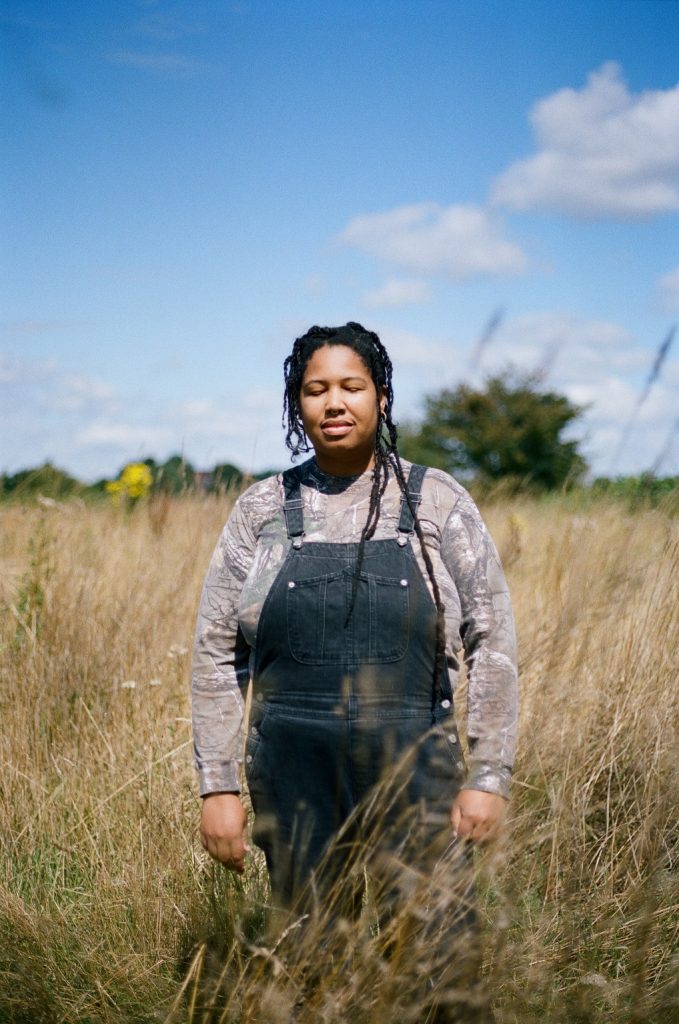
Reed prefers to keep her creative life a movable feast, but a fixed address isn’t out of the question. For now, this is an exciting time for Divide and Dissolve, as the group expands its audience through relentless global touring, including a 2024 run with Chelsea Wolfe. None of it fazes Reed. “I feel relaxed,” she says. “The way I’ve chosen to be a musician involves travel and moving around, but it doesn’t feel negative for me. It’s a part of my lifestyle.”