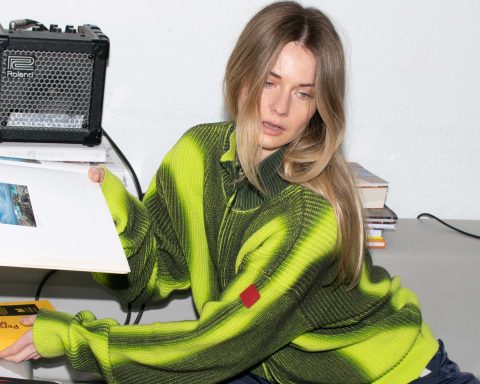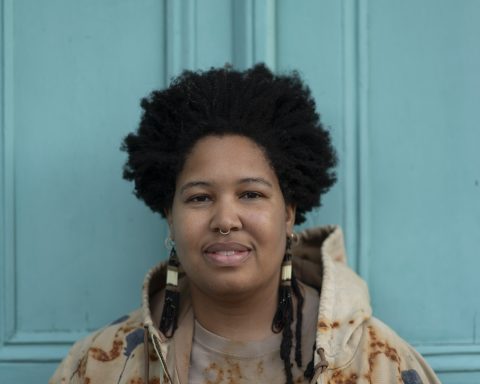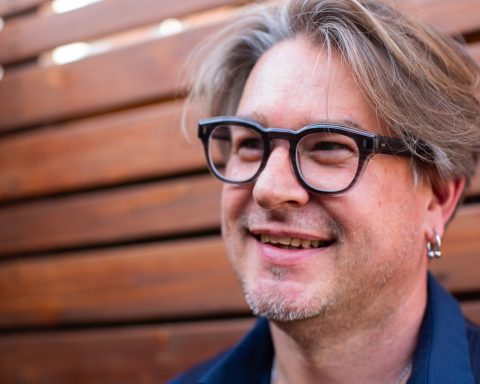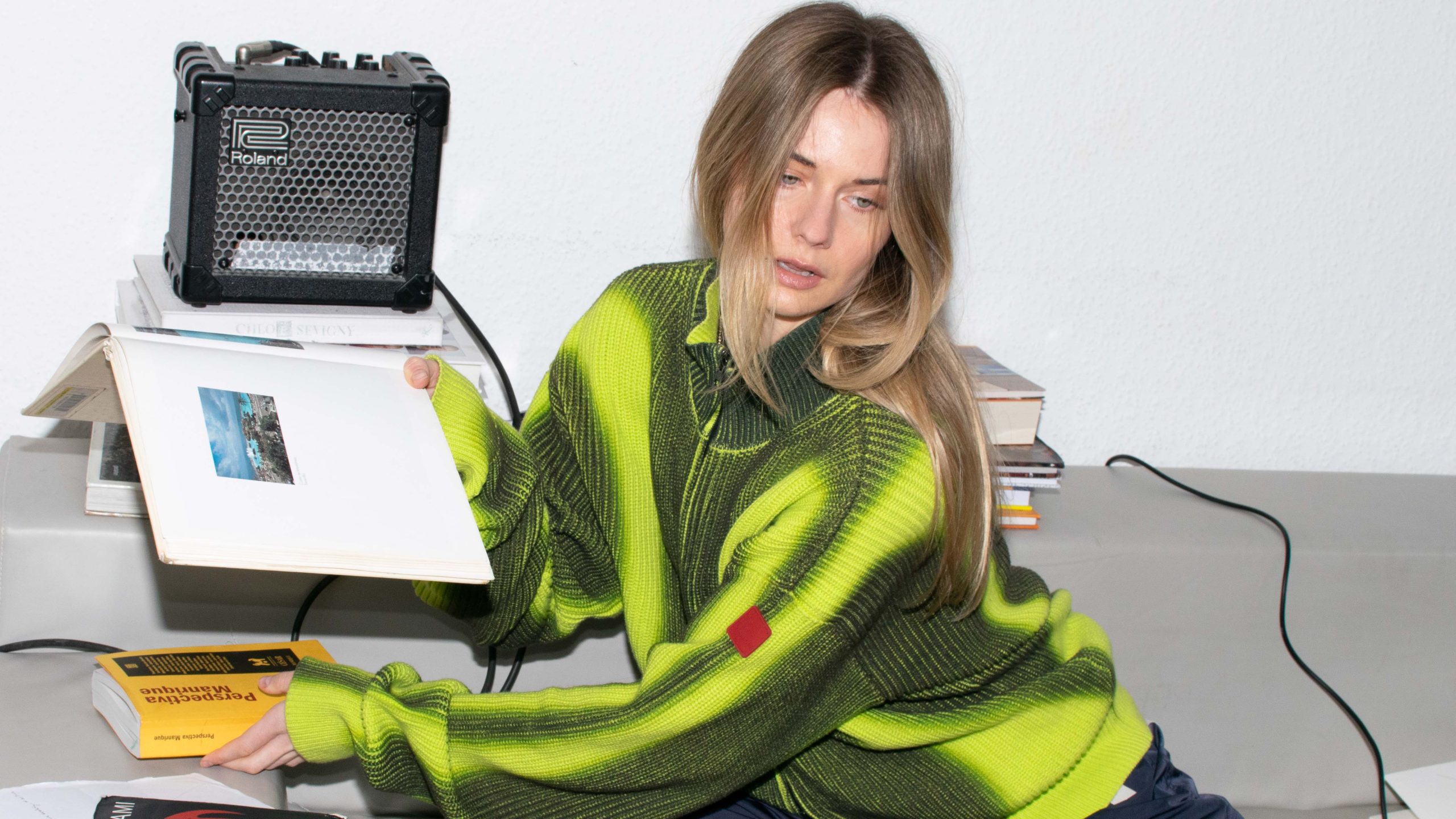
Blending organic instrumentation and vocals with tasteful electronic textures, Talulah Ruby channels the elemental forces of earth, water, air, and fire in a dynamic, evolving interplay. Those primal energies run deep and are the foundation of her music-making, which she approaches as a living practice. Ruby’s work is patiently built and deeply felt. Wherever she goes, she inspires fellow artists and leaves her mark on the creative spaces around her.
Raised on the Spanish island of Lanzarote in the Canary Islands, the London-based musician and concept artist is acutely focused on absorbing global cultures through sound while quietly building her own worlds—mainly outside public view. For years, she has been creating, testing, and collaborating within incubated circles in London, Paris, and the Canary Islands, though she recently stepped into the limelight as the lead vocalist on Maribou State’s international year-long tour. Along the way, Ruby has thoughtfully released singles into the world as “markers of emotional landscapes.”
Elemental Artistry
Talulah Ruby has spent years honing her signature sound in studios and late-night live rooms across London, patiently refining her musicianship alongside some of the city’s most respected players. We find her at home in Hackney, developing a self-produced and highly collaborative project that reflects years of sound collection and fieldwork.
Ruby has built a reputation for expansive performances that evoke a strong sense of frisson. Showcasing a collective approach that foregrounds improvisation, attentive listening, and shared musical language, she is known for her soulful vocal style and meticulous ear.
Her early recorded work, the Volcano Trilogy, introduced Ruby as a conceptual songwriter while delving into themes of environmentalism, introspection, and mental health awareness. She then established herself as a hands-on producer in her lockdown project, Hyperdrive, by skillfully melding electronic sounds with intimate, folk-inflected songwriting.
The Silhouettes Project’s “Venus” saw her contributing to a socially impactful project created in collaboration with fellow East-ender KeepVibesNear and London-based producer Sam Ellwood. Ruby’s practice became increasingly private as she turned toward sonic research within the London music scene. There, she further deepened her interest in collaborative engineering, writing, and producing.
"I'm a hybrid of a technophobe and a nerd."
Listen Deeper
Alongside music-making, Ruby practices Deep Listening. Inspired by post-war composer and electronic pioneer Pauline Oliveros, this meditative approach to sound encourages a heightened awareness of both perception and environment. Building on this, her Voice Modulation work non-judgmentally examines the central role of voice in society and culture, and its impact on our emotional, physical, and spiritual well-being.
Ruby’s last release, “Take a seat,” began as a spontaneous vocal freestyle, later joined by an organist responding in real time. Honoring her roots, she revisited the piece in Spanish as “Toma el asiento,” while recording her voice against the original organ part with no fixed tempo. It’s a method that creates an otherworldly dialogue between the two versions when played simultaneously.
Ruby shares about how gear—including a host of Roland and BOSS devices—sits at the heart of her creative process. These tools shape her sound and encourage experimentation, turning each session into a space for discovery and expression.
Hybrid Harmony
What do you enjoy most about using Roland gear?
With Roland gear, I feel the workflow has been well thought out by people who make music themselves. The functionality of everything feels tailored to a musician’s way of thinking. I guess it depends on how your brain works, but at least for me, I like the way Roland maps things out. It makes sense in my head.
I’m a hybrid of a technophobe and a nerd. I’m a complete mix of both. I know that feeling of being simultaneously overwhelmed and intimidated. But as soon as you commit to spending a little bit of time with Roland gear, you fall in love with it.
"With Roland gear, I feel the workflow has been well thought out by people who make music."
What are some of your favorite Roland devices?
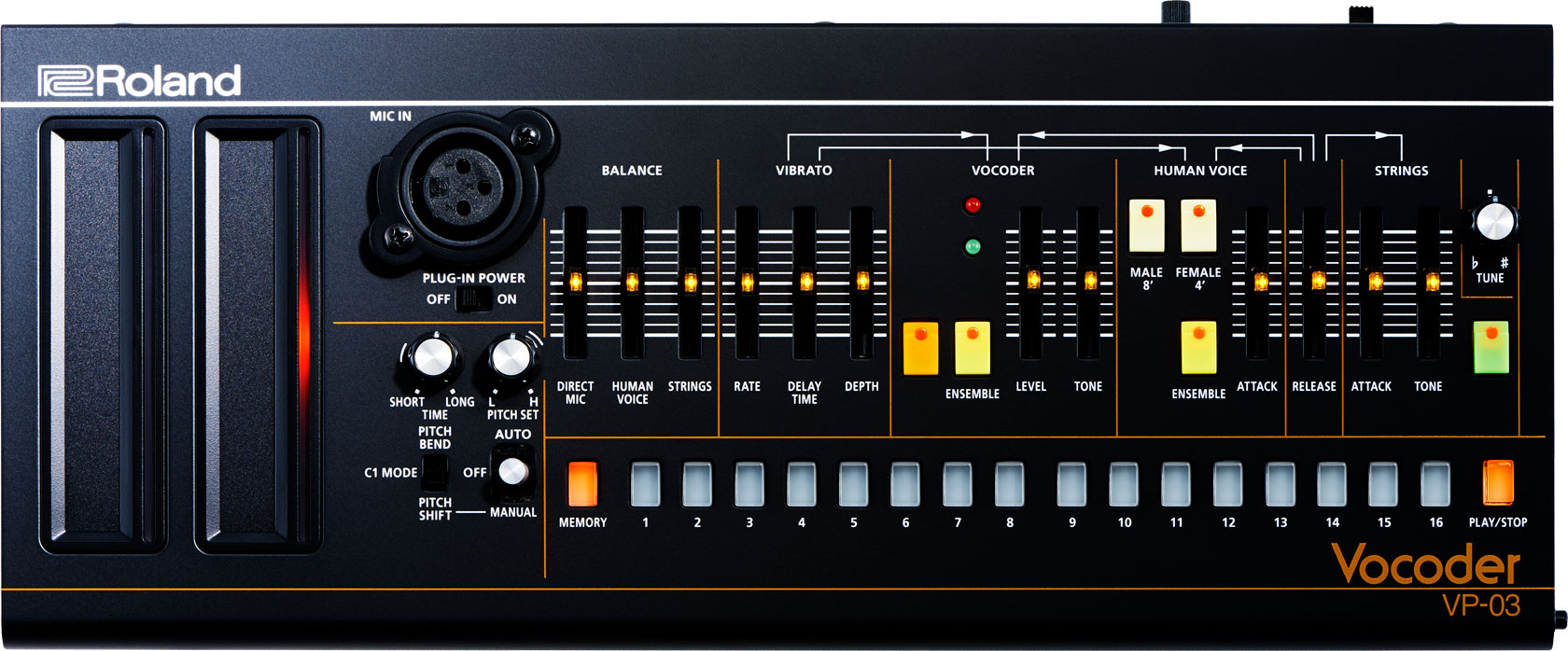
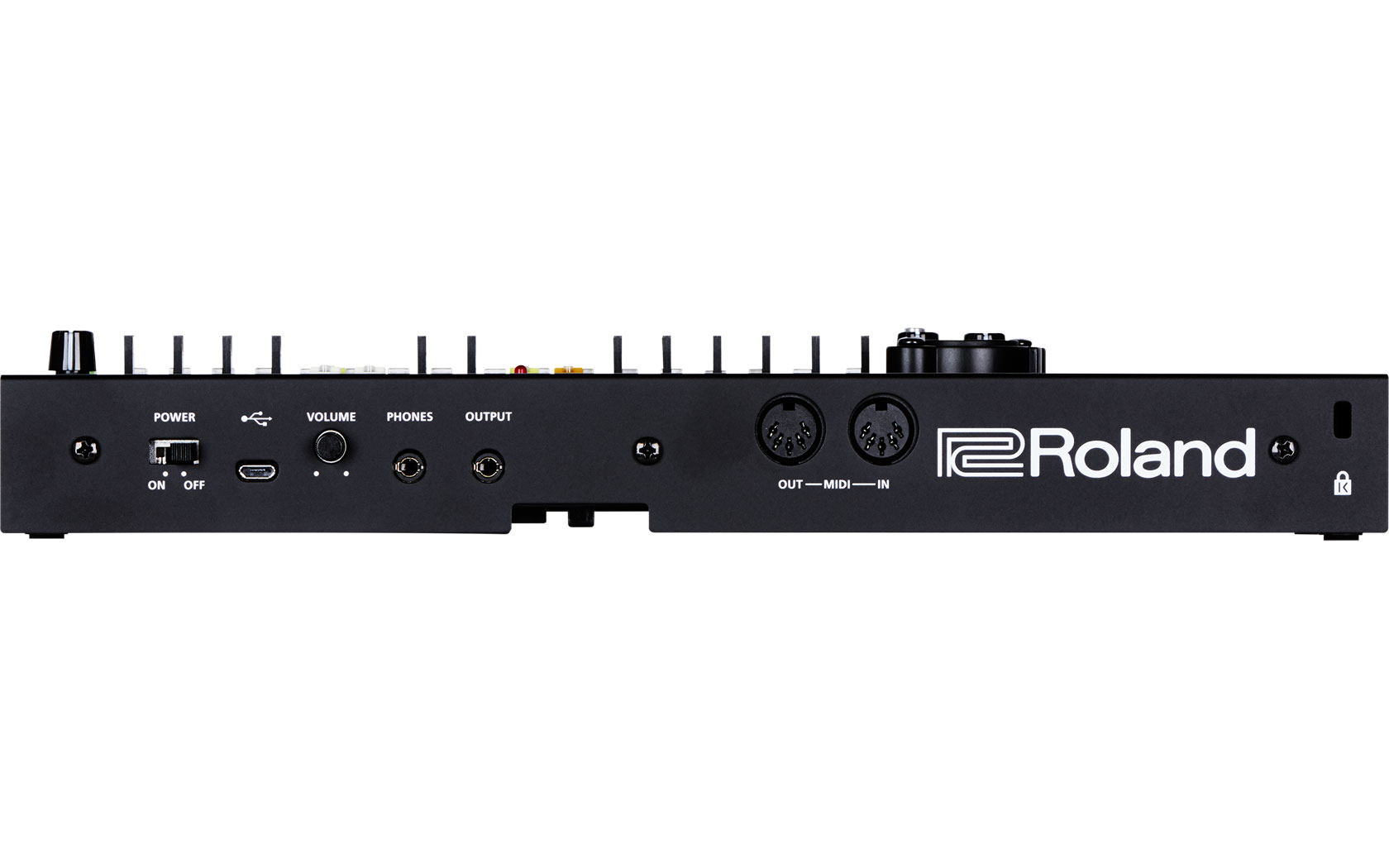
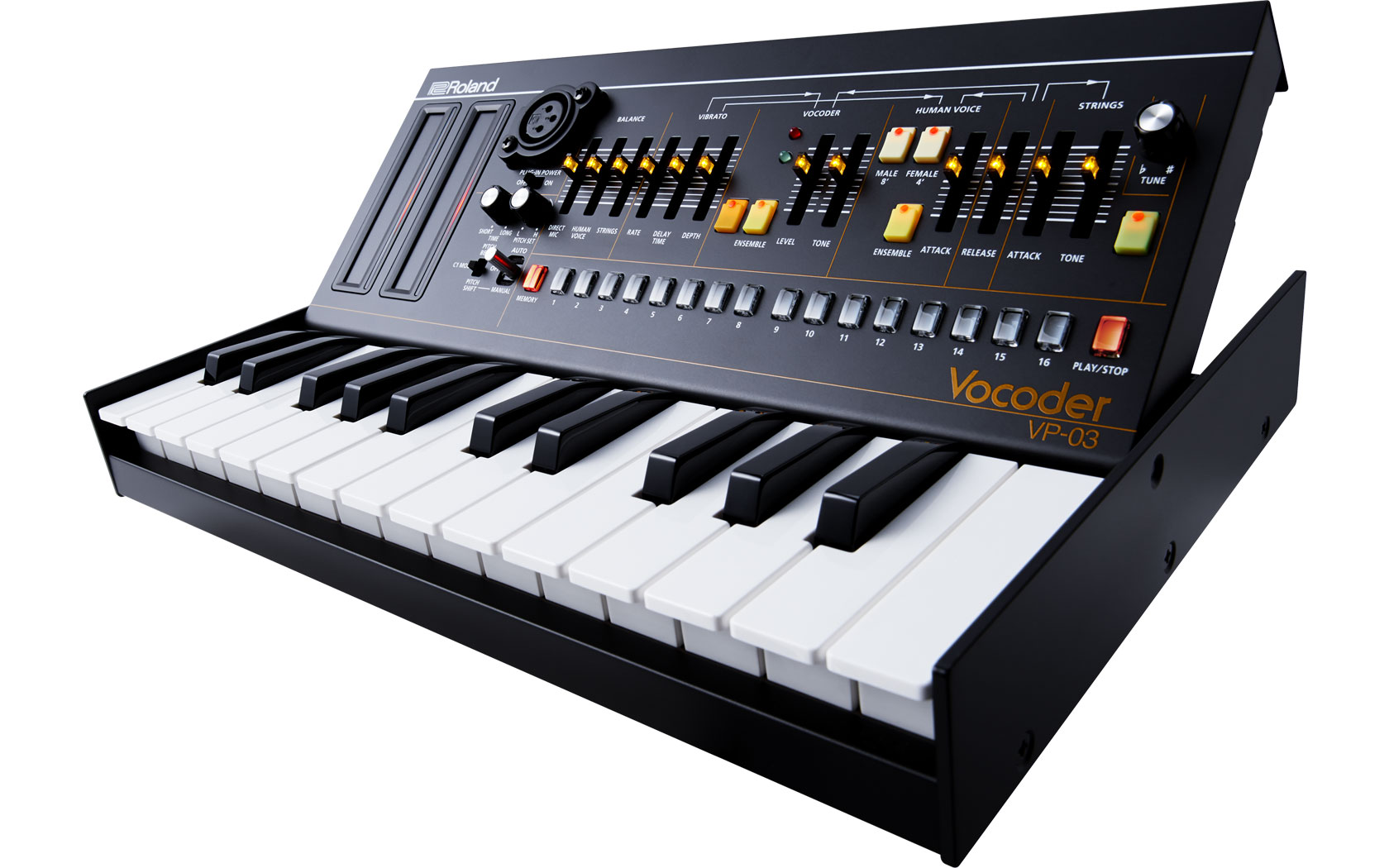
I love the Roland VP-03 Vocoder. That was my first piece of electronic gear. It’s actually been out on long-term loan to a friend. We did a swap, and he gave me the Roland TR-8 [Rhythm Performer] drum machine.
We can always swap back, but I’ve not seen my VP-03 for a while. I want to try and get my hands back on it. It’s amazing. I love the Roland Boutique range. I know that you can get the [K-25m Keyboard Unit] to go with those devices, but I never did. I just got the VP-03 module and connected it using MIDI (although I do my best to avoid MIDI keyboards now). I love the VP-03—the tone of it


Vocal Vistas
How do you like to use the Roland SP-404MKII Creative Sampler and Effector?
Historically, I’ve leaned more towards the SP-404 for live use. Funnily enough, I was at a Dijon gig recently at the Brixton Academy, and I was blown away by his vocal processing.
Afterwards, I went up to the sound engineer, Taylor Meyer, and asked about his gear. He told me he’d just added a Roland 404 to the rig only two days before the London show. He was running a load of vocal effects with an SP-404. I think he was mainly using it for the high-pitched formant shift effects and occasional layered distortion.
[Sound engineer] Michael Njuguna has been using the Roland SP-404 front-of-house for Saya Gray’s live mix. Both of those shows rank as the most impressive creative mix approaches overall for me. Because I’m vocal-focused, the SP-404 takes centre stage.
That was an eye-opener for me because I primarily think of using the 404 as a drum machine first, and effects units second. When I think about mixing, I always imagine those things as kind of separate, but the 404 is really versatile; you’ve got all these banks of sounds that you can do a whole live set with, but you can also use it for all your effects. I think it’s becoming my favorite piece of gear for performing live.
"The SP-404MKII is really versatile... I think it's becoming my favorite piece of gear for performing live."
Time and Space
What’s your most recent discovery in the Roland world?
I’ve been loving using the Roland [SRE-555] Chorus Echo recently—the rackmount unit. I’ve just fallen in love with that as of last week. I’d never used it before. My collaborator has a studio and has given me full access to it because I lost my laptop, and, with it, two years’ worth of work.
I’m desperate to rebuild and re-record, and he has given me access because he’s having a baby. It’s a really small studio space, but it’s got a bunch of nice outboard gear and a couple of hardware units I haven’t had physical access to before.
Do you prefer hardware to software?
I’m not really a plug-in person, and I don’t use many. I love the Roland Space Echo. I’ve always loved Space Echo. It’s kind of what got me into DJing vinyl. In Jumbi—a venue in South London—they have a Space Echo hooked up to the turntable. It’s a vinyl-based listening bar, but it was happening before the current listening bar buzz.
"I've always loved Space Echo. It's kind of what got me into DJing vinyl."
Jumbi was set up to honor Bass culture and Afro-Caribbean hospitality. They have different resident chefs doing the food, and local selectors come and play. But their whole thing is that they only have one turntable; you can’t spin two records, which felt way easier for me.
It takes it from being a DJ to a record selector. And because they have one turntable, they’ve built in a Roland [RE-150] Space Echo so that you can seamlessly transition. It’s so cool.
I also ran an SM58 through the Space Echo, so that, if need be, I could take my sweet time finding the next record—I’d just ad-lib vocal sounds. It’s a slightly unusual entry point, but learning on the job like that was what got me into Space Echo delay.

Tactile Tech
How does singing through hardware effects change the way you perform compared to using software?
As a vocalist, it makes a massive difference to me whether I’m using hardware or software. If you’re singing with hardware, your voice is interacting with it in real time. Often, when I’m recording, there are two versions of the same performance. I like to record with two mics: one clean, one wet. It’s about committing to singing a certain way and committing to a sound.
When I’m using, say, the Roland Chorus Echo, I will naturally change my vocal performance. Maybe I’ll move my larynx up as the sound of the effect changes, for example.
There are so many ways you can perform—different vocal techniques. I think it’s good practice for singers to work with hardware as they’re practicing. All too often, effects are only added after a vocal performance, but they can be an extension of your voice as you sing. The hardware can pull you into it, and vice versa.
"I think it’s good practice for singers to work with hardware as they're practicing."
Vocal Alchemy
Are you familiar with the BOSS Vocal Performer pedals?
I started on a BOSS VE-20 Vocal Performer when I was 14. I still have it somewhere. I really liked the harmonizer and chorus effects. I enjoyed using the looper, too. I remember doing a Little Dragon cover on it. That was my entry point to looping. I used it a lot for looping, but I’d also use it for effects. If I were doing a live show, I’d use the harmony, chorus, and reverb.
It’s maybe not so common for singers to practice using effects as it is for, say, a guitarist. But it can really open up things creatively. As a producer, it’s fun to work with effects and to have dry takes. I mean, you can do both. It’s exciting. It’s creative. I’m interested in all these things.
The world of vocal effects is huge. I love learning about bits of gear that I could potentially try out and find what sounds right with my voice. I guess that’s why it’s good to have access to plug-ins, because at least you can get an idea before investing in the hardware. You could easily use the Roland SP-404 as a vocal effects unit—the possibilities are endless.

Mixing and Fixing
What does the Maribou State rig look like?
I was invited on a tour with Maribou State, and we used a big mix of gear. It’s the craziest setup (at least I think so) We’ve got about half a dozen analog synths, a Space Echo, a couple of SP-404s, and a unit in the middle of the stage we use for percussion. Then there’s bass, congas, guitar, drums, vocals—like a full band rig on top of the synth setup. And it’s all analog, so the settings are color-coded by hand.
Our engineers are incredible, and it’s given me a deep respect for techs and roadies like Sara Ferrero, because it’s so complicated. Sara is amazing. She likes posting videos on Instagram about how she fixes things. Almost anything can go wrong, like a wiring issue, or even something as random as a guitar pick that has fallen into a gap and is interfering with a connection.
"I appreciate something that's been played by a human... But then I also really appreciate when something feels industrial or non-human."
Hard to Beat
You mentioned the Roland TR-8 Rhythm Performer; what do you especially like about that drum machine?
I love the TR-8 and those classic 808 and 909 sounds. I find sequencing difficult. It takes me a while to get my head around, but once I’ve gotten used to it, I’ve found it really fun to play around with. I just love the sound of the TR-8—it’s incredible.
I really, really enjoy using real kit for groove, along with drum machines for all the hi-hat stuff. I like that kind of high-end. It’s a nice blend. I’m obsessed with the hybrid of live electronic equipment and live instrumentation that feels organic.
Being a singer, I appreciate something that’s been played by a human—something that feels human, like a feeling. But then I also really appreciate when something feels industrial or non-human—something that I couldn’t necessarily do naturally.
Opposites Attract
How do your environment and identity shape your creative process and sound?
I think I’m always kind of trying to reference my identity. I’m from the Canary Islands, which feel very organic, natural, and beautiful. The landscape is a mix of gorgeous sand dunes and dramatic black volcanic rock.
I love that contrast between something soft and something hard. I think that’s what the TR-8 did for me. It creates textures I can’t achieve organically. But it feels nice—not too digital-sounding. It takes me into a plastic realm that feels gritty and has a lot of flavor.
Which artists have inspired you with a similar blend of natural and electronic sounds?
I’ve always listened to records from the ’60s and ’70s, and recently I’ve been listening to Annette Peacock a lot. The way her voice is processed on “I’m the One” sounds incredible. That way of blending natural and electronic sounds is a great example, and has been a reference point for me recently.
"The process of recording is as important as the idea of the song itself."
The Spell of Sound
What are you working on now, and how would you describe your process?
I’m currently writing a song called “Magic,” and I’ve been thinking about how the process of recording is as important as the idea of the song itself, because the process is how it’s going to sound. I realized it’s important to preempt that the process is a part of it.
Harry Nilsson’s The Point is really interesting. There are a few bangers on that record, but there’s one song in particular that explores the idea that if there are points in every direction, then there’s no point at all. That whole philosophy made me take a step back. Listening to that record, I was reminded that there actually needs to be no point at all for it to make a point.
And then I started thinking, “What is the point of magic?” I thought of it as a spell, and so I wrote that song as one. It was like a beautiful conjuring of something that hadn’t happened yet but was wanting to happen.
When you have that approach to mixing and gear, it’s all about the ritual. I guess that’s what I’m looking for. The process of making great music is like a ritual. Thinking about something and then manifesting it is magical.
Has that way of thinking altered the way you present your work?
I want to be a bit more transparent about my process. That’s all I’ve got right now because, after a year of touring, sound collecting, and concept building, I lost two years’ worth of all my work on my laptop and hard drives.
I’m letting people into my process and doing my best to be more open in real time about what it’s like to write, record, and experiment with equipment. I like the idea of sharing it all so that when I release the work, it hasn’t been hiding behind a curtain.
I want to be in front of everyone in real time. I want to encourage people to ask me questions and get involved, almost like a collaboration. At the moment, it’s a blank canvas, which is exciting
"I want to encourage people to ask me questions and get involved, almost like a collaboration."
Freestyle Fusion
Your process of creating “Take a seat” is interesting. Tell us about that.
There are two versions: “Take a seat” and “Toma el asiento,” the Spanish translation. It was really impactful for me at the time. I wrote and recorded those tracks with a Flea 47 mic running through a Neve preamp.
“Take a seat” was a freestyle vocal from start to finish, recorded in a single take. The organ performance played on top was also done in a single take. I just pressed record, and Couros reacted to my voice in real time.
There was no discernible pattern throughout “Take a seat.” Therefore, the Spanish version, “Toma el asiento,” which features the original organ, doesn’t have a set timing either. So, when I recorded my vocals for it, I was, in turn, responding to the organ part, as opposed to it responding to me.
Recording “Toma el asiento” was hard because there was no metronome, and I originally wrote it using a drone—a single note we had running, rather than, say, a chord progression. If you play “Take a seat” and “Toma el asiento” at the same time, it creates an interesting effect—almost like Space Echo.
"As much as Lanzarote is known as a tourist destination and is under the radar when it comes to music, it has a rich subculture."
Island Roots
How does your identity continue to shape your music?
I put out a remix of “Take a seat” with an artist called Bikôkô. Like me, she speaks English and Spanish, which adds a bit of identity. I’m from the Canary Islands, and was born and raised in the middle of the lava fields in Lanzarote. It was quite a unique upbringing. I grew up in a place where people like Brian Eno and Björk have enjoyed visiting. There are all these incredible, kind of obscure, but well-respected artists who spent a lot of time in Lanzarote.
As much as Lanzarote is known as a tourist destination and is under the radar when it comes to music, it has a rich subculture. Locals have been wanting to change that for a really long time, and we really appreciate it when people visit who are interested in culture, the arts, and sports. That’s part of our identity as an island. We want it to be known as a place where you can come and explore the natural reverbs!