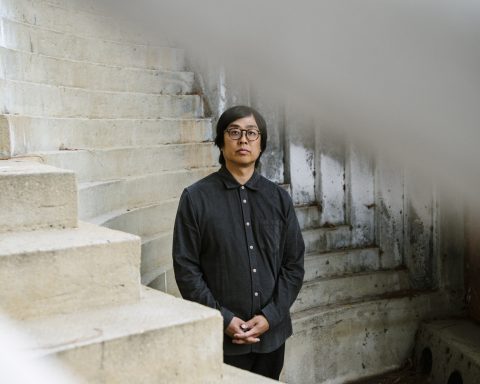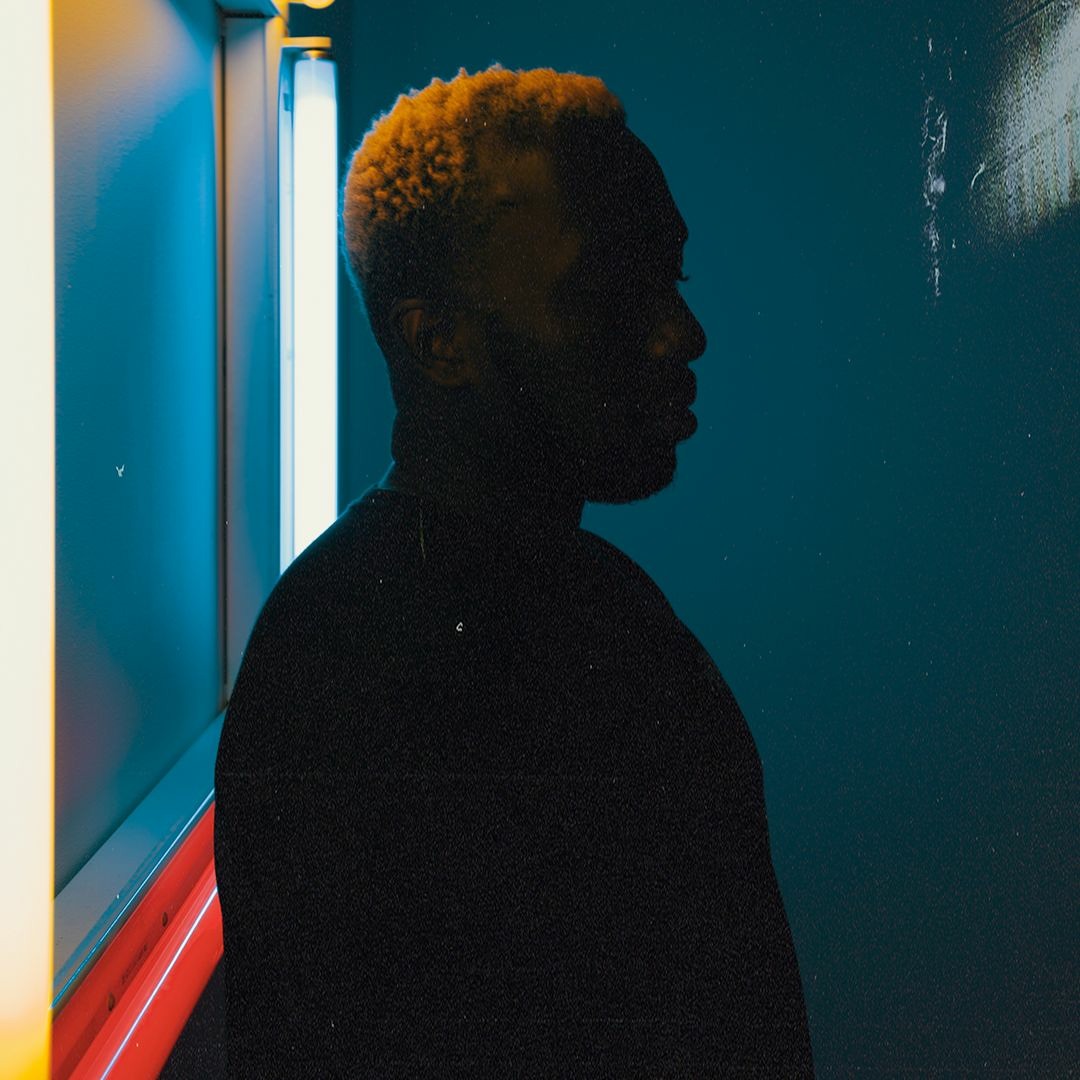


Daramola is emotional.
Every aspect of the Nigerian music producer’s music is informed by emotion—from sound selection to the drum sounds in specific sections of the song. Legends like Marc Anthony and Shakira, rising chart-toppers like Anitta and Elena Rose, and his own solo music career have benefited from his machine manipulation, where he can alchemize a siren whistle from the Roland JUPITER into a mermaid sound. The young man who grew up on garage music in the UK, southern hip-hop in Alabama, and Afrobeats in his home country has become one of the preeminent hitmakers in the Latin music space. And he did so by translating his varied music tastes through a universal language: feelings.
Few people can attest to how central Roland is to the sound of Latin music.
“I’ve personally been in rooms with some of the GOATs in this space, and there’s a JUNO in the studio. It’s not just sitting there looking pretty; it’s getting put to work,” he says. “In general, you can’t really mention modern Latin music without leaning into the influence of Reggaeton. And there’s a 50% chance one or two Roland instruments are in the mix of all of that.”
With a new solo album arriving, Daramola dived into the making of some of the most important records in Latin music over the last half-decade, and the lessons he’s learned.
Playlist
Ginger by Sean Paul
The first time Daramola got the chance to work with Sean Paul, he witnessed the dancehall legend’s ability to freestyle an entire song in one take. The hook was a collective invention. There’s a moment in the 25-year veteran’s 2025 single “Ginger” when his seductive fixation on a love language rests on a bed of cloud-soft synth. This was part of Daramola leaving his new imprint on one of the most revered legacies in music.
“If I ever do a song where there is some sort of break on the pre-chorus where it’s pads only, nine times out of ten there will be a JUNO pad in there,” he says. “I had another iteration of JUNO for ‘Ginger.’ That’s all credit to Roland for creating a phenomenal instrument that everyone wants to have their version of. But, once you get the real thing, you’re stuck on it.”
Gangsta Angel by Elena Rose
To Daramola, the breezy yet vibrant dancehall vibe of this track is one of his best productions, and one that subverted genre expectations. While the song grew from a simple guitar melody, it eschews the bright-sounding tropes of traditional Afrobeat songs in favor of a steamy richness that sounds like it’s drenched in sweat from bodies colliding on the dance floor. What most hear as a standout track from the Grammy Award-nominated Latin pop star’s debut album is actually a statement to the entire music industry.
“It sounds sonically different than all of the other records on the album, chord progression-wise. It’s the respect record. [It tells listeners] this person isn’t just hopping on the happy Afro wave,” Daramola says. “She’s creating and crafting her own thing within the context of what’s happening [in the Afrobeats space].”
orióN by Boza & Elena Rose
With over 850 million streams on Spotify alone, Daramola’s first Latin music hit owes a lot of its success to the Roland JUNO-106 pad. Opting for a polysynth stack adds layered texture to his synths, accentuating the festival of sounds he arranged. More importantly, his most successful song carries his unique sonic signature of dynamism that sets him apart from other producers.
“When a producer just adds guitars and drums, or a drum loop and bass, and that’s the end of a song, that’s great,” he explains. “But in instances, if I were to do that, it would lack a bit of character. When you introduce the idea of synthesizers to something, it does that. That’s why ‘orióN’ was what it was.”
Caramel by Danny Ocean
Experimentation anchored in emotion is often how one can make the future feel familiar. Venezuelan hitmaker Danny Ocean benefited from Daramola exhibiting this mindset on his Babylona Blue EP stunner “Caramel,” a song that sounds like the joy of a tropical vacation on an alien planet. Weird Afro drums mesh with sublime Roland JUNO-106 synths. The song was conceived while Daramola was in the Dominican Republic with Ocean and multi-platinum producer Jon Leone, whom he refers to as “the man who got me married to synthesizers.” And a new Latin music favorite all started from one piece of equipment.
“We wanted something cool and emotional. John pulled out the Roland and played the first few pads on there,” he remembers. “That became the actual basis of the entire record.”
"I’ve personally been in rooms with some of the GOATs in this space, and there’s a JUNO in the studio. It’s not just sitting there looking pretty; it’s getting put to work."
Daramola
Choka Choka by Anitta and Shakira
Brazilian pop megastar Anitta and Latin music icon Shakira represent two distinct generations of music, and Daramola’s alternative music-leaning co-production on “Choka Choka” was the nexus point. Listen intently to this song, and you can hear heavy synth and pad work from the Roland JUNO. The Nigerian producer wanted to challenge himself and show the Latin music world his capabilities extended far beyond Afro-inspired sounds. The song instantly became a Top 20 hit on Billboard’s Brazil Hot 100 chart, but only after the song was meticulously refined through 18 different mixes.
“Shakira is a perfectionist at what she does,” he explains. “I learned a few things from her. It looks like, ‘Hey, I think we should have this sounding this way. I think this sound should be here.’ For you to be able to get to that point, you have to be performing at a high level to think like that.”
Dios me oyó by Beéle and Marc Anthony
Massive drums that march across your eardrums, guttural chants that command shivers from your body, and two powerhouse vocalists in Beéle and Marc Anthony are the ingredients for a stadium-sized anthem. What can’t be heard in the song is Daramola’s maturation away from an ego-driven approach to making a hit to a collaborative-centric focus on making an impact in the studio. This methodology properly matched the magnitude of what the song became.
“Marc doesn’t just do features; he’s Marc Anthony. There are some people who, when you have them on your record, it’s much more than a flex; you’re making a statement.”
"Marc doesn’t just do features; he’s Marc Anthony. There are some people who, when you have them on your record, it’s much more than a flex; you’re making a statement."
Daramola
Gidi 2 Caracas La Música by Daramola and Rawayana
After independently releasing two albums, Daramola became the first Nigerian to sign an artist deal with Sony Latin in 2025. The following year, he wanted to make a statement that he was here to stay. He describes “Gidi 2 Caracas” as a gumbo made of a sprinkle of jazz, a dash of Afrobeat rhythm, and a hearty helping of amapiano. Instead of using the JUPITER-8 alone, he expertly layered its polystack tone with a SKY Keys preset to build an even bigger, more textured composite sound. The emotion Daramola and Rawayna were going for informed their use of saxophones, which is atypical for a Latin Afrobeats record.
Then again, Daramola wasn’t simply making another record.
“I wanted to put a stamp on my sound so it didn’t sound like a passing fad. The response to that was cool because I was able to ink the deal with Sony Latin Music as an artist.”
Tututu by Elena Rose and Alleh
Sometimes simplicity can be a surprise. While Reggaeton fans expect songs to build up to a moment of “Despacito” sized explosion, Daramola opted to give the Elena Rose and alleh collaboration an almost syncopated bounce with sputtering hi-hats, vocals, and snare drums.
The piano never dramatically overpowers the production, while SKY Keys accentuates the delicate approach. The Roland JUNO-60 pad operates surreptitiously in the background for color. In the end, every sound plays a subtle yet important part in a song that’s not only growing in popularity among two of Latin music’s most promising stars, but also carries on one of the genre’s most prolific producers’ penchant for subversion.
“I wanted the song to go straight to the point. Let’s tell people what the moment is, rather than having them dictate it,” he says. “Oftentimes, we get caught up in the trap of doing what we think they want or expect. That gets boring; shock them a little.”
"I wanted the song to go straight to the point. Let’s tell people what the moment is, rather than having them dictate it."
Daramola