

First-time visitors to Japan are often surprised by the contrasts. Japan is, of course, known for its ancient history and traditional culture, as well as for being a high-tech wonderland. But what people might not expect is how these two sides not only live side by side, but often as one and the same. Picture an ancient shrine amidst the skyscrapers of downtown Tokyo, or a Buddhist temple using modern techno music to deliver sutras to a younger audience.
KIYOLA, Roland’s gorgeous high-end digital piano series, is another example. Created together with furniture maker Karimoku, it pairs bleeding-edge digital sound technology with wood-crafting traditions dating back more than a millennium. At first blush, this may seem like a novel contradiction, but as with many things Japanese, there’s more than what appears on the surface. This is the story of KIYOLA, a coming together of two Japanese companies with more in common than you may think.
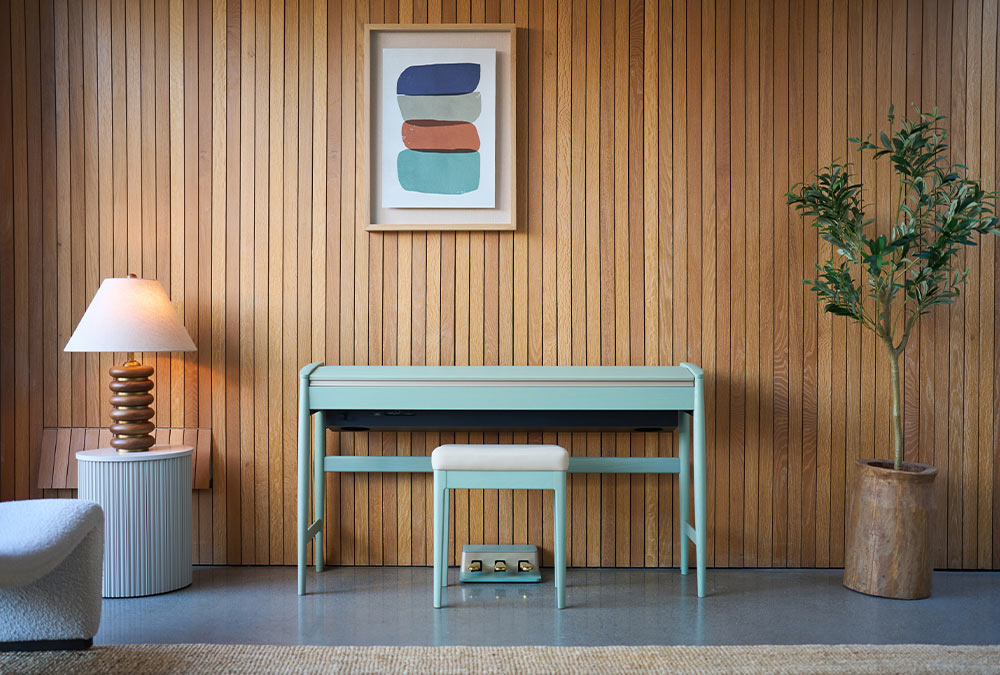
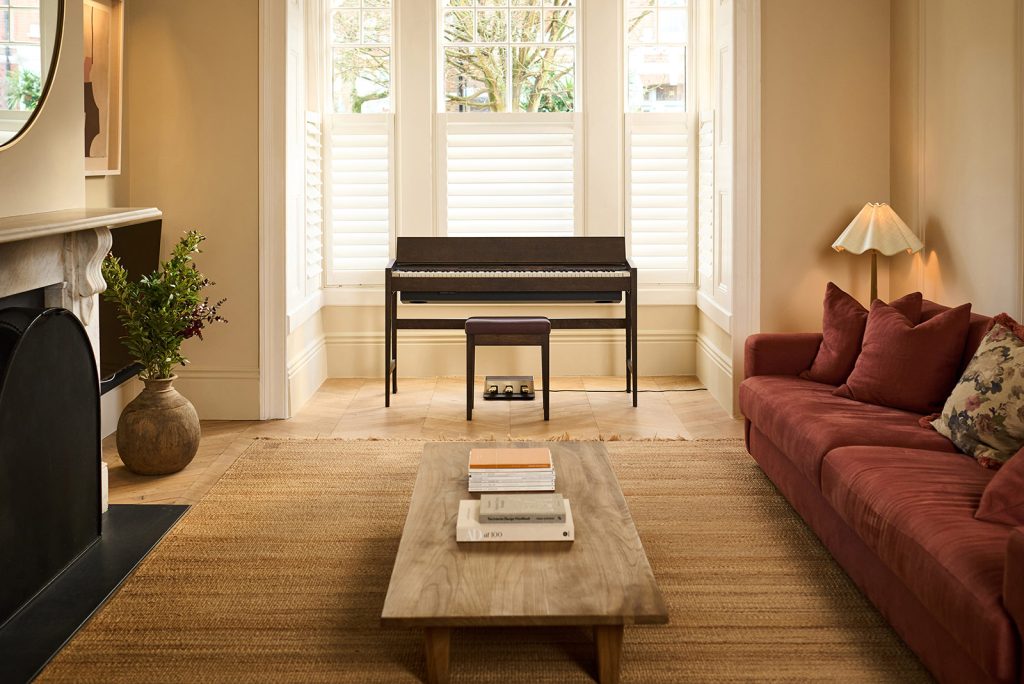
What Is KIYOLA?
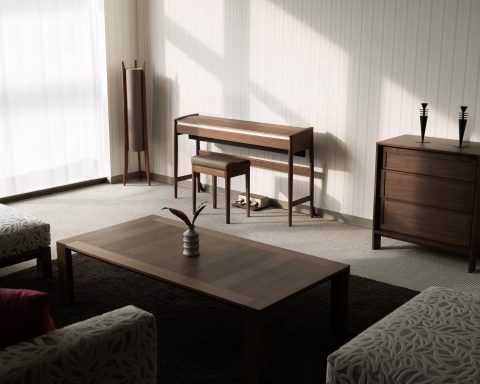
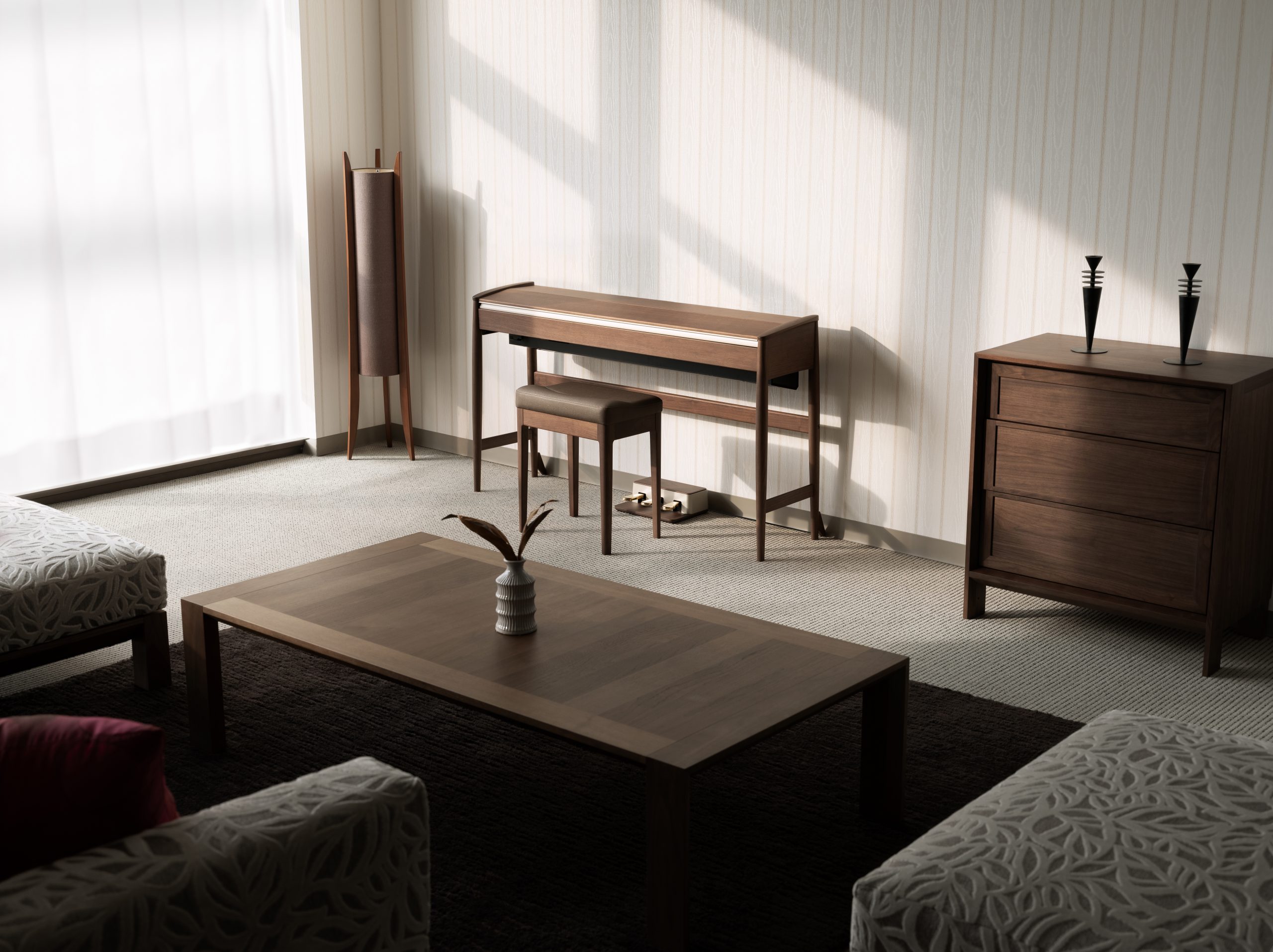
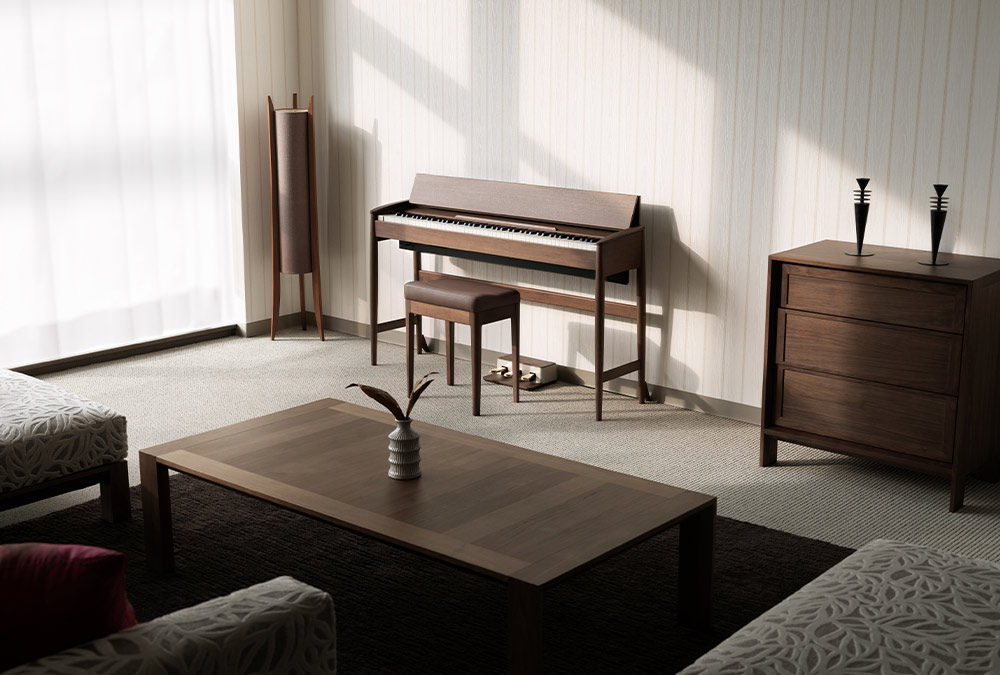
Billed as an artisan digital piano, the KIYOLA KF-10 was the first collaboration between Roland and Karimoku. It was followed this year by the KIYOLA KF-20 and KF-25, two new models with a shared digital piano sound engine based on Roland’s latest Piano Reality Modeling technology, and different cabinets that take inspiration from two types of traditional Japanese craftsmanship: hikimono and sashimono.
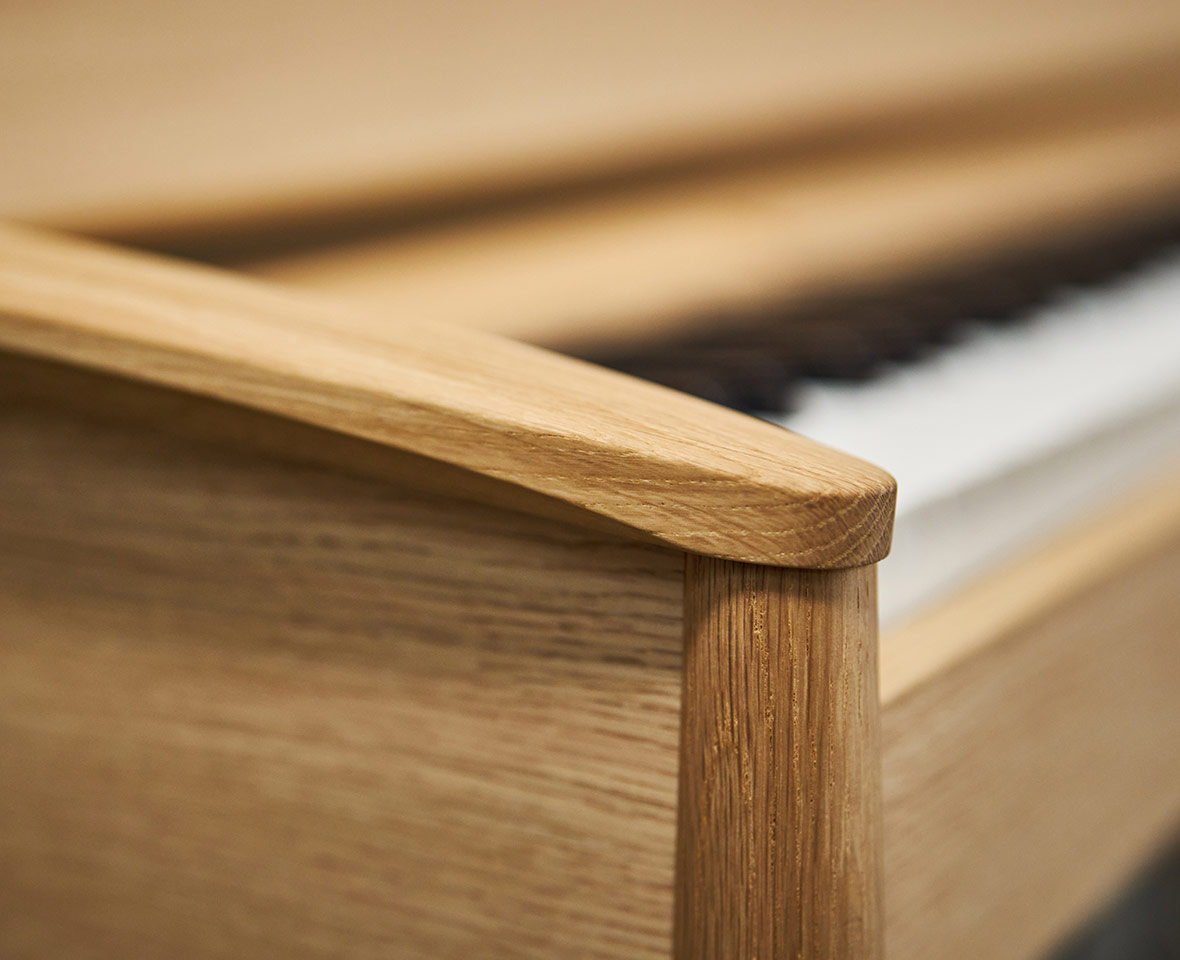
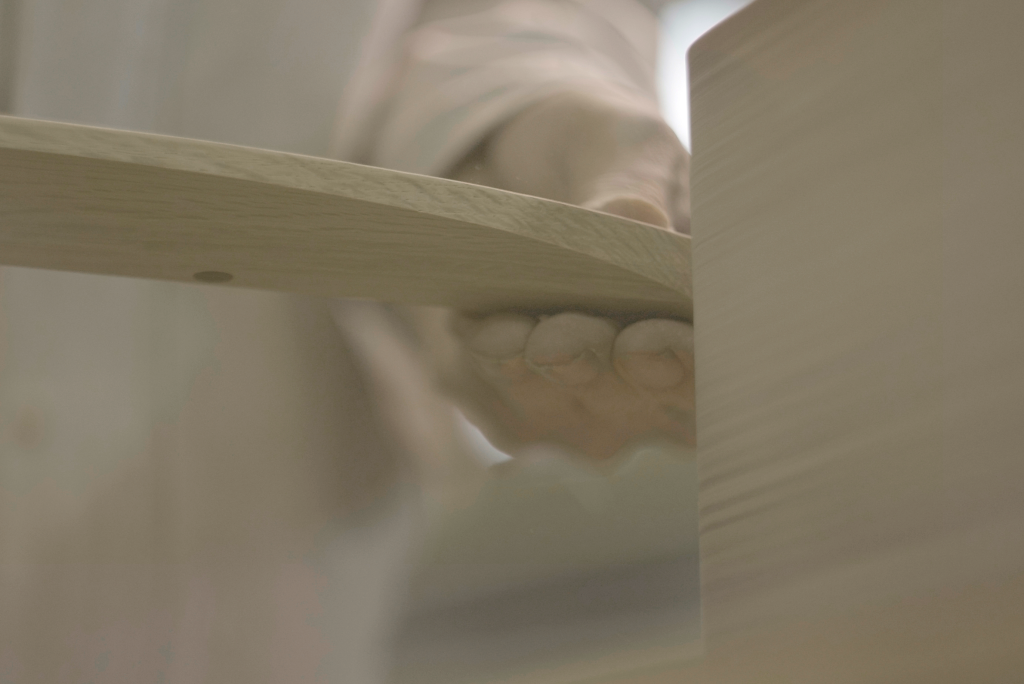
With its gently curving edges, the KF-20 looks to hikimono, a way of working with wood that dates back hundreds of years. By spinning wood on a lathe, artisans could create smoothly rounded figures, perfect for bowls and other eating utensils.
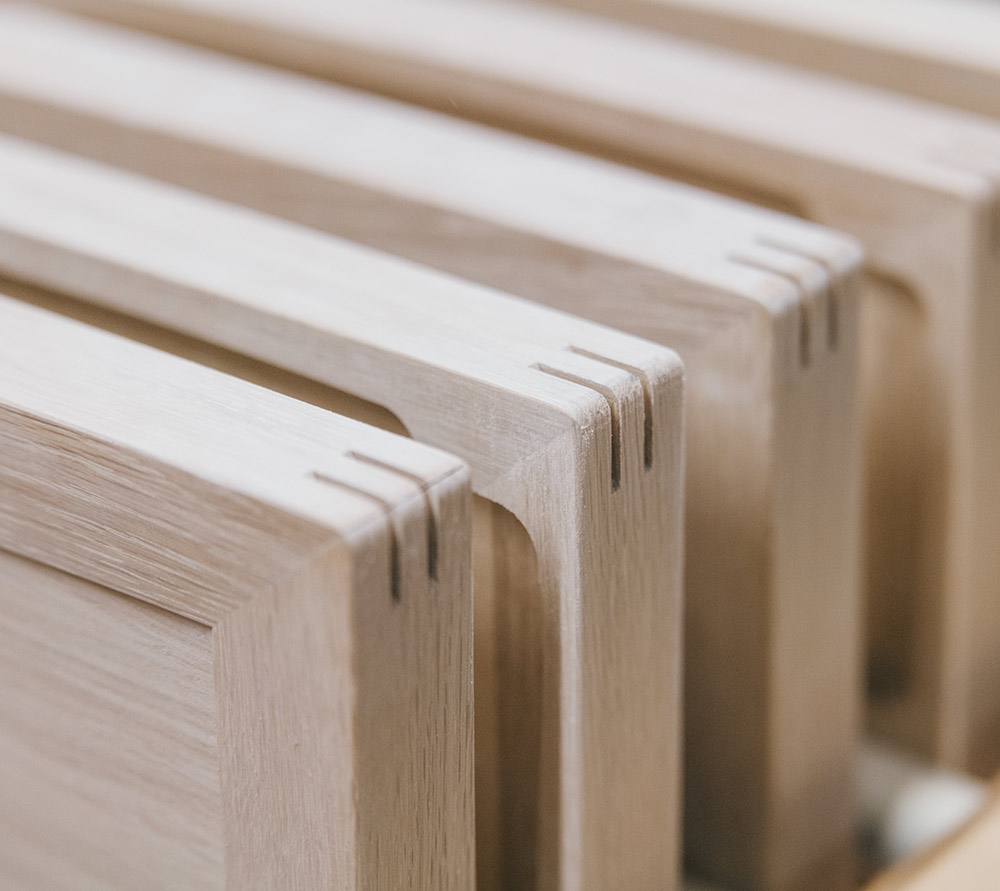
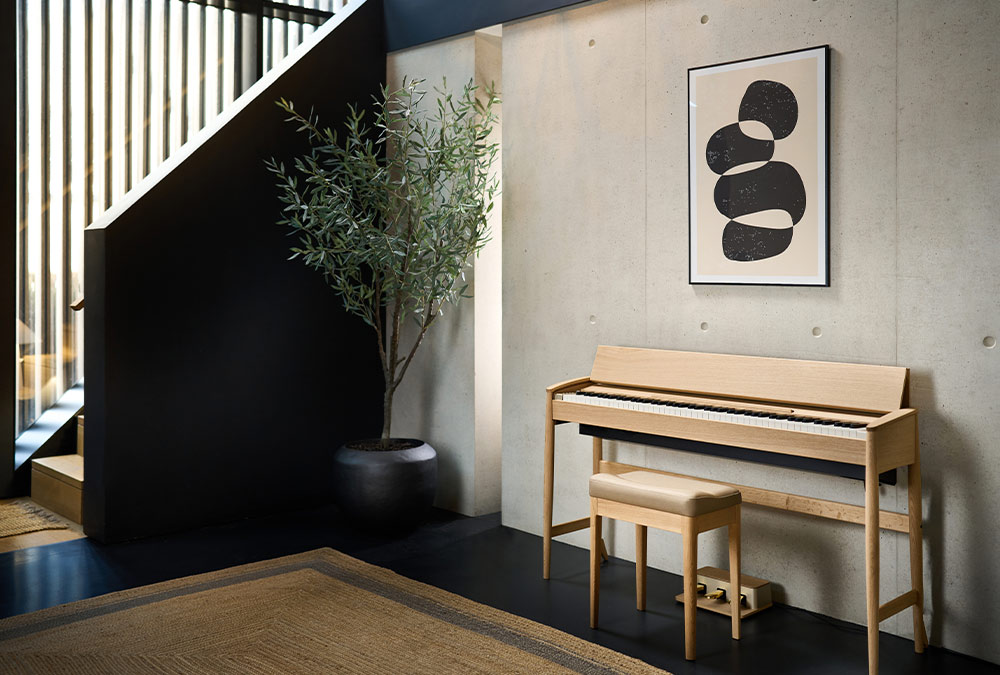
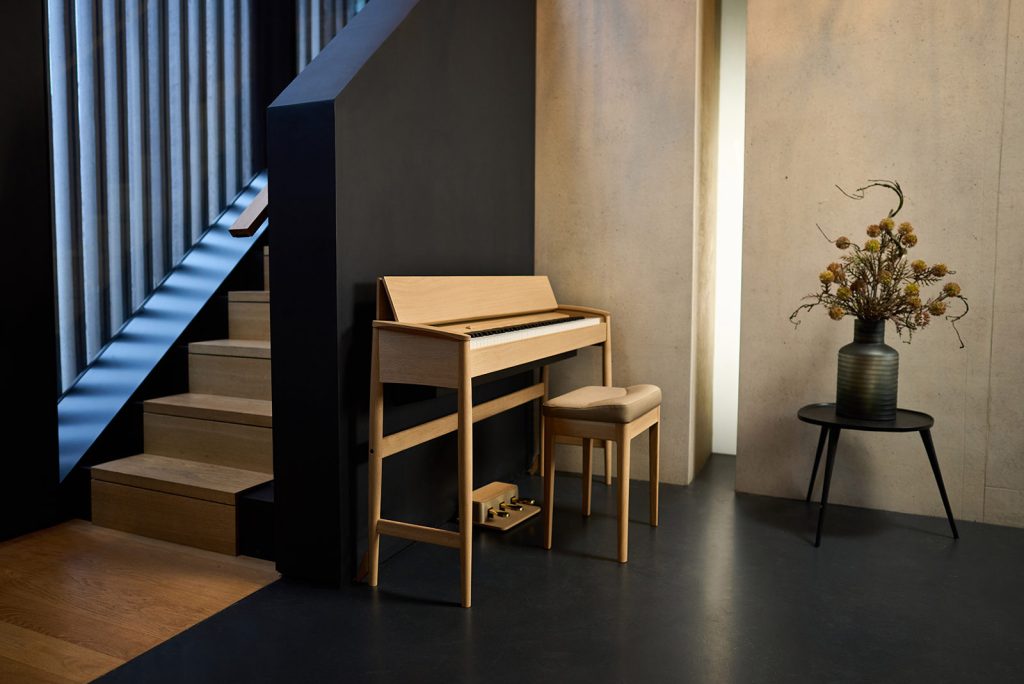
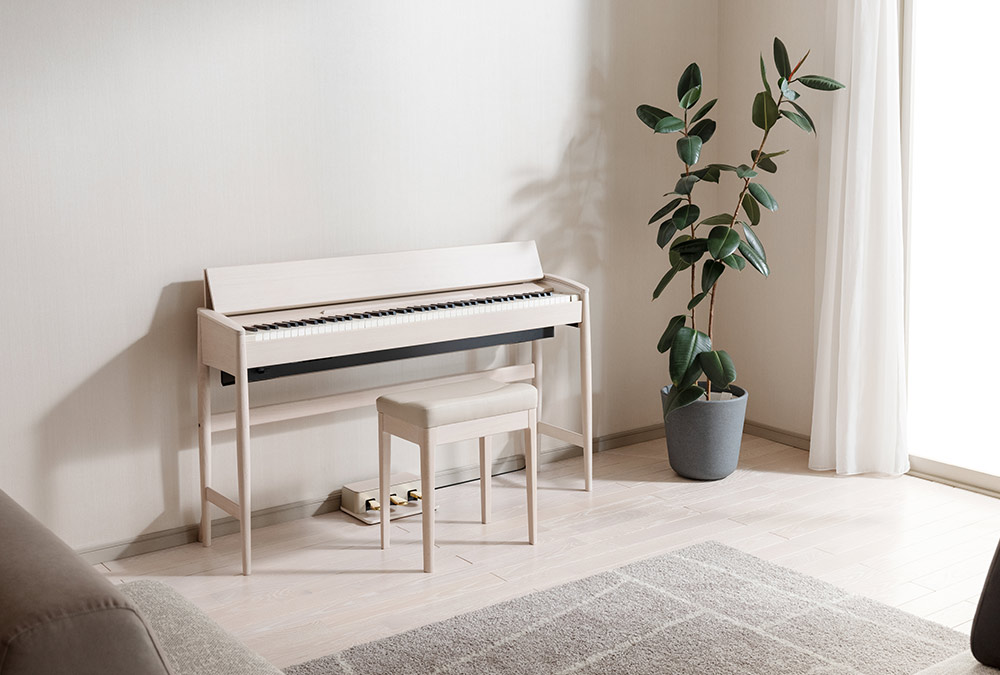
Where the KF-20 curves, the KF-25 conversely surprises with straight lines and striking angles. This is due to the application of sashimono joints, an ingenious way of joining pieces of wood without nails, screws or other metal fasteners. Often found in ancient buildings and Shinto shrines, sashimono places importance on the wood itself, resulting in a striking shape in the KF-25 that is sure to complement modern, minimal interior designs.
"Where the KF-20 curves, the KF-25 conversely surprises with straight lines and striking angles."
How It Started
The first KIYOLA debuted in 2015, but the story begins some years prior, when Roland decided it wanted to create a new kind of piano, not merely in terms of sound technology but also in appearance. “There are so many pianos on the market,” says Roland’s Kazuhiro Kubo, the Manager of the Piano & Wind Planning Group and the KF Planning Leader. “If we look at pianos from a distance, they all look almost the same.”
Choosing to focus especially on exterior design, the team soon realized that both design and pianos connect to daily life. “The perspective is very similar to furniture,” remarks Kubo-san.
With that in mind, Karimoku became the obvious choice to design and make the cabinet. “We approached Karimoku and did some brainstorming,” Kubo-san continues. “After that, we realized our corporate mindsets were almost the same, such as our spirit of manufacturing, that kind of thing, so we started investigating how to build the KIYOLA.”
"We realized our corporate mindsets were almost the same, such as our spirit of manufacturing, so we started investigating how to build the KIYOLA."
Kazuhiro Kubo (Roland)
Karimoku: High Tech and High Touch
“Karimoku is the largest well-known brand in Japan,” answers Kubo-san when asked why Roland chose to work with the furniture company. “We respect their brand reputation, and also trust their processing methods that maintain high quality.”
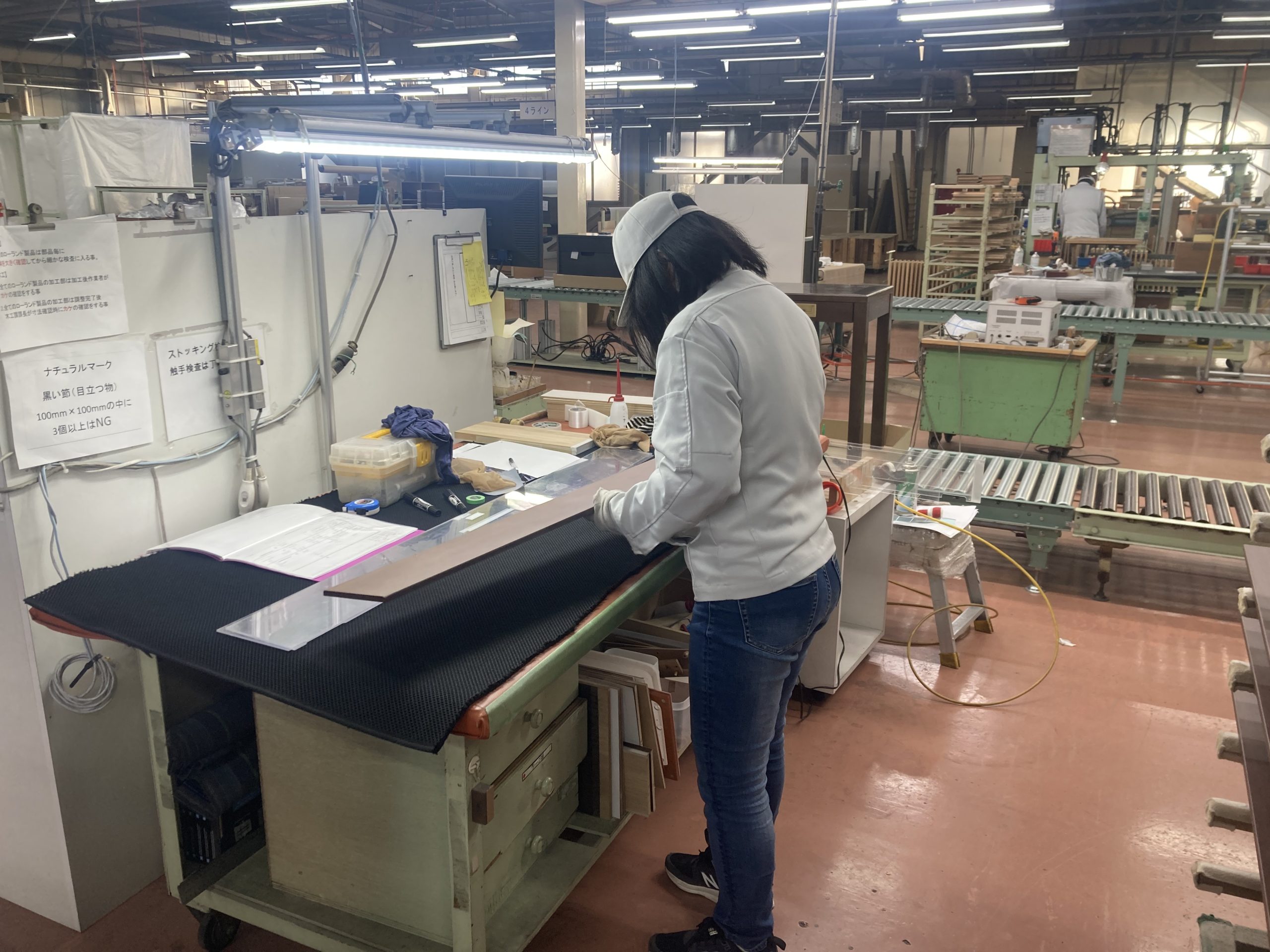
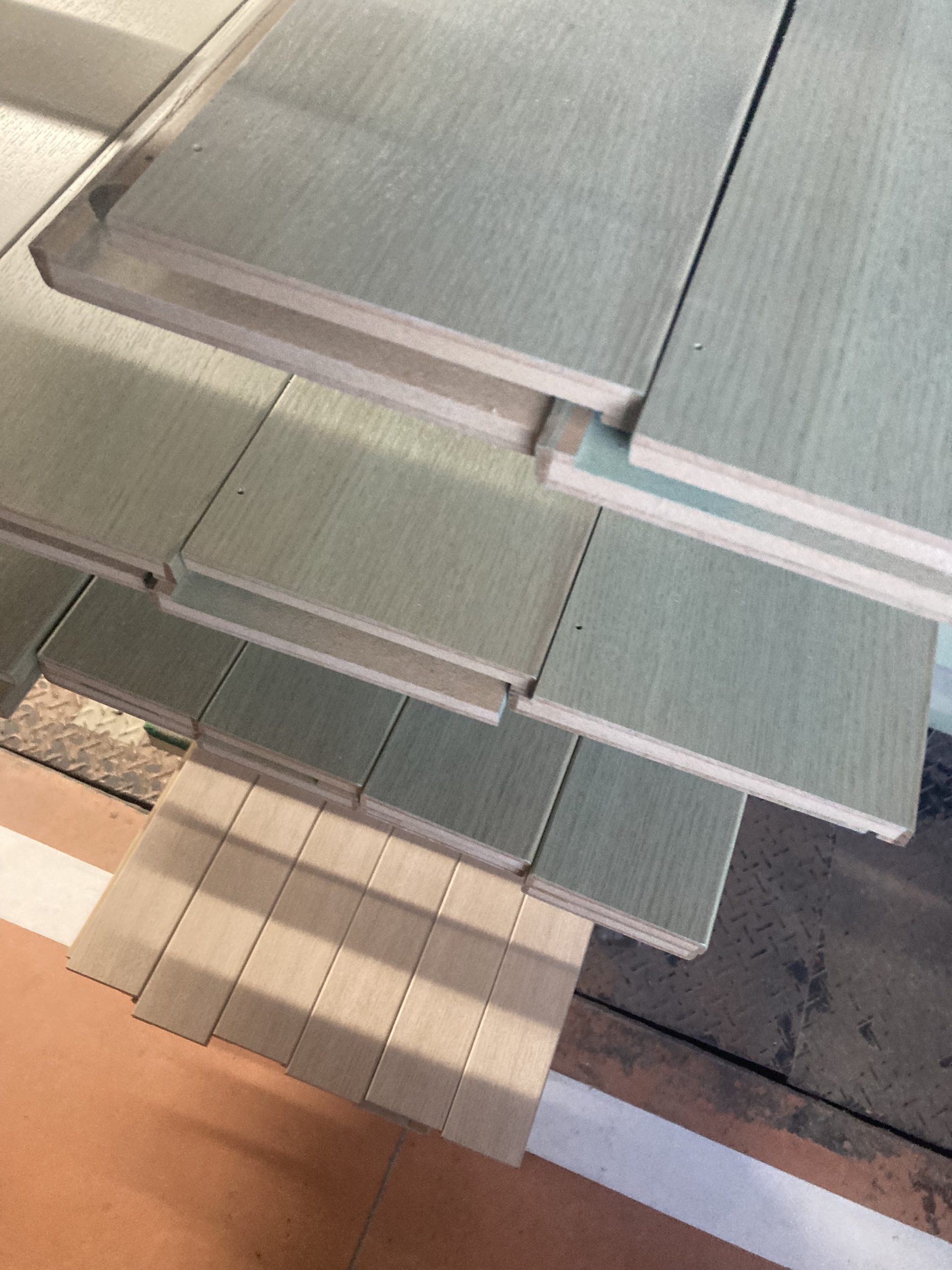
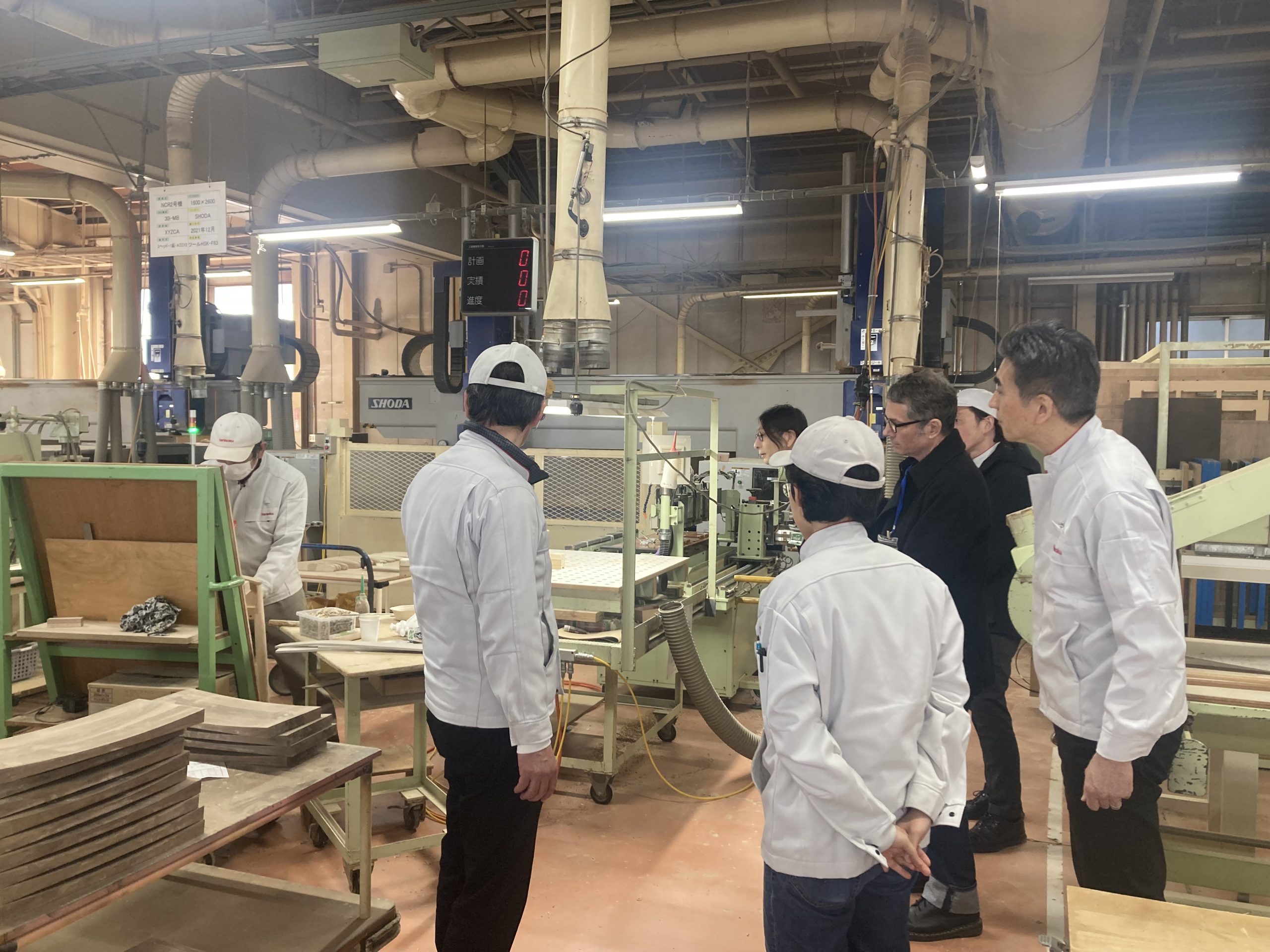
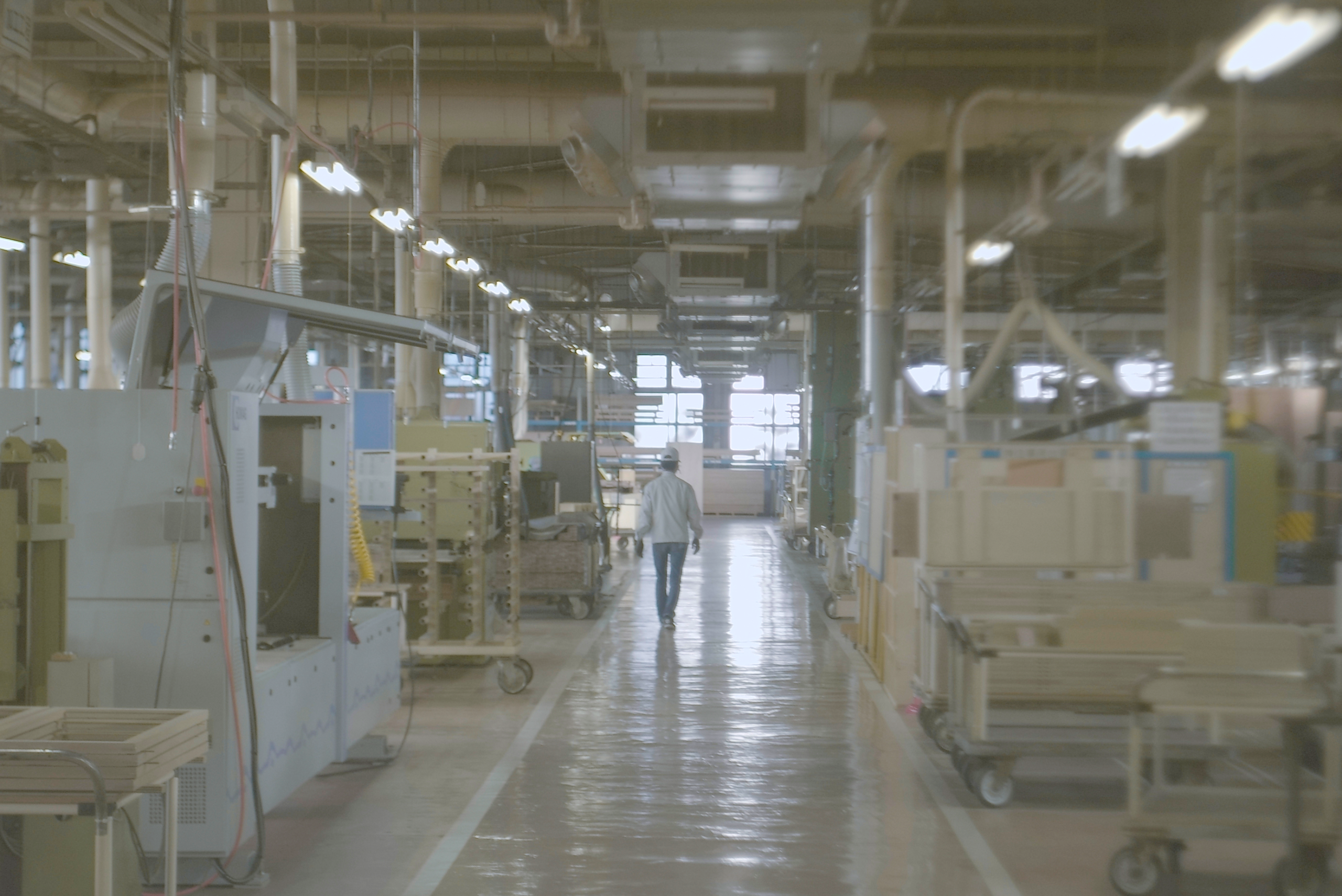
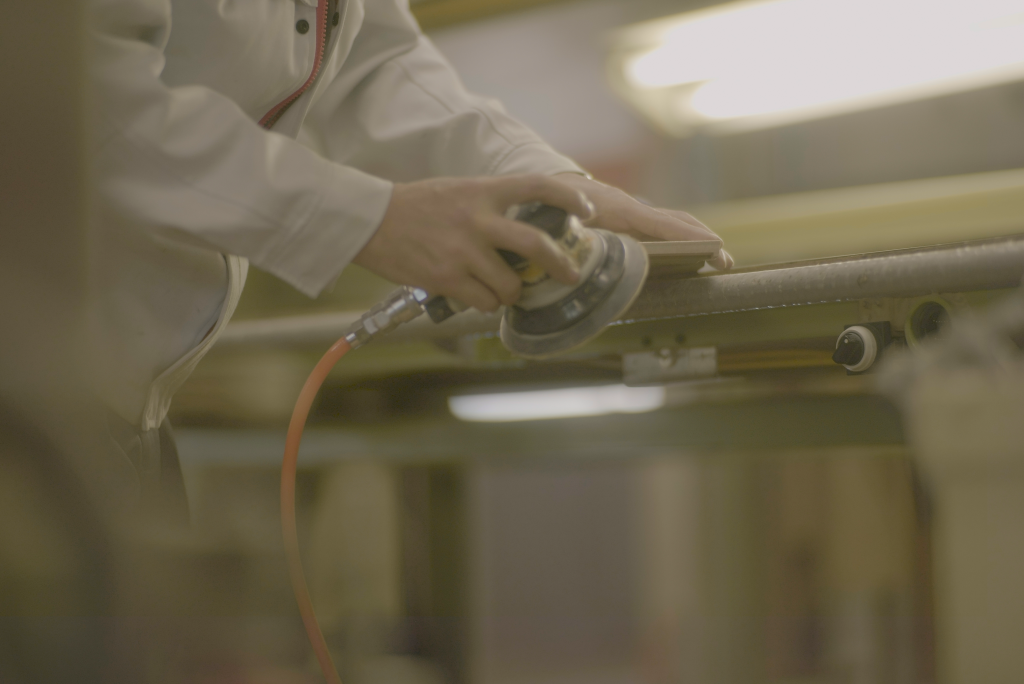
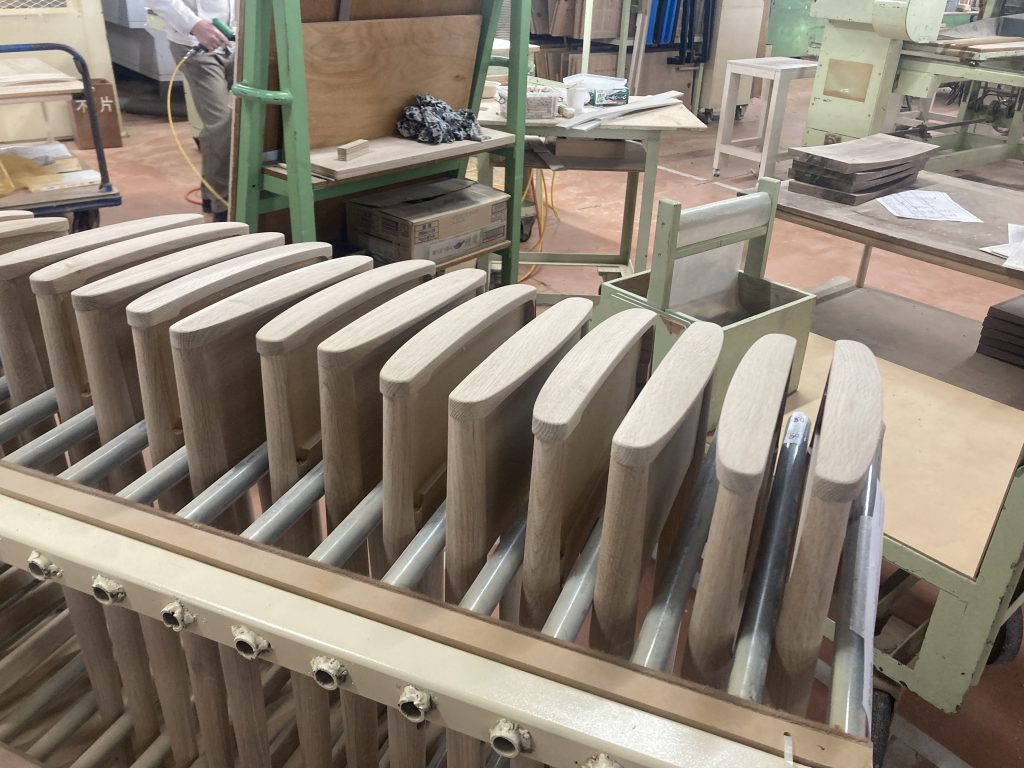
Founded in 1940, Karimoku is indeed a renowned brand in Japan, with a catalog full of gorgeous pieces of furniture. Although it maintains strict quality control and employs traditional craftsmanship, it has never been afraid of modernity. Calling its approach High Tech and High Touch, the latter a Japanese-ism that implies working with your hands with a great degree of skill, Karimoku aims for a fusion of craftsmanship and modern technology. Indeed, the factory where the KIYOLA cabinet is made is a wonderful balance of these two forces: there are machines, some incredibly modern, but just as many craftspeople, all working diligently with their hands.
“Karimoku is not a guardian preserving old traditions, but a manufacturer that continuously updates tradition with 21st-century technology,” explains Takahiko Fujimori, Karimoku’s Deputy General Manager, Marketing Center, and the designer of the KF-20 and KF-25 cabinets. “If we can speak of ourselves as a manufacturer creating lifelong partners born from the handshake between Japanese wood culture and high-tech, that would convey our values.”
"Karimoku is not a guardian preserving old traditions, but a manufacturer that continuously updates tradition with 21st-century technology."
Takahiko Fujimori (Karimoku)
Finding Common Ground
Given both Roland’s and Karimoku’s commitment to creating solid products, as well as a shared commitment to updating tradition with the latest technology (what could be a better emblem of that than a digital piano?), Karimoku admits that it was initially difficult to see how the two companies could find common ground. After all, nature and technology can be thought of as a contradiction in terms.
“At first, I sometimes wondered about the contradiction involved,” says Fujimori-san, “but I came to deeply relate to Roland’s manufacturing philosophy. I especially respect their 10-year warranty service and long-life value. The combination of technological innovation with the analog material warmth of natural wood creates a truly new kind of value.”
Coming Back to KIYOLA
Fast forward a few years. With the tenth anniversary of the original KIYOLA KF-10 now fast approaching, Kubo-san wondered if there wasn’t a way to revive the line and develop a new model KIYOLA with Karimoku. An unexpected encounter in the halls of Roland headquarters started the ball rolling.
“My background is synthesizers,” says Kubo-san. “Two years ago, I joined the piano team. At that time, I just walked around the floors and found a prototype of a new green KIYOLA.” This was the seed that would grow into the KF-20 and KF-25. “I was curious—why not release these products? We already had the prototype, but nothing was going forward.”
After speaking with other members of the piano team, they decided to go for it. However, there were design issues to iron out.
“The interesting thing is, I was the only one who thought about drastically changing the design for the new model,” says Kubo-san. “But after talking with many planning people, and Karimoku as well, I began to understand that no change is also a kind of branding. At first, I wanted to change the design, but two months later, my mind had totally changed.”
For the new models, Kubo-san and the team decided to stay with what made the look of the original model so distinctive: clean lines that enhance not only your playing but also your home interior, harmony between design and sound, and something that exists only in Japanese culture: wabi-sabi.
"After talking with many planning people, and Karimoku as well, I began to understand that no change is also a kind of branding."
Kazuhiro Kubo (Roland)
Incorporating Wabi-sabi
Wabi-sabi (侘び寂び) is a uniquely Japanese aesthetic sense that finds beauty in things that are simple, imperfect, and transient. Think of a tea cup repaired with kintsugi so that the cracks remain visible, or the quiet simplicity of a bonsai tree.
“KIYOLA possesses an air that is understated, blending into the space and calming the heart simply by being present,” says Fujimori-san. “It does not demand attention, but quietly accompanies the player’s life, becoming part of their daily existence and space over time, and gradually accumulates small moments of happiness. We believe this humble attitude reflects wabi-sabi.”
Interestingly, wabi-sabi was not part of the intention of the original KF-10. “To be honest, we didn’t consider wabi-sabi (when designing the KF-10),” admits Kubo-san. “But this time, we created the KF-25, which uses a sashimono joint.” With no metal fasteners at all, sashimono joints highlight the natural wood of the cabinet. This is very wabi-sabi.
“After that, we could recognize, this surely has the modern Japanese wabi-sabi type of feeling and nuance,” says Kubo-san.
"It does not demand attention, but quietly accompanies the player's life, becoming part of their daily existence and space over time. We believe this humble attitude reflects wabi-sabi."
Takahiko Fujimori (Karimoku)
Wa: In Harmony
Another important cultural element in Japan is the notion of wa (和), or harmony. (In fact, it’s so important, the word “wa” is often used as a kind of shorthand to mean Japan itself.) Along with wabi-sabi, wa played a major role in the creation of KIYOLA. And, it being a musical instrument, harmony had to include both visual and audio elements.
“For the cabinet’s role, harmony lies in how visual tranquility accentuates sound,” says Fujimori-san. “A concise cabinet design that doesn’t overstate its presence reduces the amount of visual information entering the field of view, while the warmth and tranquility of natural wood eliminate visual noise, guiding concentration toward the performance, and creating a deep harmony with the new KIYOLA sound source that embodies the warmth of wood.”
Kubo-san jumps in to explain more: “From the start of the engineering process, the engineers could see plainly that the material is wood. Everyone can recognize this from its appearance. The sound engineers, inspired by the exterior, tried to create a sound like wood. The target phrase was: ‘We can hear the warmth of the wood.’”
"The warmth and tranquility of natural wood eliminate visual noise, guiding concentration toward the performance, and creating a deep harmony."
Takahiko Fujimori (Karimoku)
Harmonizing the visual appearance of wood with a sound that complemented it was a painstaking but necessary process. “Basically, sound engineering is software engineering,” says Kubo-san, “but the sound goes through many paths: from the CPU to a circuit board and finally a speaker. If we use the actual piano sound as is, it’s a very hi-fi type of thing. But by adjusting the EQ in the amplifier, and also the direction of the speaker, we could create a sense of warmth.”
Eventually, after around 40 tries, the engineers were able to get the sound just right, coordinating with other engineers internally and externally with artists as well.
Karimoku also visited Roland to offer its input. Although not audio professionals, the Karimoku team offered valuable feedback from its own point of view as furniture craftspeople. “Getting such feedback from Karimoku, we could also add some other spices to the sound,” says Kubo-san. “We could finally achieve the sound of the wood.”
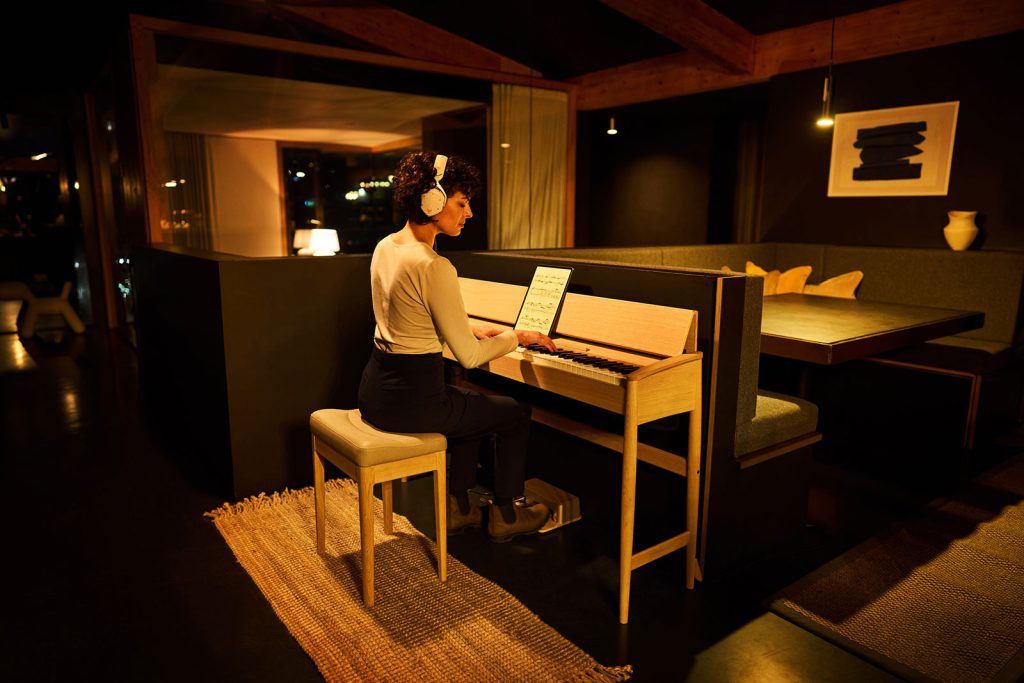
"By adjusting the EQ in the amplifier, and also the direction of the speaker, we could create a sense of warmth.”
Kazuhiro Kubo (Roland)
Matching Taste
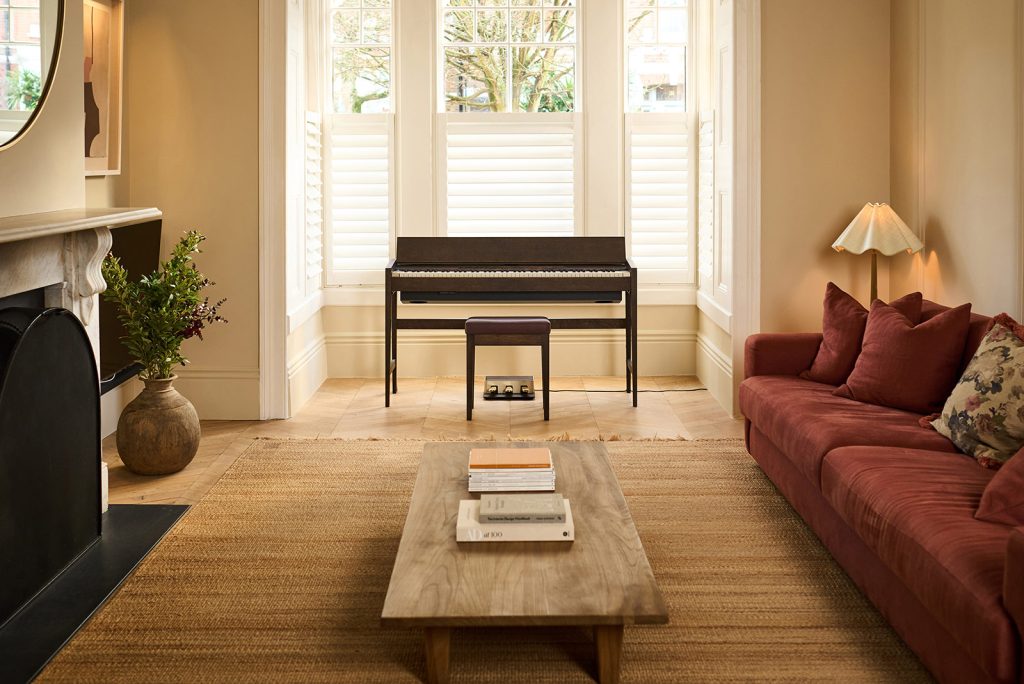
KIYOLA is more than just a digital piano. It is, quite literally, a work of art. The MoMA Design Store is the exclusive dealer of KIYOLA in the United States, after all, and the KIYOLA KF-10 has won the prestigious Japanese Good Design award.
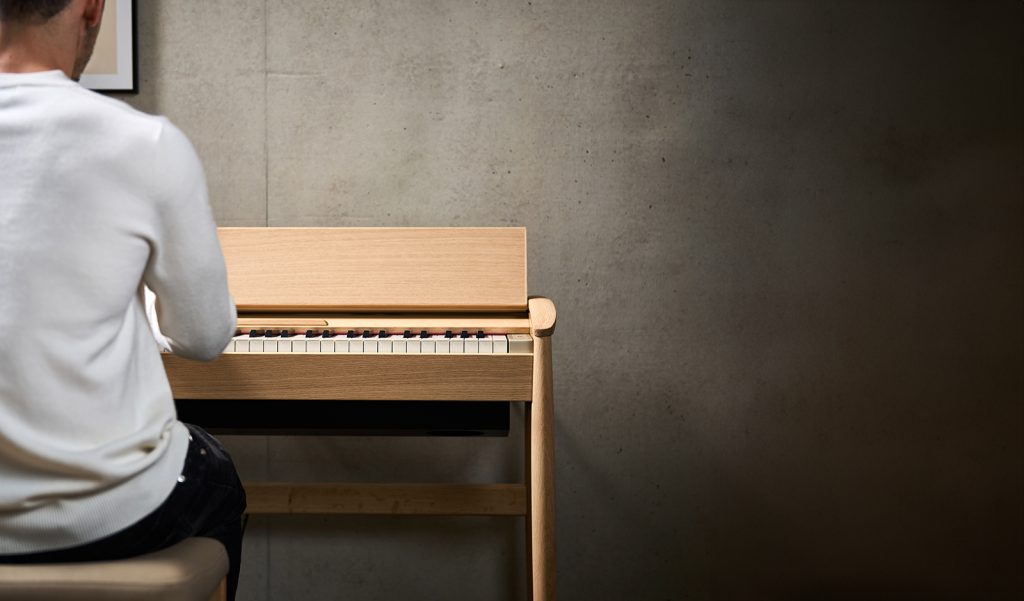
“For customers with refined taste, it being furniture takes priority over it being a piano,” says Kubo-san. “Of course, they have a sense of their interiors. What type of piano would fit their refined taste? Looking at the market, there are so many pianos that all look the same. But KIYOLA surely stands out from the others and matches their taste. I really believe that.”
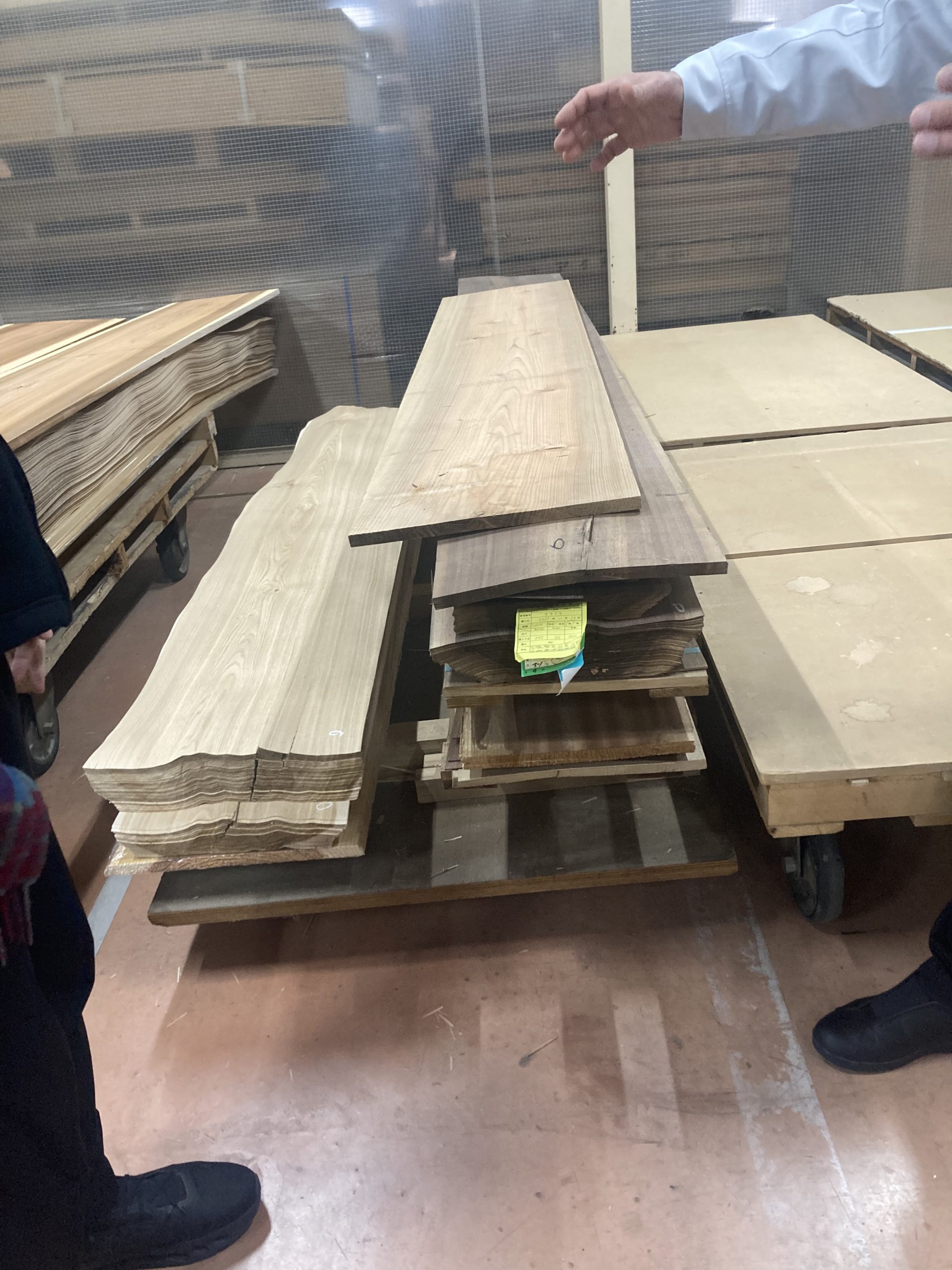
Additionally, every KIYOLA piano is one of a kind. From the unique patterns of the wood grain—carefully matched by eye to create a calming sense of balance and yes, wabi-sabi—to the way that the natural wood changes over time, the KIYOLA that you choose becomes more than just another piece of furniture. Karimoku hopes that it becomes an integral part of your life.
“We hope that you come to feel that KIYOLA is not merely an instrument,” stresses Fujimori-san, “but a partner sharing your life, and that over time, looking back, it holds the same cherished attachment as a chair that has long been a part of your life. We hope you feel the happiness of owning and playing your one-of-a-kind KIYOLA, and the peace that a piano made of natural wood brings.”