It was Brian Eno who coined the term “ambient music.” Lying in bed after an injury, he listened to a classical harp record playing low on his turntable. He noticed how the sound of the rain outside his window blended with the music and the atmosphere it created, giving him an epiphany—a type of music he’d later deem “as ignorable as it is interesting.”
Ambient music existed long before it had a name. For centuries, artists across cultures have developed music that exists beautifully in the background. You can hear it in incidental music used in ancient plays, in the repetitive drone of Indonesian gamelan, and in the blissful classical works of French composer Erik Satie. Of course, that’s just a small sample. In many ways, ambient music is eternal.
Ambient music today has developed into a rich tapestry of sounds. From droning electronic pieces to spiritual soundscapes, ambient music is only expanding in scope. These records document its growth and development, each offering a beautiful entry point into this immersive genre.
Playlist
Ambient 1: Music for Airports by Brian Eno (1979)
If you’re going to start anywhere, you might as well start at the “beginning.” While Ambient 1: Music for Airports might not technically be the first instance of ambient music, it’s the first record properly billed under the ambient label. Ambient music is often concerned with the interaction between the environment and music.
With Music for Airports, Eno envisioned an ideal soundtrack for travelers waiting in terminals, aiming to calm their minds. Utilizing tape loops of piano and choral voices, he crafted a record that feels timeless, setting the tone for the plethora of ambient music that would follow.
Seven Waves by Suzanne Ciani (1982)
Suzanne Ciani is often called the “Diva of the Diode.” An early innovator of modular synthesizer music, Ciani helped bring the sounds of synthesizers to mainstream audiences through her work scoring commercials for Coca-Cola and GE in the 1970s and ’80s. Ciani crafted her music using a Buchla synthesizer and was one of the first artists to master the instrument. Seven Waves is her proper album debut—a showcase of Ciani as an artist, reflecting her gift for emulating nature through electronic synthesis. The album evokes the sound of ocean waves, highlighting the inherent relationship between ambient music and the natural world.
Structures from Silence by Steve Roach (1984)
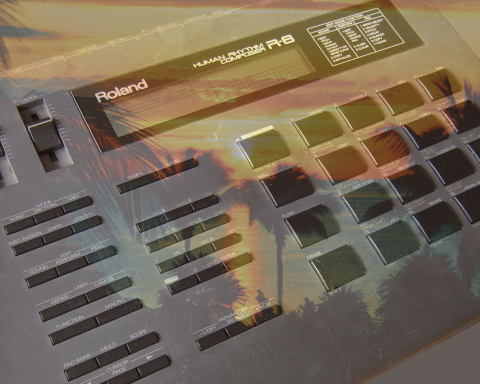
Steve Roach creates some of the most expansive ambient music, often emulating the desert landscapes he calls home. Ever prolific and still putting out records today, Structures from Silence is widely considered his first breakout release and remains a fan favorite. Roach is known to employ many Roland instruments in his work—he cites the classic Roland SH-3A as his first synthesizer—and he also utilized the RE-201 Space Echo, a favorite of many ambient artists for the expansive tone it creates.
Structures from Silence is an album made for getting lost in. Its three tracks span over an hour, subtly moving from movement to movement. It evokes the feeling of stars twinkling over a barren landscape, as desolate as it is beautiful.
Green by Hiroshi Yoshimura (1986)
Hiroshi Yoshimura is a key fixture of Japan’s Kankyō Ongaku movement. Kankyō Ongaku roughly translates to “environmental music,” taking inspiration from Eno’s concept of music and environment interacting. Green is a prime example of what this movement was all about. The album is meant to evoke “green” as an idea—the feeling of nature and the peace that it brings. Yoshimura achieves this remarkably using synthesizers and effects.
He recorded the album primarily on a DX7 but also used a Roland MSQ-700 sequencer, creating mesmerizing textures. Yoshimura and Green have had something of a revival in recent years due to his music being rediscovered on YouTube and reissued through labels like Light in the Attic and Temporal Drift.
Flow Goes the Universe by Laraaji (1992)
Before he became an icon of ambient music for his celestial sounds and penchant for wearing all orange, Laraaji used to busk around New York City with his zither running through custom reverb effects. While performing in a trancelike state in Washington Square Park, he was spotted by Eno, who left a note in his instrument case asking to collaborate. The two would collaborate on Ambient 3: Day of Radiance, cementing Laraaji as a key figure in ambient music.
He is prolific, and it can be overwhelming to know where to start given the breadth of his work. However, for those who appreciate the more serene and meditative aspects of Laraaji’s music, Flow Goes the Universe is a perfect starting point. Less “busy” than Day of Radiance and some of his other works, it captures Laraaji at his most peaceful. For those who are wellness-minded, this is a perfect album for yoga or meditative breathing exercises.
Selected Ambient Works Volume II by Aphex Twin (1994)
Alongside Music for Airports, Aphex Twin’s second album might be one of the most well-known ambient albums of all time—and for good reason. While Aphex Twin has been famously cagey and reluctant to embrace the “ambient” description (despite using it in two album titles), Selected Ambient Works Vol. II ushered in a new age of ambient electronic music.
The record is sprawling, fiercely experimental, and as beautiful as it is mysterious. It’s over two and a half hours long, and each track is simply named in numerical order (though fans have come up with their own names based on easter eggs hidden in the album artwork). The mysteriousness only adds to the experience. Much more laid-back than the bulk of Aphex Twin’s later work, this album’s influence still looms large over ambient music.
A I A: Alien Observer by Grouper (2011)
Alongside the nature of Earth, ambient music often veers toward the cosmic. Under the moniker Grouper, Elizabeth Harris emerged as a celebrated pioneer of ambient music in the last decade. Even her records, which feature more traditional song structures, singing, and guitar strumming, are welcomed into the fold based on the powerful, thoughtful atmosphere she creates.
A I A: Alien Observer revels in its obliqueness. While Harris sings lyrics, her voice feels distant and murky, as if calling out from the void. The music feels like a lost transmission, engulfed in lo-fi haze. Grouper’s music is consuming — ethereal in its beauty and timeless in its execution.
Six Songs for Invisible Gardens by Green-House (2020)
Los Angeles-based ambient artist Olive Ardizoni released their debut album as Green-House quietly, months before the 2020 global pandemic. As the pandemic surged, many listeners found refuge in Six Songs for Invisible Gardens. Like Mort Garson’s Plantasia before it, Invisible Gardens evokes the feeling of plant life and turns that serenity into music. Ardizoni continues to be one of the most exciting new talents in ambient music, blending sounds of nature with gorgeous, soft synth pads.