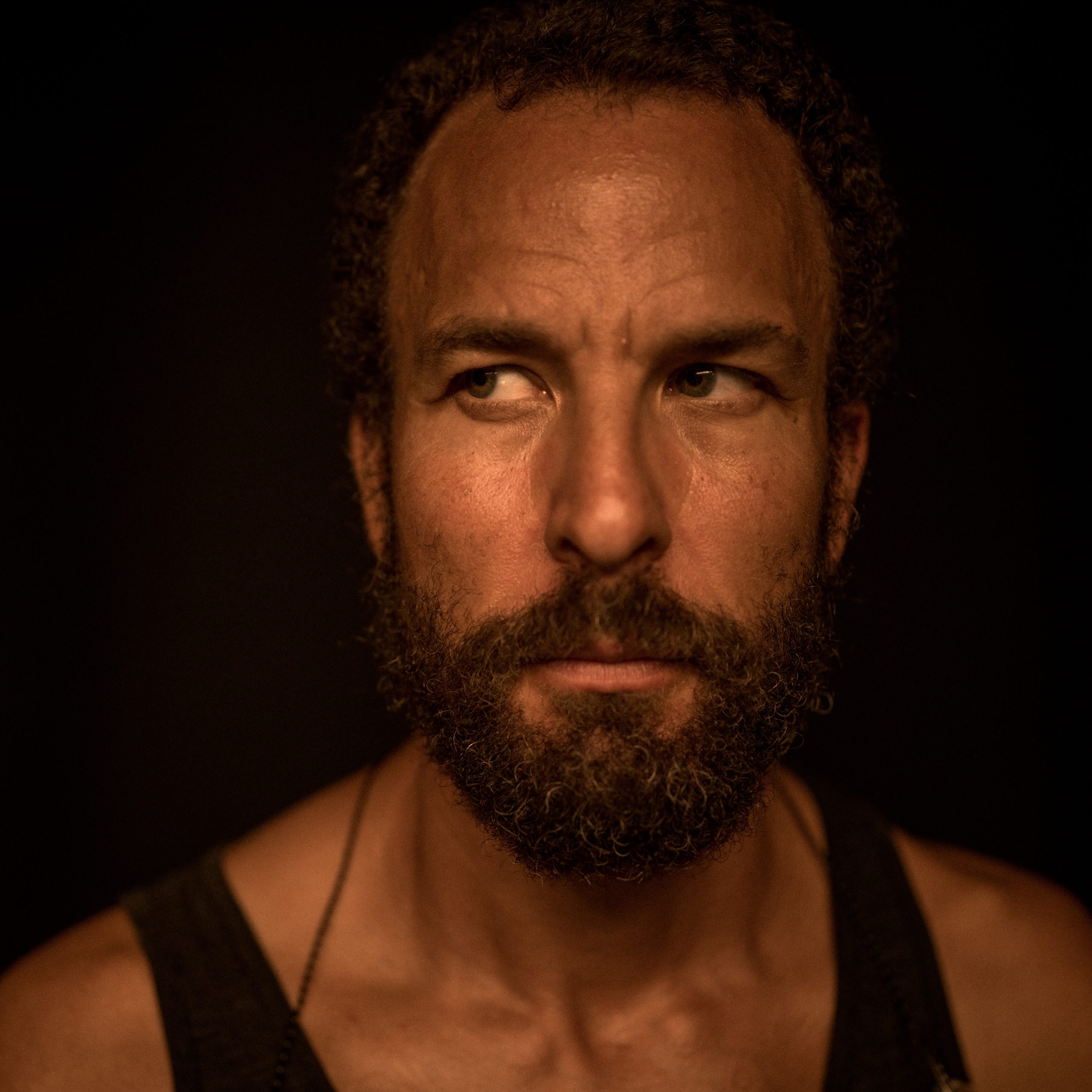


The role of the drummer is often likened to various aspects of the human form: the heartbeat, the backbone, the nerve center. The common thread is that they each provide an essential foundation for things to grow and flourish.
Jon Theodore is a drummer no stranger to helping things grow and flourish. Across a career spanning almost three decades, he’s laid down rhythm for the likes of The Mars Volta, One Day as a Lion, and Queens of the Stone Age, on a journey defined by constant exploration and development.
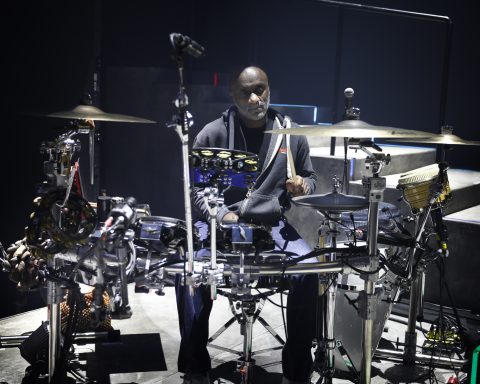
A staunch advocate of the Roland V71 module, Jon uses V-Drums to practice, record, and perform all around the world. Here he talks about his musical beginnings, his recent projects utilizing the Roland TD716 kit, and the future he continues to shape around a lifelong passion for percussion.
All the Time, Every Day: Falling into Music
Where does your relationship with music begin?
My first musical memory is listening to Beethoven’s 5th with my dad and being blown away by those big chords and loving how stoked he was. From that point on, I was pretty much always listening to the radio. When I was a kid, there was music everywhere all the time, and everyone always had the radio on. I even had a CD player in the shower where I pretty much only listened to Van Halen I. My friends and I mostly just sat around and listened to records when we hung out. So, music was always essential to me, and I was always listening long before I started playing drums.
I started learning piano when I was seven and took lessons for several years. Piano is the total instrument: percussion, melody, harmony, and theory all-in-one. So, when I finally found the drums at about 15, I already knew what to do because of my previous musical training.
"You can’t wait for anyone else to do it for you; you’ve got to build it for yourself the way you want it to be."
Where did things move for you after that?
Playing the drums immediately became the central focus of my life. It was the most important thing to me, and the place where I felt most at home and comfortable. So, I did it all the time, every day, all day long.
Eventually, my friends started playing instruments too, and I was like, “Maybe you should bring yours over to my house, and we can do it together.” Almost immediately, we started a band, had band practice, and started playing shows at parties. Then it was off and running. The doors closed behind me, and there was no turning back.
One of your early bands was Golden. What did you learn from that project?
With Golden, we learned how to play together and write songs. We bought audio gear, piece by piece. This was before the digital age, so we learned how to write and record with tape machines. We made our own records and tapes, booked and promoted our own shows, and made our own fliers. That really taught me that at the end of the day, you have to do it yourself. You can’t wait for anyone else to do it for you; you’ve got to build it for yourself the way you want it to be.
Lessons From a Life in Bands
It wasn’t long before you started playing with The Mars Volta. Did that bring any new challenges?
With The Mars Volta, I learned about work ethic. We practiced all day, every day. We lived together, ate together, and dreamed about making music together. We always played as hard as we could and took every show and tour that we could get. We never took time off. We would drive straight to the studio after the last show of a tour, load the gear in, and start work that day. So I learned that nothing happens without an immense amount of work and constant pressure.
I also got jumped into the world of the greater Los Angeles music business, because it was the first time that I ever had other people around me who weren’t in the band. Lawyers doing legal things, managers doing manager things, agents and producers doing their things… It was a crash course, so that was extremely valuable.
"With The Mars Volta, I learned about work ethic. We practiced all day, every day. We lived together, ate together, and dreamed about making music together."
As you moved between different projects, did each one teach you something new?
In One Day as a Lion, we got a thunderous drum sound for the ages. When we went in to record, it was only two instruments, so we could really maximize the sounds. I learned how to adjust the studio dynamics to optimize the drum sound. And with Robert Carranza engineering, we were rewarded with one of my favorite drum sounds.
With Dâm-Funk, I learned spectacular showmanship and how to boogie. No matter what, it was all about staying in the pocket because we were there to keep the crowd on their feet and dancing all night long. What I couldn’t have predicted at that point was how valuable that set of skills would be for Queens of the Stone Age.
How did that focus on groove and feel translate when you moved back into heavier rock music with Queens of the Stone Age?
Queens is a hard-rocking band, but it’s always body rock. It’s dance music. No matter how complex it gets, it always has to feel good in the body, and we want to keep the crowd moving.
With complicated tunes, it’s easy to get hyper-focused on yourself and getting your own parts right, but when you zoom out and really listen to everybody else, you hear the glue that’s holding it all together. That’s when the magic happens. Your own performance becomes a piston in the motor, and the whole thing elevates to another level. The whole is greater than the sum of its parts.
Tonight, I’m here with my brothers to play this show. It’s not just about me playing my best; it’s about this whole night being great for all of us. So that commitment to really listening and locking in with my bandmates has been a really valuable lesson I’ve learned from playing with Queens.
"No matter how complex it gets, it always has to feel good in the body, and we want to keep the crowd moving."
Sonic Landscapes with V-Drums
When did V-Drums first enter the picture?
My first experience using V-Drums was during writing. As we started to work on the songs for the record, we were doing tons of really long days hammering out parts and arrangements on huge drums and cranking amps, and we were just getting burnt out way too fast.
So, we tried playing with V-Drums and small practice amps, and we figured out that if we didn’t have everything blasting at full volume, we could play all day long at a reasonable volume and really work things out without being exhausted or blowing our eardrums out. It was a real revelation.
Around that time, I saw a friend’s band that had instruments in a warm-up room to play before shows. That led to us taking that writing setup out on our own tours. It was an absolute game changer. Getting loose and warmed up allows us to come right out of the gate swinging every night. We’d be sweaty before we even got on stage, like fighters coming to the ring.
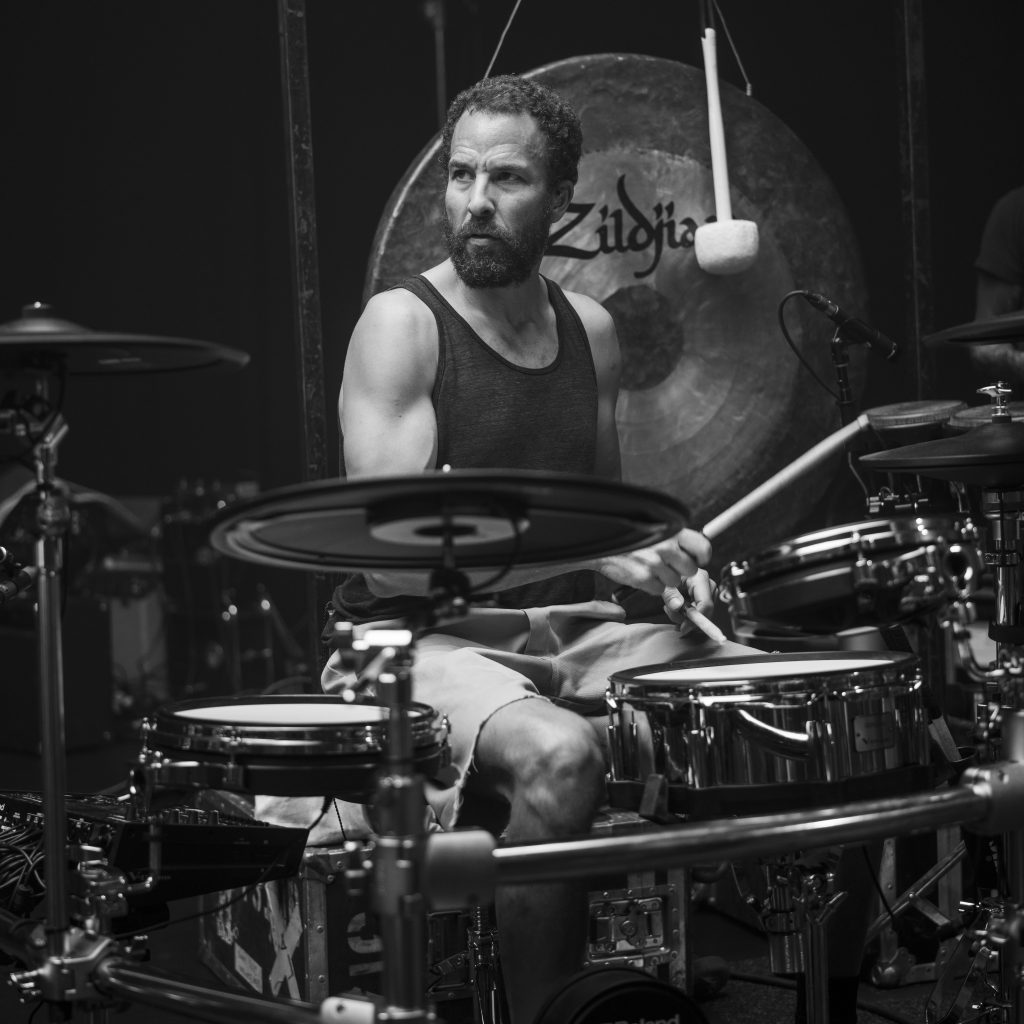
You’re using V-Drums with Queens of the Stone Age. Tell us about how you got started with that.
I had some time off from playing shows, and I was living in a cabin in the mountains. I brought my V-Drums with me so that I could practice, and a friend of mine happened to send me some demos he’d made. I went into the shed in my socks and started playing along.
I figured out how to wire the module to the computer via USB, and within a few hours, I’d cut the tracks and emailed them back to my friend. They brought them into the studio, through the board and all the analog outboard stuff, and those drum tracks ended up making the record. It was a real eye-opener and made me realize I can do my thing from anywhere. So at that point, the V-Drums became very powerful and useful for me in terms of writing, demoing, and even doing some remote recordings.
"Having acoustic percussion and V-Drums together adds a level of depth and richness to the sound."
When did you realize the TD716 kit would be a great asset for live shows?
I needed a way to keep the volume reasonable for a chamber orchestra but still have powerful sounds that I could layer with album sounds and effects. The TD716 was a natural suggestion because we had used it so much in the rehearsal room. It’s a great tool for creativity, and it allows me to do things that are impossible with an acoustic drum set.
Having acoustic percussion and V-Drums together adds a level of depth and richness to the sound. It also does a lot for the sound quality to be able to isolate, maximize, and combine sounds. Also, playing the 808s through a massive PA is so cool, and sound effects and symphonic stuff like timpani and marching snare, too.
The feel and response of V-Drums is killer. You can adjust the tension of the heads to exactly how you want them to feel, and the snare, ride cymbal, and hi-hats have upgraded to USB triggers, which increase the responsiveness and dynamic control. All these details, along with the outstanding feel, just elevate V-Drums to an unbeatable level.
Descending into the Catacombs
Speaking of live shows, how did you wind up playing in the Catacombs of Paris?
We love playing weird shows, so we always jump at the chance. We love to have the chance to reinvent ourselves in unusual places. Josh had been trying to get permission to play in the Catacombs for 20 years. Paris finally allowed us but forbade any amplification, so rather than go in there with all our full-tilt rock-and-roll gear, we stripped it all the way down.
It was a great challenge. We brought in the string players, rebuilt the songs, and tried to make something really beautiful that was a reflection of the space. Obviously, that meant no drums or V-Drums because it had to be 100% acoustic. At one point, I was clapping, but then we found some woodblocks and some chains that we utilized. I ended up using some chopsticks from a sushi restaurant at one point.
"We love to have the chance to reinvent ourselves in unusual places. Josh had been trying to get permission to play in the Catacombs for 20 years."
How did that experience lead into what you’re currently doing on tour?
Well, when we did the Catacombs performance, it was 100% acoustic, and we only did five songs. The French filmmakers knocked it out of the park, and Mark Rankin mixed it beautifully, so we put it out. People dug it, so we started wondering if we could do a tour like this. We knew we’d need more than five songs to make a show. We decided on a set of songs that would lend themselves to this reinterpretation and started thinking about what instruments would work best.
We knew we’d need a chamber orchestra, but we weren’t interested in just having them play the songs along with us. We’d let them be the focus and rework our own parts to complement theirs. The show morphed into the three-act show that we’re now doing. Act One is the original Catacombs thing, with just acoustic instruments. Act Two is led by the orchestra, has multiple percussionists, and is very theatrical. And then Act Three is deep cuts and more traditional rock songs, played in rock-and-roll format with the V-Drums and the orchestra.
It’s been a great tour. We’ve been enjoying the challenge, and the feedback has been great. It feels special, and hopefully, we can do it again sometime with longer, more varied sets with more material.
Intensity with Intention
What’s most important to you when you’re playing?
I think what’s most important to me is the actual “doing.” If someone likes it or buys a ticket, that’s great, but what satisfies me is the actual playing. I love being in a band, you know? Working on the records, going to practice, and figuring out how to put on a good show. Every experience I have with different musicians just enriches my experience. I just try to get better with each opportunity I have.
You’ve been doing this project for over a decade now. What’s that experience been like for you over time?
This is the longest I’ve ever been in a band. I think it’s been 12 or 13 years, so I’ve certainly learned how to protect the vibe, communicate better, and contribute. I’ve learned to honor the past while keeping the inspiration going for the future. To play hard but keep it grooving.
Most of all, I reconnected with the central truth in music that’s so simple and essential but so easy to lose sight of sometimes. Listening to the other players is the most important thing.
"This is the longest I’ve ever been in a band. I think it’s been 12 or 13 years, so I’ve certainly learned how to protect the vibe, communicate better, and contribute."
What else is coming up next for you?
We have some wild shows coming up this year. We’re doing a couple of different stadium tours in Europe and the US with System of a Down and Foo Fighters. Which will be killer.
And sooner or later, we’ll put out more music. There’s never a dull moment. We’re lucky to have an audience that’s so flexible and enthusiastic, so we’ll keep partying with them until the wheels fall off.