AI, xR, VR, immersive media, low-latency wireless, even physical computing and DIY electronics: Roland Future Design Lab (RFDL) is casting a wide net. Its ethos is rooted in a history of adventurism, says Paul McCabe. “For me, it’s our willingness to be weird, to try things, to put things together in ways that people didn’t expect.”
This freedom is one of the company’s defining features. “One of the things that has made Roland unique for its over-50-year history,” McCabe says, “is that engineers have been given a lot of latitude to innovate.”
RFDL has a unique challenge: continue the Roland legacy and live up to brand expectations while expanding the scope and accelerating the company’s R&D process and culture to create a new generation of innovations. To that end, Roland users can now experience works-in-progress before final shipping versions in projects like the AI-powered Tone Explorer: Technology Preview.
Not a Finished Product—A Technology Preview
“When researching and prototyping new creative experiences using frontier technologies such as artificial intelligence, it’s important that we deeply consider the user’s perspective as early and as often as possible,” McCabe notes. “Where public beta tests are about allowing users to help make final improvements to something that is essentially finished, for RFDL, a Technology Preview is our chance to build a functioning but unfinished concept and put it in the hands of music creators to get real world feedback before deciding if and how to continue.”
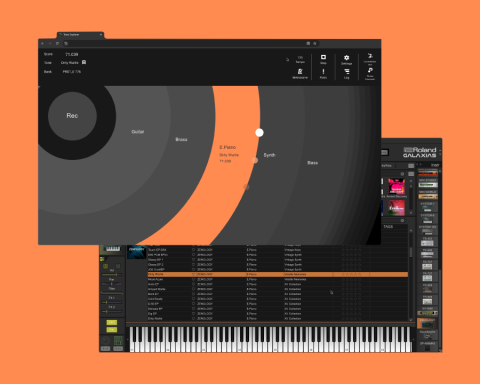
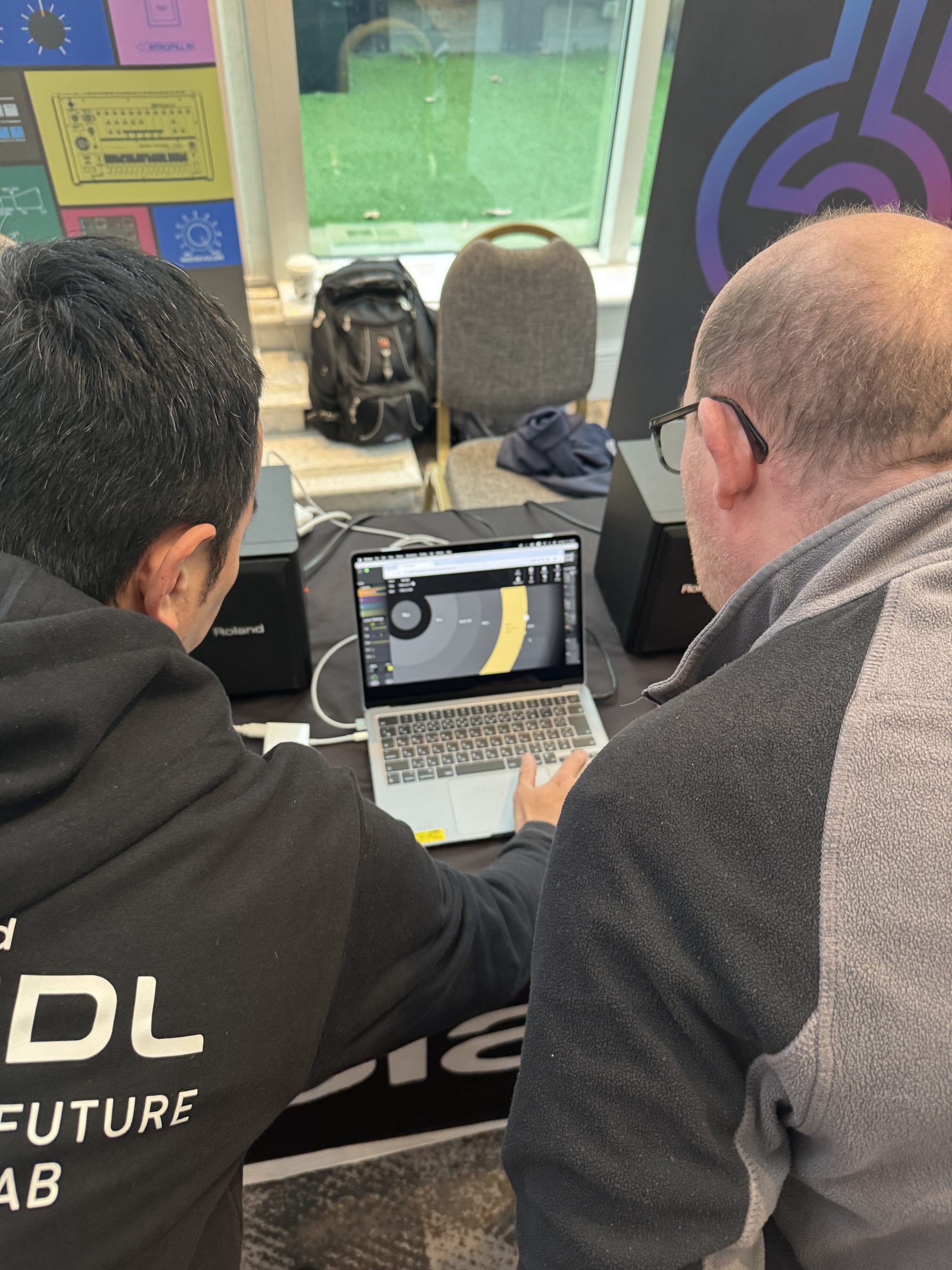
Just months after the RFDL went public, the group launched one of those ideas for users to try in Roland Cloud. Tone Explorer, a technology preview for the flagship GALAXIAS software environment, uses neural networks to help explore vast possibilities of sounds. That AI-powered capability lets the software suggest sounds based on a musical phrase. It’s arguably more transparent and human than providing a big menu.
By offering a tatakidai-style preview, Roland could test the science with GALAXIAS and Roland Cloud users. Anonymized behavior tracking lets engineers see how users navigate the tool. Direct conversations, including a Discord server, add person-to-person feedback.
This kind of exploration is a cultural shift for Roland, and McCabe, a decades-long veteran of the company, would know. “In a company like Roland, nothing sees the light of day until it’s as near perfect as we can get it, whether that’s hardware or software,” he says. “So even the notion that putting something that isn’t finished with the Roland name out in front of the public is a bit culture-busting.” In the move from evolutionary technologies like digital pianos to revolutionary core tech like AI, that type of cultural expansion is necessary.
"Even the notion that putting something that isn’t finished with the Roland name out in front of the public is a bit culture-busting.”
Paul Mccabe
To Explore Strange New Worlds
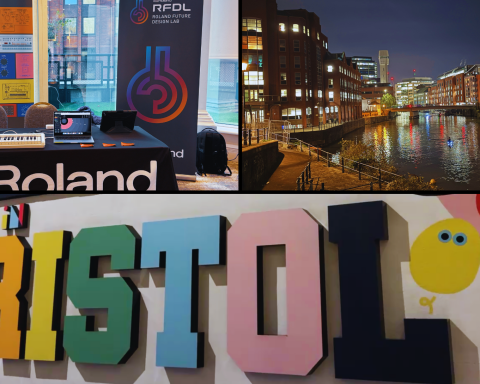
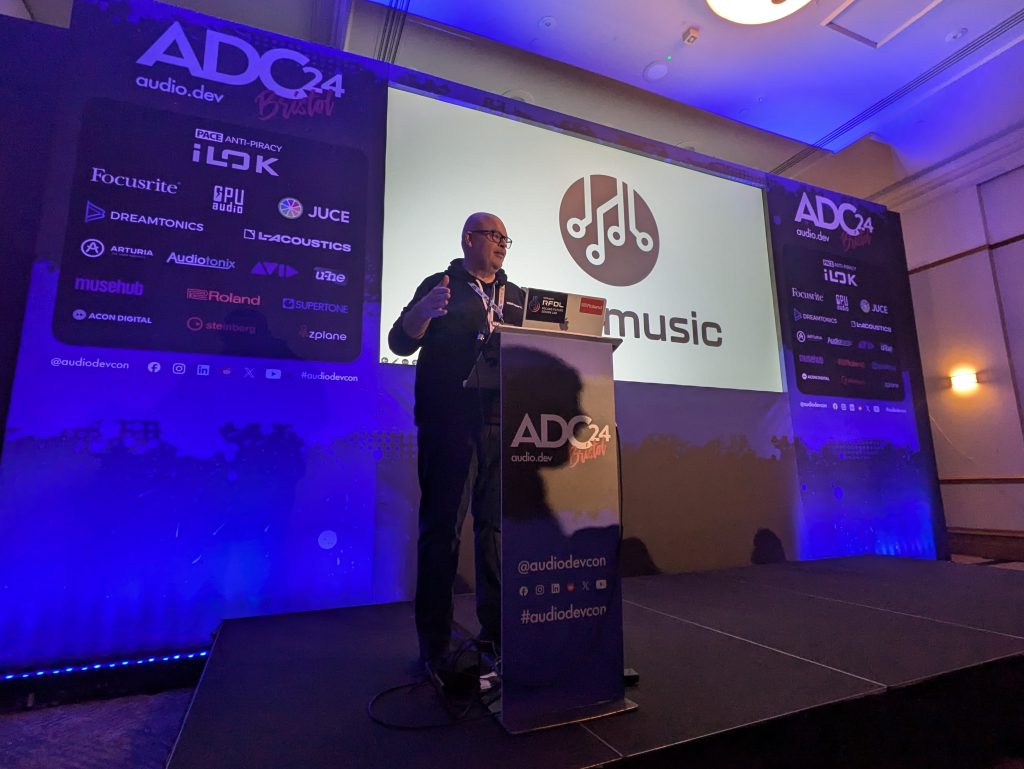
AI and how to use it responsibly, creatively, and securely are significant areas of focus for RFDL. At launch, Roland partnered with Universal Music Group to explore AI while respecting human users. That philosophy was on display when RFDL went on the road to the Audio Developers Conference in Bristol. “We call it our holistic approach to AI, which balances innovation, policy, and governance. All need to coexist as you engineer your way forward.”
Engaging the public, at events from the NAMM show to DJ Jazzy Jeff’s PLAYLIST Retreat, is making sure RFDL discovers what musicians really think. With dozens of panels, talks, and partner meetings at NAMM alone, Roland received an earful. McCabe hosted a talk on the artist’s voice. “I asked them some big, wide questions about their views on artificial intelligence, creativity, and music making.”
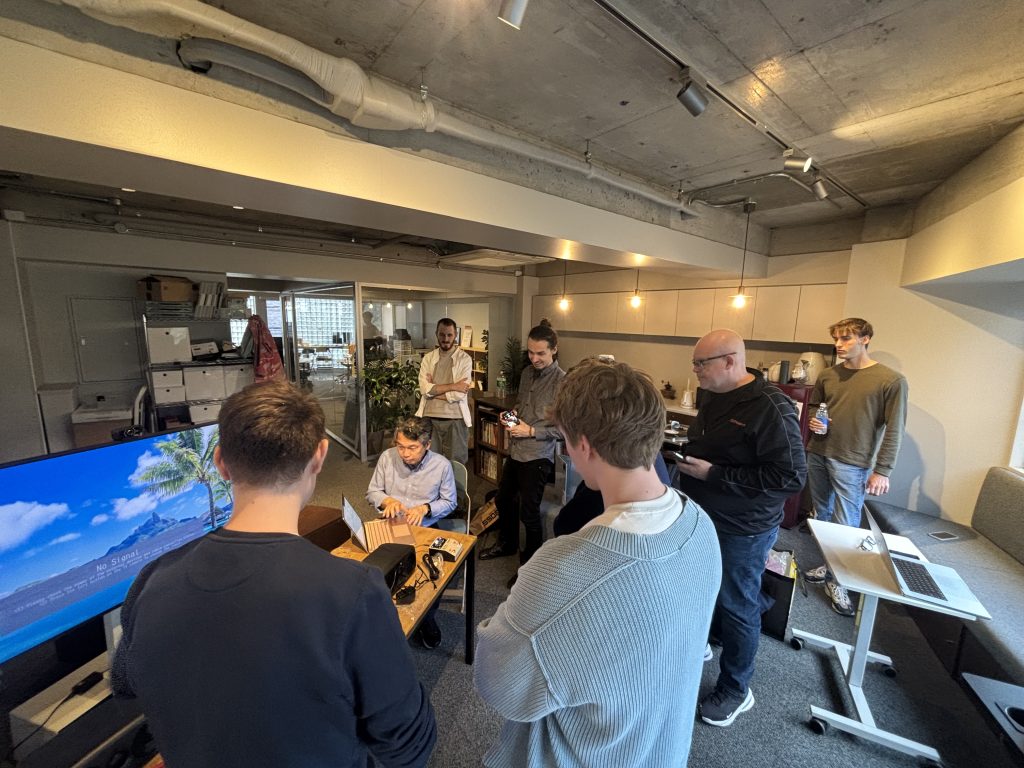
The answers are sometimes surprising. McCabe says he expected younger artists to embrace the new tech, with veteran legends being more conservative. But during interactions so far, it’s sometimes been the reverse. Plus, discussions can get heated. “Roland’s Christian Delfino was at the Jazzy Jeff event,” McCabe recalls, “and I started getting texts saying, ‘Dude, it’s a volcano here.’” The event spilled over its scheduled time as the audience kept going. “They just wanted to keep debating this.”
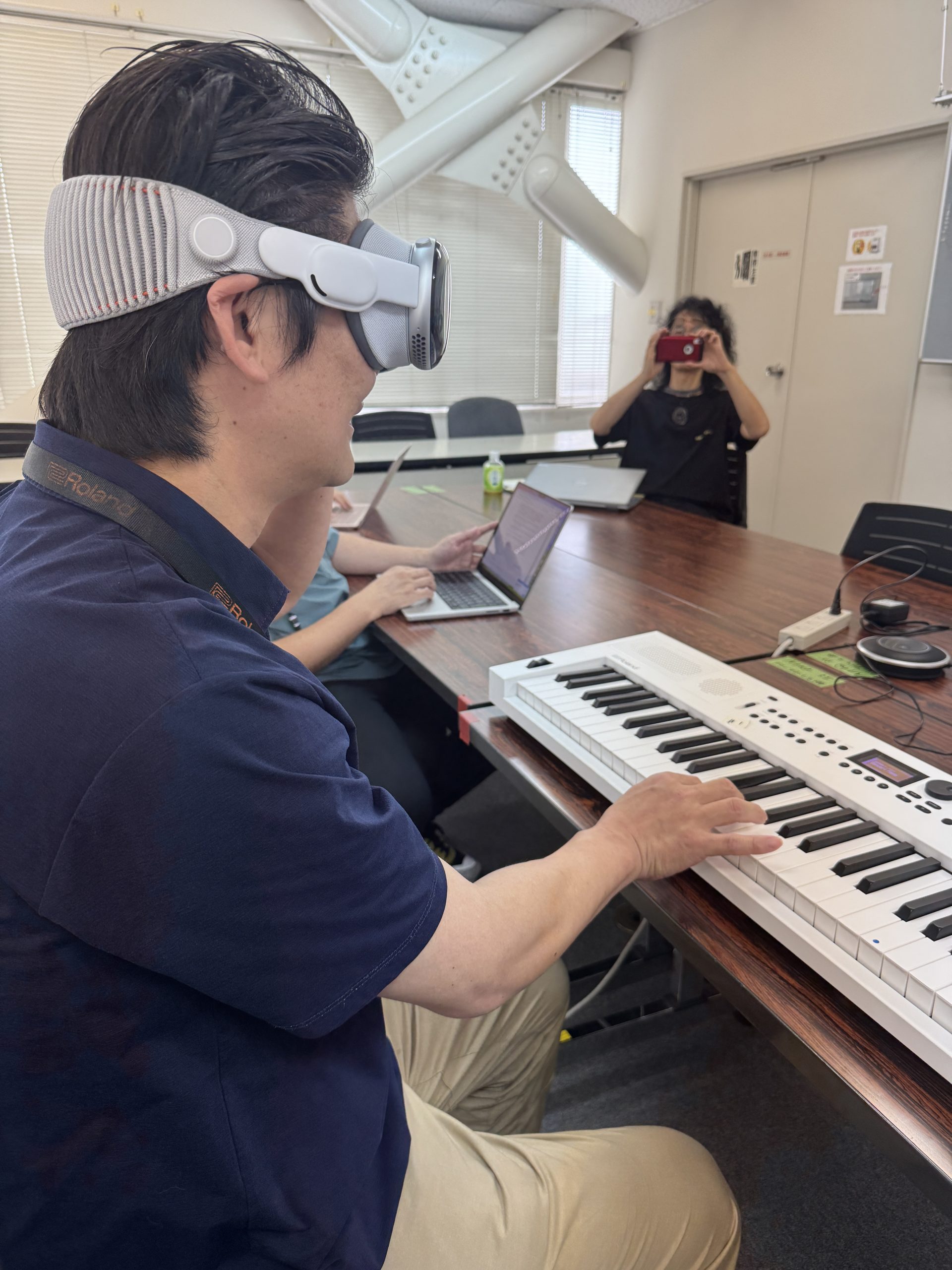
But this isn’t exclusively about AI. “We’ve got other technology previews that are more of a physical experience,” he says. “We’ll look at the area of immersive reality. And DIY is another area that we’re studying now.”
“Some of the team is really focused on cybersecurity, so we helped build the Wi-Fi module in the latest V71 Drum Sound Module in the V-Drums 7 Series,” he reveals. Our team works on internal digital transformation, as well. On GitHub Copilot, one of our team members has been leading an internal trial, getting feedback from software devs across the company.”
These efforts focus rigorously on quality and collecting experiences and verifiable data. Everything the team undertakes, McCabe cautions, has to “take into consideration Roland’s reputation for quality, reliability, stability.”
AI meets DIY
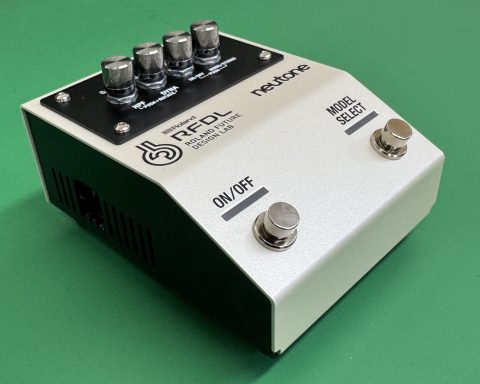
For insight into Roland’s philosophy, look no further than the recently announced Project LYDIA. It puts even technology like AI back in the hands of individual musicians. The LYDIA pedal prototype is based on a trainable AI model, powered by Neutone’s technology. It’s not about prompts or screens; it’s a physical pedal you can stomp on, connected to Roland’s own legacy of DIY with the ‘80s AMDEK pedal kits.
“We’ve been studying to understand more deeply the connection between music creation and this desire to build or customize your own instruments,” McCabe says, “what it means to express your creativity that way.” The appeal of boards like the Raspberry Pi used in LYDIA is that “they allow us to interact with the outside world.”
"While conversation around a chosen topic can start slowly, eventually momentum builds, and an hour goes by really quickly.”
Paul Mccabe
The Brainstorm
Once a week, across various time zones, the lab hosts what it calls the Future Design Session. It’s found a way to involve engineers in the brainstorming process: live mind maps.
“A mind map is like a circuit board,” McCabe posits. “In a room full of engineers and logical thinkers, building a circuit board where they can follow the traces and say, ‘this component can lead to this’ and understand the flow, it’s working really well.”
The process can take a moment to get started. “While conversation around a chosen topic can start slowly, eventually momentum builds, and an hour goes by really quickly.” It’s all about being patient and staying with it. “This kind of dreaming, this kind of horizon scanning, these are muscles that we need to exercise and make stronger.”
We Design The Future
It’s impossible to discuss Roland Future Design Lab without referencing the company’s storied catchphrase. “We Design the Future” is back.
“It’s our ‘Just Do It.’ For me, that still elicits an emotional response,” McCabe says. “As he prepared to become the CEO and Representative Director of Roland, Masahiro Minowa-san and I would discuss our mutual appreciation for the ‘We Design the Future’ catchphrase, but Minowa-san strongly felt it needed to be strengthened with clear actions, and I completely agreed.”
Roland Future Design Lab is one important investment in making “We Design the Future” real. “We’ve tried to systemize that because it can’t be embodied in just one person.” And it needed a new group that felt the same pressure to produce but in a different way.
"We listen, we think deeply, we test assumptions, we tell stories, we dare to fail, and we learn continuously.”
Paul mccabe

“Our mainline product R&D is necessarily focused on the near to mid-term, inventing and producing instruments and technologies for the next three to five years. Essentially, RFDL was formed to go beyond this, to look more broadly at creative possibilities and over a much longer term.”
For McCabe, there’s no secret sauce, just commitment. “We listen, we think deeply, we test assumptions, we tell stories, we dare to fail, and we learn continuously,” he explains. “And that’s the formula. Easy, right?”
Futurism requires a fearless disposition. “We need to be the group, more than anyone else in the company, that dreams—that asks the questions, ‘What if?'” McCabe says. “What if we partnered way outside the industry and did crazy things? What if we started thinking about what it will take to make music in low-gravity environments as humans commit to going off-planet?”
That’s one small step for Roland, one giant leap for musickind.