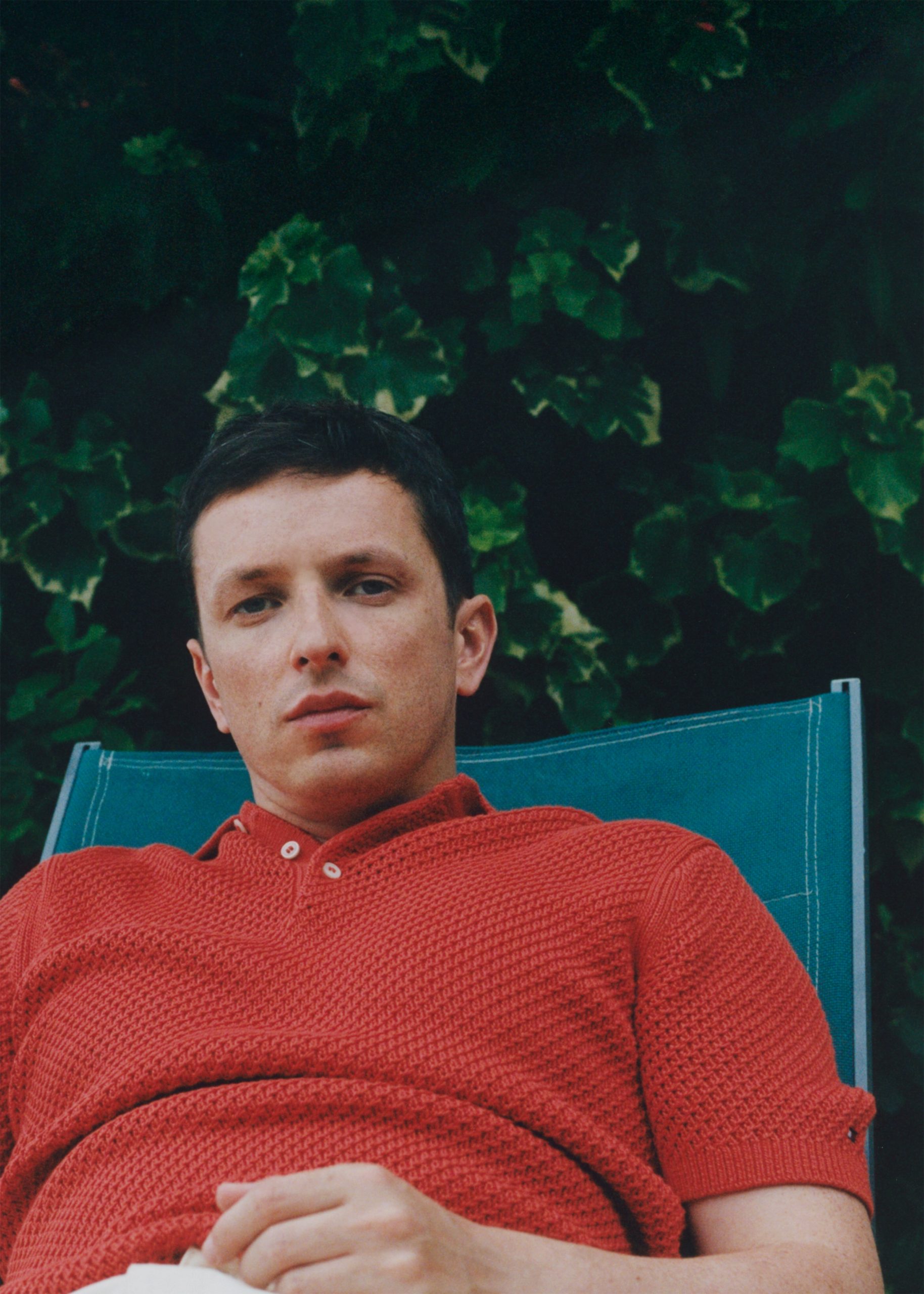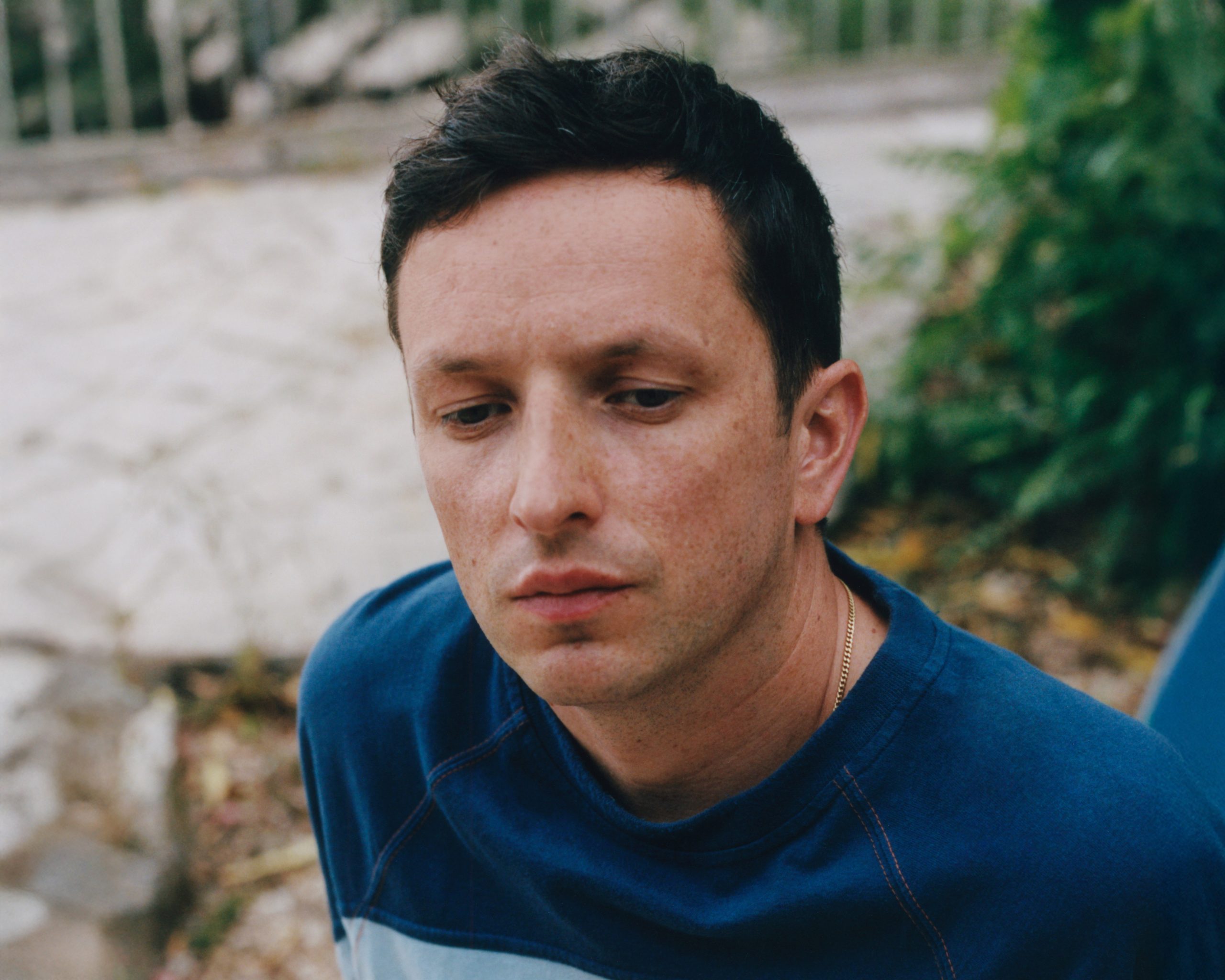


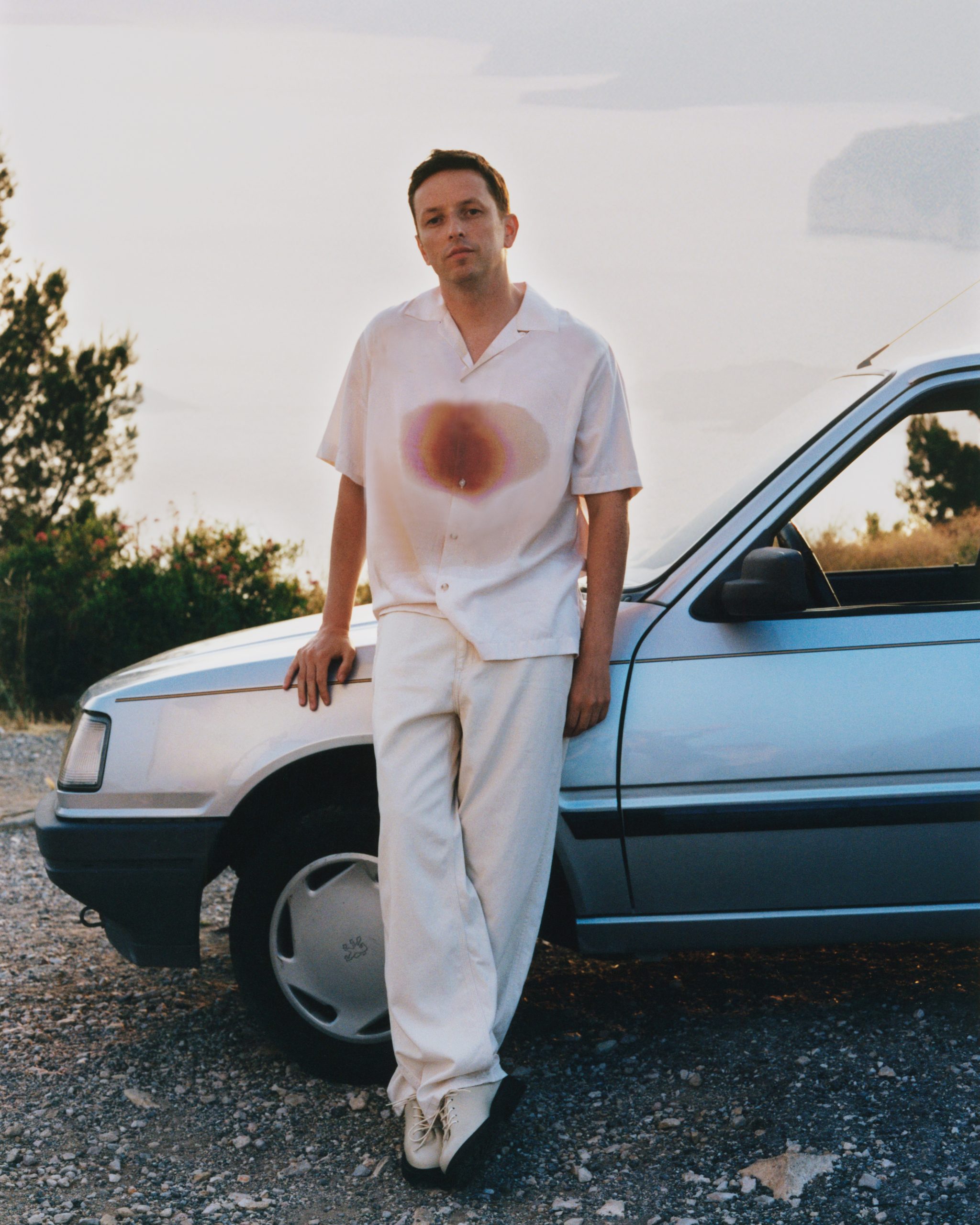
TEED (formerly known as Totally Enormous Extinct Dinosaurs) returns this December with a luminous third album, Always with Me. Following the Covid-induced anxiety of 2022’s When the Lights Go, the project sees singer-songwriter Orlando Higginbottom take a more positive direction—exploring the pursuit of happiness, despite surrounding global upheaval. Written largely in LA on a single synth, the album strips back his customary electronic pop production to bathe in soft pulses, hazy textures and intimate, unguarded vocals. Weaving nostalgia with a forward-facing optimism, Always with Me isn’t a retreat into the past; it’s a celebration of survival and pays testament to Higginbottom’s increasing maturity as a songwriter.
The Other Side of Cringe
Your last LP explored post-pandemic feelings of isolation. Coming out of that, would you say Always with Me is a more optimistic record?
It’s funny, but it always takes a year after you put something out to realize that you might have made some weird decisions. Then, with a bit of hindsight, you can start to bounce off that. The last album, When the Lights Go, was definitely pretty gloomy, but lyrically, Always with Me is far less “woe is me” and has a broader perspective. I wanted to make something less murky—more joyful, and lighter on its feet.
Do you see your role as a musician as challenging or escapist?
I only have around 60% awareness of why I make certain decisions, but I do find that I understand myself a little bit more after each record. I certainly don’t think that TEED is purely escapist; I try to challenge people with sincerity and make stuff that’s hopefully on the other side of cringe if you’re Gen Z. On the escapist side, I’m trying to build something that’s beautiful and dreamy; that’s what makes me want to keep making music.
You’ve mentioned that the music business is a broken, toxic industry. Does digitalization offer any solutions?
Oh boy, I’m going to regret putting that in the press release because it’s such a big thing. Of course, there have been broken elements to the system for as long as I’ve been doing it, and way before that. Exploitation and shifty, covert business dealings make it really hard for most artists to have a career that lasts more than one or two album cycles. I don’t think digitalization has made things easier because there’s so much music being released and so many artists fighting for attention, and that part of it is quite toxic because people are doing all kinds of crazy stuff just to get seen.
On the positive side, there are lots of mechanisms now for releasing music and learning about your rights and ownership. I’ve been self-releasing since 2018, so learning that has enabled me to carry on, and I’ve never felt as stable and comfortable. Ultimately, you just have to let the music lead and not be seduced into wanting to become famous, because that’s a very depressing and difficult game!
“I wanted to make something less murky, more joyful and lighter on its feet.”
Less is More
TEED’s debut LP, Trouble, was quite club-oriented, but you’ve slowly taken on a more mellow sensibility. What do you put that stripped-down approach down to?
There isn’t a truer statement in music production than “less is more,” and I still feel I have a long way to go with that. What’s interesting is that when I’m producing other people’s music, I can do that at will. I’ll work on a track, strip it back to three elements, and it’ll be punchy as hell, yet still have the depth it needs. But when I’m working on my own music, I become obsessed with uncovering an inner voice that people can’t even hear.
I love crafting stuff, but I’m also very aware that nobody listens to music on a beautiful hi-fi system anymore, so everything needs to be stripped back and sound good. Sweating over those finer details exposes more of me, requires confidence and tends to happen when you don’t have the time to overthink. The longer I work on a track, the further it drifts away from its core simplicity. It’s actually terrifying to go through old demos, because I always think my first ideas were clearer and better than the final versions.
In what way did you reference the work of Depeche Mode when making Always with Me?
It’s going to be a funny answer because I have a conceptual awareness of Depeche Mode but not a deep knowledge of their music. I understand what they were doing, but don’t love any particular album or song. I just have an abstract idea in my head about them and bounce off it by asking myself, “What would my imaginary friends Depeche Mode do in this situation?”
That might have nothing to do with what they would actually do, but it seems to do something for me. It’s the same as when I’m producing another artist, and they’re stuck on a vocal. One of the games I’ll play will be to say, “What would Mariah Carey do in this situation?” and they immediately unlock something based on their false impression of Mariah Carey.
“The longer I work on a track, the further it drifts away from its core simplicity.”
As part of your more minimalist approach to production, I understand that you deliberately restricted yourself to using one synth?
That was actually a bit of hyperbole. The quick version of the story is that during the pandemic, I basically had to sell most of my gear because I had to move and wasn’t making any money. I had a studio full of keyboards and all this fun stuff, so getting rid of that was obviously a horrible experience. If I ever get to buy a house, I’ll probably want to start collecting instruments again, but since then, I’ve either been jamming on a desktop synth or borrowing gear from friends, although my computer obviously has every version of every synth and sound, and that all goes in as well.
Gear Cull
Did Roland survive the gear cull?
Well, on the hardware front, the first synths I owned were the Roland Alpha Juno and a JUNO-106, and I’ve used the Roland TR-505 a lot throughout my career because I love the drum pads and think that the sounds on that are great. I also have a small D-5 unit behind me, which was modeled on Roland’s larger D series synths. Then I have a friend who lives around the corner who has a JUPITER-8, so I’m always going over there to use his gear to source sounds.
Your productions are very melody-driven. What’s your approach to finding and using specific sounds?
A lot of the conversation around hardware revolves around the intricacies of programming or what you can or can’t do, but for me, it’s always been about whether I can switch something on that sounds cool and inspires me to write a song really fast. Some songs have come from simply switching on the Juno and playing keys because the filters were halfway down, the chorus was on, and there was a tiny bit of pitch wobble that immediately gave a vibe. Sometimes you can play three notes and be made to feel something – and that’s where the magic is and what matters to me most.
Now that you’re using software emulations, how do you find they compare to their hardware counterparts?
There’s a lot of emphasis on the warmth of a sound, but what matters is character and that things sound interesting and have an angle to them. There’s not much character to a thick, digital square wave, so you have to start chipping away at it, and that can be a really fun thing to do. Because of that, maybe this album would be less interesting if I were only using hardware synths.
“The first synths I owned were the Roland Alpha Juno and a JUNO-106.”
A Preset Person
Are you happy to use presets if they serve a song, or do you prefer to bend sounds beyond recognition?
I’m a huge preset person and love flicking through them to spark off an idea. Only last week, I was using the Roland JD-8000 rack. Again, that’s a piece of gear where you just choose a patch and write a song, but I’d challenge anyone to tell me which preset I’ve used in any of my music – and even if you could, who cares? I think it’s amazing when you come across a preset that Prince used, so that doesn’t feel wrong to me. You don’t think of a violin as a preset, yet there’s 600 years of music written for that instrument, and people are still asking how we can use this tool.
Do lyrics trigger ideas for melodies and songs, or does everything start with a groove?
Normally, there’s a line of lyric and melody that comes with the writing of an instrumental. For example, I might make a groove, begin to put in a harmonic pattern, and then a little bit of melody or lyric will come. That usually acts as a flag in the ground and gives a sense of mood, but after that, a song can take any number of roads and anywhere between two days and six months to complete.
"People were sold on the fact that it was humans approximating the machines and not the machines telling us what to do."
Artists often say that one track often defines what an album will become. Was there a specific track on Always with Me that did that?
That’s definitely true. At the start, there’s a stupid amount of ideas being made. I usually have lists and lists of songs and session titles on the wall to stop me losing track. There’s a wealth of music, and then one track crystallizes in some way and becomes the cornerstone. On the last album, that was “Crosswalk,” and on Always with Me it was “Desire.” Once that was 90% formed, it was like, “Okay, I know what the album’s going to be now, so let’s start plotting another seven winners.”
Being Prolific
Is an album ever truly finished, or do you have to accept the notion of imperfection?
I always hear the mistakes immediately afterwards and think, there was a great idea there, and I didn’t quite take it where it could have gone. Then again, I’m also inspired by my contemporaries who were very prolific but might have put an album out with only one good song. I get reassurance from the fact that if I make enough albums, maybe people will one day think, Here are ten really good songs that TEED made. Obviously, I’m trying to make the best record I can, but I dream of being prolific. That’s the goal!