

Ever-evolving collective Snarky Puppy returns with Somni—a sweeping, dream-inspired collaboration with the Netherlands’ Metropole Orkest. A decade after their Grammy-winning Sylva, the boundary-pushing group led by bassist Michael League once again fuses orchestral grandeur with genre-defying grooves.
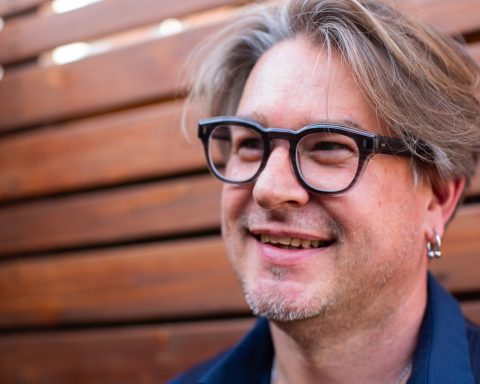
Among the band’s core creative force is pianist and composer Bill Laurance, whose cinematic sensibilities help shape the album’s sound world. A founding member of the collective, Laurance’s contributions stretch far beyond virtuosity. His harmonic imagination and textural command bridge the worlds of classical composition, jazz improvisation, and electronic exploration. Somni is Snarky Puppy at their most expansive and emotionally resonant. For Laurance, it’s another milestone in a two-decade journey that redefines what modern ensemble music can be.
The Jam Situation
Returning to your early days in the Leeds music scene, what sort of challenges and opportunities did you encounter there as a young musician trying to make a living?
I did a classical degree, but it was hard to get any kind of jam situation happening, so once I left university I really made a point of jumping into as many musical opportunities as possible and started playing in every kind of band you can think of: salsa groups, reggae, various pop groups, soul jazz, loads of trios, and some classical things.
It was the full spectrum, and that really informed the way I developed as a musician and composer. I was accompanying dance classes in the mornings, making music for commercials, teaching, and doing gigs in the evenings. The challenges were real, and sleep deprivation was a big one, but that plate spinning was the reason I was able to survive.
When you first met Michael League, did you have an inkling of how pivotal your collaboration would become?
We met before Snarky Puppy existed, but definitely hit it off, and I was really struck by how inspiring he was and how much we bonded and inspired each other. He was looking for a piano player and invited me onstage to record the very first Snarky Puppy album. At the first rehearsal, I started playing D’Angelo’s Spanish Joint and it was immediately apparent that we were on the same page, so I went to the States to record the LP and started touring, very unglamorously, for nine years.
“At the first rehearsal, I started playing D’Angelo’s 'Spanish Joint,' and it was immediately apparent that we were on the same page.”
To Sleep is to Dream
I understand Michael wrote the latest Snarky Puppy album, Somni, in Japan. At what point did the band come together and start fleshing out his demos?
That basically happened a few days before we started tracking. Mike sent the demos, and we maybe had a couple of weeks to learn them and get all the parts together, but he’d specifically written everything so that the band could play them without an orchestra. Then we got together in a recording space about two or three days before the orchestra arrived and fleshed out all the entrances and voicings for the songs. He creates everything in Logic with MIDI sounds, which allows a lot of freedom for musicians to give the compositions personality, until they take on a life of their own. I think that combination is where Snarky gets its sound.
The name Somni is derived from the Latin word for “sleep.” To what extent did the band consider that conceptual arc?
Whether consciously or not, I think it really played a part when learning the parts we’d been told to play. There’s an element of just doing what’s on the page, but in terms of tone, articulation, and feel, there was room for interpretation in trying to help realise and emphasise that concept. Everyone was talking about dreams during the break and discussing ways to reinforce them, so I think we were very much “in the dreams,” for sure.
“Michael League and I talk a lot about the significance of using space and simplicity to inform the writing.”
Grand Collaboration
It’s the band’s second collaboration with the Metropole Orkest. How does the project expand on or differ from your first partnership a decade ago?
Michael and I talk a lot about the significance of using space and simplicity to inform the writing, so with Somni, there’s definitely more melody, but there’s also a simplicity to the writing that still has depth in the arrangement. It’s also more ambitious in scale; we had four drummers alongside three percussionists, three guitarists, three keyboard players, five horns, one violin, one bass player and a symphony orchestra. That’s a lot of people, which enabled more opportunity for experimentation within the arrangements.
For example, the track “Recurrent” has four drummers trading with different parts of the orchestra, and they’re all on different clicks, so you’ve got multiple meters happening simultaneously, which we’ve certainly never done before. It was like a Steve Reich moment, where two ideas were morphing together and morphing apart again.
The track “Chimaera” sounds like a very grandiose James Bond theme. As a film composer, do you think Snarky Puppy would work well in the soundtrack sphere?
The beautiful thing about the band is that it’s like a chameleon and can play in any style. Back in the day, we conducted numerous sessions for various bands—from R&B to reggae and soul—so, from a compositional point of view, every musician is very versatile and can adapt to any circumstance. If the band got asked to score a film, they’d definitely be able to do it.
Over the years, you’ve had about 40 different musicians enter and depart Snarky Puppy. At what point do you make those decisions, and does the line-up change significantly from album to album?
Originally, it was born out of necessity because a musician might not be available or might miss their flight, so someone else would get a call and have to jump in. But as the collective has morphed and evolved, it seems to attract a particular kind of musician, one that has the capacity to embrace any style or genre, but also has a big heart and is really open and cool to be with on the road. It’s a huge family. The guys are all like siblings to me and everybody else, and because we’ve all released our own solo projects in different capacities, it’s an ever-evolving organism.
“From a compositional point of view, every musician is very versatile and can adapt to any sort of circumstance.”
Classic Allure
What has made Roland unique to your creative setup over the years?
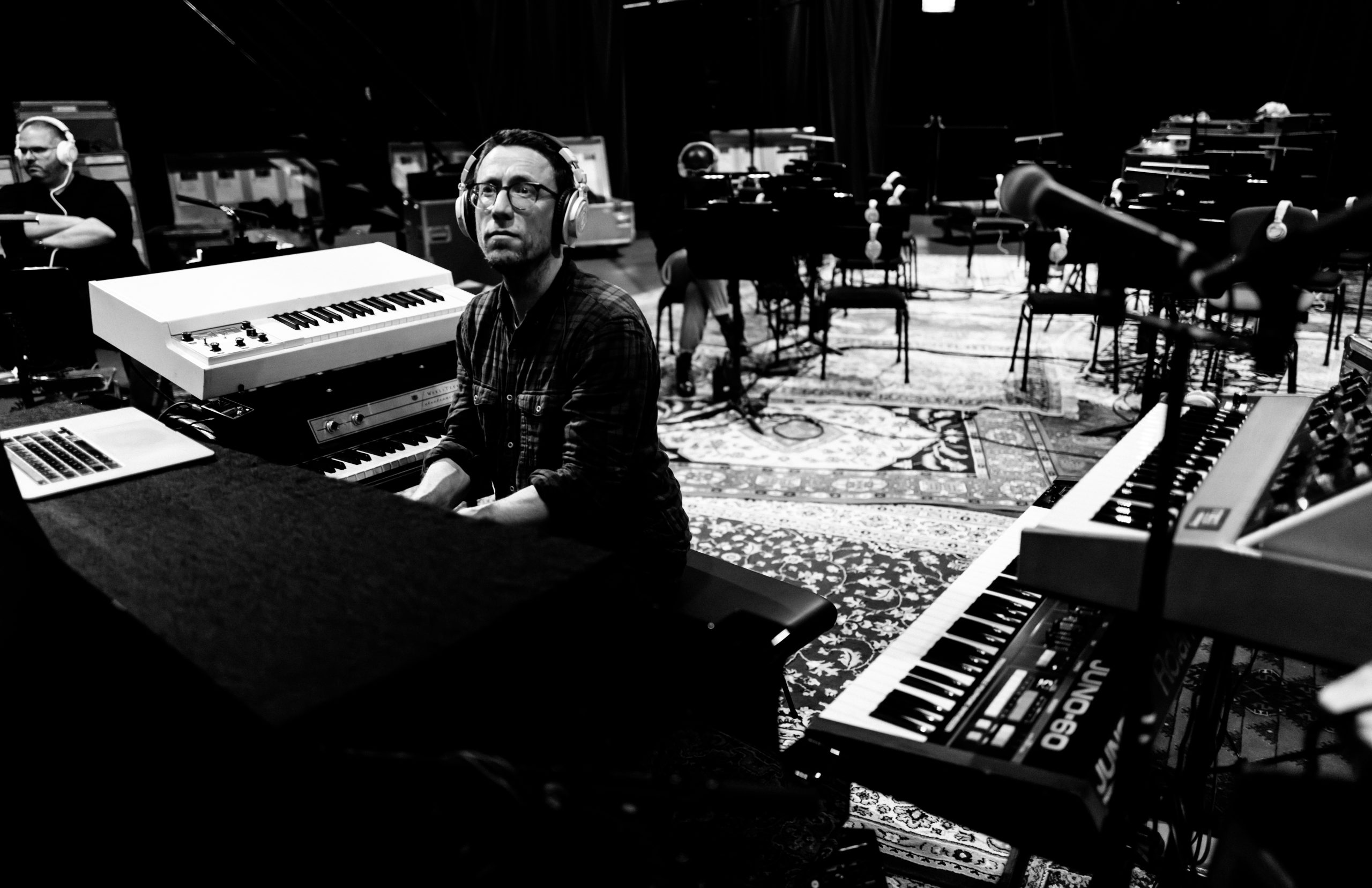
Oh man. Well, the JUNO-106 was my first-ever synthesizer, so I have a very deep-rooted love for Roland, as that was my genuine introduction to synthesis. Obviously, it’s super-analog and one of the original tactile synths. Ever since, I’ve found myself trying to avoid the menu-diving and establish how my love for synthesis has to be a tactile operation. Later, I found Nils Frahm an interesting reference because I saw him using a JUNO-60 with the arpeggiator and started doing a lot of solo piano records and concerts where I was setting off different sequences and synths.
Have you always used Roland hardware on stage?
I got the Roland SH-01A and TR-09 and began taking them on tour, placing them on top of the piano. Everything was MIDI’d up, and I had this whole rig kicking off alongside the acoustic piano. I was also using a Roland SE-02 for sequencing as part of my solo show. I’d just press play and have that kind of arpeggiated sound going out.
“The JUNO-106 was my first ever synthesizer, so I have a very deep-rooted love for Roland.”
Do you still feel synth technology is moving forward?
I like what companies are doing with gear in terms of trying to push the realms of expression forward. That’s super exciting, but the irony is that I always find myself gravitating back to the JUNO-60 in terms of its sound quality. All these classic synths are still very hard to beat, but it does feel like everything’s moving in the other direction and becoming more digital and portable. I’m very much a purist and still crave the valve and the analog signal. I don’t know. What do you think?
My theory is that the electrical current running through analog circuitry brings a depth and warmth that digital doesn’t possess. Obviously, digital runs on electricity, but that’s based on numbers, not voltage.
I think that’s exactly what’s going on. I’m also gravitating back towards an acoustic signal, which is a physical thing. You still get a sound wave out of the speaker from a synthesizer, but there’s something about the organic source that’s paramount to how we hear and therefore feel it. I think we’ve got to find a way to continue the evolution but maintain the analog element, because that’s what gives the sound its depth.
To Embrace the Future
Would you say you’ve mastered playing keyboards, or are there aspects that still remain elusive to you?
To be honest, the beauty of it all is that there’s never an arrival point. I was quite struck when we supported Chick Corea and his electric band in Japan a year or two before he passed away. The crowd was blown away by their performance, and when I asked Chick how he still managed to do that, he said, “Man, I’ve been locked in the shed for the past three weeks for this gig.” There he was at the end of his career still practicing as much as anybody, and it just hit me that there really is no limit to what you can learn, particularly in synthesis, which is a study unto itself.
"The interesting part is what happens when things become too digital, because then you’ve lost the human connection, and I think it’s about searching for the join."
Will AI open new possibilities?
There’s an amazing film called Transcendent Man about a guy called Ray Kurzweil, which discusses how man and machine will become one by the year 2029. I’m really interested in that meeting point because we’re obviously turning into robots, and there’s no avoiding that with the digitization of society. I think we have to somehow embrace it because being afraid isn’t useful. The interesting part is what happens when things become too digital, because then you’ve lost the human connection, and I think it’s about searching for the join.