

Rising to prominence in the mid-’90s alongside the likes of Massive Attack and Portishead, British electronic band Morcheeba is celebrated for its signature, defining blend of trip-hop, soul, folk-rock, and chill-out. Formed by brothers Paul and Ross Godfrey alongside vocalist Skye Edwards, the trio sold an incredible 10 million records worldwide with albums Who Can You Trust? and Big Calm, featuring hits like “Trigger Hippie” and “Tape Loop.”
Despite numerous line-up changes and temporary departures, Skye and Ross reunited to recapture the group’s downtempo zeitgeist on last year’s Escape the Chaos, the 11th Morcheeba album. Now, ahead of a three-part remix series, Remix the Chaos, Ross reflects on the band’s journey and the central role that Roland played in shaping their genre-defying sound.
Brothers in Arms
When you began making music with your brother Paul, were you as interested in the technology as you were in the music scene?
I was mainly a guitar player and loved using specific guitars and pedals, with a wall of wahs, fuzzes, and phasers, which naturally translated into liking analog synths. Once I got into analog stuff, I totally geeked out on that, and I’ve always been into interesting old equipment and collector’s items. I’ve got an RE-201 Space Echo, which is almost like an instrument in itself. It has such character, and you can’t help but fall in love with equipment like that while you’re making music. The same goes for the old Roland 808 and 909 drum machines.
Did moving to London in the early ’90s enable you to get more access to gear to experiment with when you first started the band?
I started making music at 12 or 13 playing in bands with friends and my brother who was a scratch DJ and producer. He was into hip-hop, and I was playing guitar. I grew up on the Kent coast in a town called Hythe, and we used to buy most of our equipment from this crazy secondhand music shop where the guy was mad and could never remember how much anything was worth.
He sold a whole room full of analog synths for £500, which we berated him about because we used to enjoy going there and playing them. When I moved to London, I went to the BRIT School and took a music production course. There were different things you could choose to learn, so I chose analog synthesis and learned to program on their in-house Roland SH-101.
"I’ve got an RE-201 Space Echo, which is almost like an instrument in itself. It has such character."
Did you purchase an SH-101 soon after?
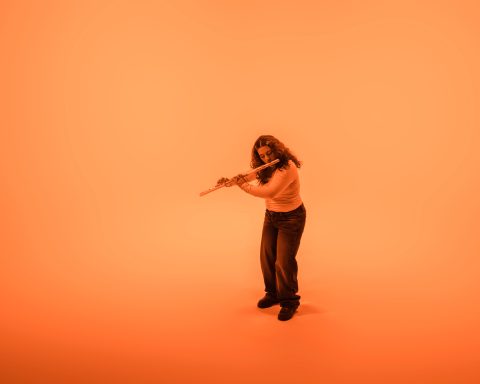
I bought a Roland SH-09, which was the precursor to the 101, as soon as I had the money and never looked back. 101s were the simplest and easiest way to learn how analog synthesis worked, and there was this amazing test at the end of term where they basically wrote down the name of loads of instruments on bits of paper, put them in a hat, and you had to pick one and make that sound on the synth. I picked out “flute,” and was so happy because it was pretty easy to make that sound.
Soon after, I got into polysynths, including JUNOs and JUPITERs, and got a Roland guitar synth. I was a big fan of Talking Heads’ Stop Making Sense LP and, weirdly, ended up working with David Byrne a couple of years later. He turned up with this modern, digital guitar synth, and I remember going to town on him, saying, “You should have kept the old analog one!” But he was brilliant. He was playing glockenspiel samples on his guitar.
How did all of this translate to using synths on those early Morcheeba albums?
We got a record deal pretty soon after I left college, moved into a recording studio in Clapham, and set about filling it full of old gear and all the toys we ever wanted. This was before eBay, so you had to find bargains in the local newspaper, and it was very much like the Wild West as far as secondhand gear went.
One of our sound engineers had a Super Jupiter MKS-80, and we used that for pads on songs like “Trigger Hippie” and the SH-09 for its weird bubbliness. There was a lot of experimenting, and it was a very hands-on experience. I think those were probably the best days for recording, because it was before you had to spend hours and hours looking at a computer screen.
"We were constantly trying to emulate our heroes and the records we loved."
The Skye’s the Limit
Were you actively seeking a vocalist before meeting Skye?
At the time, we were making instrumental music and toying with the idea of using rappers because we were trying to mix psychedelic rock, hip-hop, and electronica. We met Skye at a party in Greenwich in late 1994. My brother was DJing, and I started chatting to her because she was trying to sell me a drum kit.
Anyway, I got her number, and eventually invited her into the studio and got to hear her sing. “Trigger Hippie” was the first track we recorded with Skye, and that came out as a single in 1995, followed by the album Who Can You Trust? It all kind of came together at that point, and having a female vocalist put a different vibe on our music. Because Skye sang so quietly, it calmed everything down a bit, and the music became a lot more tucked in.
You mentioned using a Roland MKS-80, which was the sound module version of the Roland JUPITER-6 and JUPITER-8. How did that assist you creatively?
On the first record, we didn’t have the programmer box, and the engineer said it was like trying to decorate the house through the letterbox. We spent so much time pressing buttons and going through menus, but the MKS-80 had such a beautiful, rich sound that we pretty much used it on every track. Then we got the programmer, and it was a bit more fun because you had the sliders to play with. I still think that’s probably the best polysynth there is.
By now, Morcheeba was entering peak popularity, and any level of fame has the capacity to cause creative disagreements. How difficult was it to negotiate that?
It can be challenging working with different people, and bands always have a challenging dynamic. Paul and Skye fell out, and she left Morcheeba for a while. And then she came back, and Paul left the band, so there was a lot of drama. I just kind of kept my head down and tried to get on with making the music.
"I bought a Roland SH-09 as soon as I had the money and never looked back."
Super Jupiter
Skye sings on last year’s album, Escape the Chaos, but does her input extend beyond providing lyrics and vocals?
She’s always had a say in the songs and the atmosphere that we want to convey. Morcheeba’s music is quite hard to describe. It’s an abstract thing, but I think that’s why musicians are musicians, because they can express something that they can’t through language.
It’s about trying to convey feelings, so there’s always a conversation with Skye about whether something feels right, but we’ve both got quite good taste as far as the sounds go. We might write a demo and use plug-ins to hash it out, but if anything sticks out that sounds horrible, we’ll have a conversation about replacing it with more tasteful sounds.
You used a lot of JUPITER synths on Escape the Chaos. How do you typically insert those sounds into songs?
I’ve always loved the JUPITER and a friend of mine runs a studio called Silver Shark, which has the best collection of analog synths I’ve ever seen. He had a Boutique JP-08, so I played it on a couple of tracks and ended up buying one and using it quite a lot. I’ve never owned an actual JUPITER-8, but I absolutely love them to bits. I think that’s probably on my birthday present wish list because they are beautiful, lovely things.
What do you think it is about those machines that gives them such longevity?
They’re so hands-on and tactile. I mainly used JUPITERs for pads, but what I love about them is their multiple levels of oscillation. You can have a modulator and the pulse width going, with the LFO doing the filter, and they kind of cross-modulate, so you get this ever-moving, shifting sands sound. And you can layer them up too, so I might combine a slow attack pad with wah-wah guitar, and they kind of melt into each other to create a lava lamp of sound. It’s a bit like musique concrète, but instead of using found sounds, you create them yourself.
Remix the Chaos
What can you tell us about the forthcoming Remix the Chaos project in terms of why you wanted to work with others and create new versions of original tracks?
Remix the Chaos has a few dance versions, like the Paula Tape remix of “We Live and Die,” but there’s also some weird stuff from artists like Daedelus. We recently did a publishing deal with Ninja Tune, so I bugged them to try and get hold of him, and he’s done a wonderfully weird mix. There’s also a Merther Hum mix that’s really lovely and dubby.
We just want people to see the tracks through a different lens, and it sounds like it’s going to be really varied because we’re giving remixers the creative freedom to do whatever they want. The remix album is a way for us to get our music to different demographics and into other areas that we wouldn’t normally reach, like specialist radio or getting played at a club in Ibiza.
"The SPD-SX PRO is a vital part of our show because we don’t use click tracks or have any backing tracks running."
Does Roland gear play a big role on stage, too?
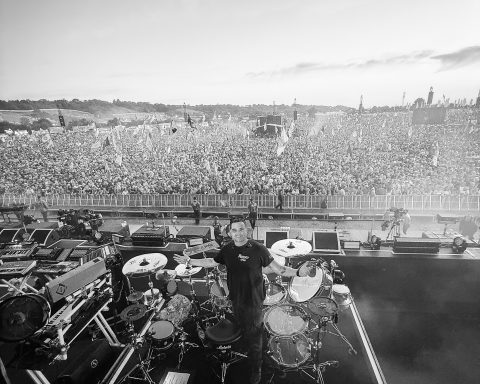
We’ve been playing Escape the Chaos live for six or seven months now, which included a big European tour last November, and we’ve just come back from Australia. We don’t use any Roland keyboards live, but the SPD-SX PRO is a vital part of our show because we don’t use click tracks or have any backing tracks running.
It’s all completely live, so playing samples from the record or any sounds that we can’t reproduce ourselves is quite important, whether it’s dubby noises, extra drum hits, or 808 sub kicks. We’ve got Roland trigger pads on the kick and the snare, and a Roland foot pedal to do longer loops. I also use some BOSS pedals, but we’re always bugging Roland for bits and pieces to go out on the road with, and they’ve been very supportive of us as a band.