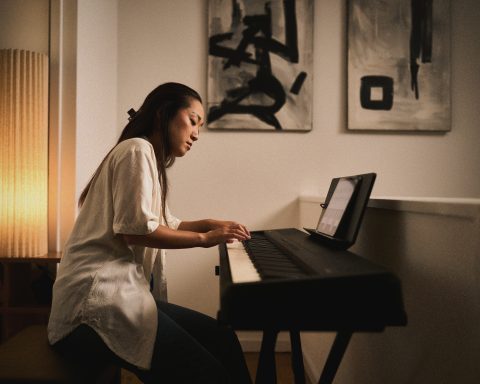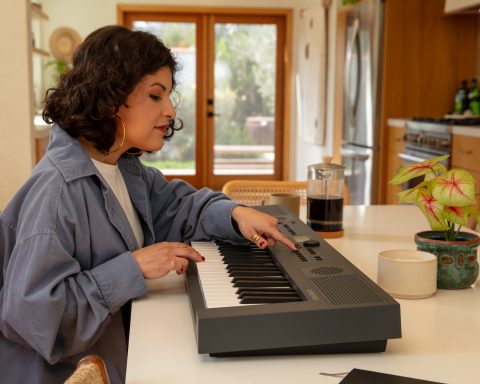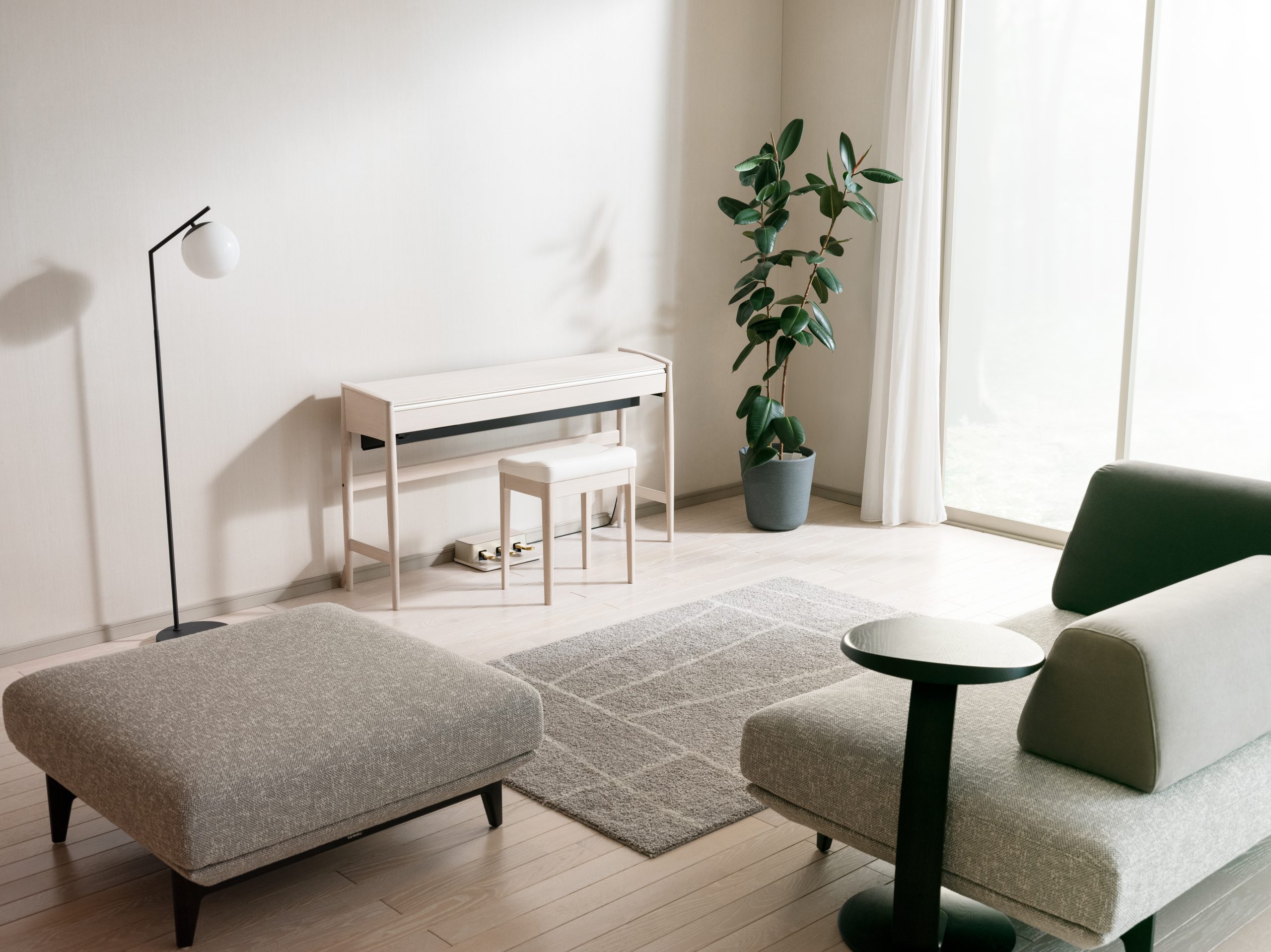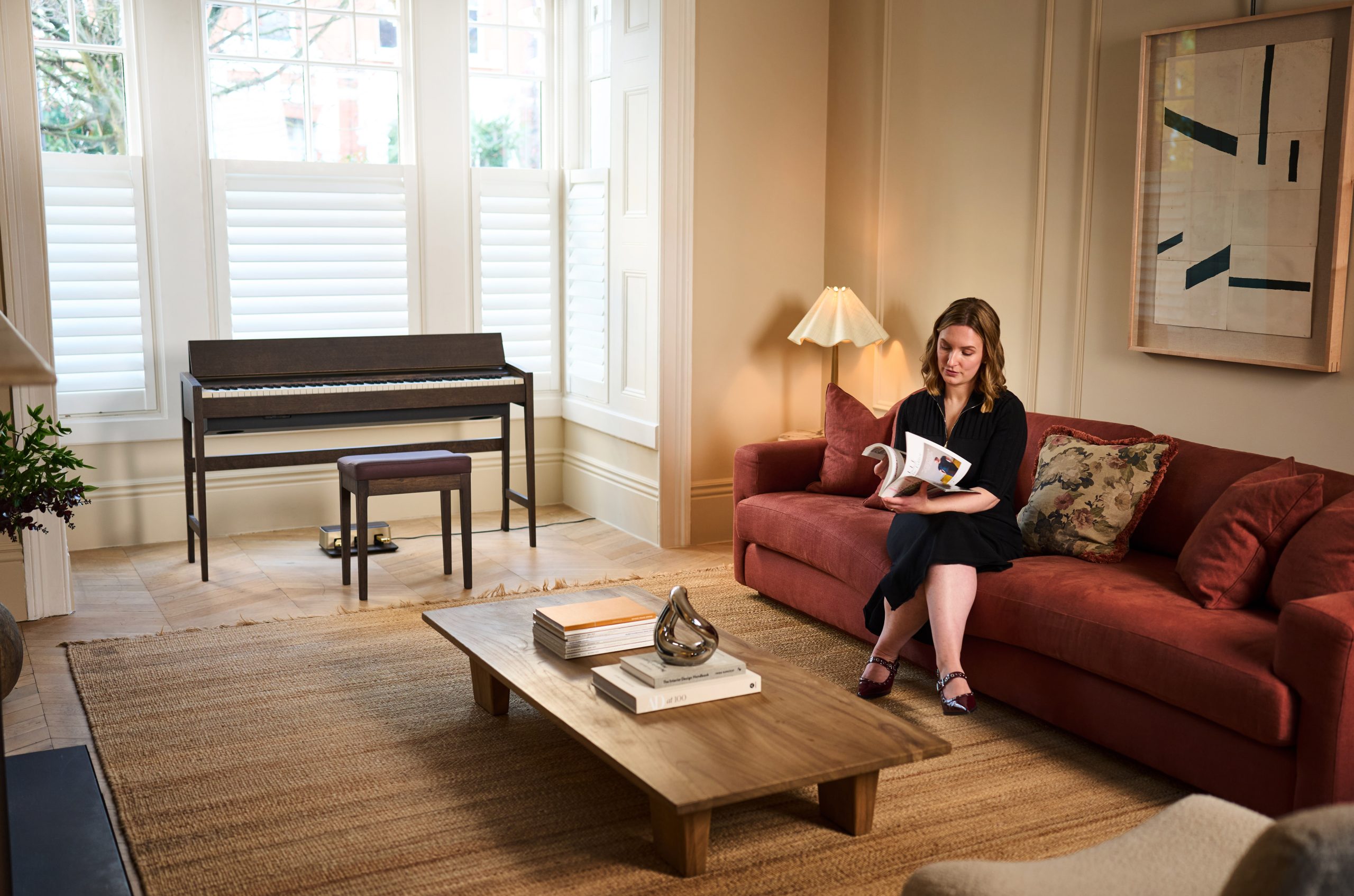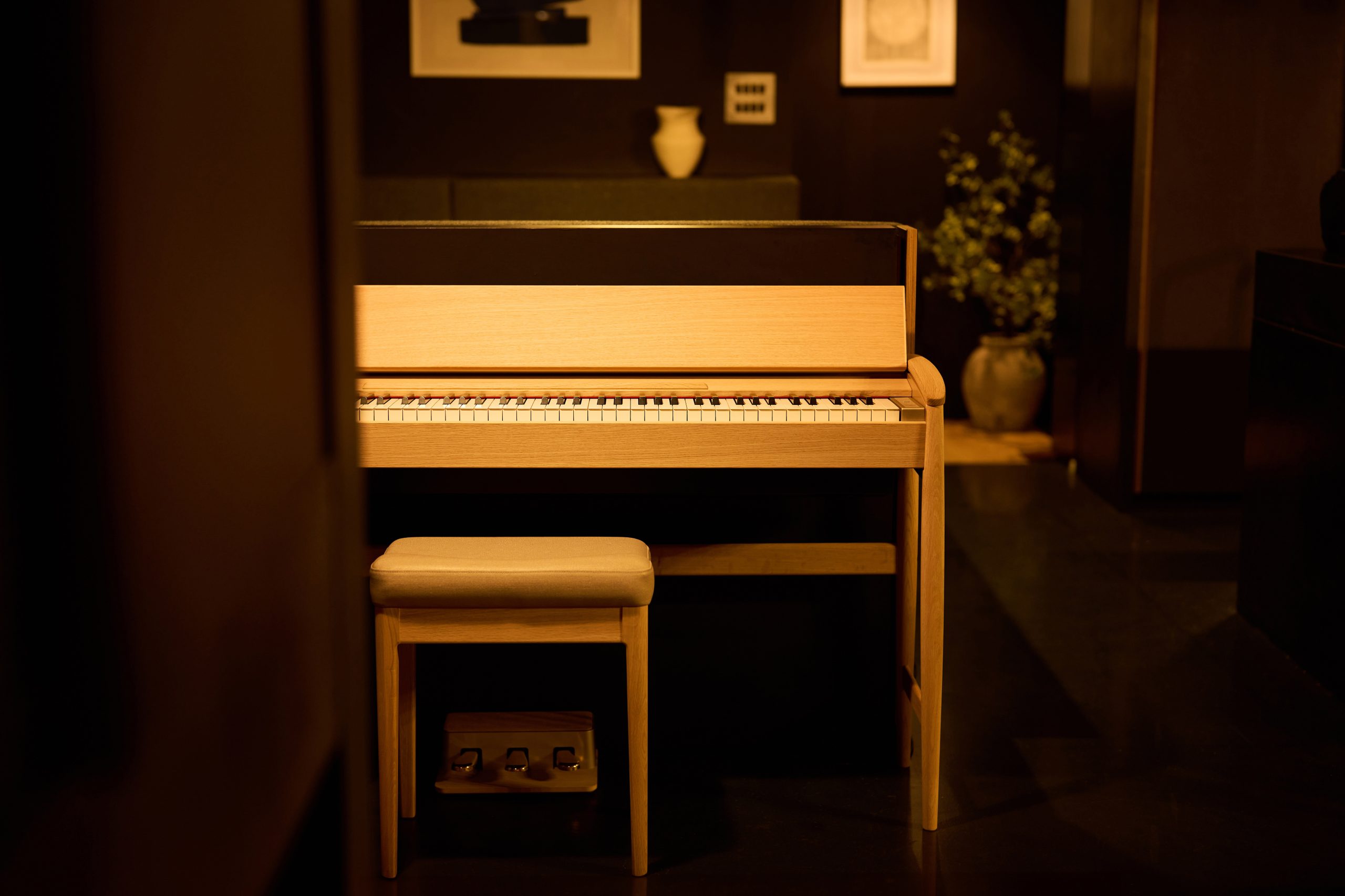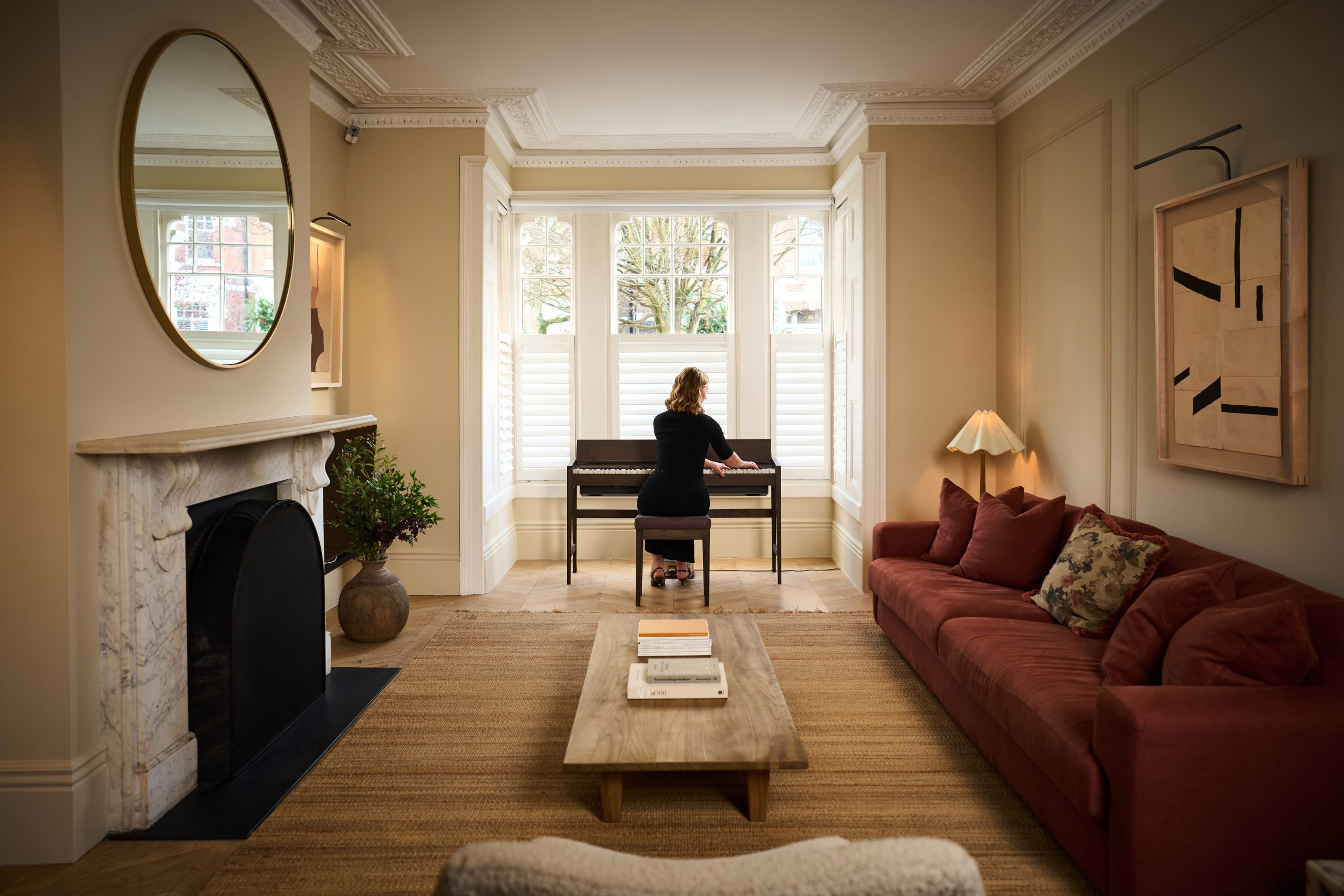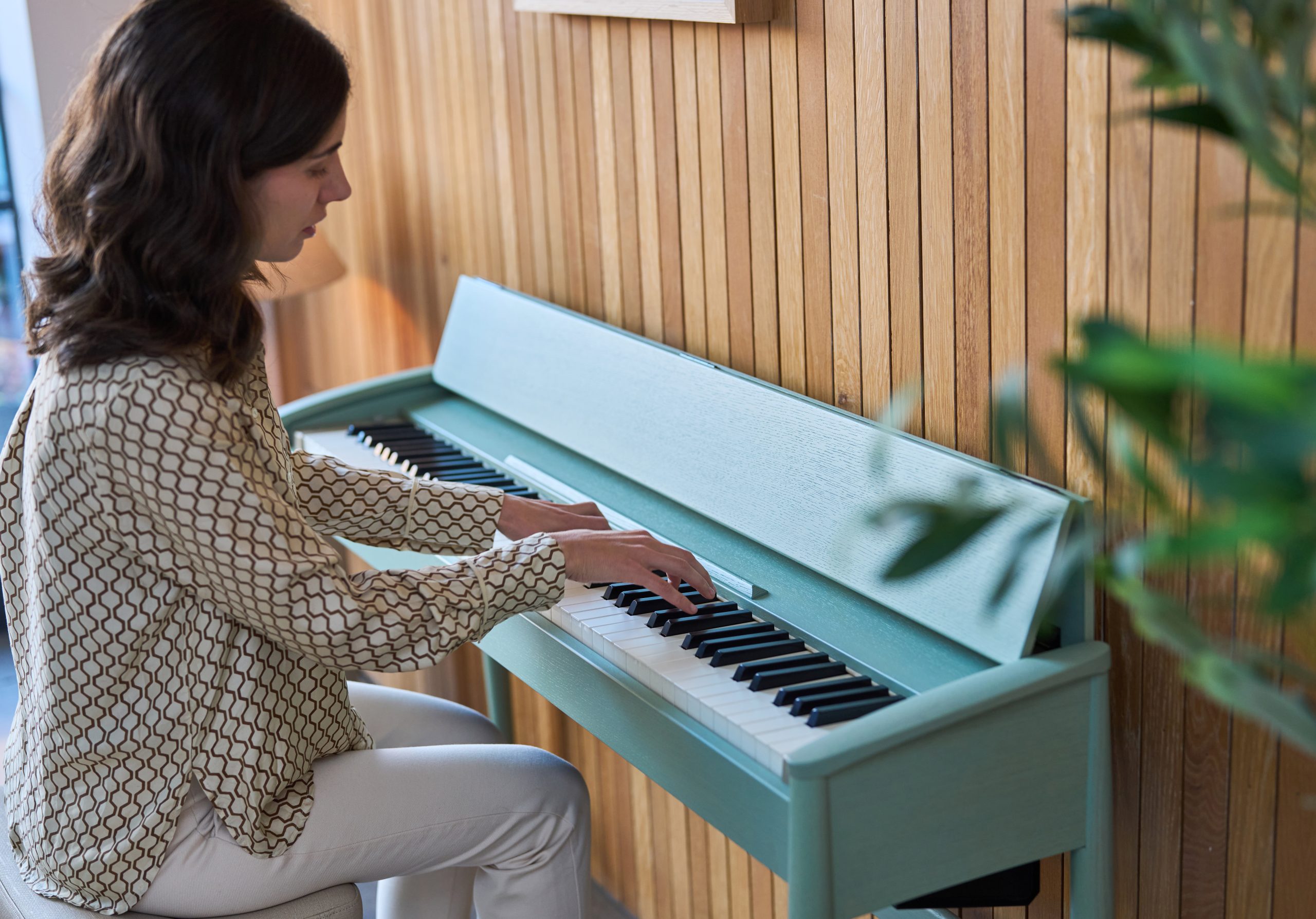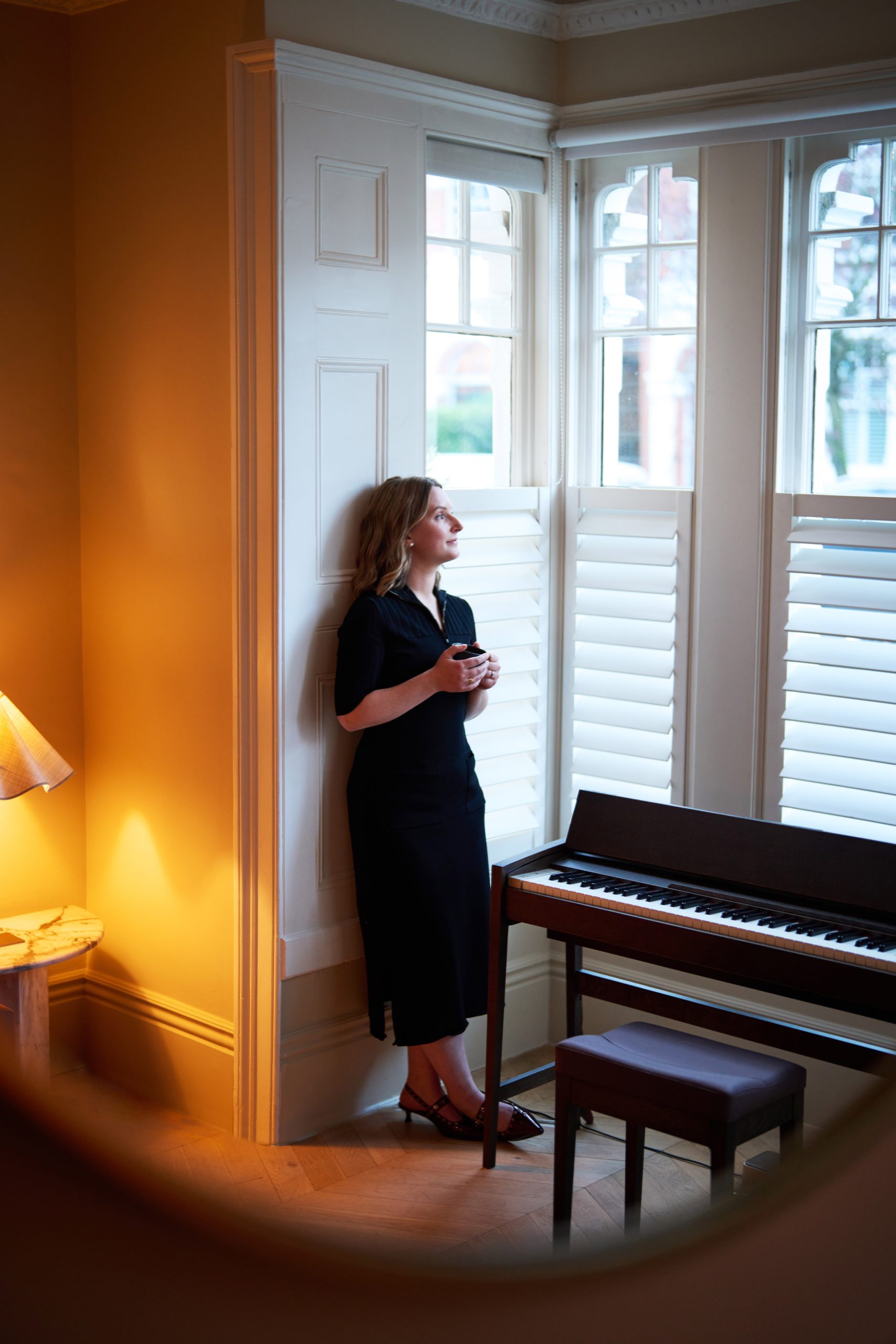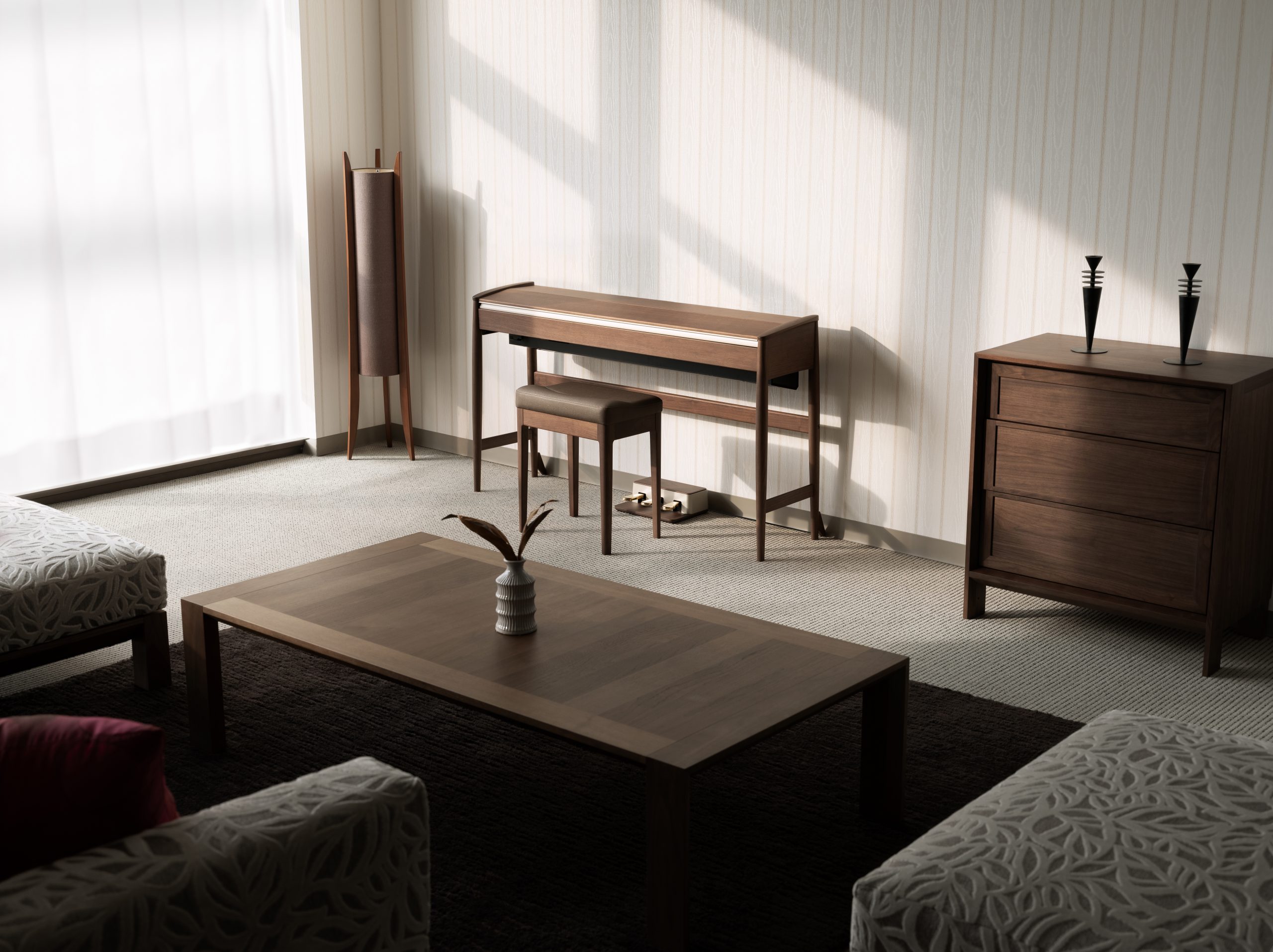


Roland has again partnered with the high-end Japanese furniture company Karimoku for its latest KIYOLA digital pianos. Both new models are infused with Japanese cultural elements that date back more than a thousand years. For the KF-20, its gently curved lines embody the quiet beauty derived from hikimono lathe-spinning technique, while the clean lines and unique joints of the KF-25 come from sashimono, a distinctive method of joining pieces of wood without nails or screws.
More than just clever construction methods, hikimono and sashimono are part of a distinctly Japanese way of thinking. This philosophy infuses the aesthetics of the KIYOLA pianos with Japanese notions of wabi-sabi, wa, and Japandi, and harmonizes across both the external cabinet and internal electronics.
Wabi-sabi: Transience and Stillness
Tea ceremony. The quiet calm of a Japanese garden. Falling cherry blossom petals carried away by a gently flowing stream. These are all examples of wabi-sabi (侘び寂び), a uniquely Japanese aesthetic sense that finds beauty in things that are simple, imperfect, and transient.
“That is a general definition,” says Karimoku’s Takahiko Fujimori, the Deputy General Manager, Marketing Center, and designer of the cabinet for KIYOLA, “but we share a common value with it: transience and stillness.”
Looking at either of the KIYOLA models, you can immediately sense what Fujimori-san is saying. “KIYOLA possesses an air that is understated,” he continues, “blending into the space and calming the heart simply by being present. We believe this humble attitude reflects wabi-sabi.”
An example of this is the sashimono-style joinery used in the KF-25, which combines wood without metal fasteners, highlighting the wood itself. Employing sashimono techniques was a deliberate choice by Roland and Karimoku.
“To be honest, we didn’t consider wabi-sabi when designing the first KIYOLA KF-10,” says Kazuhiru Kubo, the planning leader for the KIYOLA project for Roland. “But this time, we created the KF-25, which uses a sashimono joint.”
Accepting things as they are is another key aspect of wabi-sabi. Perfection in imperfection. KIYOLA has this, too. “KIYOLA embraces the depth gained through the aging of natural wood,” continues Fujimori-san. “It deliberately incorporates the wood’s inherent character—knots, variations in color, and other imperfections—into its design. Its peak is not when new; as it is used, its color changes, and even scratches become part of its history and charm.”
As time passes, KIYOLA becomes more beautiful. This is wabi-sabi.
"KIYOLA embraces the depth gained through the aging of natural wood. It deliberately incorporates the wood's inherent character—knots, variations in color, and other imperfections—into its design."
Takahiko Fujimori
Wa: The Warmth of Wood
Another Japanese concept inherent in KIYOLA is wa (和), or harmony. Wa is a defining element in Japanese cultural practices, whether that be harmony among the members of a group, or in the design of a musical instrument such as the KIYOLA. Both the KF-20 and KF-25 exhibit wa in their makeup, harmonizing both the visual and auditory aspects of the instruments.
There is the sublimely understated outer wooden cabinet, which in KIYOLA is much more than just a functional case for the electronics within. It is part and parcel of the experience itself.
“For the cabinet’s role, harmony lies in how visual tranquility accentuates the sound,” explains Fujimori-san. “A concise cabinet design that doesn’t overstate its presence reduces the amount of visual information entering the field of view, while the warmth and tranquility of natural wood eliminate visual noise, guiding concentration toward the performance.”
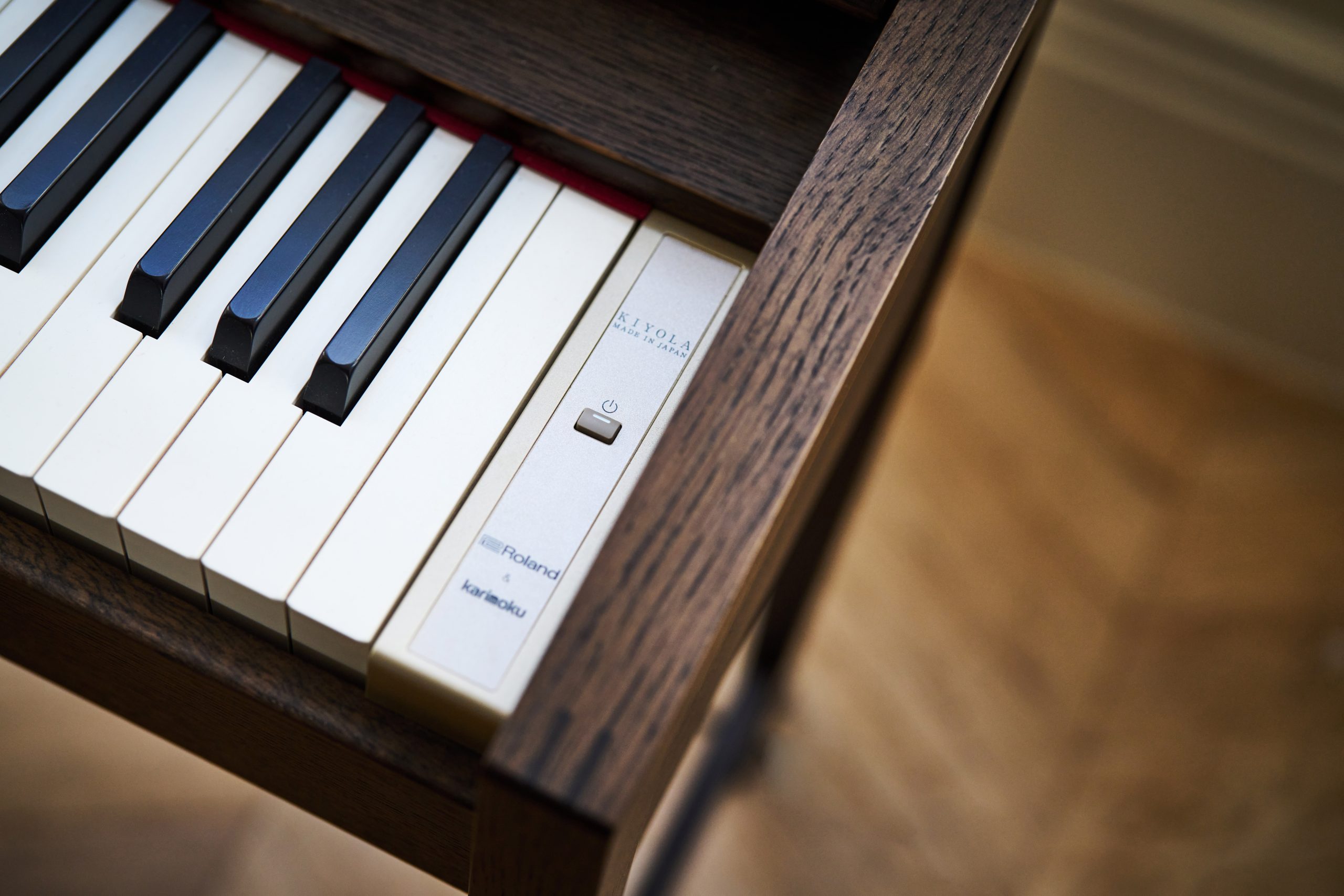
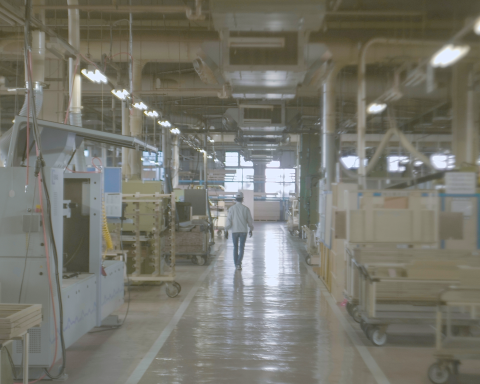
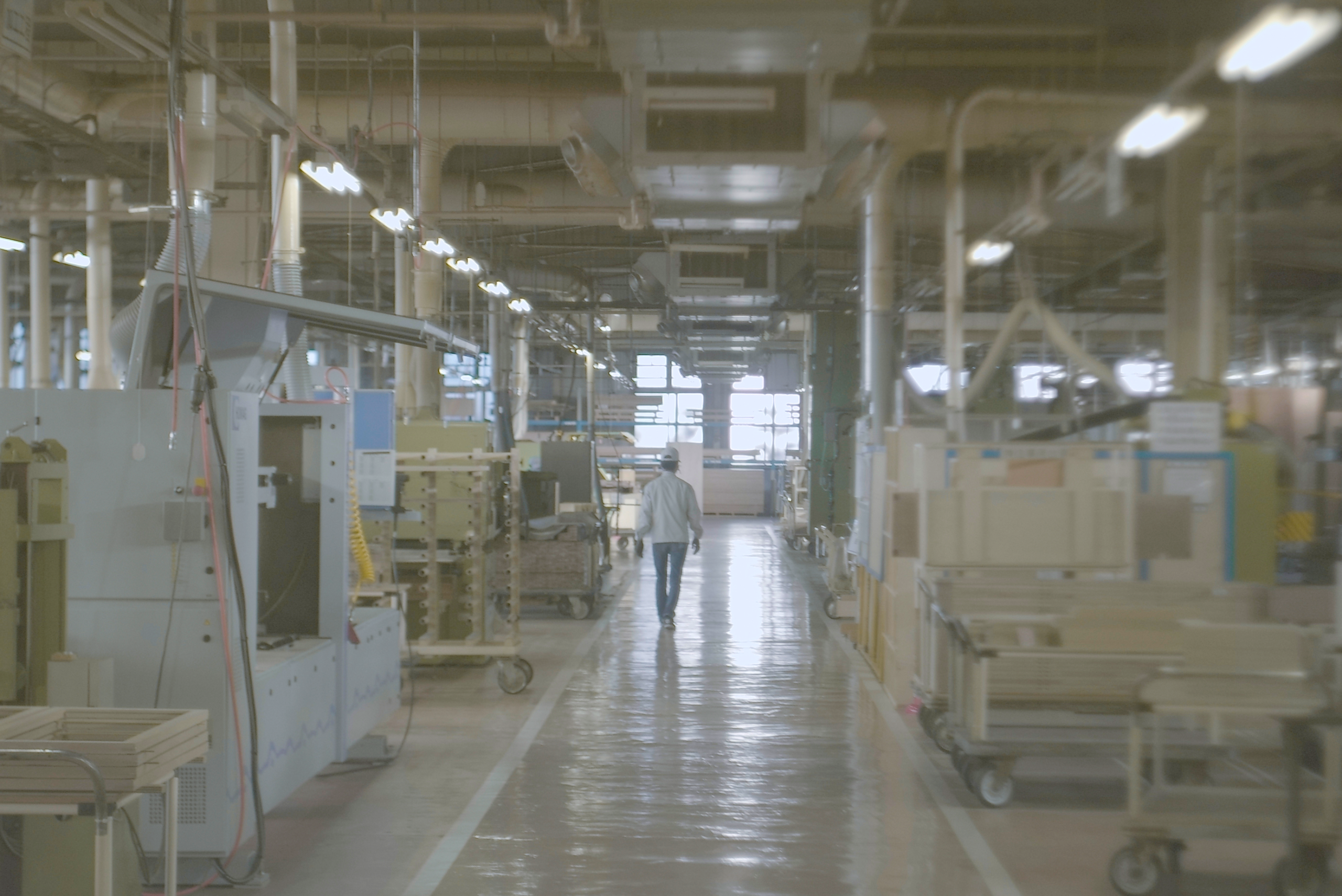
There is also the wood, its natural color and grain, with pieces painstakingly chosen to create a holistic aesthetic of beauty through visual harmony. Development of this balance begins when the logs themselves are purchased, and continues when cutting the wood, and finally at the cabinet production factory. And then it may still not be perfect; trained eyes in the quality control department send back one in four panels for repair. This attention to detail is exacting because it is so vitally important.
The sound of KIYOLA also harmonizes with the cabinet, literally. The piano tone of KIYOLA has been specially tuned by Roland’s engineers to elicit the “warmth of wood,” with adjustments made to EQ and speaker direction, all in the service of a sound that is in harmony with its cabinet. “Adding some spices,” says Kubo-san, “we could finally achieve the sound of the wood.”
"Adding some spices, we could finally achieve the sound of the wood."
Kazuhiru Kubo
Japandi: Cozy Minimalism
The final element that comes together in the KIYOLA cabinet is Japandi, a design philosophy that combines the simplicity of Scandinavian design with Japanese aesthetics, Nordic hygge (coziness) and Japanese wa. “Both value the small joys of daily life and respect for materials over ornate decoration,” says Fujimori-san. “We believe this functional yet warm minimalism deeply resonates with Japanese aesthetics.”
The curved legs and invitingly rounded details of the KF-20 represent “the meeting of Scandinavian design’s gentleness and Japanese delicate craftsmanship,” he says, the hikimono-inspired curves encountering the comfort of hygge.
There’s also a common value: that of lasting use. “Both Scandinavia and Japan share a mindset that loves timeless design over chasing trends,” Fujimori-san says. “We believe KIYOLA’s simplicity means that it isn’t bound by specific eras or styles, which is why it resonates.”
Made in Japan
The two KIYOLA models are currently the only pianos made in Japan, the cabinets handmade by Karimoku and then assembled at Roland’s factory in Hamamatsu. It is fitting, then, that KIYOLA should be so emblematic of Japanese culture and design. Of course, KIYOLA is more than just a piece of furniture. It is a musical instrument to be played and loved.
“We hope the customer’s happiest day isn’t just the day of purchase,” sums up Fujimori-san, “but rather after five or 10 years of use, as the wood’s color changes and memories of performances and happy family moments are etched into it, it becomes an even more irreplaceable presence.”