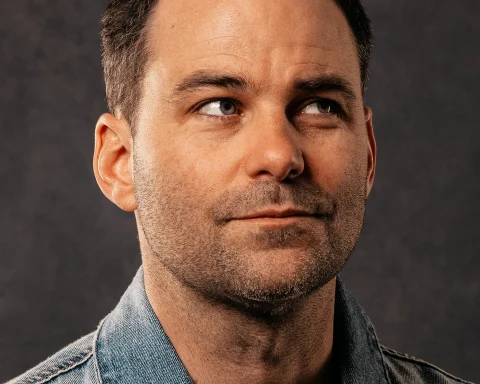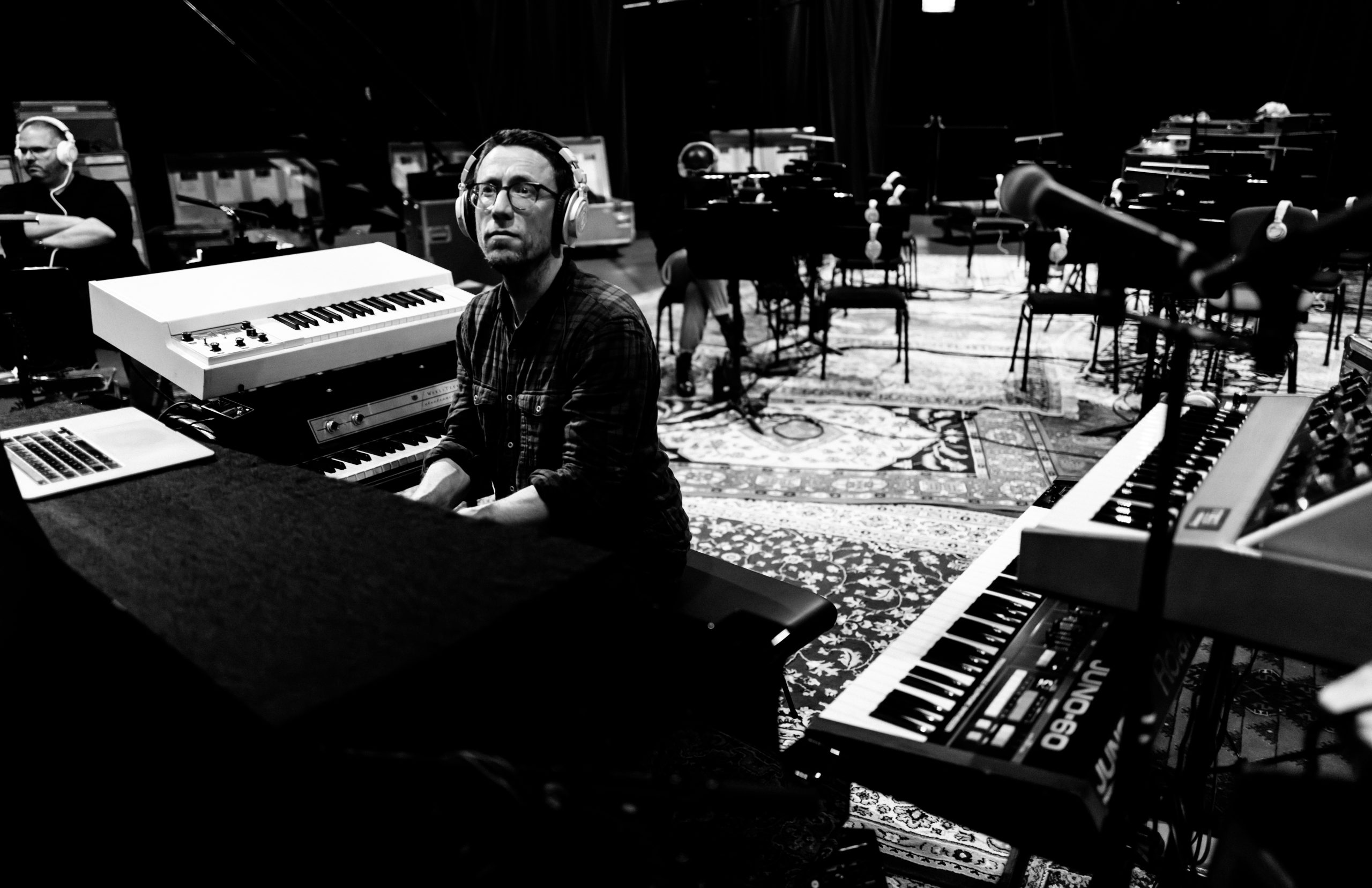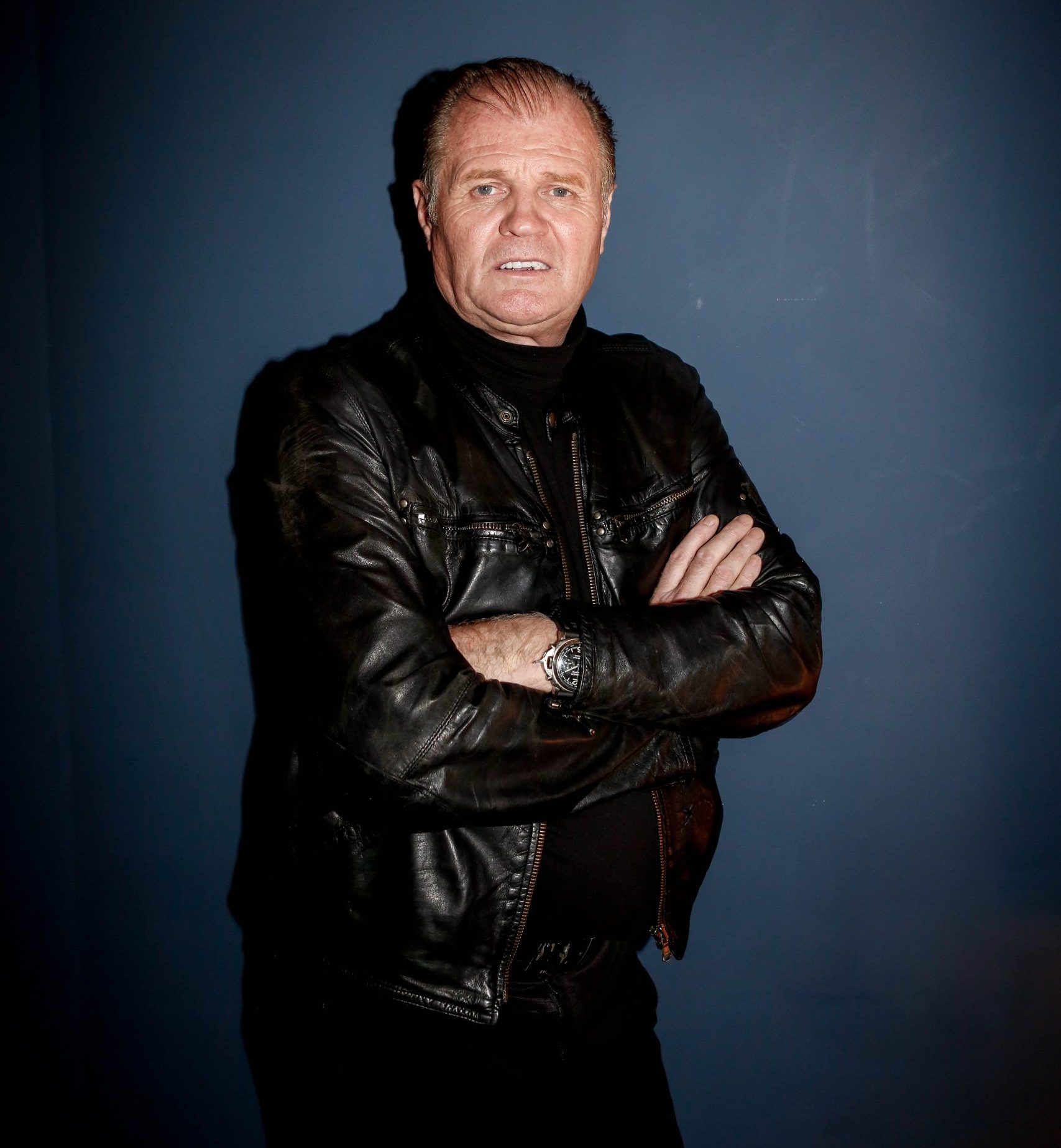


Rusty Egan stands as one of the defining figures of Britain’s New Romantic revolution. The London-born electronic polymath began as a drummer for punk band Rich Kids alongside Glen Matlock and Ultravox star Midge Ure before co-founding Visage and influencing the soundtrack of a generation with hits like “Fade to Grey” and “Mind of a Toy.” As resident DJ at London’s legendary Blitz Club, Egan introduced audiences to the sounds of the synthpop era before co-creating the Camden Palace nightclub and moving into production, remixing Madonna’s first single, “Everybody.” Decades on, Egan shows no signs of slowing. His 2025 album, Romantic, and recent autobiography celebrate a career that helped define modern electronic music and the indelible spirit of 1980s nightlife.
Hitting Boxes
What led to your interest in working in the music industry?
At 14, I got a drum kit for Christmas from my brother, and I’d been hitting boxes, pots, and pans and watching Top of the Pops when the theme tune to Hawaii Five-O came on. I played it, and my brother said, “Wow, you’re a drummer!” Then I came across an unbelievable drummer named Richard James Burgess, who invented the SDS-V drum synthesizer with Dave Simmons, and I had the prototype. We discovered in late 1978 that if you touched the jack plug on the motherboard with your finger, it could produce a sound. If I removed the skin from my drum kit and used this jack plug bit, I could stop the drum from resonating.
If you listen to the track “Tar” by Visage, you might think the drums sound like a Roland TR-808, but the hi-hat, kick, snare, and crash were all created separately and produced without the use of a drum machine. Now, if you turn over to the B-side, there’s a song called “Frequency Seven,” which is me experimenting with the SDS-V.
When did you start using Roland drum machines?
If you listen to Visage’s “Fade to Grey,” it’s all done on the Roland CR-78, which was inspired by the Roland TR-77 that was used on the Ultravox track “Hiroshima Mon Amour.” I love that drum pattern and became friendly with Warren Cann, so we started experimenting with electronic drums.
Is that when you came across the Roland MC-4 Microcomposer?
My experience with triggering and programming the Roland MC-4 came from Richard Burgess, who obtained one to review for some electronic magazines. I saw him at DJM studios, where he was a top session drummer, and he asked me round to his place in South East London, which might as well have been Germany to me. When I arrived, he had an Aladdin’s Cave of technology, and I saw the Roland MC-4 and asked, “What can that do?” Richard sat down and played some stuff, and I said, “What’s playing that?” He said, “Nothing. I tell it what to play, and it plays it.” I thought, “Wow, I can just tell it what to do, and I don’t have to be Billy Cobham.”
When did you start using the MC-4 on synthpop tracks?
We composed a piece of music on the MC-4 called “RERB” by a band called Shock, which became the B-side of “Angel Face” and released it in 1980. We programmed everything beforehand and just pressed play in the studio. Of course, the studio engineer, John Hudson, was like, “Where are the musicians?” But he also did something quite amazing. He came out of the sound booth with two floor plates with door handles on them and said, “This is how we do old-school claps.” We had these claps that we added a bit of reverb to and then combined them with the SDS-V and Roland sounds.
"If you listen to Visage's 'Fade to Grey,' it's all done on the Roland CR-78."
The Visage Nucleus
Tell us how Visage came into being.
I met Billy Curry from Ultravox, and he was like, “It’s finished–the band’s over!” And then I went to see Simple Minds with the band Magazine, and they were getting dropped, so I said, “Guys, I’ve got this project. Are you available?” I had some demo time at EMI, had these drum patterns and ideas, and said, “Look, it’s so simple, let me show you how it’s done.” And they’re like, yawn, go away, you nerd. So I brought my little square box, the Roland CR-78, thinking I need it for the kick and the snare, and then I’ll play on top.
The first Visage album was recorded in Martin Rushent’s garage while he was building Genetic Studios, and the first single, “Tar,” was released on his label, Genetic Records. We just sat in the studio with Midge Ure, Billy Curry, John McGeoch, and Dave Formula from Magazine, who played guitar and piano. We had the nucleus, but then Billy was offered a tour with Gary Numan. So off he goes, then John went on tour with Siouxsie and the Banshees, and Midge went off to play with Phil Lynott. The project went on hold, and I was DJing at the Blitz club, trying to hold down two jobs, so recording the Visage album ultimately took a whole year.
“Fade to Grey” was your first big hit, but with so many people involved, it seemed to cause some issues.
As far as I was concerned, the whole album was written, arranged, and produced by Visage. Everyone was doing it in their downtime and didn’t have any money. The first single by Visage went nowhere, but the second single, “Fade to Grey,” was released, and the album lands on our lap, and all the credits had been changed. It didn’t even say that Midge and I had produced it. So Steve Strange and I thought, “It’s all over. Forget it. What’s the point?” But my point is that the drummer is an equal person. Stop removing the drummer!
When Kraftwerk’s Ralph and Florian were known as “Ralph und Florian,” they created experimental albums. However, after bringing in Karl Bartos and Wolfgang Fleur, they co-wrote all the songs and became a cohesive unit. I learned the hard way really early. They said, Rusty, you’re only a drummer, yet I developed that sound and style. I used electronics and a real kit and played every drum fill.
So, band members weren’t recognized enough for the contributions they made?
When you hear New Order, those drums were programmed on my yellow Pearl three years beforehand. When you hear OMD’s “Enola Gay” or Marvin Gaye’s “Sexual Healing,” it’s clear that someone programmed everything into the Roland CR-78, and then people say, “Yeah, but it’s not you, it’s a machine.” Well, you’ve got a computer, but does it write a book for you? It might spell check, but you still have to write it.
"My point is that the drummer is an equal person. Stop removing the drummer!"
808 in the Booth
Is it true that you were using a TR-808 in your DJ sets during the early ’80s?
It must have been 1982 because we’d used the 808 on The Anvil album. At the time, I was DJing at the biggest nightclub in London, called the Camden Palace, and had a Minimoog and an 808 in the DJ booth. I was using the decks as acapellas and had a TEAC tape machine running at 50 IPS. I used to record on a cassette, play it back as I recorded, and use it for delays. Bottom line was that I was experimenting with electronic music while playing Arthur Baker and Afrika Bambaataa.
Were you supplementing songs with sounds and beats?
The beats transitioned, and it was my 808, so I could pull a record in or out. For example, I’d program the same beat as Kraftwerk’s “Trans Europe Express” or something from Afrika Bambaataa’s Soulsonic Force and press the little buttons to make it skip beats. If you find a Visage track called “Pleasure Boys (Bonus Beats),” I released just the beats, bass, and drums so that DJs could use them to put their own a cappellas and scratches on top.
Tell us about your experience of hip-hop emerging in New York.
In 1982, I went to New York for about the fifth time and saw New Order at the Paradise Garage. I heard Larry Levan, a DJ, met John Luongo, who remixed Michael Jackson’s “Don’t Stop Till You Get Enough,” and producer Tom Moulton, all the proper DJ remixers. By then, I was a DJ. I’d done extensive remixes of everything, and “Fade to Grey” was a big club hit all over Europe. A girl who worked for Malcolm McLaren, who’d just recorded “Double Dutch,” said, “Why don’t you come to the roller disco to meet Futura 2000 and Afrika Bambaataa and the Zulu Nation?”
There was graffiti everywhere, and I had no idea where I was going, but I got to this roller disco, and there were six SL-1200s with two guys behind each set and an MC. Of course, I knew all the breaks and where they were getting the kicks and snares from, but they kept rewinding the vinyl so fast and scratching to get it in time that I was like, “Wow!” I just watched in the same way I watched Richard Burgess showing me what the MC-4 could do.
"I knew all the breaks and where they were getting the kicks and snares from, but they kept rewinding the vinyl so fast and scratching to get it in time that I was like, 'Wow!'"
Hopeful Romantic
Bringing things up to date, tell us about your new LP, Romantic, and the whole ethos behind it?
I made some albums called Welcome to the Remix, Welcome to the Beach, and Welcome to the Dance Floor, which had about 40 different tracks with 25 other collaborators. This time, rather than having a record label deadline, I just worked on 20 tracks over five years until it all came together. It started after listening to some ideas by David Brooks, who’s been on the road with Gary Numan for 25 years. He was going to put out his own album, which was all rock, guitar, bass, and drums, and I said there’s a song in there called “Beautiful Day” that should be all electronic. He took it as an insult, but I just heard it as being like Depeche Mode without the drums. So, he said, “Let’s remake it your way,” and then I got Paula Gilmer from Tiny Magnetic Pets to do the vocals.
After that, I sent some material to Chris Payne, Gary Numan’s original keyboard player and co-writer of “Fade to Grey,” and asked him to share some of his ideas. Then I moved on to the next track, “Dream of the Blitz,” which is produced by an unbelievable producer and synth player called Zeus B. Held, and got Claudia Brucken from Propaganda, who ended up on ZTT making absolutely brilliant records. So, one by one, I got people on board, including Peter Hook, Tony Hadley, Wolfgang Fleur, Boy George, and Vandal Moon.
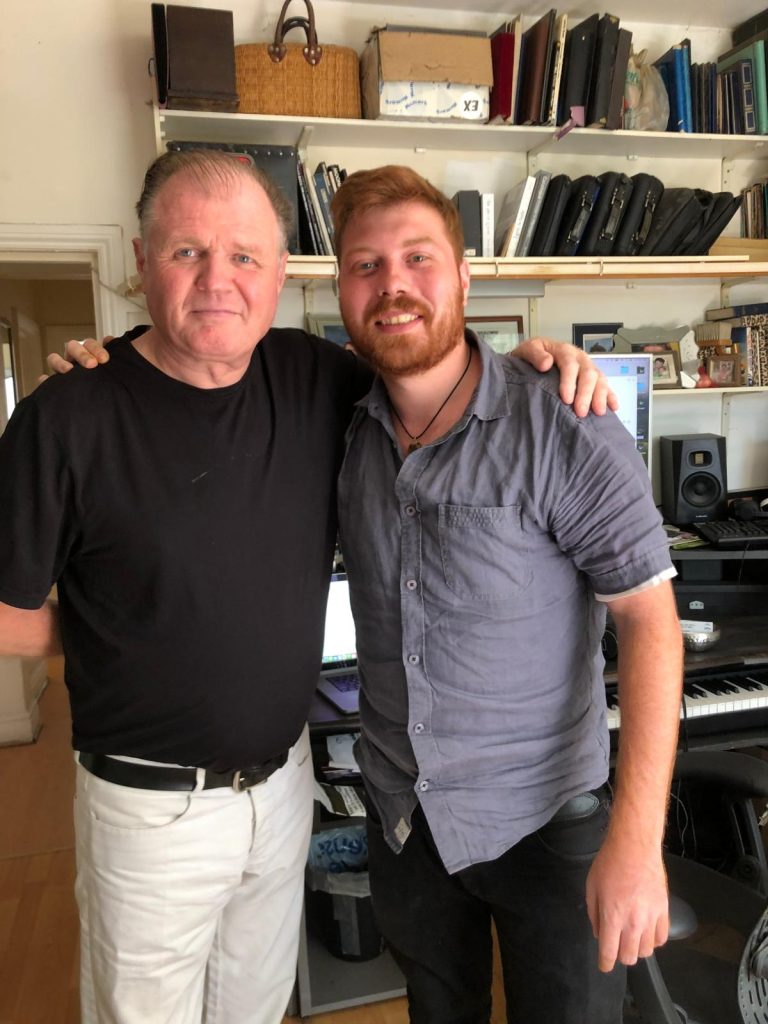
You have two separate mixes of “Fade to Grey” on the album. How did you approach recreating such an iconic track?
Well, Chris Payne is the composer, and if we had to license it, it would have cost a fortune, so we just re-recorded it. When I went through some of my old photographs, I saw pictures of Steve Strange with Ronny and thought, “I wonder if I could get Ronny to sing it?” When the stems arrived, and we dropped them in, they just worked perfectly. I also saw some pictures of Steve with Zaine Griff. If you’re not familiar with Zaine, he has produced two albums and worked with notable artists such as Tony Visconti, Yellow Magic Orchestra, Hans Zimmer, and Kate Bush. He’s got such a pedigree, so I asked if he’d like to sing it, and then we also did a track called “Visions of You.”
To what extent is your son, Oscar, involved in your productions?
The Divide project is a collaboration between my son and me, and we released an EP last year called NonStopElectronicSynthPopDub, which features four experimental electronic tracks. Oscar is the co-writer, co-producer, and he programs everything on Ableton, and he understands all of my sounds. However, he doesn’t feel that my album is our album.
For any young person reading this, you end up better at what you do when you collaborate with others. You might think you’re great and can do it all on your own, but there’s a sound engineer in the room, and he might be called Flood, or there’s an intern over there who programmed everything. So I take a lot of pride in my drum sounds and pattern programming, and I don’t go around suing people.
"For any young person reading this, you end up better at what you do when you collaborate with others."
The Music Biz
You’ve been through the ringer at times, but what do you think of the music business today?
I left the music business for 20 years. It’s horrible—I hate it. I just like music, and there are people on my album that give me hope, but most artists are so self-focused. I had an accountant say to me, “You do know that you can give your children £3,000 pounds tax-free?” I said, “Really?” He goes, “Yeah, you can gift them”, and I’m like, “Well, I haven’t got £3,000.”
So, you can imagine Sting sitting there with his accountant, and he has £800 million, but never thought about how Andy Summers is doing? All I’m saying is, as I approach retirement age, it’s either Bognor Regis or the South of France, and it’s looking more like Bognor Regis.
What aspects of the ’80s would you like to see return, and what would you be happy to leave behind?
One aspect of the ’80s was that the videos were really creative—The Cure, Madness, Robert Palmer, Malcolm McLaren, Duran Duran, and Anton Corbin’s Depeche Mode. Or, if you look at the Visage video for “Fade to Grey,” you’ll see what can be done with virtually no budget. Now you have a drum machine going bang, bang, bang, and people singing about guns and gangsters. I’m bored to death with that compared to when people were scratching or making a drum beat out of an old record, because that was really creative. And I never saw anything from Lady Gaga that I hadn’t already seen Grace Jones do.