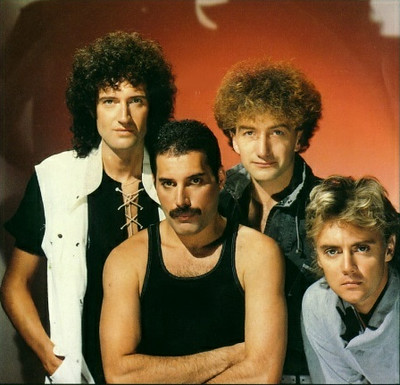


When Queen began planning their 11th album, The Works, in 1983, the band faced a turning point. One of the UK’s biggest musical exports since The Beatles, Queen built a global fan base through a decade of recording and touring. However, their most devoted fans were rock enthusiasts who had followed them since the mid-1970s. These followers felt isolated and underwhelmed by Queen’s previous album, Hot Space (1982). Here’s how “Radio Ga Ga” flipped the script, ushering in a new wave of success for the group.
From Toddler Talk to Studio Masterpiece
As Queen entered the early 1980s, they found themselves surrounded by musical change. The rise of disco and synth-laced UK pop acts like Gary Numan, OMD, and The Human League began to steer the industry’s direction and presented both challenges and opportunities for the band. Alongside these cultural shifts, advancements in recording studio technology and musical instruments also opened new doors.
After releasing Greatest Hits in 1981 (the best-selling album of all time in the UK), Queen adapted creatively by exploring disco influences. Hot Space included the hit “Under Pressure” with David Bowie, but many felt Queen had strayed. The stadium anthems that once unified fans seemed distant from the band’s new electronic direction.
I Heard It on My Radio
“Radio Ga Ga,” the lead single from The Works (1984), had a rather unlikely origin story. In the time leading up to the album’s recording sessions in August of 1983, Roger Taylor presented several demos to the band, which Freddie Mercury deemed not strong enough for recording. Rather than feeling discouraged, Taylor went back to the drawing board. Before long, the moment came that would present him with the creative spark he needed.
Taylor was enjoying some time at home with the radio on when his 3-year-old son, Felix, entered the room and succinctly announced, “Radio ca ca.” This statement immediately resonated with Taylor’s thoughts about the early 1980s music industry. He felt it would make a great title for a song.
A traditionalist who connected with many of his favorite artists through radio in his formative years, Taylor was disillusioned that videos had become the new medium for mass music exposure. Fueled by this fire and his toddler’s contribution, he moved his efforts to the Record Plant in LA. There, he approached the creative process with renewed fervor.
"A traditionalist who connected with his favorite artists through radio, Taylor was disillusioned that videos had become the new medium for mass music exposure. "
Scaling Up the Demo
Armed with a LinnDrum and a Roland JUPITER-8, Taylor wrote the demo version of “Radio ca ca”, which he would later present to the band. This time, the result was different, and Freddie Mercury immediately saw potential in the idea. However, the song would undergo several changes as it transformed into the stadium shaker we recognize—particularly the use of the JUPITER-8 arpeggiator. The band decided to explore this sound and let it carry almost every section of the song except for the chorus. With the help of session keyboardist Fred Mandel, Mercury began arranging the re-styled “Radio Ga Ga” with full license from Taylor.
Over the thumping drum pattern and pulsating arp sequence, Queen layered smooth saw wave JUPITER pads, glistening piano, and Taylor’s dreamy vocals using the Roland VP-330 vocoder. Together, these elements created a lush, futuristic soundscape. The result was the perfect platform to deliver Mercury’s lyrical vision for the song: a sentimental homage to radio and its cultural role in connecting music and the listener.
Bass Punctuation
Another masterful feature of “Radio Ga Ga” is John Deacon’s bass guitar performance. Although low in the mix, Deacon’s skillful groove works off the mechanical rhythm of the JUPITER-8 arp to create a unique feel that punctuates and adds color to each respective section.
To make the chorus stand out, the band introduced a pause in the synthesizer track and altered the drum pattern. These changes emphasized the call-and-response vocals. Driven by the dominant piano and jangly guitar chords, the double clap on the upbeat became an interactive element. The trick encouraged audience participation, most famously at the iconic Live Aid concert at Wembley Stadium in 1985.
"Deacon's skillful groove works off the mechanical rhythm of the JUPITER-8 arpeggiator to create a unique feel."
Synth Pop that Rocks?
When compared to many other of Queen’s stadium-rallying hits, “Radio Ga Ga” is decidedly understated. Instead of revolving around one of Brian May’s rambunctious guitar riffs, the song is quite introspective. Even his guitar solo on “Radio Ga Ga” seems to take influence from Roxy Music’s 1982 release, Avalon. Nevertheless, its fusion of electronic and new wave elements became a magical recipe, thanks to Mercury’s contributions.
For this reason, it welcomed Queen’s rock fan base back into the fold, with a theme relatable to any music lover. Without the edge of rock guitars and drums, listeners could appreciate its simple theatrical beauty. The song’s lament of MTV’s rise became ironic when paired with David Mallet’s big-budget Metropolis-inspired video. The clip immortalized the song for years to come and set the stage for other singles from The Works, including “I Want to Break Free” and “Hammer to Fall.”
A Sublime Electronic Anthem
“Radio Ga Ga” serves as a reminder of the ever-changing nature of the music industry, not only in the sounds we gravitate towards, but in the delivery formats that determine how we connect with the artists we love. With the death of disco, perhaps Queen was predestined to return to their roots. Still, Roger Taylor couldn’t have foreseen the success of the sublime electronic anthem we know as “Radio Ga Ga.”